PADI Night Diver Specialty Course
There's something magical about slipping beneath the waves after dark. The familiar dive site you know by heart transforms into an entirely different world once the sun disappears. Night diving opens up a whole new chapter in your scuba journey, where the ordinary becomes extraordinary under your dive light's beam. This PADI Night Diver Specialty course with BlueWater Divers will change how you see the underwater world forever.
Beneath the Surface
Night diving isn't just regular diving in the dark – it's a completely different experience that reveals the ocean's hidden personality. As daylight fades, the reef comes alive with activity you'd never witness during regular day dives. Creatures that hide during daylight hours emerge from their hiding spots, creating an underwater light show that's absolutely mesmerizing. You'll learn proper night diving techniques, navigation skills, and how to communicate effectively with your buddy when visibility is limited to your flashlight beam. The course covers essential safety protocols, specialized equipment use, and builds your confidence for exploring underwater after sunset. Most divers find night diving surprisingly peaceful – there's less boat traffic, calmer conditions, and a sense of adventure that day diving simply can't match.
Dive Brief & Gear Info
Night diving requires some additional gear beyond your standard scuba setup, but nothing too complicated. You'll need a primary dive light, plus at least two backup lights – redundancy is key when darkness surrounds you. We'll cover proper light techniques, including how to signal your buddy and avoid blinding marine life with your beam. The course teaches you to navigate using natural reference points and compass headings, since familiar landmarks look completely different in artificial light. You'll practice controlled descents and ascents, learn to stay close to your dive buddy, and master the art of moving slowly and deliberately underwater. Emergency procedures take on extra importance during night dives, so we'll drill proper signaling techniques and emergency ascent protocols. The training typically involves confined water practice followed by open water night dives where you'll put these new skills to work in real conditions.
Marine Life You'll See
Night diving reveals marine creatures that remain hidden during daylight hours, creating encounters you'll remember for years. Octopuses become active hunters after dark, using their incredible camouflage abilities as they prowl the reef for crabs and small fish. These intelligent cephalopods are incredibly curious about dive lights and often approach divers, displaying rapid color changes that showcase their mood and communication methods. You might spot them squeezing through impossibly small cracks or watch them jet away in clouds of ink when startled.
Lobsters and crabs emerge from their daytime hiding spots to scavenge across the bottom, their eyes glowing like tiny jewels when your light catches them. These crustaceans are much bolder at night, often walking right up to divers or engaging in territorial disputes with each other. Spiny lobsters march across sandy areas in single file, while smaller decorator crabs showcase their amazing camouflage abilities.
Eels become active predators during night hours, slithering through coral formations and sandy areas hunting for sleeping fish. Green morays, snake eels, and conger eels all exhibit different hunting behaviors that are fascinating to observe. Many eels that remain hidden in crevices during day dives venture out completely at night, giving you clear views of their impressive size and graceful swimming motion.
Sleeping parrotfish create some of the most interesting night diving encounters. These colorful reef fish wrap themselves in mucus cocoons for protection while they rest, creating translucent sleeping bags that look almost otherworldly under your dive light. Finding a sleeping parrotfish is like discovering underwater treasure – they remain perfectly still, allowing close observation of their intricate scale patterns and peaceful expressions.
Plan Your Next Dive
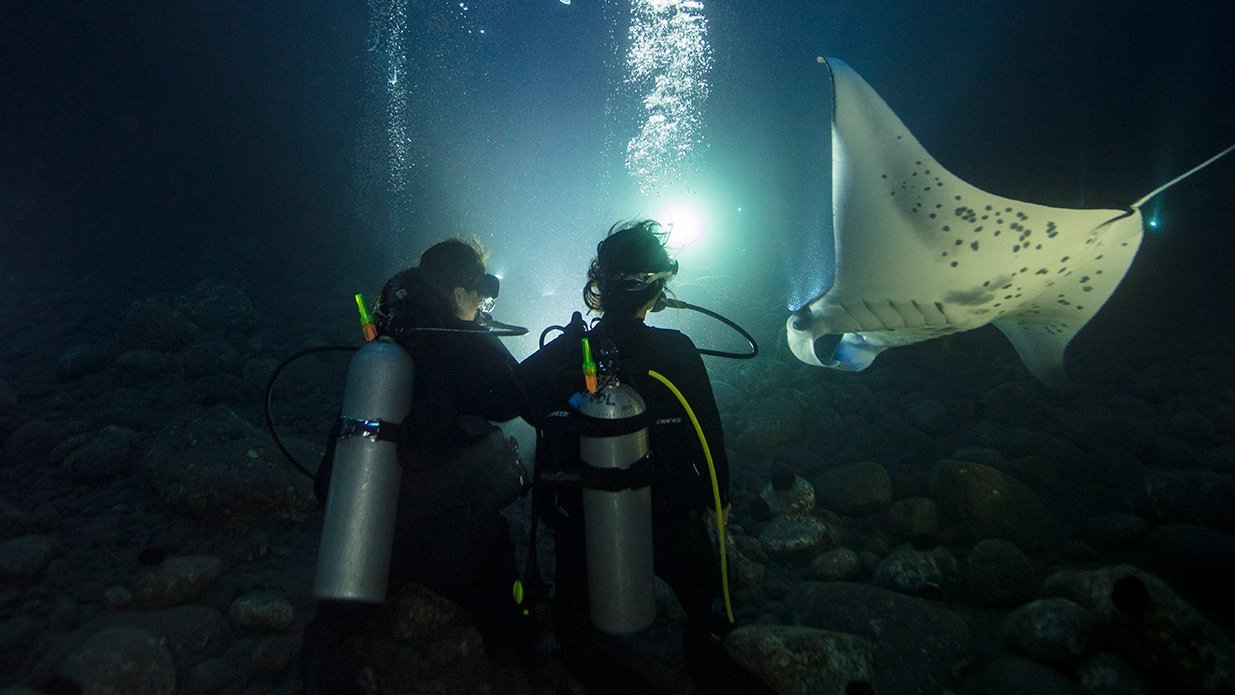
The PADI Night Diver Specialty course opens up diving opportunities you never knew existed. Many of the world's best dive sites offer completely different experiences after dark, from manta ray night dives to coral spawning events that only happen under cover of darkness. This certification expands your diving seasons too – some destinations that might be less appealing during certain daylight months become absolutely spectacular for night diving. The skills you learn here will boost your overall diving confidence and make you a more well-rounded underwater explorer. Ready to discover what happens beneath the waves after sunset? Contact BlueWater Divers to schedule your PADI Night Diver Specialty course and prepare for some of the most memorable dives of your life.
 Key Largo, FL
 PADI Night Diver Specialty course certification training