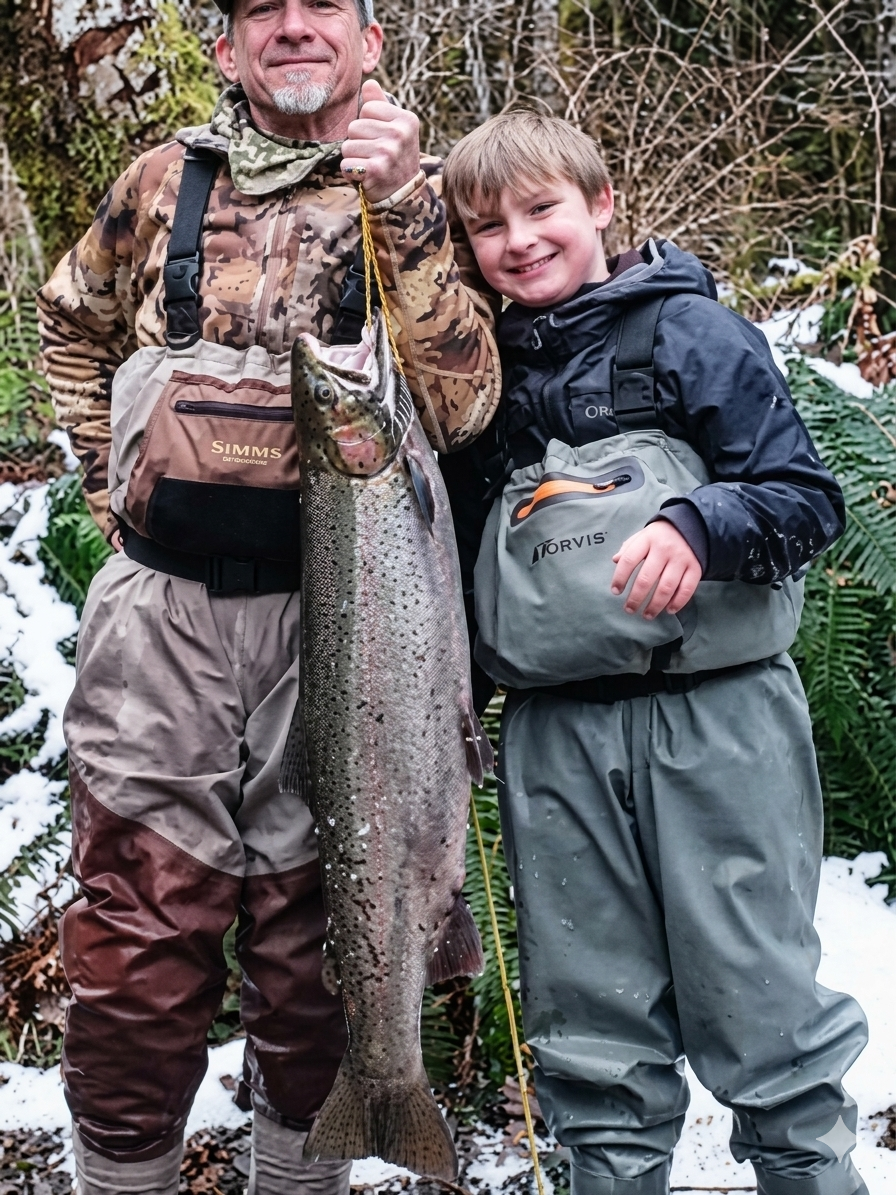
Half Day Salmon River Guided Salmon Fishing Trip
Chris's Guide Service puts you right where the salmon are running thick on Washington's premier coastal rivers. Christine Dooley has been guiding these waters for years, and she knows exactly where to position you for the best shots at landing chinook, coho, and chum salmon. This isn't your typical charter boat deal – we're talking serious bank fishing on the Salmon River, Cook Creek, Quinault River, and Queets River systems near Humptulips and Aberdeen. Whether you've been swinging flies for decades or you're just getting your feet wet, Christine tailors every trip to match your skill level and gets you dialed in on what's working.
What to Expect on the Water
Your half-day adventure kicks off with Christine sizing up the conditions and picking the hottest spot based on recent runs, weather, and what the fish have been hitting. These four-hour trips move at a comfortable pace – no rushing, no pressure – just solid fishing time focused on putting you in front of active salmon. You'll be working prime bank access points where salmon funnel through during their spawning runs, often in spots that most anglers never even know about. Christine provides all the rods, reels, terminal tackle, and bait, so you can travel light and focus on the fishing. Just make sure you've got your valid Washington fishing license sorted before you arrive. The beauty of bank fishing these coastal rivers is the intimate connection you get with the water – you're reading the current, watching for subtle takes, and feeling every bump on the bottom. Groups stay small at just two people maximum, which means plenty of one-on-one coaching and prime water for everyone.
Gear Setup & River Tactics
Christine runs quality spinning and conventional setups matched to the specific conditions you'll face each day. Depending on water levels and fish behavior, you might be working with drift rigs, running spinners through the deeper holes, or presenting fresh roe in the perfect seam where salmon stage before moving upstream. Bank fishing these coastal systems requires reading water like a book – knowing where salmon rest, how they move through different stretches, and what presentations trigger strikes when fish are being finicky. You'll learn to identify the subtle differences between a snag, a bottom bounce, and that telltale salmon take that makes your heart skip. Christine shares the local knowledge that separates successful days from slow ones: which tides push fresh fish into the system, how recent rainfall affects salmon behavior, and why certain pools consistently produce when others go quiet. The 72-hour free cancellation policy means you're never stuck fishing in terrible conditions – Christine would rather reschedule than waste your time on water that won't fish well.
Top Catches This Season
These Washington coastal rivers serve up three distinct salmon species, each with their own personality and fighting style that keeps things interesting throughout the season. Understanding what makes each species tick helps you appreciate every fish that comes to the net, whether it's your first salmon or your fiftieth.
Chinook salmon are the heavyweight champions of the Pacific Northwest, and landing one from the bank is something every angler should experience. These kings typically run 15-30 pounds in these systems, with occasional monsters pushing even bigger. They're most active during the late summer and early fall runs, often moving through on incoming tides when they're fresh from the ocean and full of fight. What makes chinooks special is their power – they'll strip line, bulldoze toward snags, and test every knot in your setup. Christine knows the deeper holes and current breaks where big kings rest during their upstream journey, and she'll position you perfectly to intercept them with the right presentation.
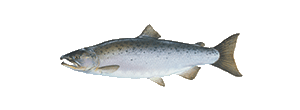
Coho salmon bring a completely different energy to the game with their aerial acrobatics and aggressive strikes. These silver rockets usually range 8-12 pounds and hit lures with authority that'll wake you up in a hurry. Cohos love moving water and will often chase down spinners or grab drifted baits with confidence. They're excellent table fare and known for their spectacular jumps that can happen multiple times during a single fight. Fall runs typically produce the most consistent coho action on these coastal rivers, especially when fresh rainfall brings new fish in from the Pacific.
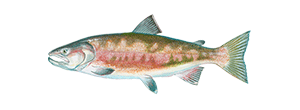
Chum salmon might not win beauty contests, but they make up for it with raw determination and surprising strength. These bulldogs typically weigh 8-15 pounds and wage long, grinding battles that test your endurance and drag settings. Chums often show up in good numbers during their spawning runs, providing steady action when you locate a fresh school. They're particularly fun on lighter tackle where you can really appreciate their stamina and willingness to fight right to the net. Many anglers overlook chums, but Christine knows they can provide some of the most memorable fights of the day, especially when they're fresh from saltwater.
Time to Book Your Spot
Half-day trips with Christine deliver exactly what serious salmon anglers want: expert guidance, prime water access, and the kind of local knowledge that takes years to develop on your own. You're not just buying a fishing trip – you're getting a masterclass in reading coastal rivers, understanding salmon behavior, and maximizing your time on productive water. The option to grab lunch or dinner together after your trip means you can pick Christine's brain about other local fishing opportunities, seasonal patterns, and techniques that'll help you become a better angler long after your trip ends. These Washington coastal rivers produce some of the best salmon fishing on the west coast, and Christine's approach puts you right in the thick of it without the crowds and pressure you'll find on more popular systems. Book your dates now and get ready to experience salmon fishing the way it's meant to be done.

 Private Trip
 River Fishing
 Salmon River
 Land-based salmon fishing on four pristine Washington rivers