West Palm Beach Fishing Charter for Beginners
Ready to get your first taste of offshore fishing? This West Palm Beach charter is built for folks who've been dreaming about getting out on the water but don't know where to start. Glass Action Charters runs a solid 4-hour trip that takes the intimidation out of deep-sea fishing while still giving you shots at some seriously good fish. Your captain knows these waters like the back of his hand and genuinely enjoys teaching newcomers the ropes. Whether you're flying solo, bringing the family, or getting a group of friends together, this trip strikes the perfect balance between learning and actually putting fish in the boat.
What to Expect on the Water
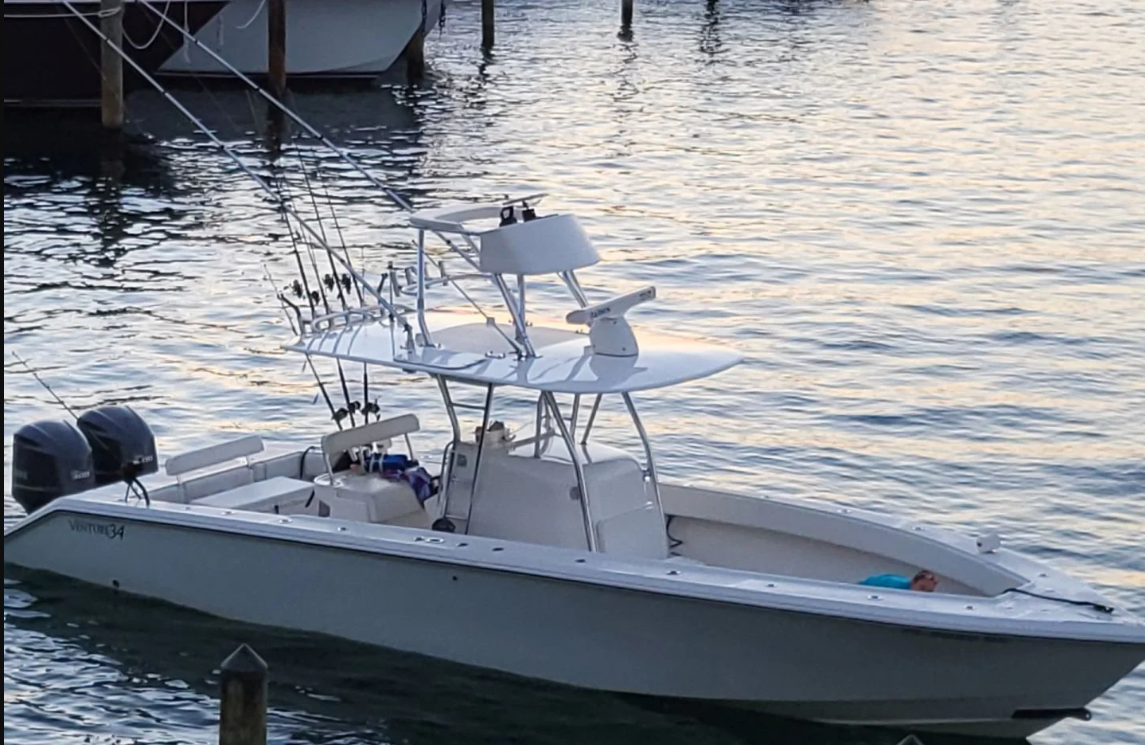
You'll step aboard a well-maintained boat that's set up for both comfort and serious fishing. The crew provides all your tackle – quality rods, reels, and fresh bait – so you don't need to worry about showing up with gear you're not sure how to use. The captain starts things off by walking everyone through the basics: how to hold a rod properly, when to set the hook, and what it feels like when a fish is actually biting versus when your line just hit some seaweed. The pace stays relaxed, but don't mistake that for boring. West Palm Beach sits right on the edge of some of Florida's most productive fishing grounds, where the Gulf Stream pushes in close to shore and brings plenty of hungry fish with it. You'll be fishing in water that ranges from 60 to 150 feet deep, depending on what's biting that day. The boat handles up to six anglers comfortably, which means you get plenty of personal attention without feeling crowded.
Techniques & Tackle Setup
This isn't about throwing complicated rigs or mastering advanced techniques – it's about learning the fundamentals that actually work. You'll spend most of your time bottom fishing with circle hooks, which are perfect for beginners because they hook fish in the corner of the mouth automatically when you reel tight. The captain will show you how to feel for the bottom, how much weight to use in different currents, and how to tell when something's nibbling versus when a fish has committed to your bait. You'll also get to try some light trolling, which means pulling lures behind the boat while moving slowly. This is where you might connect with bigger, faster fish like mahi-mahi or barracuda. The boat carries a fish finder and GPS, so the captain can put you on structure like reefs, wrecks, and ledges where fish like to hang out. All the rods are matched to the fishing you'll be doing – medium-heavy spinning setups that can handle anything from a 2-pound hogfish to a 20-pound grouper without being too heavy for beginners to manage.
Customer Stories
"Had a great time. 5 stars for a reason" - Austin
Species You'll Want to Hook
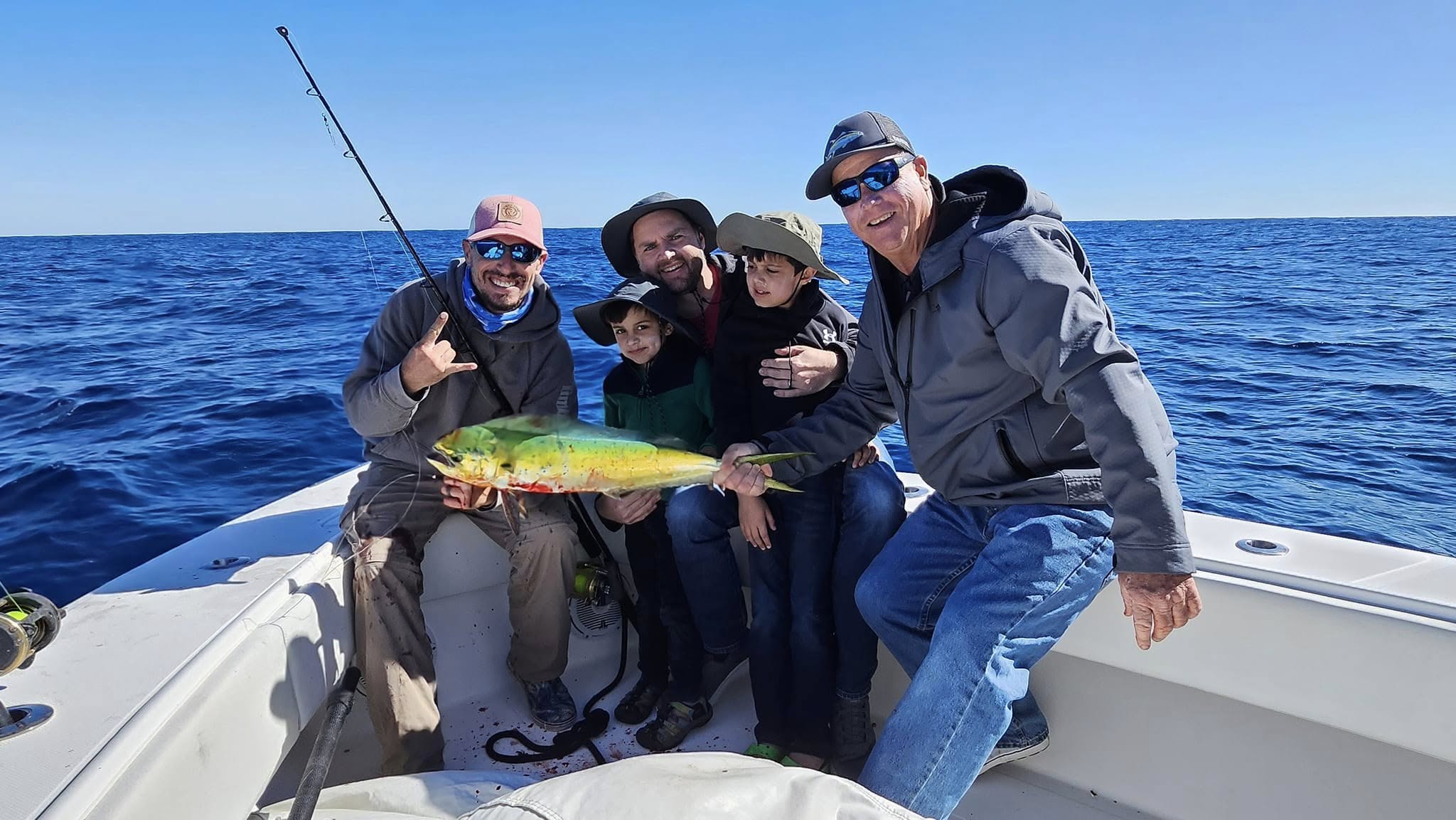
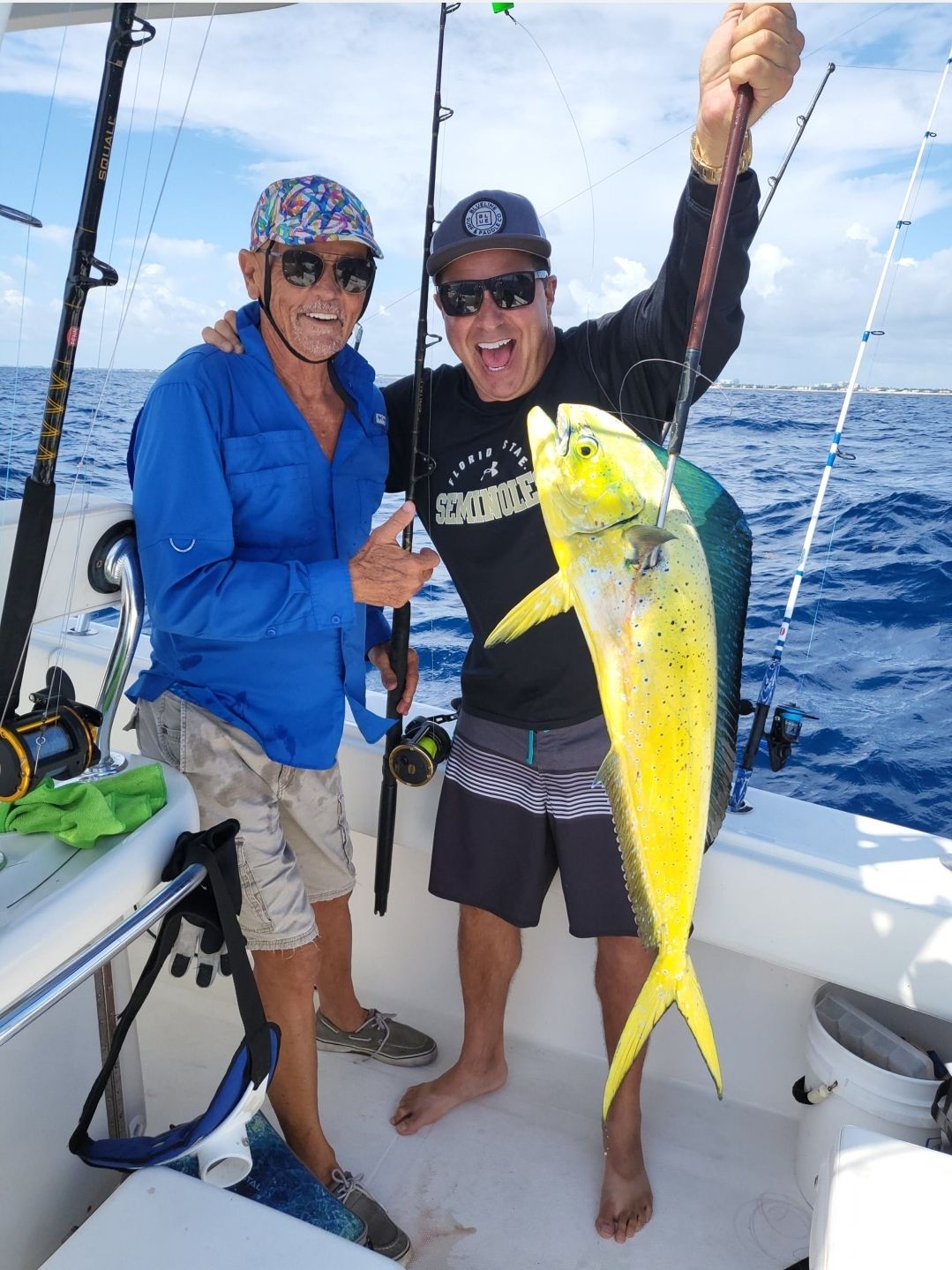
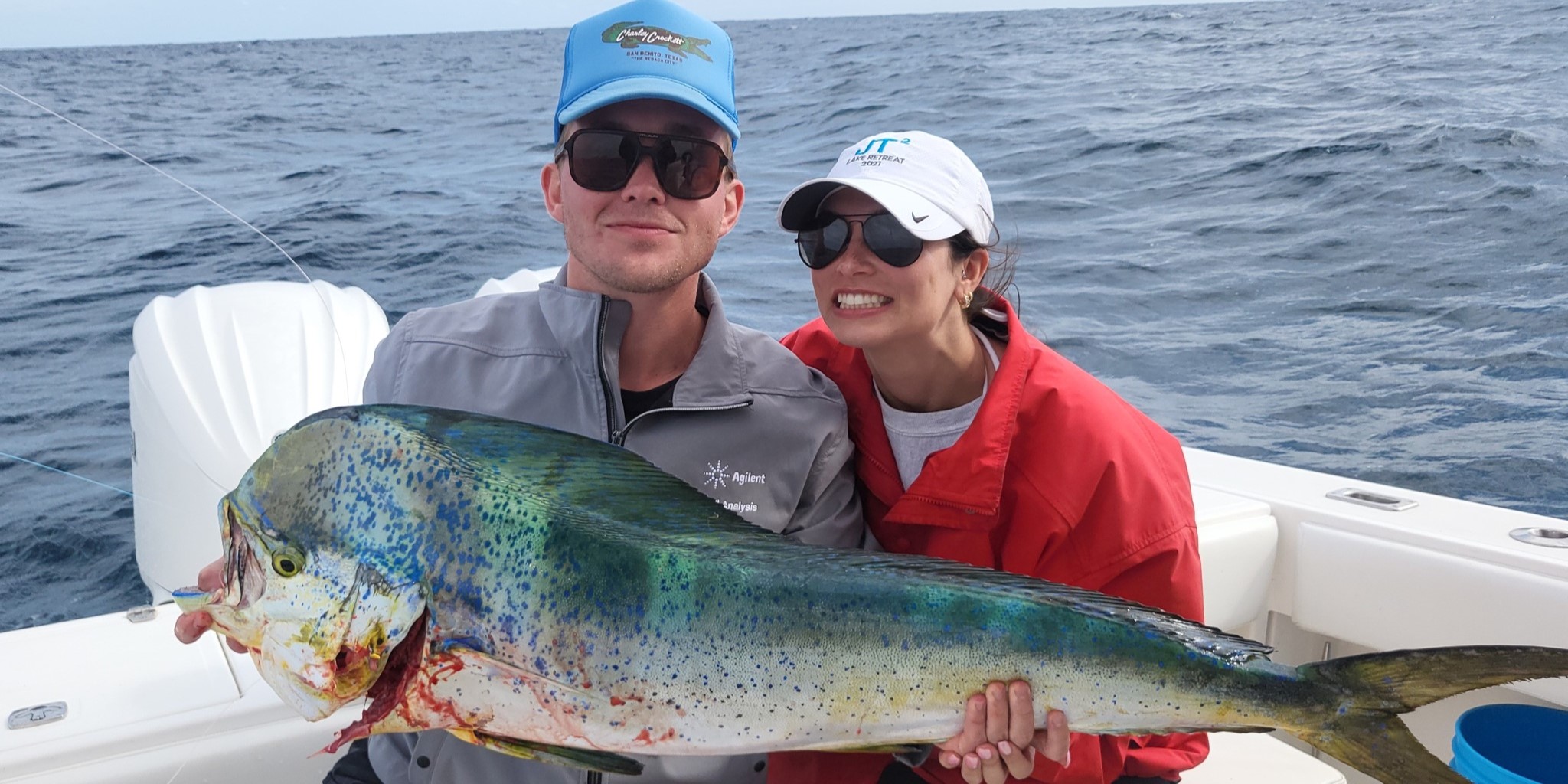
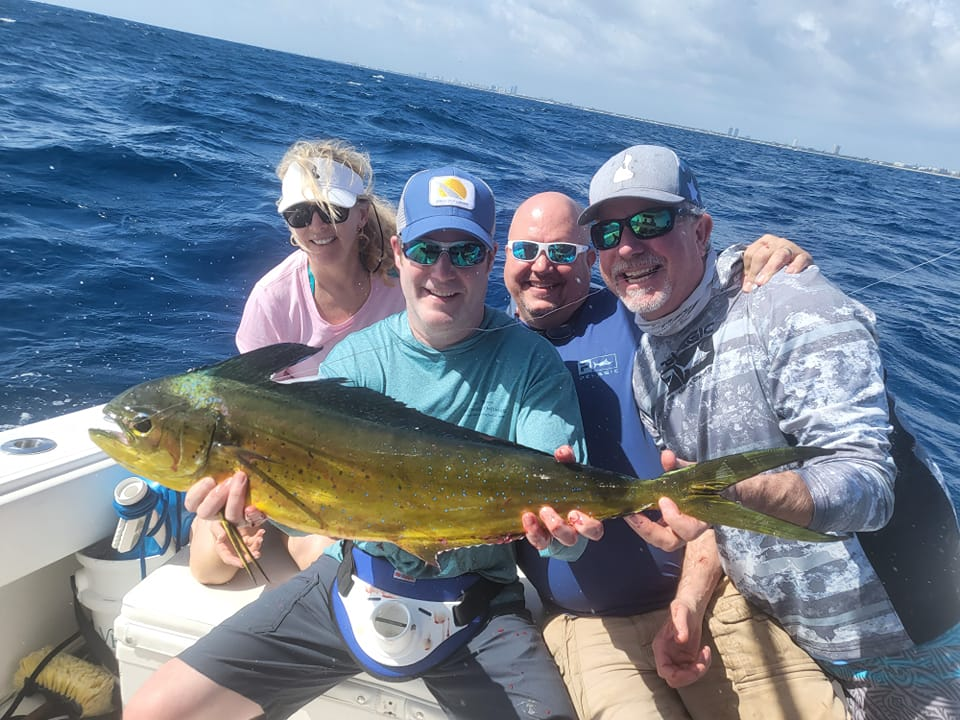
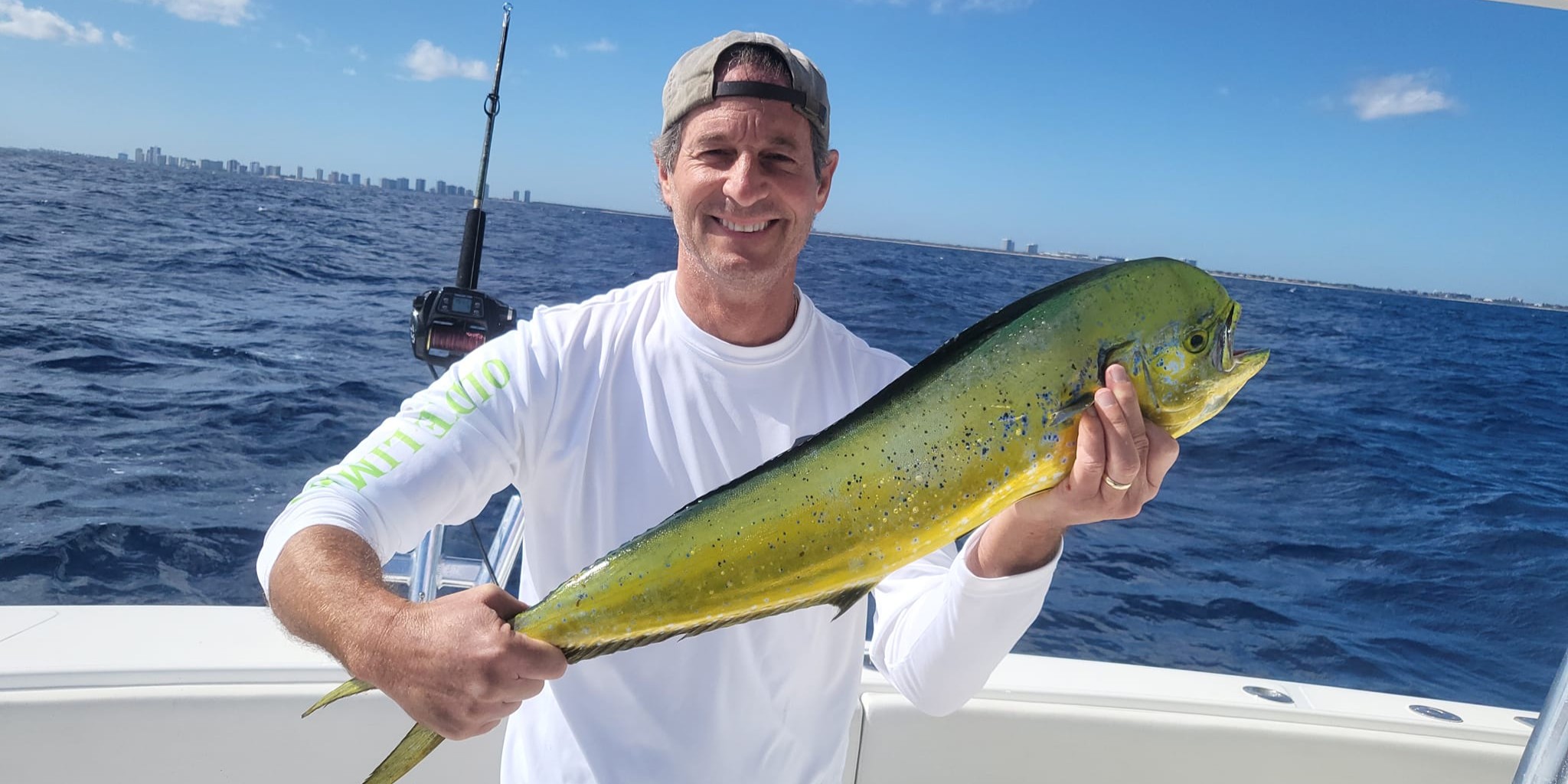
Mahi-mahi might be the most exciting fish you'll encounter out there. These guys are pure gold and green beauty that put on an aerial show when hooked. They travel in schools, so when you find one, there's usually more around. Best time for mahi is late spring through early fall when they follow the weed lines and floating debris. They hit trolled baits hard and fast, and watching a mahi jump and shake its head trying to throw the hook gets everyone on the boat fired up. They're also fantastic eating, with firm white meat that's perfect for grilling.
Hogfish are one of the coolest-looking fish in these waters, with their pig-like snout and vibrant pink and yellow colors. They're smart fish that feed around the bottom, using that distinctive snout to root out crabs and small fish from the sand. You'll find them around reefs and wrecks in 40 to 100 feet of water year-round, though they bite best in the cooler months. When you hook a hogfish, they don't jump like mahi, but they pull steady and hard toward the bottom. They're considered one of the best eating fish in Florida waters – the meat is sweet and flaky with a flavor that's almost lobster-like.
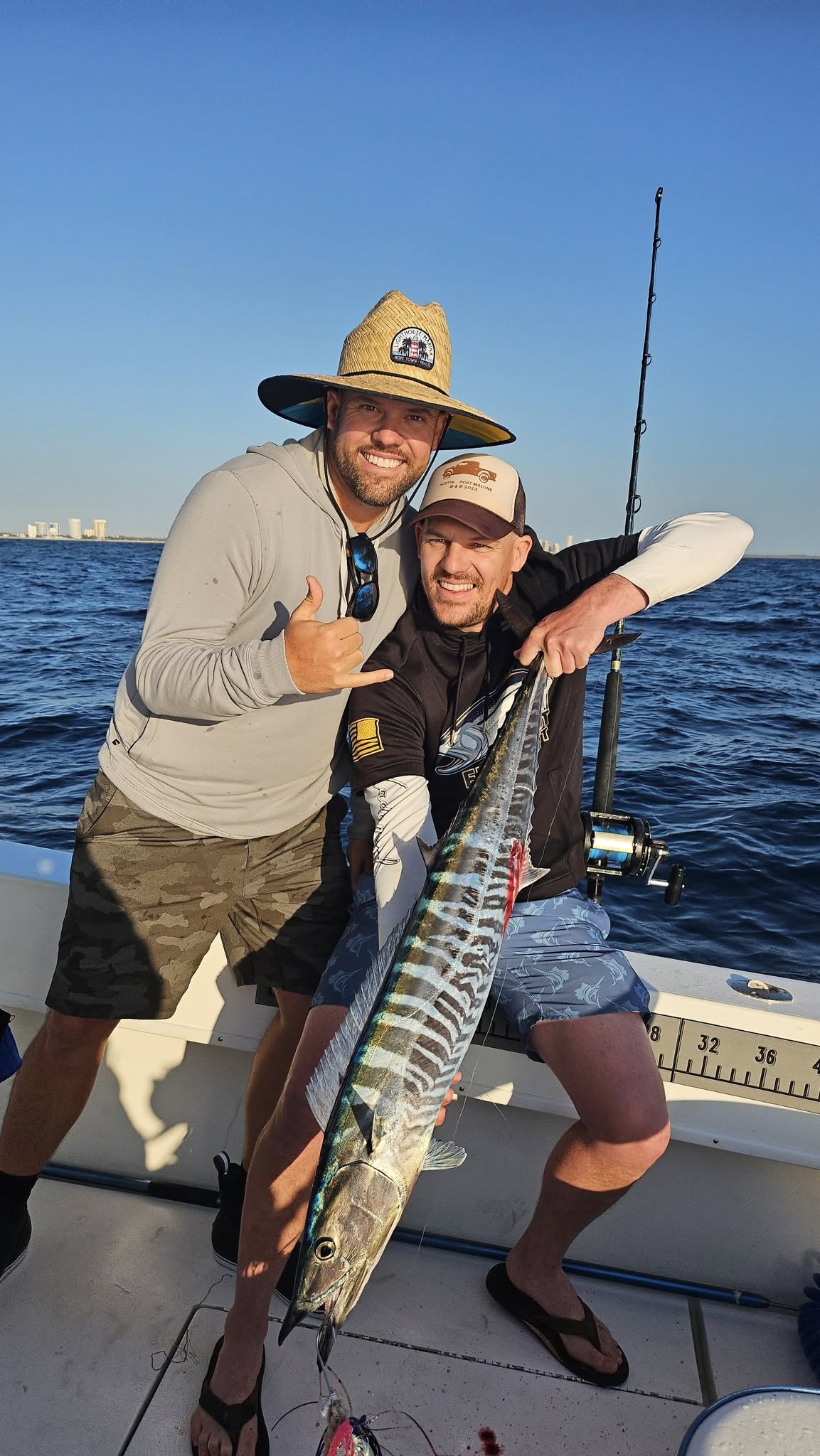
Great barracuda are the wolves of the reef, and seeing one streak toward your bait is something you won't forget. These silver bullets can hit 40 mph when they want to, and they're not shy about it. Barracuda patrol the edges of reefs and drop-offs, usually in 30 to 80 feet of water. They're year-round residents here, but they're most active during the warmer months. When a cuda hits your bait, you'll know it immediately – the line screams off the reel, and they often jump multiple times. They're fun to catch and release, though smaller ones make decent table fare if you know how to prepare them.
Gag grouper are the bread and butter of offshore fishing around West Palm Beach. These bottom dwellers are ambush predators that hide around rocks, ledges, and wrecks waiting for an easy meal to swim by. They're most active from October through April when the water cools down a bit. Gags are strong fighters that immediately head for cover when hooked, so you need to muscle them up quickly before they can wrap your line around structure. They're excellent eating with firm, white meat that's perfect for any preparation. The current regulations require them to be at least 24 inches, and there's a bag limit, but the captain will handle all that for you.
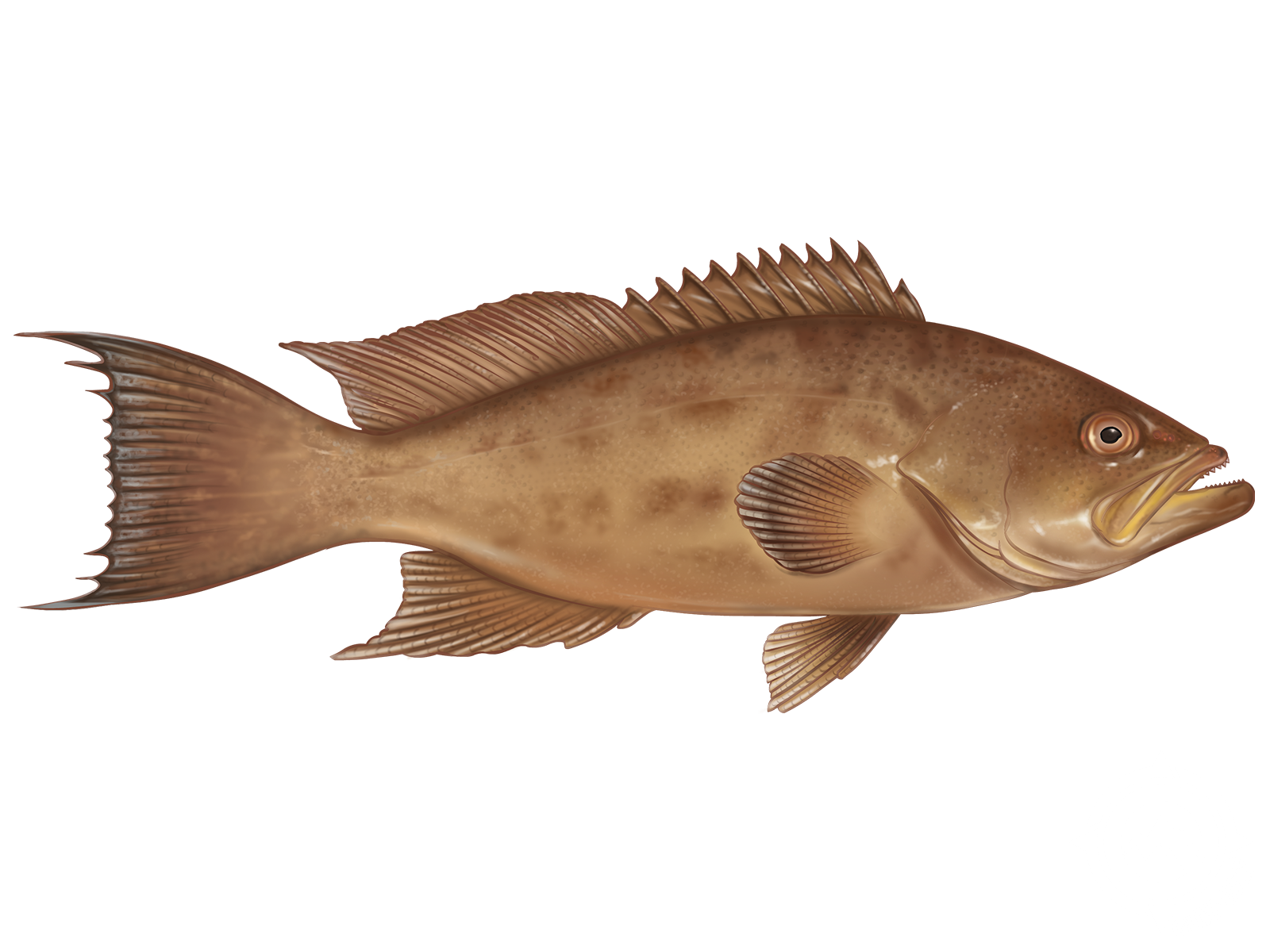
Scamp grouper are smaller cousins to the gag grouper but just as tasty and fun to catch. They prefer deeper water, usually 80 to 200 feet, and they're more common in the winter months. Scamp have a distinctive brownish color with darker blotches, and they fight harder than their size suggests. Like all grouper, they head straight for the bottom when hooked, so you need to keep steady pressure on them. They're fantastic table fare and are often considered even better eating than their larger gag group
 5.0(3 Reviews)
 Private Trip
 Offshore Fishing
 West Palm Beach


 Four-hour beginner-friendly fishing charter accommodates up to six guests