Crabbing Charter – $100 Winchester Bay
Captain Mark LaDuke knows Winchester Bay's crab grounds like the back of his hand, and he's ready to share that knowledge with you on a dedicated crabbing charter that puts Dungeness crab front and center. Forget the rush of chasing fish – this trip is all about the steady rhythm of pulling pots and the satisfying weight of keeper-sized crabs hitting the deck. At just $100 per person with a two-person minimum, you're getting access to some of Oregon's most productive crab waters without breaking the bank. Mark runs these charters aboard his 2018 Hewescraft, a boat built for Oregon's coastal conditions and equipped with the electronics you need to work the best spots.
What to Expect on the Water
This isn't your typical combination trip where crabbing gets squeezed in between fishing runs. Mark dedicates the entire day to working crab pots, which means more time over productive grounds and better chances of filling your limit. The trip launches from Salmon Harbor's Tuesday main boat ramp at T Dock, putting you just minutes away from the bay's prime crab habitat. Winchester Bay offers that perfect mix of protected waters and tidal flow that Dungeness crabs love, especially around the deeper channels and rocky structure near the jetties. Mark's 2018 Hewescraft handles these waters with ease, and the GPS and fish finder onboard help pinpoint the exact spots where crabs congregate. You'll spend your day moving between pot sets, checking gear that's been soaking in the best locations, and learning the subtle art of reading water for crab sign.
Gear Setup & Crabbing Methods
Mark provides all the crabbing gear, so you can leave the pots and rings at home. He runs a mix of standard crab pots and ring nets, depending on conditions and what's producing best that day. The GPS unit lets him mark productive spots and return to them trip after trip, while the fish finder helps identify the bottom structure and depth changes that attract crabs. Winchester Bay's crabbing revolves around working the tide changes, and Mark times his pot pulls to coincide with peak crab movement. You'll learn to read the gear as it comes up – feeling for that telltale weight that means crabs in the pot, and watching for the subtle differences in how the line behaves when there's something worth hauling aboard. The measuring and sexing process becomes second nature once you get the hang of it, and Mark walks first-timers through the regulations to make sure everything goes by the book.
Target Species Breakdown
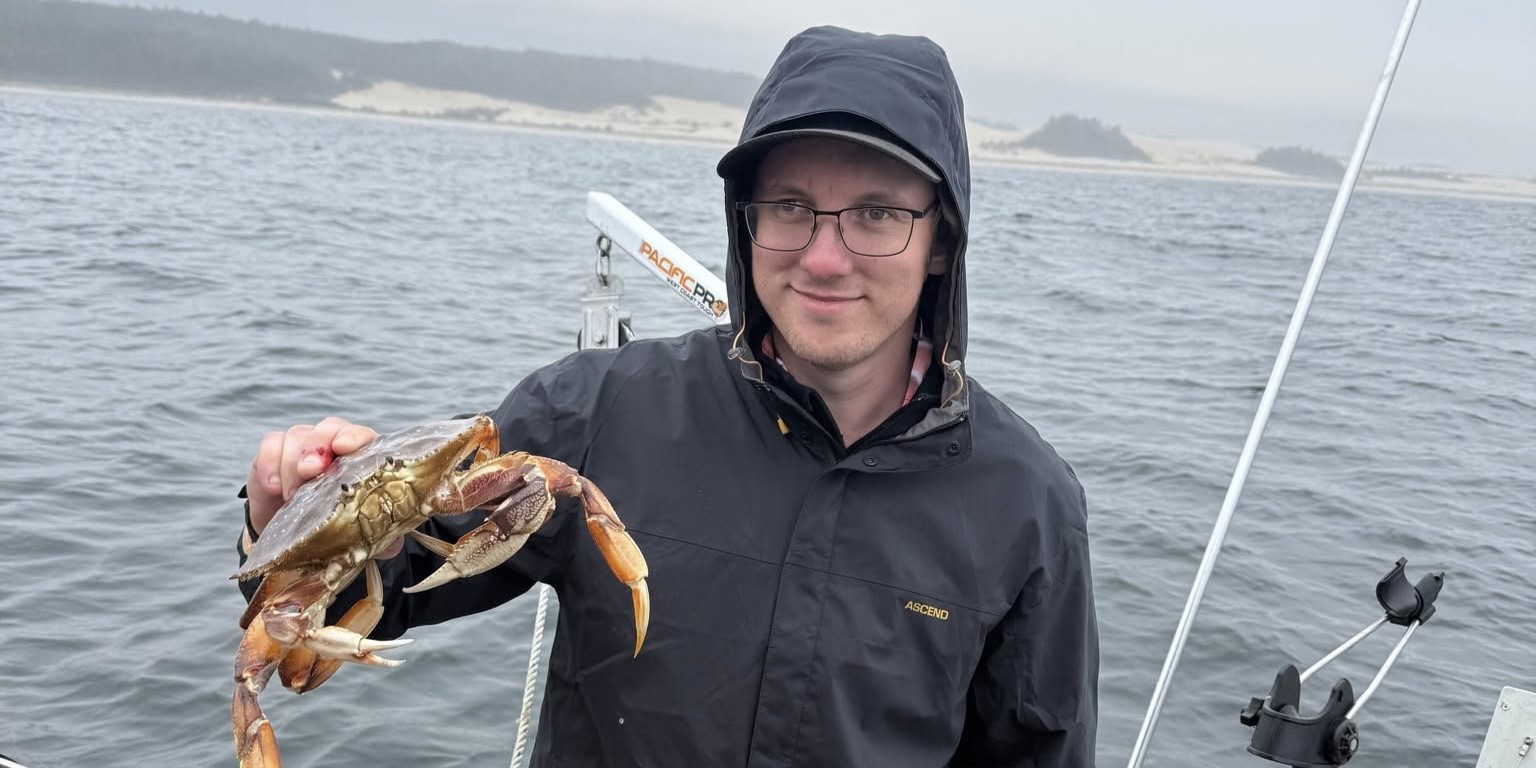
Dungeness crab are the stars of this show, and Winchester Bay produces some beauties. These crabs typically run 6-7 inches across the shell in the bay, with the occasional monster pushing 8 inches or better. Male crabs only – that's the regulation – and they need to measure at least 5¾ inches across the widest part of the shell to be legal keepers. What makes Dungeness crab so appealing to target is their predictable behavior around structure and tide changes. They move into shallower water to feed during certain tide phases, making them easier to intercept with properly placed gear. The meat quality from Winchester Bay crabs is top-notch thanks to the mix of fresh and salt water, plus the abundant food sources in the estuary. Peak season typically runs from December through August, though regulations can shift year to year. These crabs are ambush feeders that rely on scent to locate food, which is why fresh bait and proper pot placement make such a difference in your success rate.
Local Waters & Seasonal Patterns
Winchester Bay sits at the mouth of the Umpqua River, creating an estuary environment that's absolutely perfect for crab habitat. The mix of tidal influence and freshwater input creates the kind of nutrient-rich conditions that support healthy crab populations year-round. Mark focuses his efforts on the deeper channels and drop-offs where crabs stage during different tide phases, particularly around the areas where the main river channel meets the bay's broader waters. The jetty systems on either side of the bay entrance create additional structure and current breaks that concentrate both bait and crabs. Seasonal patterns play a huge role in crab behavior here – winter storms can push crabs into deeper, more protected areas, while spring and summer see them spread out across the bay's flats and edges. Water temperature and clarity both factor into crab activity levels, and Mark adjusts his approach based on current conditions rather than sticking to the same spots regardless of what's happening.
Planning Your Crabbing Trip
Before you step aboard, make sure you've got your Oregon shellfish license sorted out – it's required for everyone participating, and Marine Patrol takes licensing seriously in these waters. The two-person minimum keeps the trip economical while ensuring you've got help working the gear when things get busy. Mark's operation runs these dedicated crab charters as conditions allow, and booking ahead gives you the best shot at securing your preferred dates. Winchester Bay can get busy during peak crabbing season, so having an experienced captain who knows the less obvious productive spots makes a real difference in your success. The $100 per person rate includes all gear and Mark's local knowledge, but you'll want to bring your own cooler and ice for the trip home. Consider the tides when planning your trip – while Mark works around the conditions, certain tide phases definitely produce better crabbing than others.
Time to Book Your Spot
Mark LaDuke's dedicated crabbing charters offer exactly what serious crabbers want – focused time over productive water with a captain who knows Winchester Bay inside and out. At $100 per person, you're getting access to prime crab grounds, quality gear, and the kind of local expertise that makes the difference between a good day and a great one. The 2018 Hewescraft provides a stable, comfortable platform for working gear, while the GPS and electronics ensure you're fishing the most productive spots rather than just hoping for the best.
 Shared Trip
 Inshore Fishing
 Winchester Bay
 Dungeness crab pulling adventure in productive Winchester Bay waters