Private Matagorda Bay Duck Hunting
When it comes to world-class waterfowl hunting along the Texas coast, few spots can match what Matagorda Bay brings to the table. No Slack Guide Service has been putting hunters on birds in these waters for years, and there's a good reason we keep coming back. The shallow flats, protected coves, and abundant food sources create the perfect storm for duck hunting success. From September through January, this bay system hosts everything from early-season teal to late-arriving mallards and pintails. You'll be hunting with guides who know every pothole, grass line, and flight pattern in the area. We're talking about prime real estate where ducks want to be, not just where they might show up.
Inside the Hunt
Your hunt starts well before sunrise, which is exactly how every serious duck hunter wants it. We'll meet at the launch and get boats loaded with decoys, blinds, and all the gear needed for a successful morning. The Matagorda Bay area offers diverse hunting opportunities - some days we're setting up in shallow marsh ponds, other mornings we're working the open bay flats where ducks raft up to feed. Weather plays a huge role in our strategy, and that's where having experienced guides makes all the difference. Cold fronts push birds south, wind direction determines flight patterns, and tide levels affect where ducks want to feed. Your guides read these conditions like a book and adjust accordingly. Expect to be in chest-deep water at times, which is why those chest waders are absolutely essential. Hip waders just won't cut it in this country. We accommodate up to four hunters per trip, keeping groups small so everyone gets quality shooting opportunities and personalized attention from the guides.
Tracking Tips & Terrain
Matagorda Bay hunting is all about reading the birds and adapting to conditions. The terrain here ranges from open water flats to protected marsh channels, each requiring different decoy spreads and calling techniques. In the early season, we're often working teal over small ponds with tight decoy sets and minimal calling - these birds respond better to movement than sound. As the season progresses and bigger ducks arrive, we spread out larger decoy patterns on the open flats and use more aggressive calling sequences. Your guides carry a full arsenal of calls, from wood duck squeals to pintail whistles, and they know exactly when to lay on the calling and when to stay quiet. Concealment is critical in this clear water environment. We use layout blinds, vegetation, and natural cover to disappear into the landscape. The key is staying still and letting your guide do the calling - they know the local birds' behavior patterns and what it takes to finish them. Weather gear is crucial because conditions can change fast on the coast. Layers are your friend, and quality rain gear can make or break a hunt when coastal storms roll through.
Target Game Breakdown
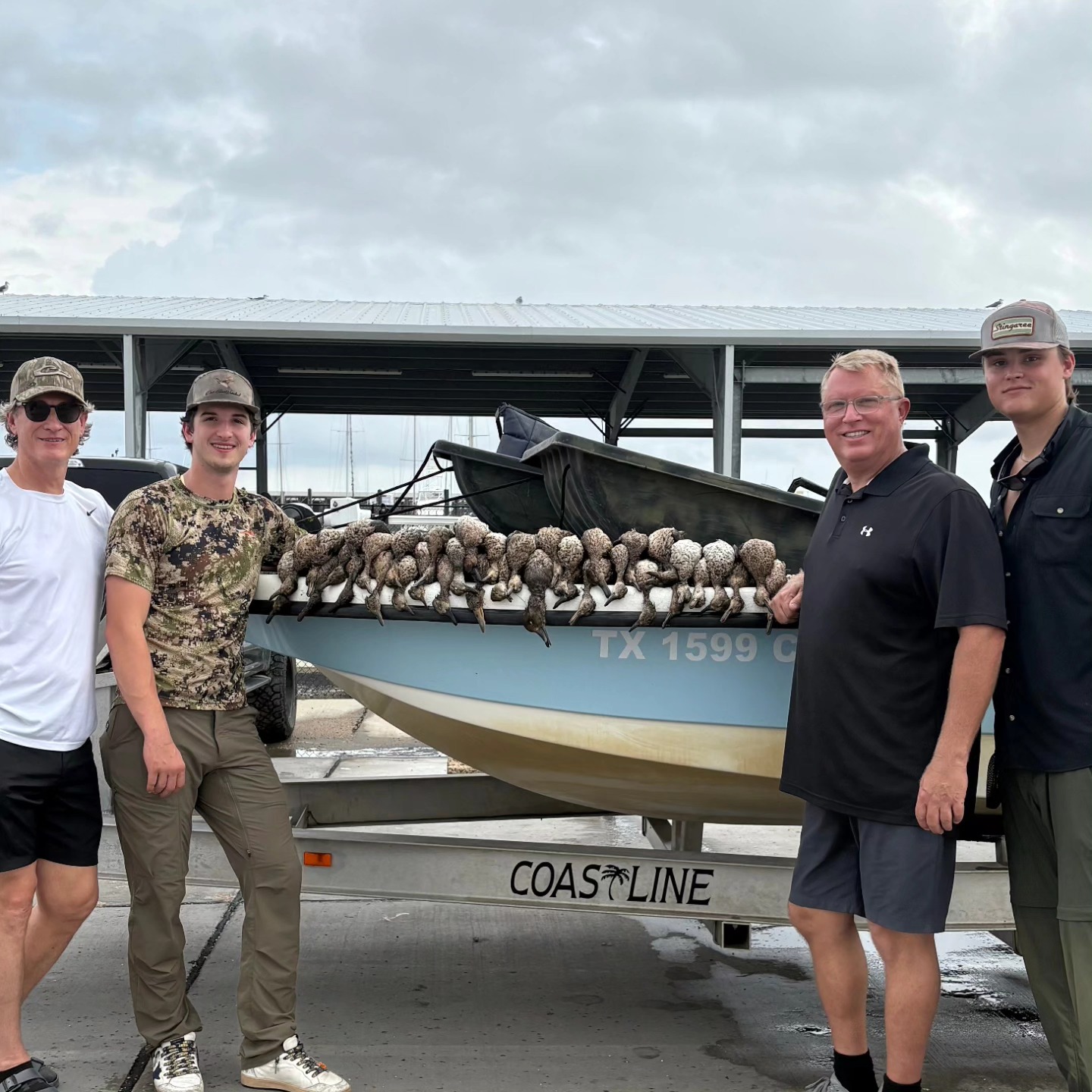
Blue-winged teal are the stars of the early season show, typically arriving in September when the weather's still warm. These fast-flying ducks travel in tight flocks and provide some of the most challenging wing shooting you'll find. They're smaller than other puddle ducks but make up for size with sheer numbers and acrobatic flight patterns. Teal love the shallow, weedy areas of Matagorda Bay where they can tip-feed on aquatic vegetation. The excitement comes from their unpredictability - one minute the sky is empty, the next you've got fifty teal buzzing the decoys at Mach 2.
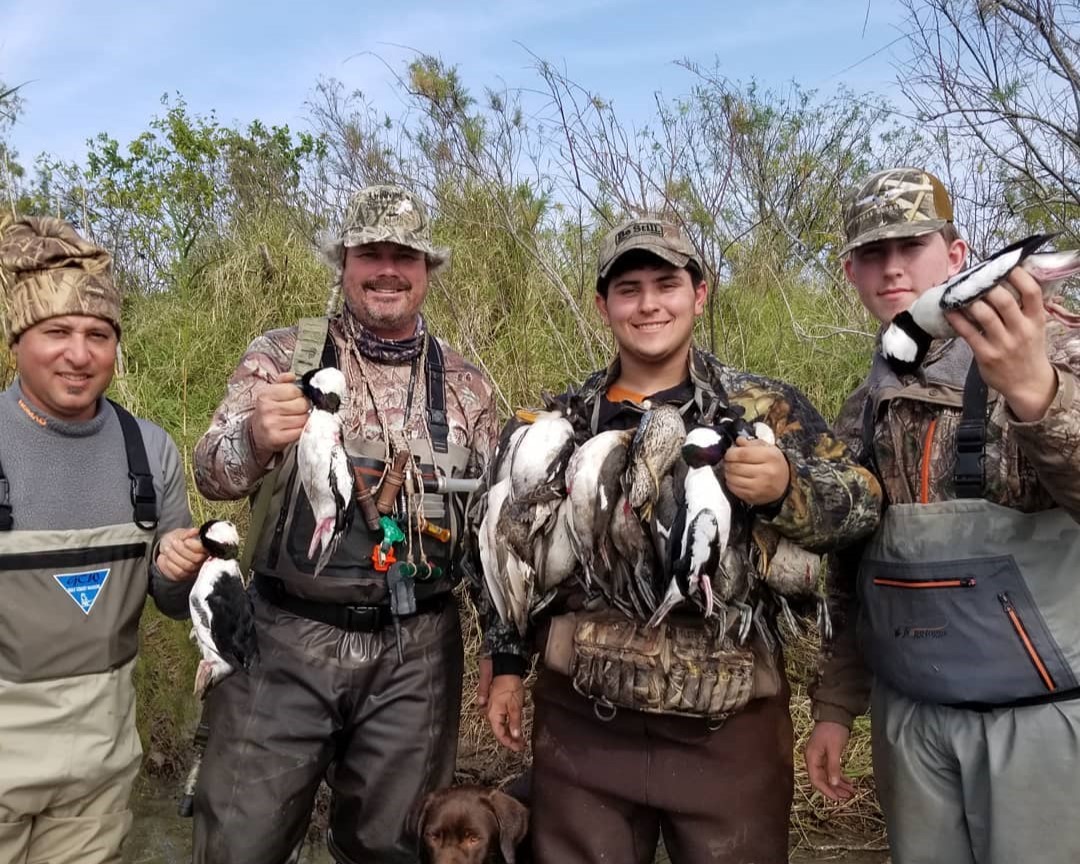
Mallards show up as temperatures drop, usually hitting their stride from November through January. These are the classic duck hunting birds that most hunters dream about - big, beautiful, and vocal. Matagorda Bay mallards can be call-shy compared to their inland cousins, so your guides use subtle hen calls and feeding chuckles to work birds in close. When a greenhead commits to the spread with wings cupped and feet down, that's hunting at its finest. These birds provide excellent eating and make for trophy photos that'll hang on the wall for years.
Pintails arrive with the cold fronts, bringing their distinctive long necks and elegant appearance to the bay. These ducks are spooky and require perfect shooting form - they're big targets but tough birds that require good shot placement. Pintails often feed in the open flats where decoy visibility is key. Your guides set large spreads with plenty of movement to catch their attention from long distances. When pins work a spread properly, circling high before committing to the decoys, it's one of waterfowling's most beautiful sights.
Gadwall, wigeon, and other puddle ducks round out the bag throughout the season. Each species brings something different to the hunt - wigeon with their distinctive whistling calls, gadwall with their subtle beauty and excellent table fare. The diversity keeps every hunt interesting because you never know what might appear over the decoys next.
Book Your Next Tag
Matagorda Bay duck hunting with No Slack Guide Service delivers everything serious waterfowlers want - knowledgeable guides, prime hunting grounds, and consistent action throughout the season. Whether you're a seasoned hunter looking to explore new territory or someone newer to the sport wanting to learn from experienced guides, this hunt provides the perfect combination of challenge and success. The coastal environment offers a different hunting experience than inland spots, with unique species behavior patterns and hunting techniques you won't find elsewhere. Book early because the best dates fill up fast, especially during peak migration periods when weather patterns align perfectly. Your guides handle all the scouting, decoy setup, and local knowledge - you just need to show up ready to hunt with proper gear and a current Texas hunting license. This isn't just another guided hunt; it's your chance to experience one of Texas's premier waterfowl destinations with guides who live and breathe duck hunting. The memories and skills you'll take home are worth every penny of the investment.
 Private Trip
 Bird hunting
 Matagorda, TX
 Guided waterfowl hunting in prime Matagorda Bay grounds