Private Nature Tours - Bonita Springs Fishing
Looking for something different on the water? Our private nature tours take you through some of Southwest Florida's most productive fishing waters while giving you a front-row seat to the area's wildlife show. The Cocohatchee River Estuary and Estero Bay aren't just beautiful - they're feeding grounds for everything from snook to tarpon, and the same shallow flats that attract baitfish also bring in dolphins, manatees, and every bird species you can imagine. With space for up to six people, this trip works perfect for families wanting to mix fishing with wildlife watching, or anglers who appreciate the bigger picture of what makes these waters so special.
What to Expect on the Water
We'll be running the shallow backcountry where the Gulf meets the estuaries, and trust me - this is where the magic happens. The Cocohatchee and Estero Bay system creates the perfect nursery habitat that draws in everything from juvenile gamefish to massive tarpon during their seasonal migrations. You'll be fishing the same grass flats and oyster bars where dolphins are working bait schools, and don't be surprised when we spot manatees cruising the channels or roseate spoonbills feeding in the shallows. The water here averages 2-8 feet deep, so we're sight fishing most of the time. You'll see everything before you cast to it, which makes for some pretty exciting moments when a big snook or redfish cruises into range. The tidal flow through these systems keeps the water clean and brings fresh bait in twice a day, so the fishing stays consistent while the wildlife activity never stops.
Techniques & Tackle Setup
We fish light tackle in these waters - 7-foot medium action spinning rods with 20-30 lb braid and fluorocarbon leaders. The clear, shallow water means fish are spooky, so we keep our distance and make long, accurate casts. Live shrimp under popping corks work great for everything from snook to trout, while soft plastics on jig heads let you work the grass flats without hanging up constantly. When we're sight fishing, we'll switch to topwater plugs or shallow-running jerkbaits that let you place your bait right in front of cruising fish. The key here is being quiet and patient - we use the trolling motor to position the boat, then let the current do the work while we watch for fish movement. Between fishing spots, we'll drift the channels looking for dolphin pods, bird activity, or those classic redfish tails sticking up in skinny water. The nature watching actually makes you a better angler because you start reading the water like the wildlife does.
Target Species You'll Hook
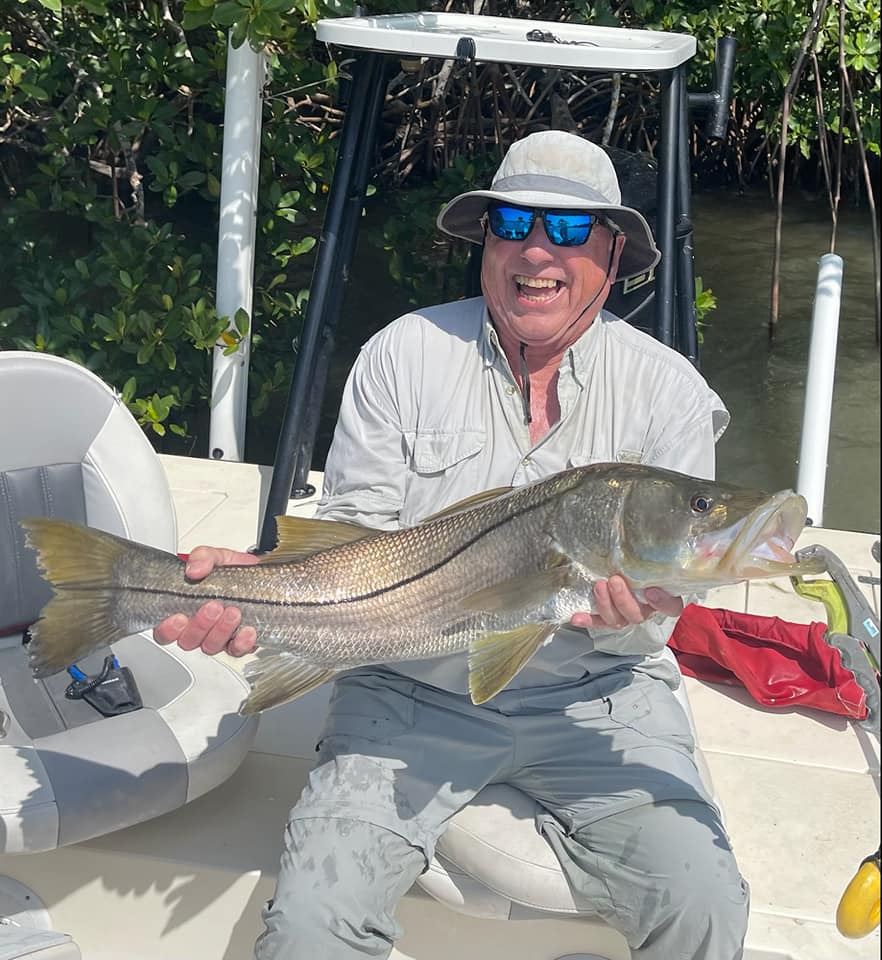
Snook are the kings of this estuary system, and they love the structure around mangrove points and oyster bars. These fish average 20-28 inches here, with slot-size fish being common and the occasional 30+ inch trophy making an appearance. They're ambush predators that sit in the shade waiting for bait to drift by, so accurate casting to cover is crucial. Best action happens during moving water, especially the last two hours of incoming tide when shrimp and baitfish get pushed into the shallows. What makes snook special is their explosive strike and acrobatic fight - they'll jump, gill-rattle, and make powerful runs toward structure. The mangrove snook here are particularly aggressive because they're feeding in such a rich environment.
Redfish cruise these flats year-round, and spotting them in shallow water never gets old. They'll range from schoolie-size 18-inchers up to bull reds pushing 35+ inches, depending on the season and location. Spring and fall bring the biggest concentrations when reds move through the passes, but resident fish stay in the backcountry all year. You'll find them tailing in 12 inches of water or cruising the edges of grass beds looking for crabs and shrimp. Redfish eat with their heads down, so you need to lead them and let your bait sink to their level. Their fight is all about power and endurance - they'll make long, steady runs and use their broad sides to leverage against your drag.
Spotted seatrout are the bread and butter of these grass flats, with good numbers of 14-18 inch fish and occasional 20+ inch gator trout that'll surprise you. They school up over sandy potholes in the grass beds and respond well to live shrimp or soft plastics worked slowly along the bottom. Trout bite best during cooler months when they move into deeper holes and channels, but you'll find them scattered across the flats most of the year. They're great fish for beginners because they bite consistently and fight on the surface with some nice head-shaking action.
Time to Book Your Spot
This trip gives you the best of both worlds - quality fishing in some of Florida's most productive backcountry waters, plus wildlife encounters that'll have you reaching for your camera as much as your fishing rod. The shallow water fishing here is world-class, but seeing it through the lens of the complete ecosystem makes every trip memorable. Whether you're an experienced angler wanting to try sight fishing or a family looking to experience Florida's natural side while still getting some fish in the boat, this top-rated charter delivers something special. The Cocohatchee and Estero Bay system is trending as one of Southwest Florida's premier fishing destinations, and for good reason - the combination of diverse habitat, consistent fish populations, and abundant wildlife creates fishing experiences you just can't find in deeper offshore waters. Book your private nature tour and discover why this backcountry fishery keeps anglers and nature lovers coming back season after season.

 Private Trip
 Backcountry Fishing
 Bonita Springs, FL
 Private nature tours through Cocohatchee River Estuary and Estero Bay