Thermal Hog Hunting in Texas
Picture this: you're crouched low in the Texas brush, watching your thermal scope light up with heat signatures moving across the landscape. What you're seeing isn't just one or two hogs – it's an entire sounder, maybe fifteen or twenty animals, completely unaware of your presence. This is thermal hog hunting at its finest, and it's exactly what we deliver at Texas Wildlife and Land Management. Our night hunts combine cutting-edge thermal technology with good old-fashioned hunting skills to give you shots at wild hogs that most hunters only dream about. With no bag limits and hogs active year-round, this isn't your typical hunt where you might go home empty-handed.
Inside the Hunt
When you roll up to our property, you'll quickly realize this isn't your grandfather's hog hunt. We're talking state-of-the-art thermal scopes that turn pitch-black Texas nights into a hunter's paradise. The beauty of thermal hunting is that hogs can't hide from heat – they show up like glowing ghosts against the cool ground. Our guides know these properties like the back of their hand, and they've mapped out travel corridors, feeding areas, and bedding spots where hogs feel safe. That's where our drone technology comes into play. Before we even step foot in the field, we're scouting from above, pinpointing exactly where the action is. You'll spend your evening stalking through mesquite and oak mottes, moving quietly from one vantage point to the next. The atmosphere is electric – there's something about hunting under a blanket of Texas stars that gets your blood pumping. Every shadow could be your next target, and with thermal scopes, you'll spot movement that would be completely invisible to the naked eye. This is a solo experience, so it's just you, your guide, and the hogs. No crowd, no pressure from other hunters – just pure focus on the task at hand.
Tracking Tips & Terrain
Our thermal scopes are top-of-the-line units that detect heat signatures up to several hundred yards out, depending on conditions. The technology is so advanced that you can distinguish between different animals based on their heat patterns – hogs run hotter than deer, and mature boars show up differently than sows with piglets. We'll teach you how to read what you're seeing through the scope, because thermal hunting has its own learning curve. The terrain varies across our properties, from thick bottom land near creek beds to more open pastures where hogs come out to root and feed. Each area requires different stalking techniques. In the thick stuff, we're moving slow and deliberate, using natural cover and staying downwind. In open areas, we can set up at longer distances and wait for hogs to move into our shooting lanes. Wind direction is crucial – hogs have an excellent sense of smell, and even with all our technology, they'll bust you if the wind shifts wrong. Our guides carry wind checkers and constantly monitor conditions. Shot placement is critical too, especially at night. We'll walk you through anatomy and discuss the best angles for clean, ethical kills. The thermal scope eliminates a lot of guesswork, but you still need to know where to aim for quick, humane harvests.
Target Game Breakdown
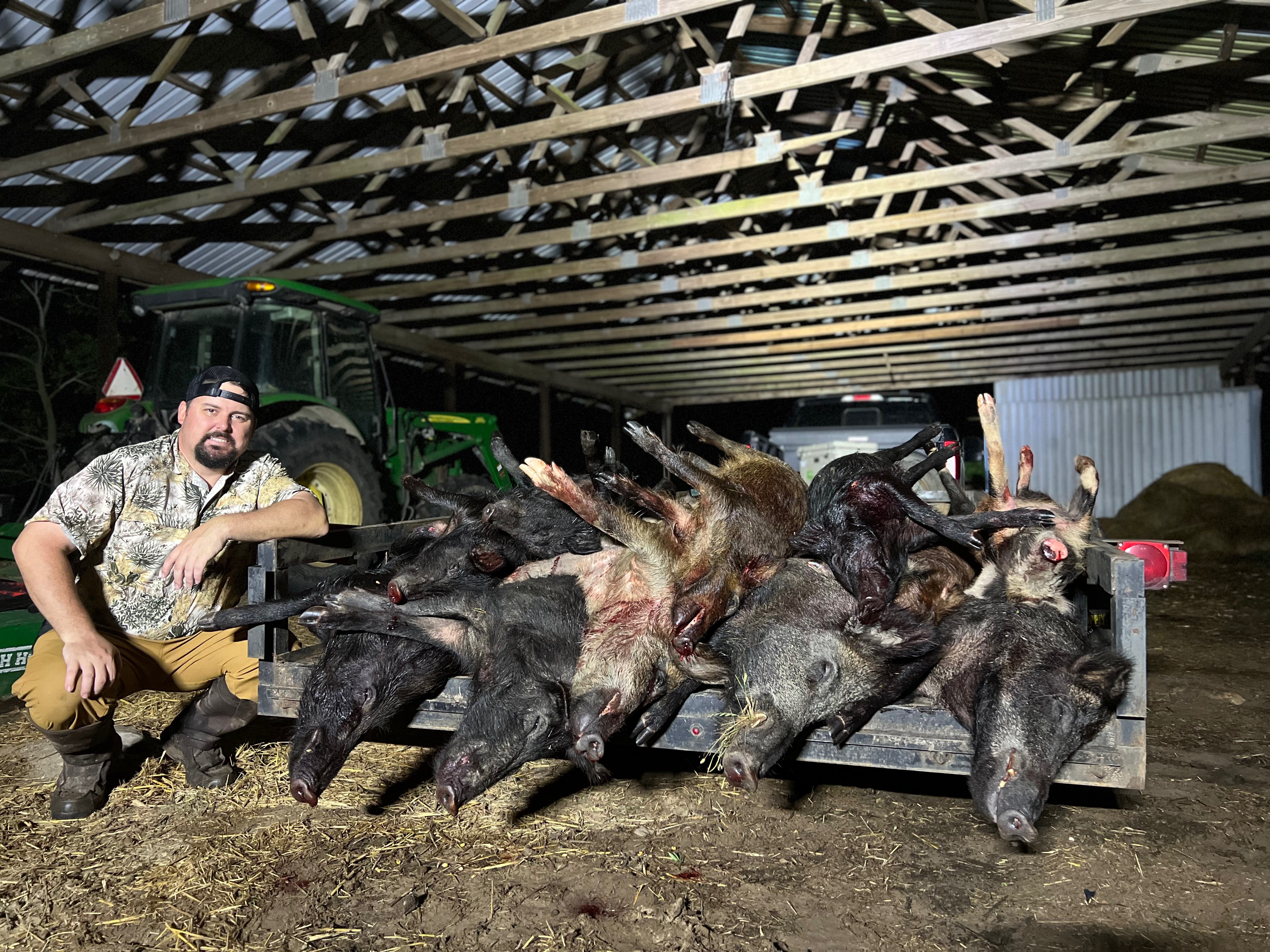
Wild hogs in Texas are basically year-round targets, but they're most active during cooler months when they're not dealing with extreme heat. These aren't the domestic pigs your grandparents raised – we're talking about true wild boars and feral hogs that have been living rough for generations. Mature boars can push 300 pounds or more, with thick shoulder shields and razor-sharp tusks that they're not afraid to use. Sows are typically smaller, running 150-200 pounds, but they're often more aggressive, especially when they have piglets nearby. What makes Texas hogs such a popular target isn't just their size – it's their behavior. They're destructive, intelligent, and adaptable. They'll tear up crop fields, destroy native vegetation, and compete with native wildlife for food sources. That's why there's no bag limit and no closed season. From a hunter's perspective, they're challenging because they're constantly on alert. Their hearing is sharp, their sense of smell is outstanding, and they're quick to spook if something doesn't feel right. But here's the thing – thermal hunting gives you a massive advantage. You can watch their behavior patterns, see how they interact with each other, and time your shots when they're relaxed and feeding. Spring and fall are prime times because hogs are more active in moderate temperatures. Summer hunting can be productive too, but you're dealing with heat and more insects. Winter is often the best because hogs are moving more during daylight hours to stay warm, and they're easier to pattern around food sources.
Book Your Next Tag
This thermal hog hunt represents everything that's exciting about modern hunting in Texas. You're getting access to private land where hogs haven't been pressured by other hunters, combined with technology that turns night hunting into a legitimate strategy rather than a lucky accident. The no-limit policy means you can keep hunting as long as you're seeing animals and having success. Most hunters walk away with multiple hogs, and the meat is excellent if you're looking to fill the freezer. Beyond the hunting itself, you're contributing to land management and helping control a species that causes millions in agricultural damage across Texas each year. Every hog you harvest is one less animal destroying crops and competing with native wildlife. The solo format means this hunt is tailored specifically to your skill level and comfort zone. Whether you're an experienced thermal hunter or completely new to night hunting, our guides adjust the pace and techniques to match your abilities. Ready to experience thermal hog hunting that's light-years ahead of sitting in a blind with a spotlight? This hunt books up fast, especially during peak months, so don't wait around if you're serious about getting after Texas hogs with the latest technology.
 Private Trip
 Wild boar hunting
 Austin
 Advanced thermal scopes and drone technology locate hog groups