Night Diving Adventures in Florida Waters
There's something magical about dropping into Florida's warm waters as the sun sets and darkness takes over. SEA School & Travel's night diving course isn't just about seeing the ocean after dark – it's about discovering a completely different underwater world that comes alive when most divers have called it a day. This top-rated experience combines skill-building with pure adventure, teaching you essential night diving techniques while exploring Florida's renowned dive sites under the cover of darkness. With personalized one-on-one instruction, you'll master navigation, communication, and safety protocols that'll make you a more confident diver both day and night.
Beneath the Surface
Night diving transforms familiar Florida reef systems and wreck sites into alien landscapes where your dive light becomes your window into an active nocturnal world. The water feels different at night – calmer, more intimate, with that slight edge of excitement that comes from exploring the unknown. Your certified instructor will guide you through pre-dive preparations as daylight fades, covering hand signals that work in low visibility, proper light handling techniques, and buddy system protocols specific to night conditions. The small group size means you get individual attention on skills like compass navigation and natural navigation using bottom contours. Most night dives start just after sunset when there's still some ambient light filtering down, making the transition from day to night gradual and comfortable. You'll practice controlled descents, learn to move efficiently without stirring up sediment, and discover how marine life behaves completely differently once darkness falls.
Dive Brief & Gear Info
Your night diving setup includes specialized equipment that makes all the difference between a good dive and a great one. The primary light is your main source of illumination – usually a powerful LED system that cuts through the water with a bright, focused beam. You'll also carry at least two backup lights because redundancy is everything when you're 60 feet down in the dark. Navigation becomes critical at night, so you'll use both compass bearings and natural references like sand channels or reef formations to find your way. Communication shifts from basic hand signals to light signals – quick movements, covering and uncovering your beam, and using your light to point out marine life to your buddy. The gear briefing covers light maintenance, battery management, and proper ascent procedures using your safety stop as a final skills check. Florida's warm waters mean you can focus on technique rather than thermal protection, though many divers prefer a thin wetsuit for the slight buoyancy control it provides. Entry and exit procedures get special attention since boat ladders and shoreline navigation present different challenges in low light conditions.
Marine Life You'll See
Florida's night diving scene showcases marine behavior you'll never witness during daylight hours. Tarpon become the stars of many night dives, with these massive silver fish often reaching 6-8 feet in length as they cruise through dive lights like underwater giants. They're naturally curious about artificial light sources and will often circle divers repeatedly, creating those jaw-dropping encounters that make night diving addictive. Peak tarpon activity happens during warmer months from May through October when they're feeding aggressively and moving through Florida's coastal waters in large schools.
Nurse sharks transform from sleepy daytime bottom-dwellers into active nocturnal hunters, and encountering one gliding silently through your light beam never gets old. These gentle giants can reach 10-14 feet but pose no threat to divers – they're actually more curious at night and often approach closer than they would during day dives. Year-round residents in Florida waters, nurse sharks are most active during summer months when water temperatures peak and their prey is most abundant.
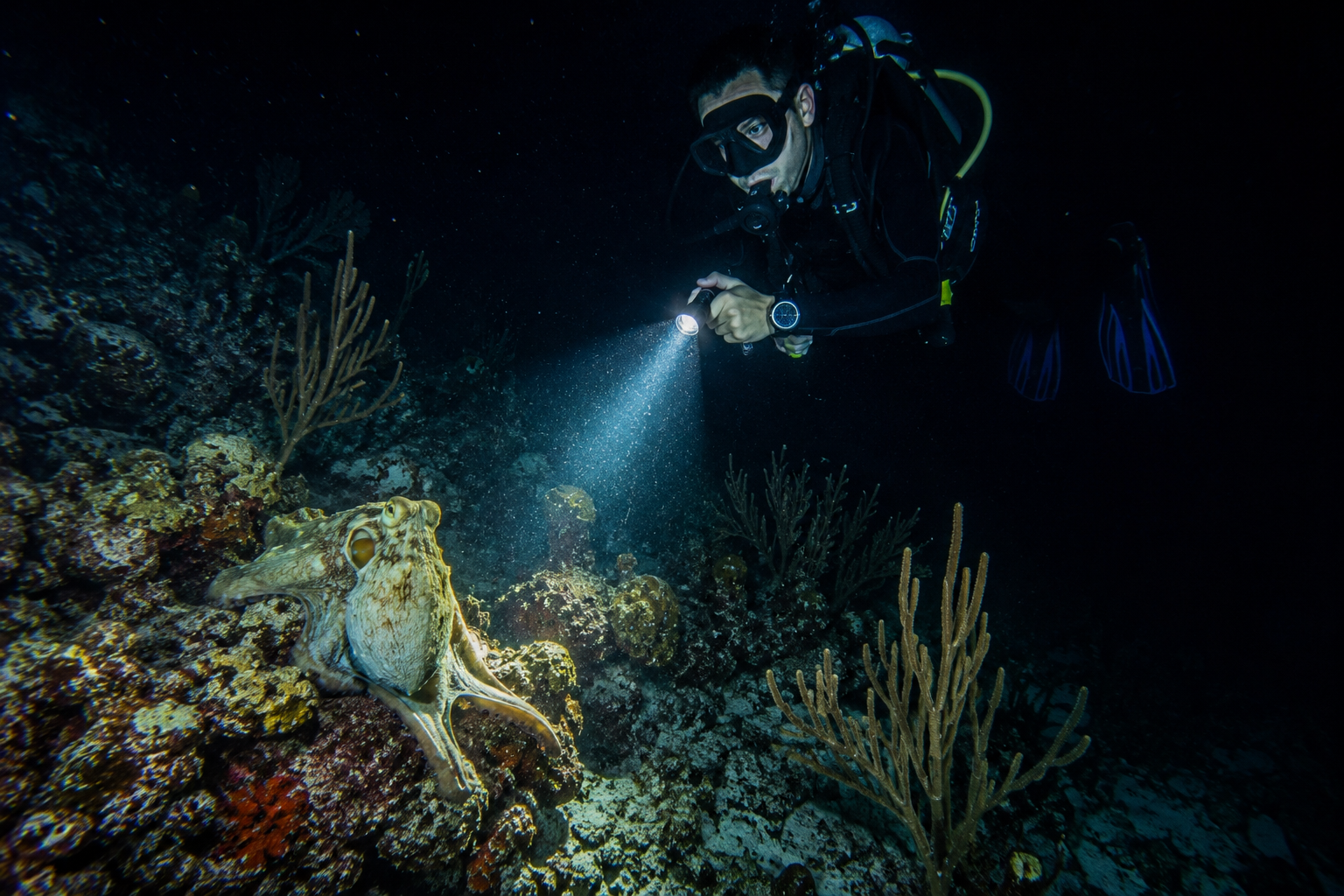
Octopi become the night dive superstars, emerging from crevices and coral formations to hunt for crabs and small fish. Florida's Caribbean reef octopus displays incredible color-changing abilities that seem even more dramatic under dive lights. These intelligent cephalopods can shift from camouflaged brown to bright red or white in seconds, and night divers often witness hunting behaviors and territorial displays rarely seen during daylight hours. They're active year-round but most easily spotted during cooler months when they venture further from protective cover.
Lobster activity peaks dramatically after sunset, with Florida spiny lobsters emerging from their daytime hiding spots to forage across the reef. Their antennae and spiny carapaces create distinctive silhouettes in dive lights, and observing their social behaviors and feeding patterns adds an educational element to night dives. Lobster season runs from August through March, making fall and winter night dives particularly rewarding for spotting these crustaceans in their natural hunting mode.
Plan Your Next Dive
Night diving represents one of those watershed moments in a diver's development – the point where you stop being a tourist underwater and start becoming a true explorer. This world-class training experience with SEA School & Travel gives you skills that'll enhance every future dive, whether you're exploring Caribbean walls, Pacific kelp forests, or continuing to discover Florida's diverse underwater landscapes. The personalized instruction format means you progress at your own pace, building confidence naturally while developing techniques that take most divers years to master. Florida's consistent water temperatures and diverse marine life make it the perfect classroom for night diving education, and the skills you learn here translate directly to diving conditions worldwide. Ready to see what you've been missing after dark? Reserve your spot for this customer favorite night diving course and discover why so many certified divers consider their first night dive the moment they truly fell in love with the sport.
 Shared Trip
 Scuba Diving
 Spring Hill, FL
 Night diving course teaches specialized underwater navigation techniques