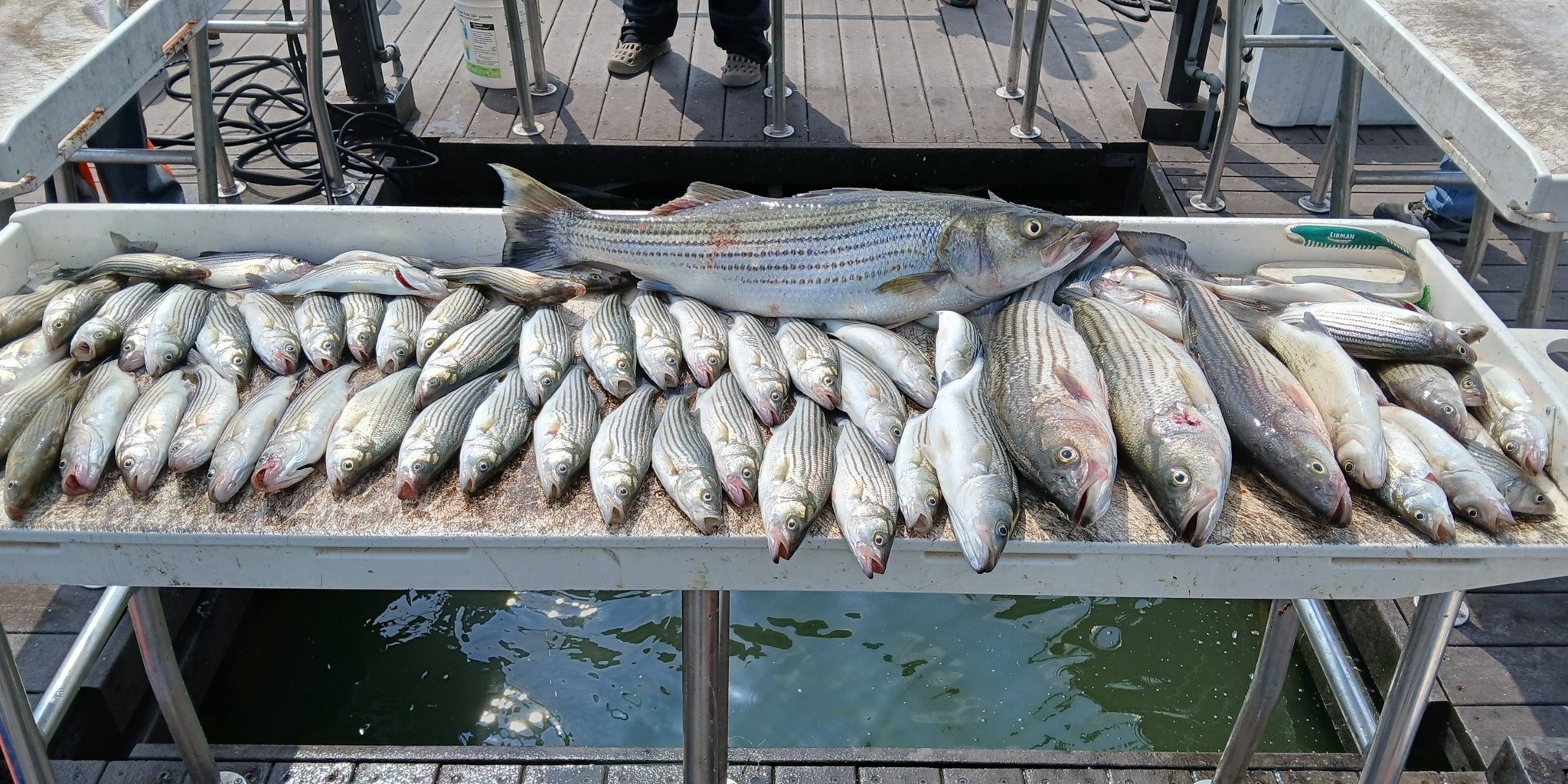
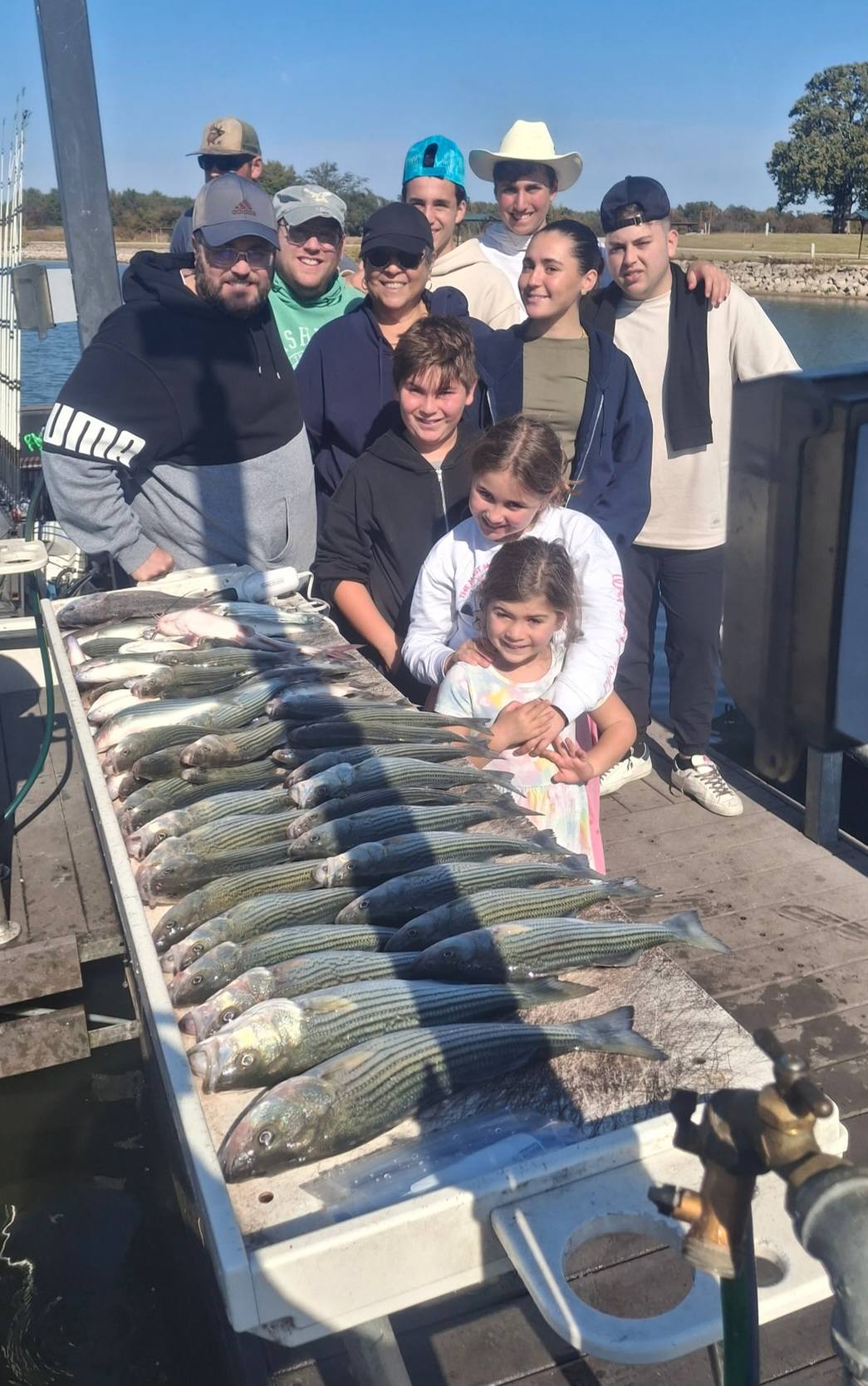
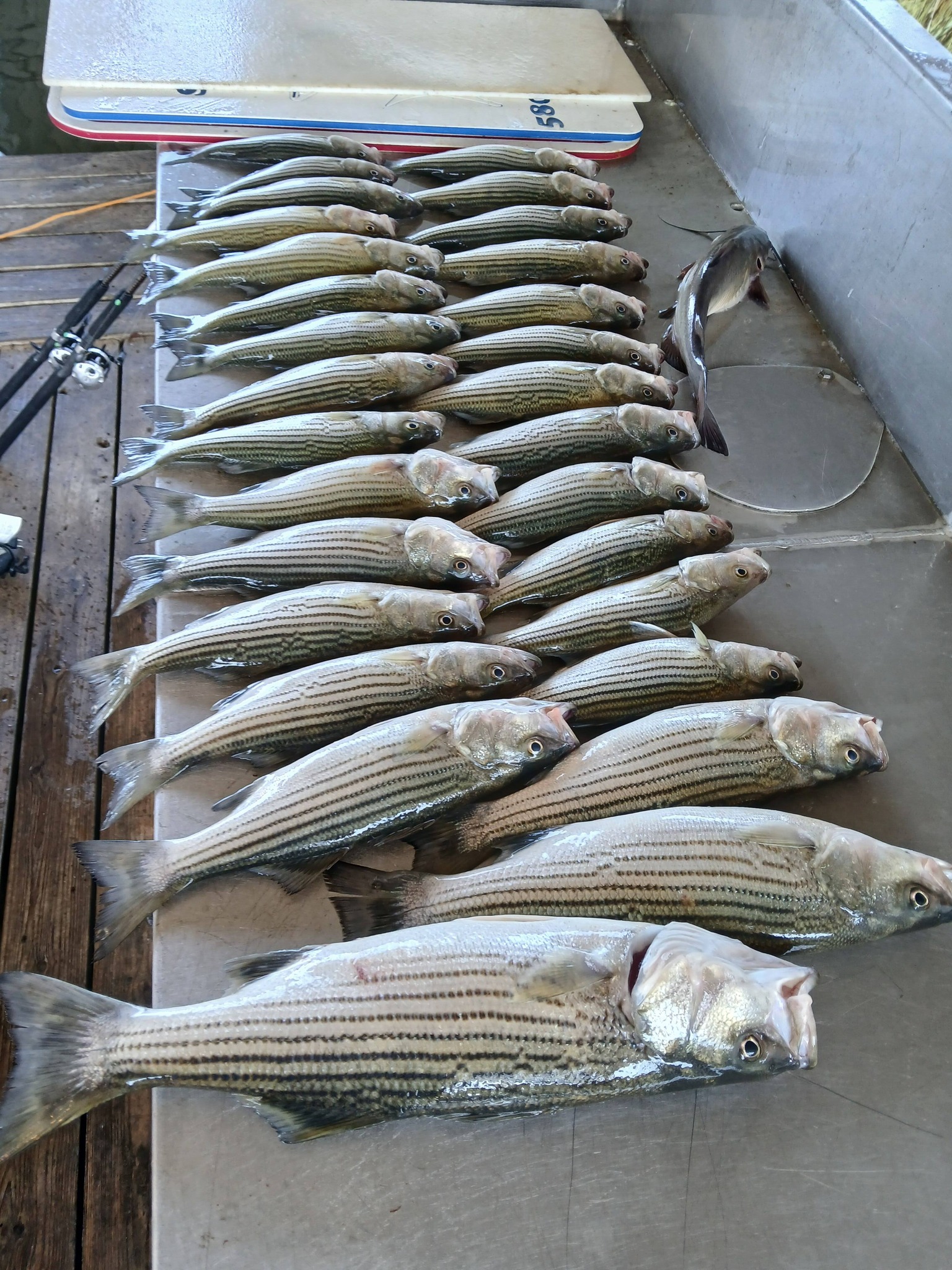
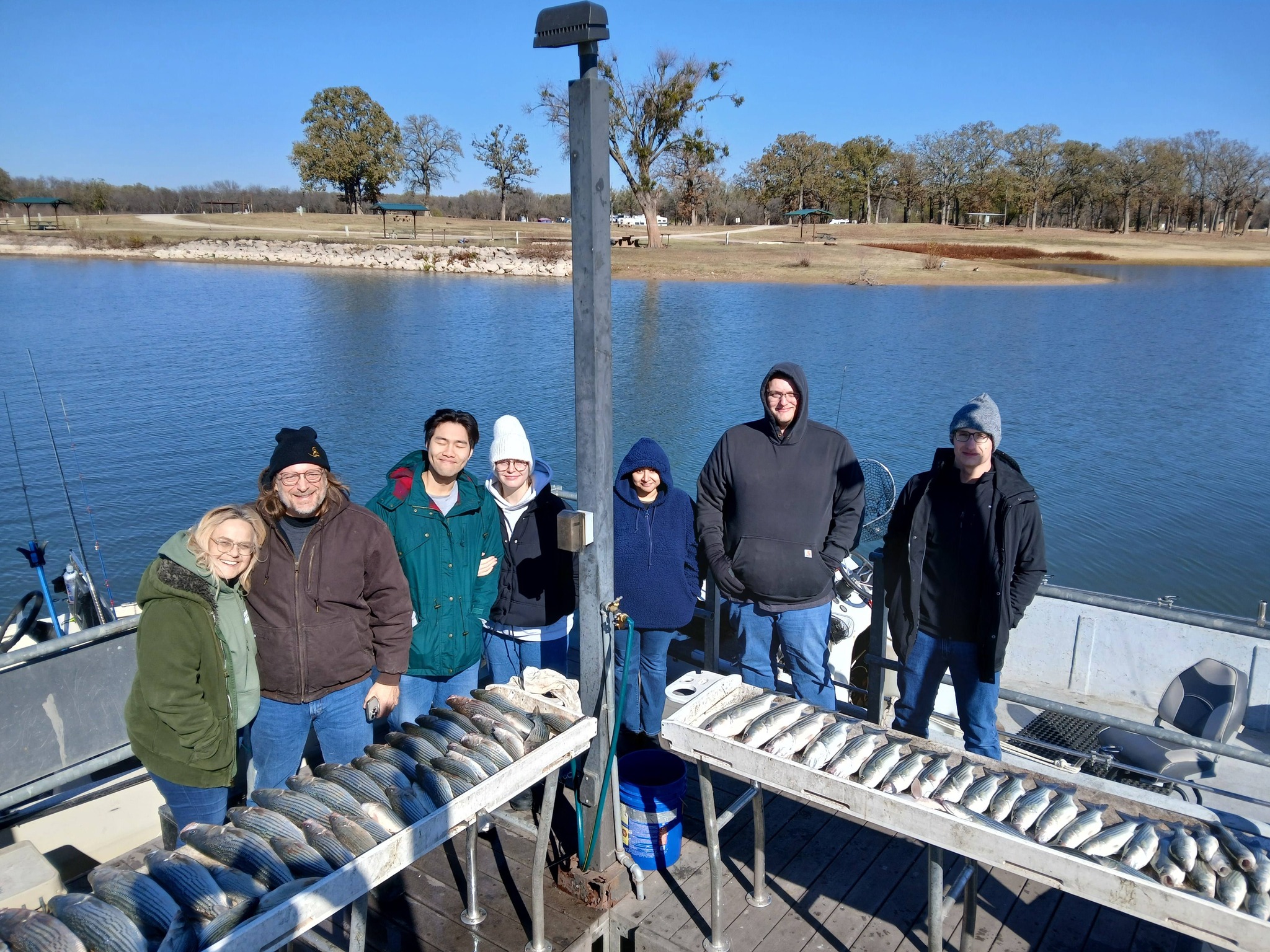
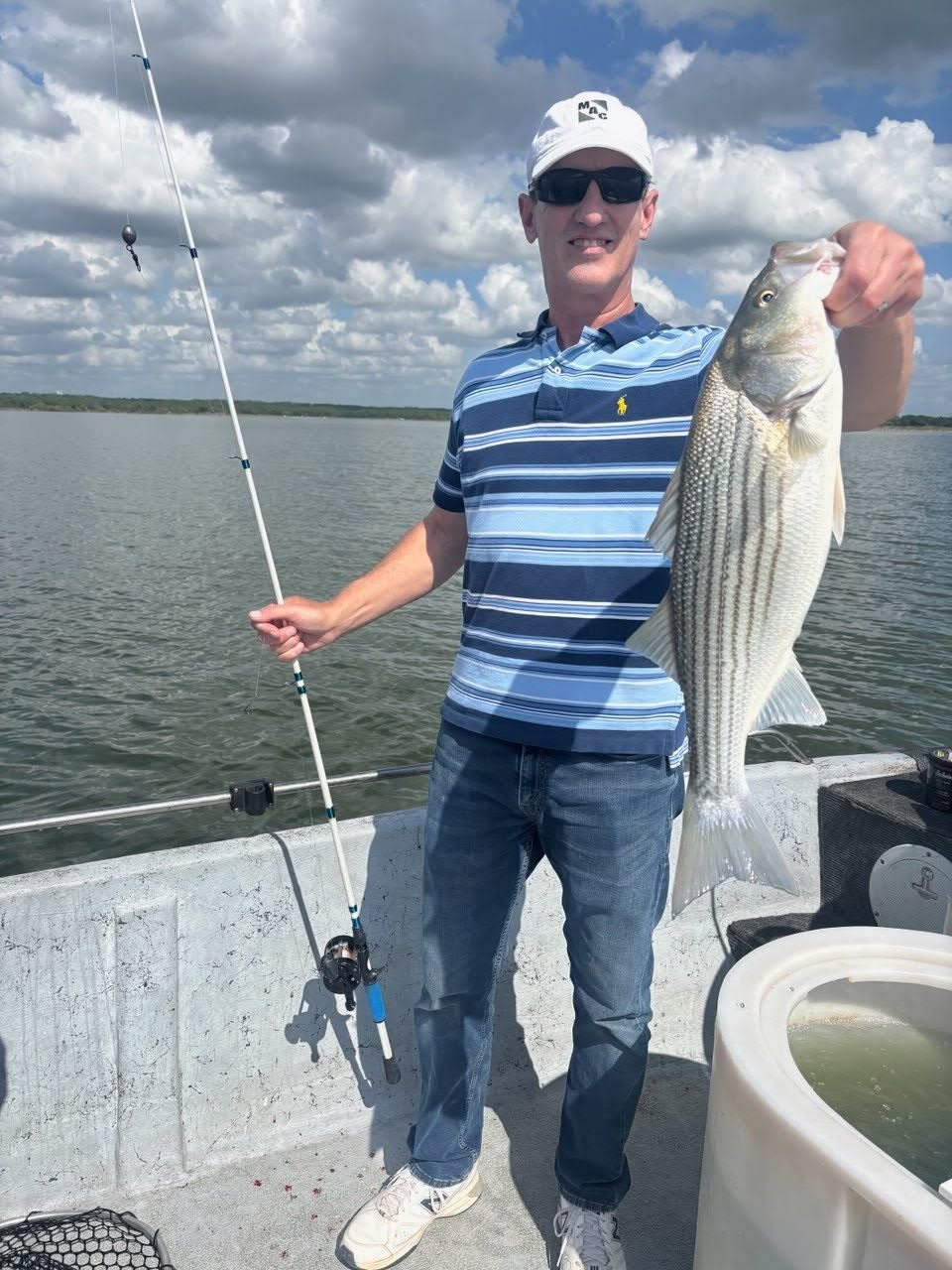
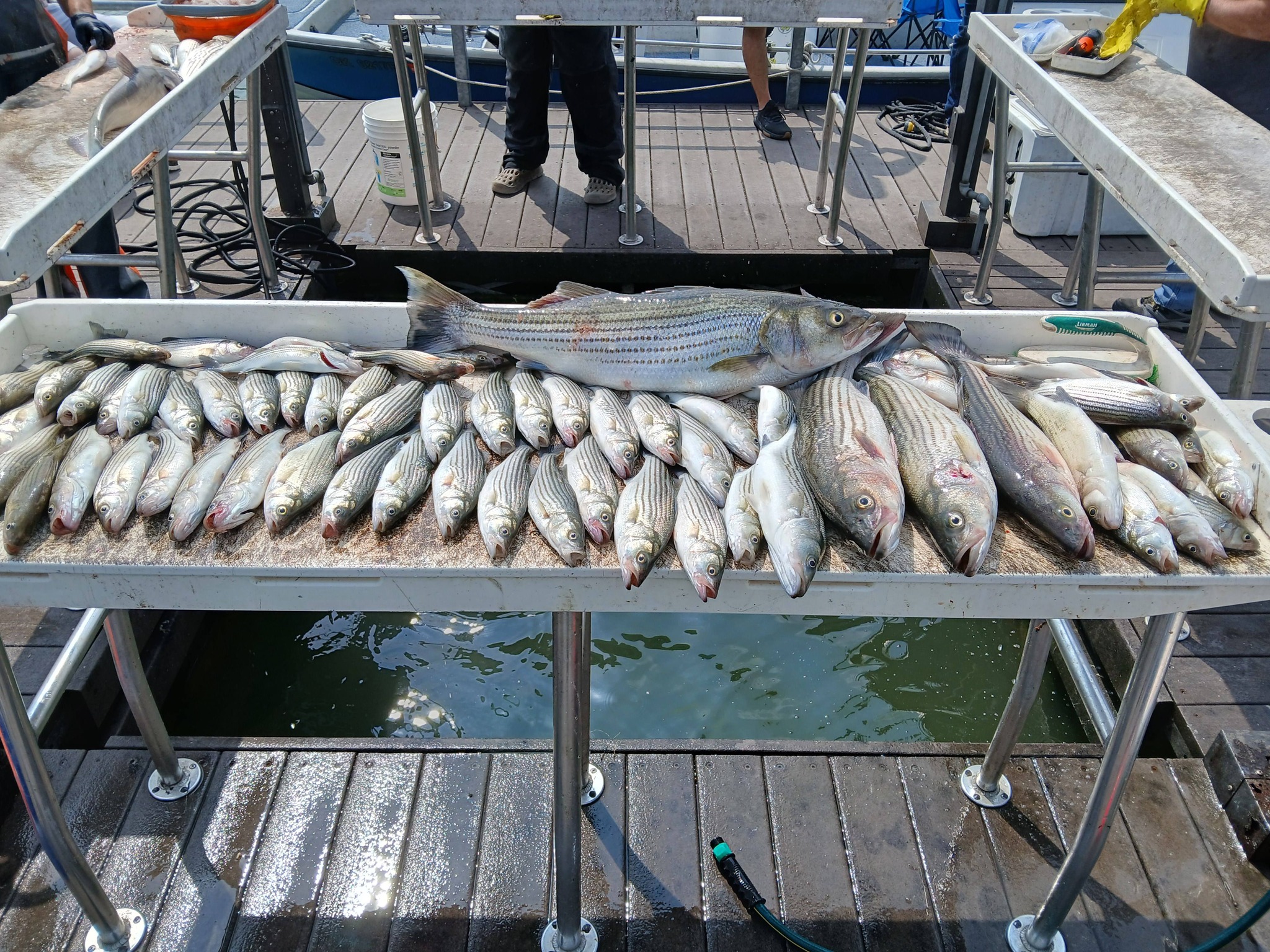
Lake Texoma Weekday Morning Striper Fishing Charter
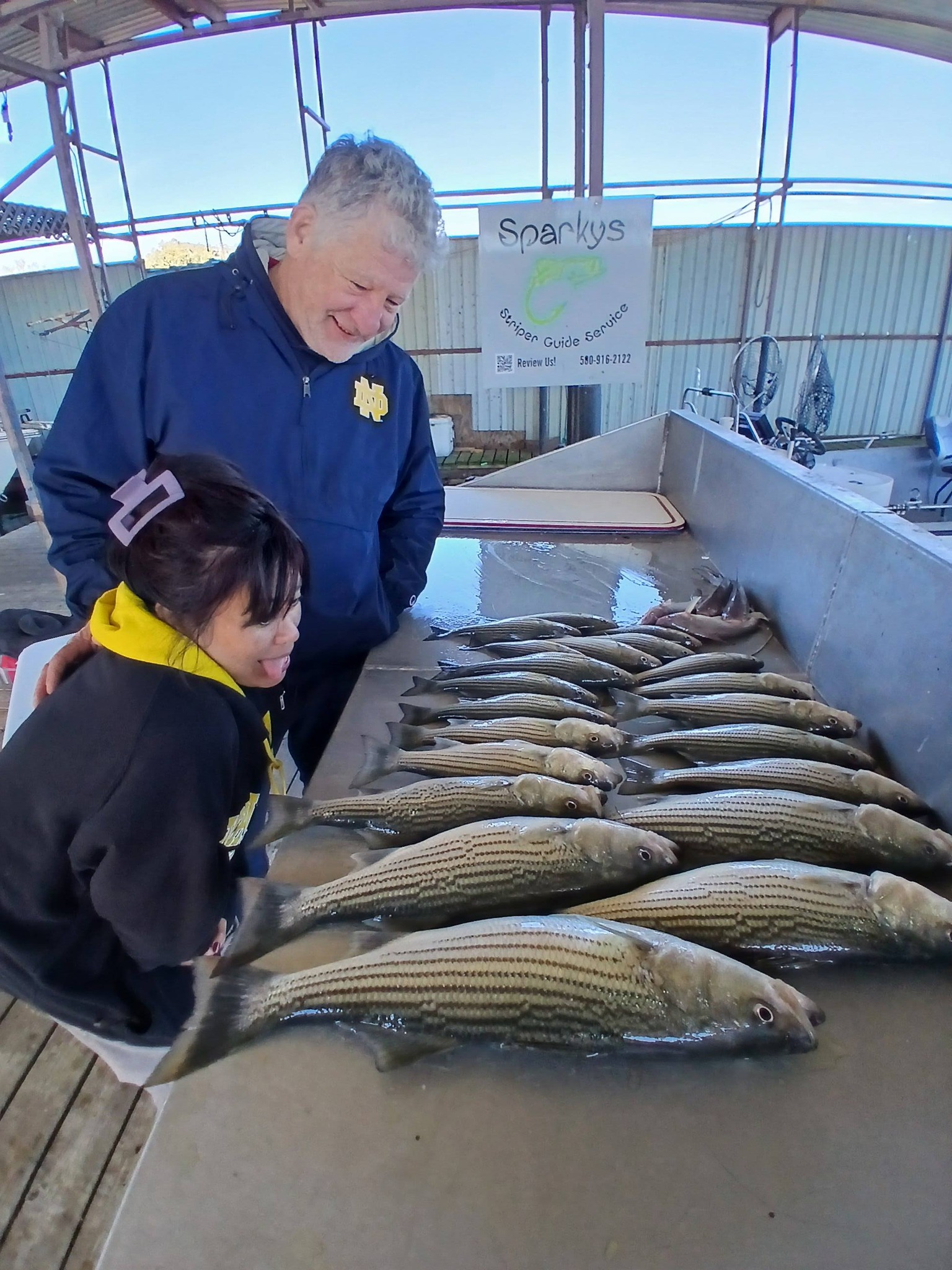
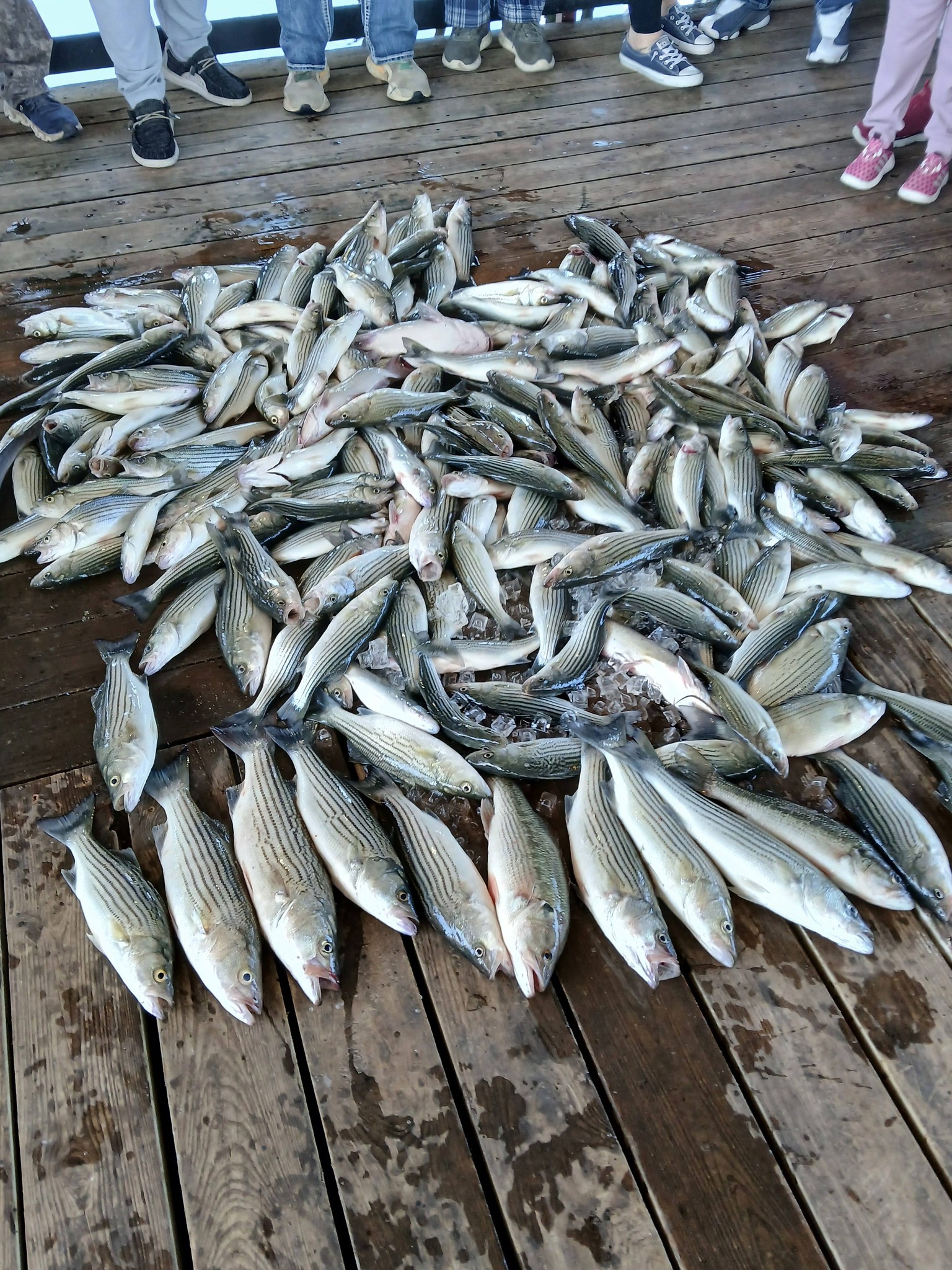
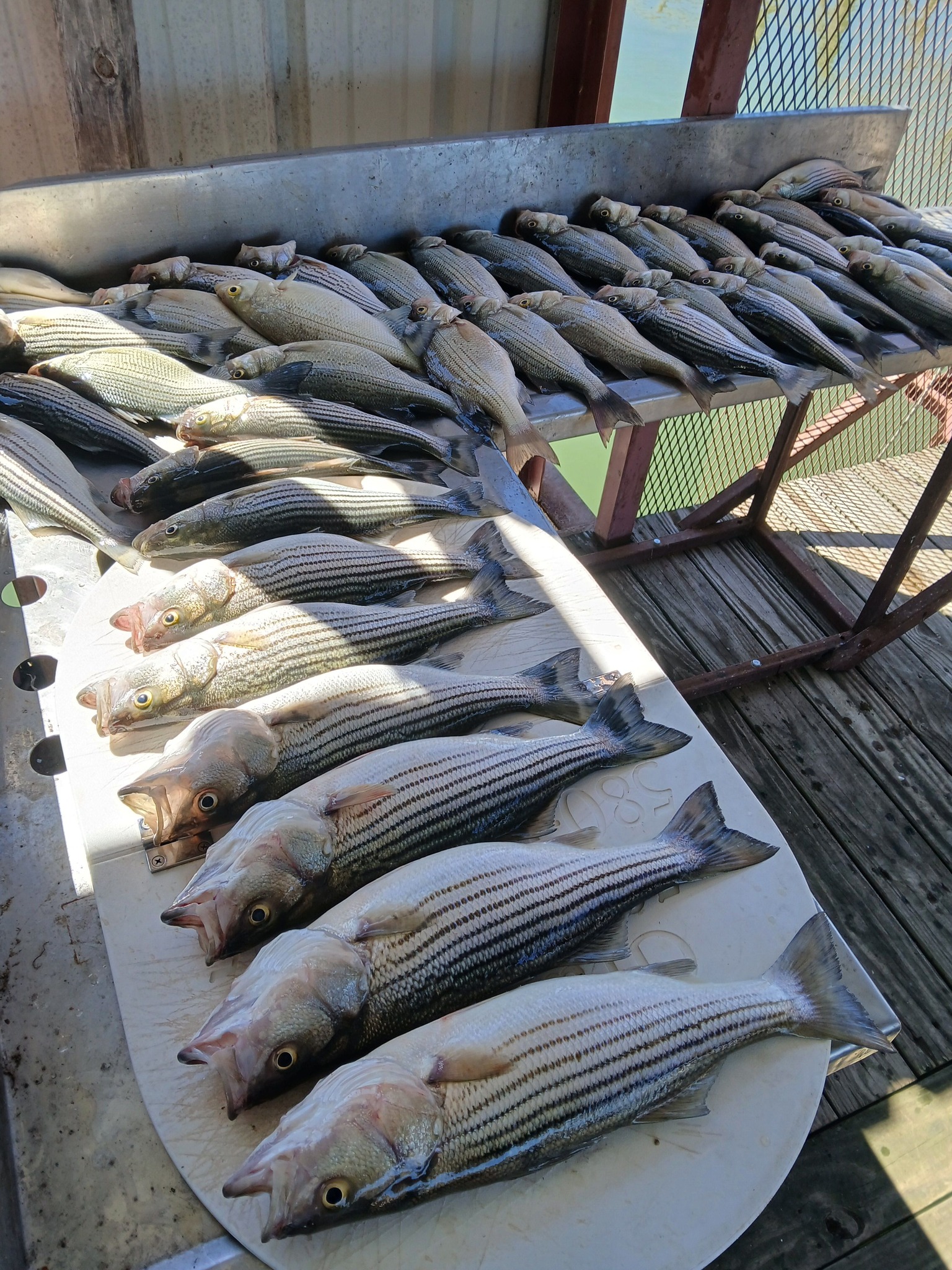
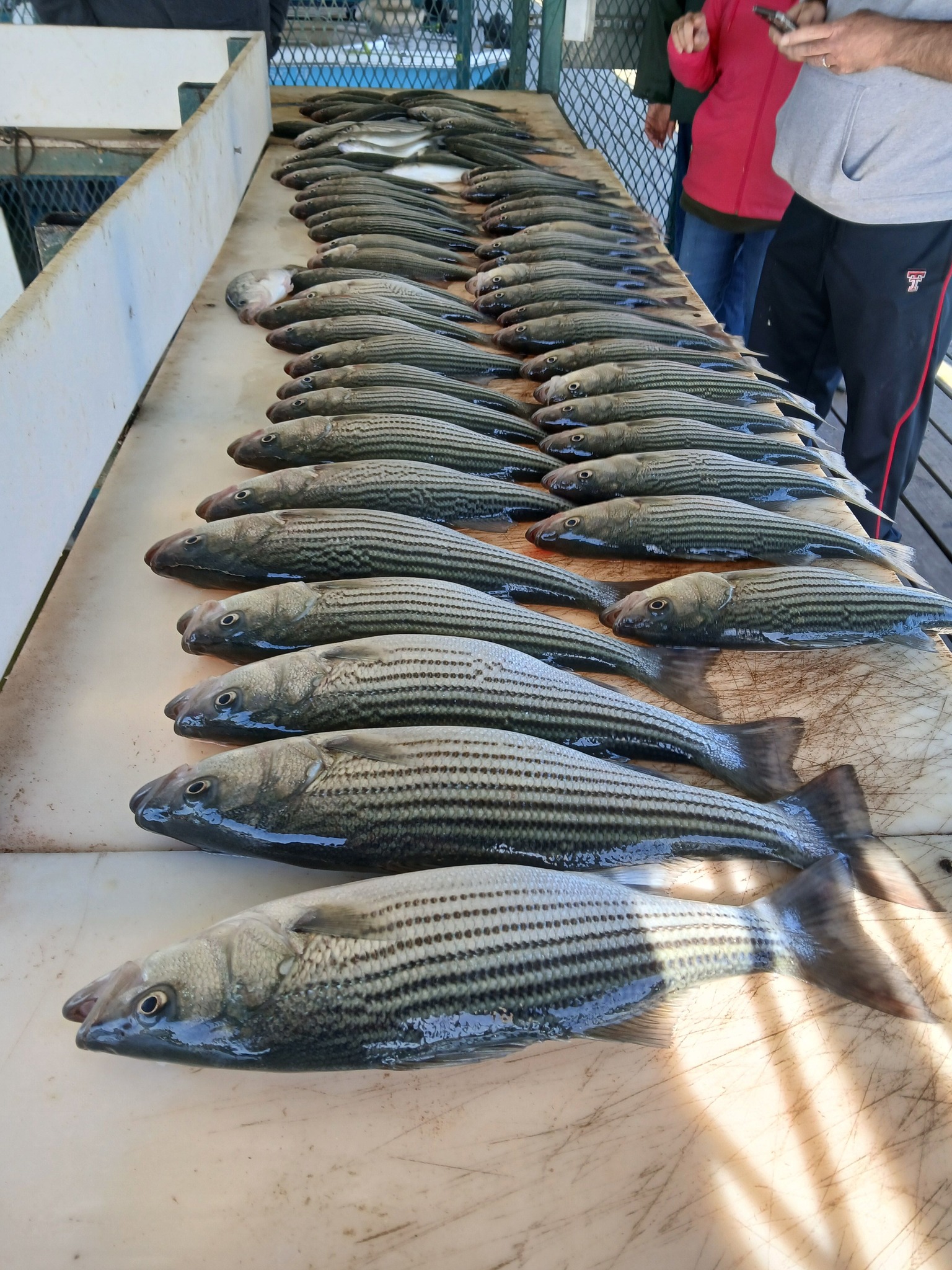
Beat the weekend rush and get out there when the fish are really feeding. This four-hour morning charter on Lake Texoma kicks off at 7:00 AM sharp, right when stripers and white bass are most active. Captain Zach McClendon knows these waters like the back of his hand, and he'll put you on fish whether you're a first-timer or you've been chasing bass for decades. We're talking about a proper fishing trip here – not some tourist boat ride. You'll be working productive structure and open water on a spacious 24ft bay boat, with all the quality tackle and fresh bait you need to make it count. Plus, we'll clean and fillet your catch at the end so you can take home dinner. Weekday mornings mean fewer boats, calmer water, and fish that haven't been pressured all weekend long.
What to Expect on the Water
Lake Texoma is a striper factory, plain and simple. This massive reservoir sits right on the Texas-Oklahoma border and holds some of the best mixed-bag fishing you'll find anywhere in the region. Captain Zach runs a clean 24ft bay boat that can handle up to three anglers comfortably, so you're not elbow-to-elbow fighting for space. The early morning start isn't just for show – that's prime time when the water's still cool and the baitfish are moving shallow. We'll target main lake points, creek channels, and wherever the fish are showing on the electronics. The weekday timing is clutch because you're dealing with way less boat traffic, which means the fish are more cooperative and you can actually hear yourself think out there. Captain Zach's been guiding these waters for years, so he knows exactly where to find the schools when they're moving and how to adjust tactics based on what the fish want that particular morning.
Tactics and Gear Setup
We're talking serious fishing here, not just throwing lines in the water and hoping for the best. The boat comes rigged with quality electronics to locate schools and structure, plus all the rods, reels, and terminal tackle you need to get the job done right. Depending on conditions and what the fish are doing, we might be throwing live shad, working jigs vertically over structure, or casting topwater when the bite gets hot. Captain Zach runs a mix of techniques – sometimes we're trolling to cover water and find active schools, other times we're anchored up and working specific spots where the fish are holding. The 24ft bay boat gives us the range to hit different areas of the lake quickly, from shallow flats to deeper channel swings. All your tackle, bait, and terminal gear is included, so you don't need to worry about bringing anything except your fishing license. The captain provides everything from heavy spinning gear for big stripers to lighter setups for white bass when they're schooling up.
Target Species
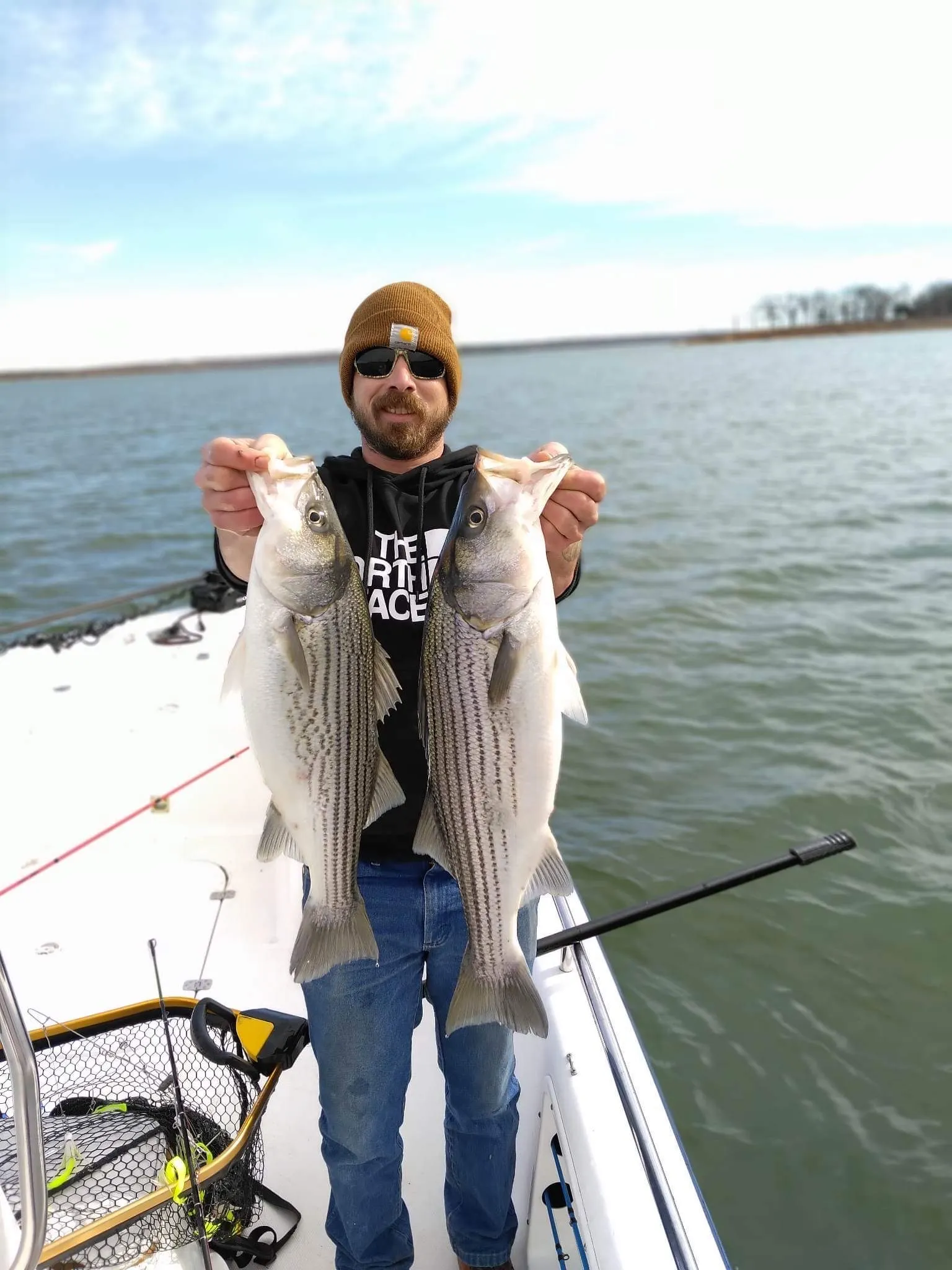
Striped bass are the main attraction here, and Lake Texoma grows them big and aggressive. These fish can range from schoolie-size at 2-3 pounds all the way up to genuine trophies pushing 20 pounds or more. Stripers are most active in early morning and late evening, which is exactly why this 7 AM start time works so well. They're ambush predators that follow schools of shad, so when you find the baitfish, you'll find the stripers. What makes them so exciting to catch is their initial run – when a good striper hits, it's going to peel drag and test your skills. Spring and fall are peak seasons, but these fish bite year-round if you know where to look.
White bass might be smaller than their striped cousins, but they make up for it with pure aggression and numbers. These fish school up tight and when you find them, you can catch them as fast as you can drop a line. They typically run 1-2 pounds on Lake Texoma, but they fight way above their weight class. White bass love to chase shad in open water, and when they're feeding on top, it looks like the water's boiling. They're most active in spring during their spawning run, but they provide consistent action throughout the warmer months. What anglers love about white bass is the fast action – when the school is hot, everyone on the boat stays busy.
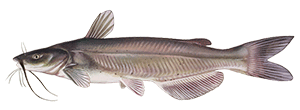
Channel catfish are the steady producers when bass fishing slows down. Lake Texoma holds plenty of channels in the 2-8 pound range, with bigger ones mixed in for good measure. These fish are most active in warmer weather and bite well on cut bait, live shad, or prepared baits. They're not flashy fighters, but they're excellent table fare and provide reliable action when you need to put some fish in the cooler. Channels are structure-oriented, so we target creek channels, rocky points, and timber where they like to hold.
Blue catfish are the heavyweights of the catfish world on Lake Texoma. These fish can grow massive – we're talking about specimens that can hit 30, 40, or even 50 pounds if you're lucky enough to tangle with a true giant. Blues prefer deeper water and stronger current, so we target main lake areas and the dam region when going after them specifically. They're powerful fighters that will test your tackle and your endurance. Most blues you'll encounter run in the 5-15 pound range, but the potential for something truly special is always there.
Flathead catfish are the apex predators of the catfish family, and Lake Texoma holds some real monsters. These fish are primarily nocturnal and prefer live bait, especially live sunfish or small bass. Flatheads are solitary hunters that like heavy cover – think fallen trees, rock piles, and deep holes with structure. They can grow enormous, with fish over 50 pounds caught regularly. What makes flatheads special is they're one of the best eating fish in the lake, despite their intimidating appearance. They fight differently than other catfish too – more bulldogging power
 Private Trip
 Lakes/Reservoirs/Ponds Fishing
 Lake Texoma

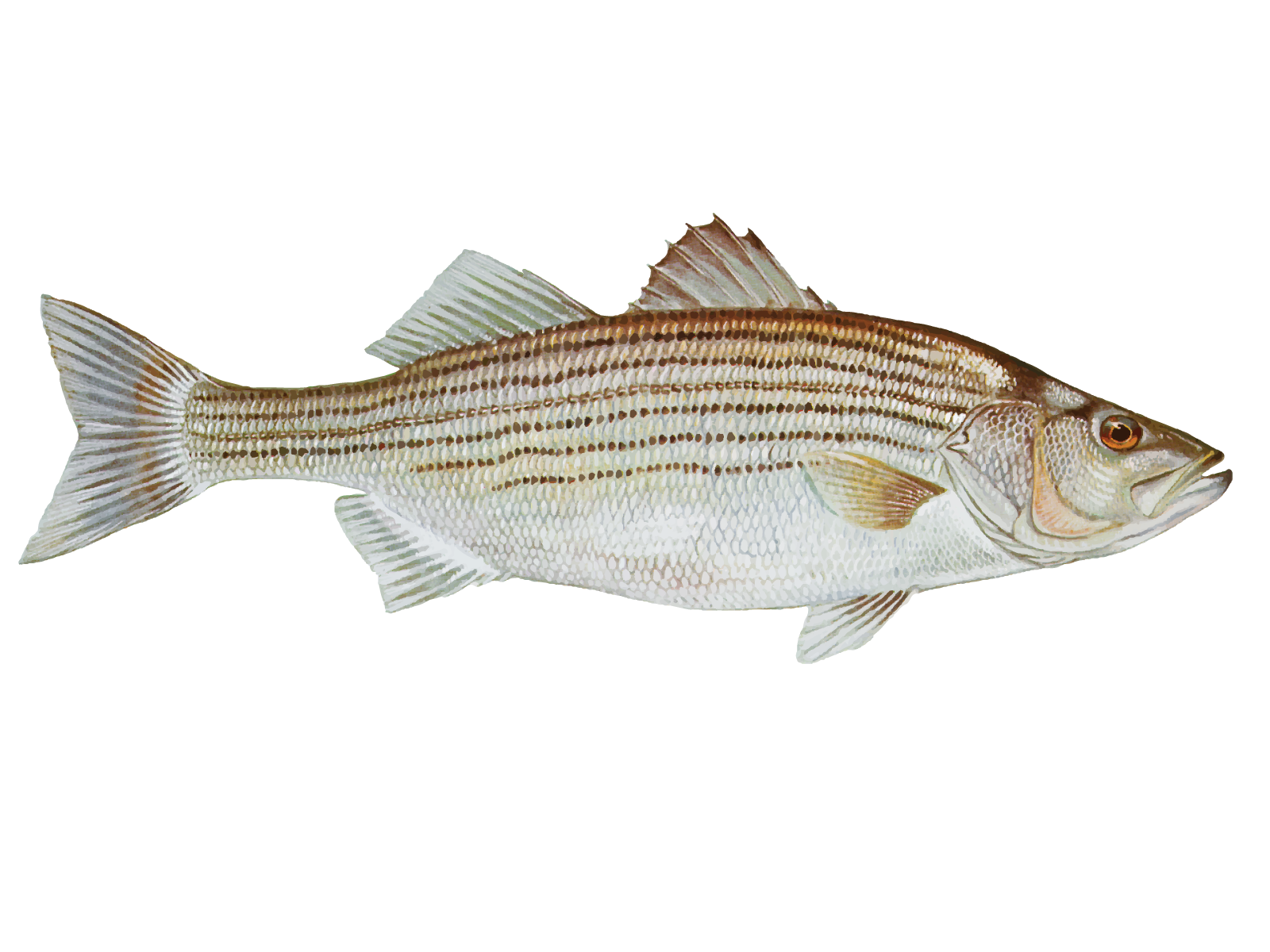

 Four-hour weekday morning charter targeting striped bass and white bass