Half Day Seasonal Lobster Fishing in Little Torch Key
Captain Allen knows these waters like the back of his hand, and when lobster season rolls around from August 6th through March 31st, there's no better way to spend four hours than hunting for spiny lobsters in the crystal-clear shallows around Little Torch Key. This isn't your typical rod-and-reel fishing trip – you'll be diving down to hand-catch these tasty crustaceans from their rocky hideouts. With your fishing license and lobster stamp included, all you need to bring is your mask, fins, and appetite for adventure. Whether you're a seasoned lobster hunter or trying it for the first time, Captain Allen will get you on the bugs and make sure you head home with dinner.
What to Expect on the Water
This four-hour charter takes you into the backcountry waters where spiny lobsters love to hang out – around coral heads, ledges, and rocky structure in 8 to 25 feet of water. The boat stays anchored while you free-dive or snorkel down to spot lobsters tucked into their daytime hiding spots. Captain Allen will position you over productive areas and give you the lowdown on reading the bottom structure. The water clarity around Little Torch Key is typically fantastic, often offering 40+ feet of visibility, which makes spotting those telltale antennae much easier. You'll work systematically through different spots, and Captain Allen rotates locations based on tide, wind, and where the bugs are holding. The intimate six-person max keeps things relaxed and gives everyone plenty of water time without crowding.
Gear and Techniques
Lobstering is all about technique and knowing where to look. You'll need a mask and fins – bring your own since they're not provided – and Captain Allen supplies the lobster nets, measuring gauges, and everything else required by law. The key is learning to read the bottom: look for dark holes, overhangs, and crevices where lobsters hide during daylight hours. When you spot those long antennae sticking out, approach slowly and get your net positioned behind the lobster before making your move. They shoot backwards when startled, so positioning is everything. Captain Allen teaches proper measuring techniques since undersized bugs must go back immediately, and he'll show you how to handle them safely without getting whipped by those spiny shells. The boat carries a cooler with ice to keep your legal-sized catches fresh, and you'll learn the difference between keeper-sized lobsters and the shorts that need to swim another day.
Top Catches This Season
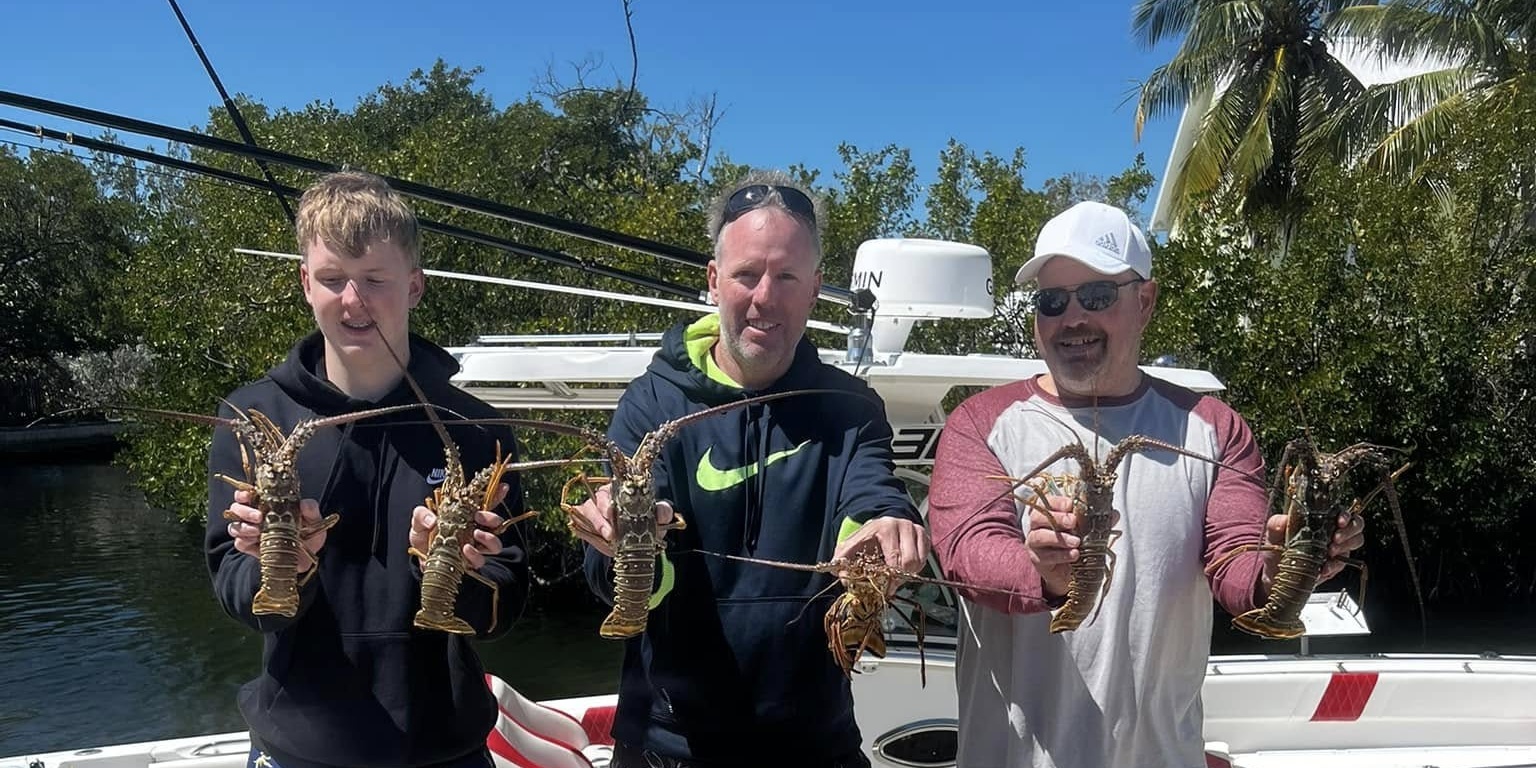
Caribbean spiny lobsters are the main target here, and these waters around Little Torch Key hold some real beauties during peak season. These lobsters don't have the big claws like their Maine cousins – instead, they're all tail meat and sweet, firm flesh that's perfect for grilling or boiling. During early season in August and September, you'll often find smaller groups scattered around the flats, but as water temperatures drop through fall and winter, they start schooling up in deeper holes and ledges. The best hunting typically happens from October through February when lobsters are more active and easier to spot. A good day might yield 4-6 keeper lobsters per person, with tails ranging from the minimum 3-inch carapace length up to real monsters pushing 5+ inches. Captain Allen has his honey holes marked, and he rotates spots based on moon phases, tides, and seasonal patterns he's learned over years of guiding these waters.
Species You'll Want to Hook
The Caribbean spiny lobster is what you're after, and these prehistoric-looking creatures are perfectly adapted to the Florida Keys environment. They can live up to 20 years and grow quite large, with the biggest specimens often hiding in the deepest holes and most protected structure. During daylight hours, they tuck themselves into coral crevices and rocky overhangs, extending only their long, sensitive antennae to detect predators and food. What makes lobster hunting exciting is the chess match – you're trying to outsmart an animal that's been perfecting its hide-and-seek game for millions of years. Spiny lobsters are most active at night when they come out to forage for small fish, crabs, and marine worms, but skilled hunters can coax them out of their holes during the day. The meat is incredibly sweet and delicate, with a texture that's firmer than warm-water shrimp but more tender than cold-water lobster. Size limits exist for good reason – these animals need several years to reach sexual maturity, and protecting the breeding stock ensures future seasons stay productive.
Time to Book Your Spot
Lobster season in the Florida Keys is special, and Captain Allen's local knowledge makes this trip a customer favorite for both visitors and locals wanting to fill their freezers. The combination of pristine water clarity, healthy lobster populations, and an experienced guide who knows exactly where to look creates the perfect recipe for success. With all licenses and stamps included, you just show up with your snorkel gear and get ready to work for your dinner. The six-person limit keeps groups small and personal, ensuring everyone gets plenty of coaching and water time. Book early since seasonal trips like this fill up fast, especially during the prime October through February window when conditions are most favorable and lobster activity peaks.
 Private Trip
 Inshore Fishing
 Florida Keys
 Four-hour lobster fishing charter during August-March season