New Bern Multi-Species Fishing Charter
If you're looking for variety on the water, New Bern's got you covered. This isn't your typical "fish for one species all day" kind of trip. Captain Dave knows these waters like the back of his hand, and he's figured out how to put you on five different gamefish species in a single outing. We're talking Redfish, Speckled Trout, Flounder, Striped Bass, and Bluefish – all swimming in the same general area around the Neuse River system. It's like having a sampler platter, but for fishing. Whether you're new to saltwater angling or you've been at this for years, there's something pretty satisfying about checking multiple species off your list before lunch.
What to Expect on the Water
Captain Dave runs a tight ship, but he keeps things relaxed out there. You'll start early – that's when the fish are most active – and spend your day moving between different spots depending on what's biting. One minute you might be working a grass line for trout, the next you're drifting over structure for flounder. The beauty of this trip is the variety of techniques and locations. Dave provides all your gear, handles the fishing license, and does the heavy lifting when it comes to finding fish. He's been working these waters for years, so he knows which spots produce when. The boat holds up to three anglers, which means you're not fighting for elbow room or competing with a crowd for the captain's attention. It's personal, hands-on, and focused on putting fish in the boat.
Techniques & Tackle
This isn't a one-trick-pony operation. Depending on what we're targeting and where we find them, you might be throwing topwater plugs at dawn, working soft plastics around docks, or drifting live bait over drop-offs. Dave switches up the approach based on conditions and what the fish are telling him. For the reds, we might be sight-casting in shallow water or working the edges of oyster bars. Trout often come on artificial lures worked near grass beds, while flounder prefer live bait presented near bottom structure. The stripers and blues can be anywhere – schooling on the surface one day, hugging the bottom the next. Dave's got the right tackle for each situation, from light spinning gear for trout to something with a little more backbone for the bigger stripers. The key is staying flexible and reading the water as the day develops.
Species You'll Want to Hook
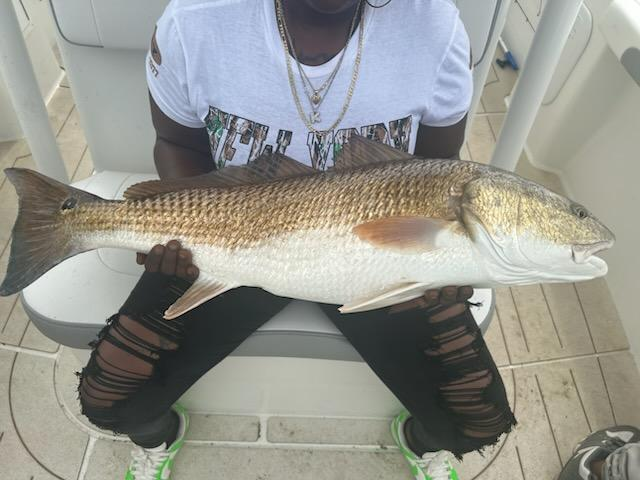
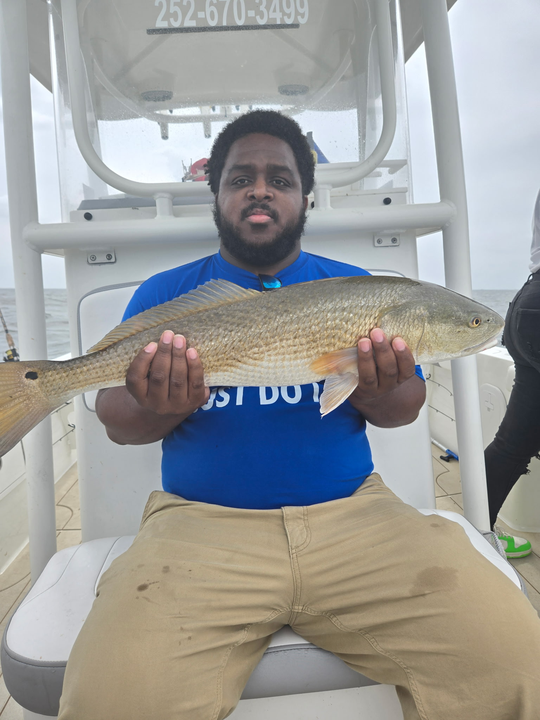
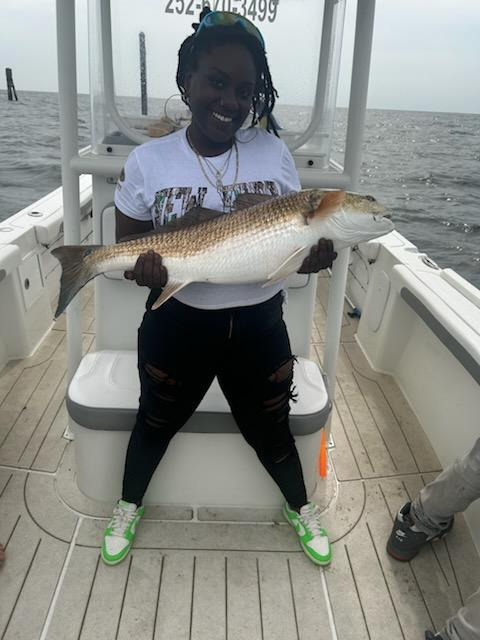
Redfish are the rock stars of the inshore scene around New Bern, and for good reason. These copper-colored fighters average 20-30 inches and put up a serious scrap once hooked. They're around year-round, but fall months are prime time when they school up in big numbers. What makes reds special is their attitude – they're aggressive, they eat well, and they don't give up easy. You'll find them cruising shallow flats, around oyster bars, and near any structure that holds baitfish. There's nothing quite like watching a red blow up on a topwater plug in two feet of water.
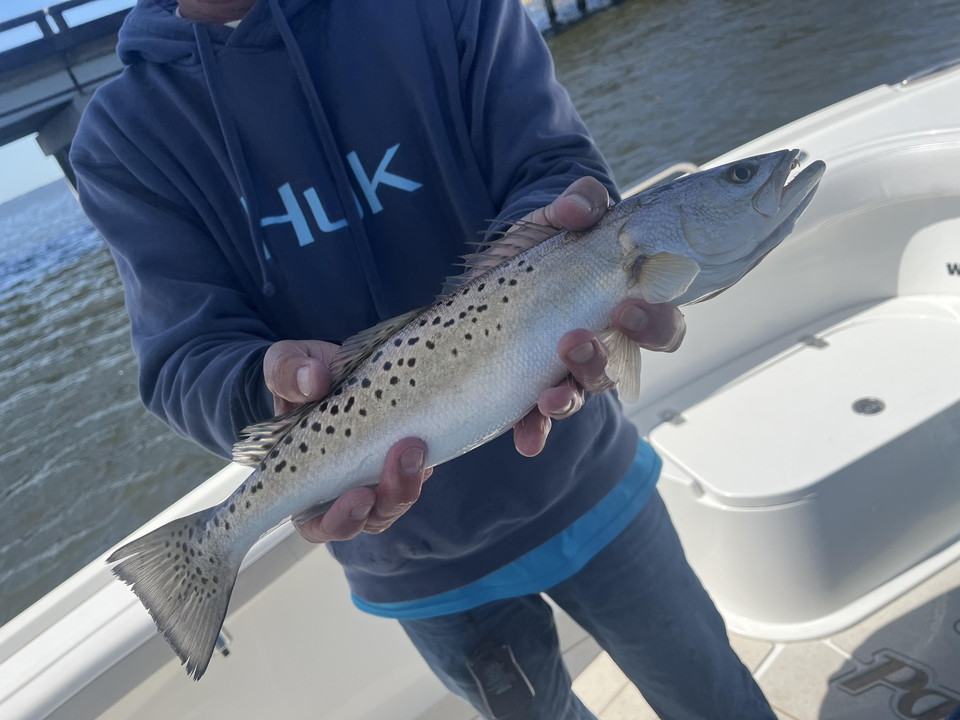
Speckled Trout might be the most technical fish on this list, but they're also one of the most rewarding. These spotted beauties are all about presentation and timing. They're most active during cooler months, from October through March, and they love to hang around grass beds and channel edges. A good trout will run 15-20 inches, and the big ones – the gator trout over 25 inches – are legitimate trophies. They're excellent table fare, which makes them doubly popular with anglers who like to eat what they catch. Trout fishing teaches you patience and precision, two skills that make you better at everything else.
Flounder are the masters of disguise, lying flat on sandy bottoms waiting to ambush whatever swims by. These flatfish are seasonal visitors, showing up in good numbers during spring and fall migrations. A keeper flounder in North Carolina waters needs to measure at least 15 inches, but the good ones push 18-22 inches and make for some of the best eating you'll find. They're not flashy fighters like reds or trout, but there's real skill involved in finding and catching them consistently. Dave knows the productive spots – around bridge pilings, channel edges, and areas where current creates ambush points.
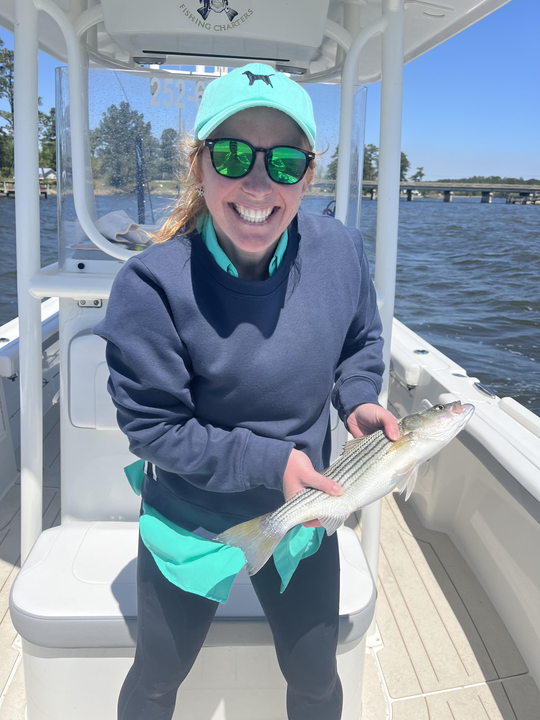
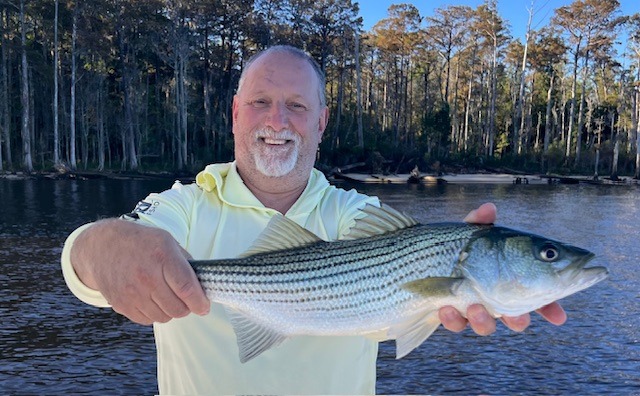
Striped Bass bring the muscle to this mixed bag. These silver submarines can range from schoolie-sized fish up to genuine trophy specimens pushing 30-plus inches. Spring and fall see the best action as stripers move through the area following bait schools. When they're feeding, it's pretty obvious – birds working, bait jumping, and that distinctive boiling water that gets every angler's heart racing. A good striper will test your drag and your patience, making long runs and using its weight to stay deep. They're also excellent eating, which makes them popular with families.
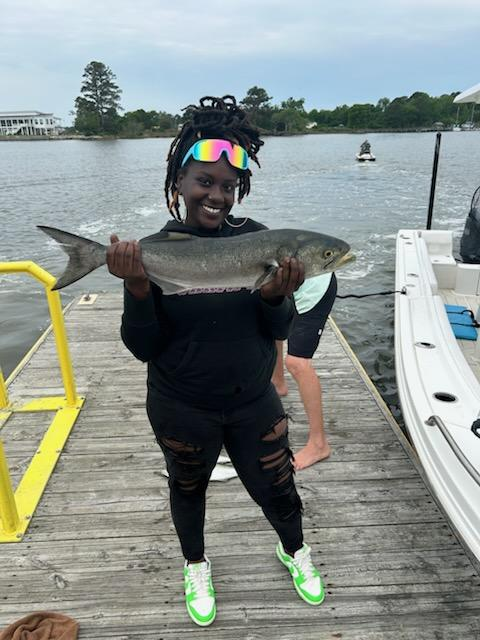
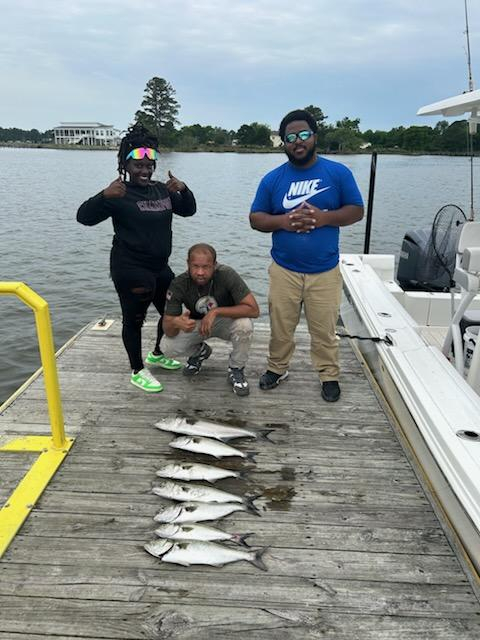
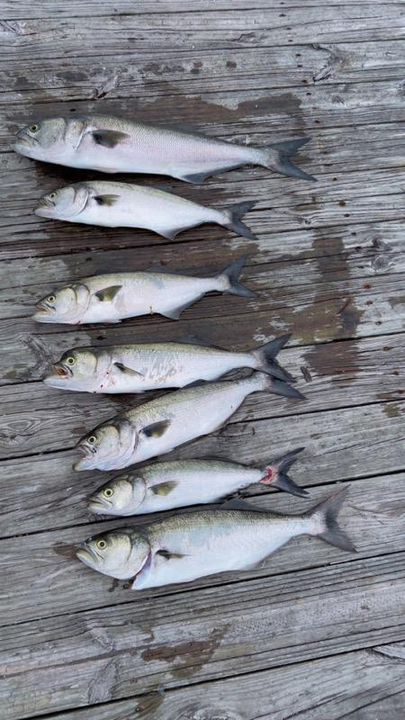
Bluefish are the wildcard in this lineup – aggressive, unpredictable, and always ready to fight. These toothy predators show up when baitfish are thick, often mixing with the stripers in feeding frenzies that can be seen from miles away. Blues hit hard, fight dirty, and have zero quit in them. They're not everyone's favorite table fare due to their oily flesh, but they're pure adrenaline on the end of a line. When the blues are around, you'll know it – they destroy everything in their path and make the water look like a washing machine.
Time to Book Your Spot
This multi-species approach is what makes New Bern fishing so special. Instead of putting all your eggs in one basket, you're spreading your chances across five different species that all call these waters home. Captain Dave's got the local knowledge, the right gear, and the patience to put you on fish. Whether you walk away with a mixed bag or focus on one species that's really turning on, you
 Private Trip
 River Fishing
 North Carolina
 Target five species including redfish, trout, and striped bass