12 Hour Private Gulf Stream Fishing Charter
When it comes to offshore fishing in North Carolina, nothing beats a full day run to the Gulf Stream. This isn't your typical half-day trip close to shore – we're talking about a serious 12-hour adventure that puts you right in the heart of where the big fish live. The Gulf Stream's warm, blue water sits about 35-50 miles off our coast, and that's where the magic happens. You'll be fishing waters that consistently produce trophy catches, from screaming wahoo runs to heart-stopping billfish strikes. With space for up to 5 anglers, this private charter gives your group the flexibility to fish your way without dealing with a crowded boat.
What to Expect on the Water
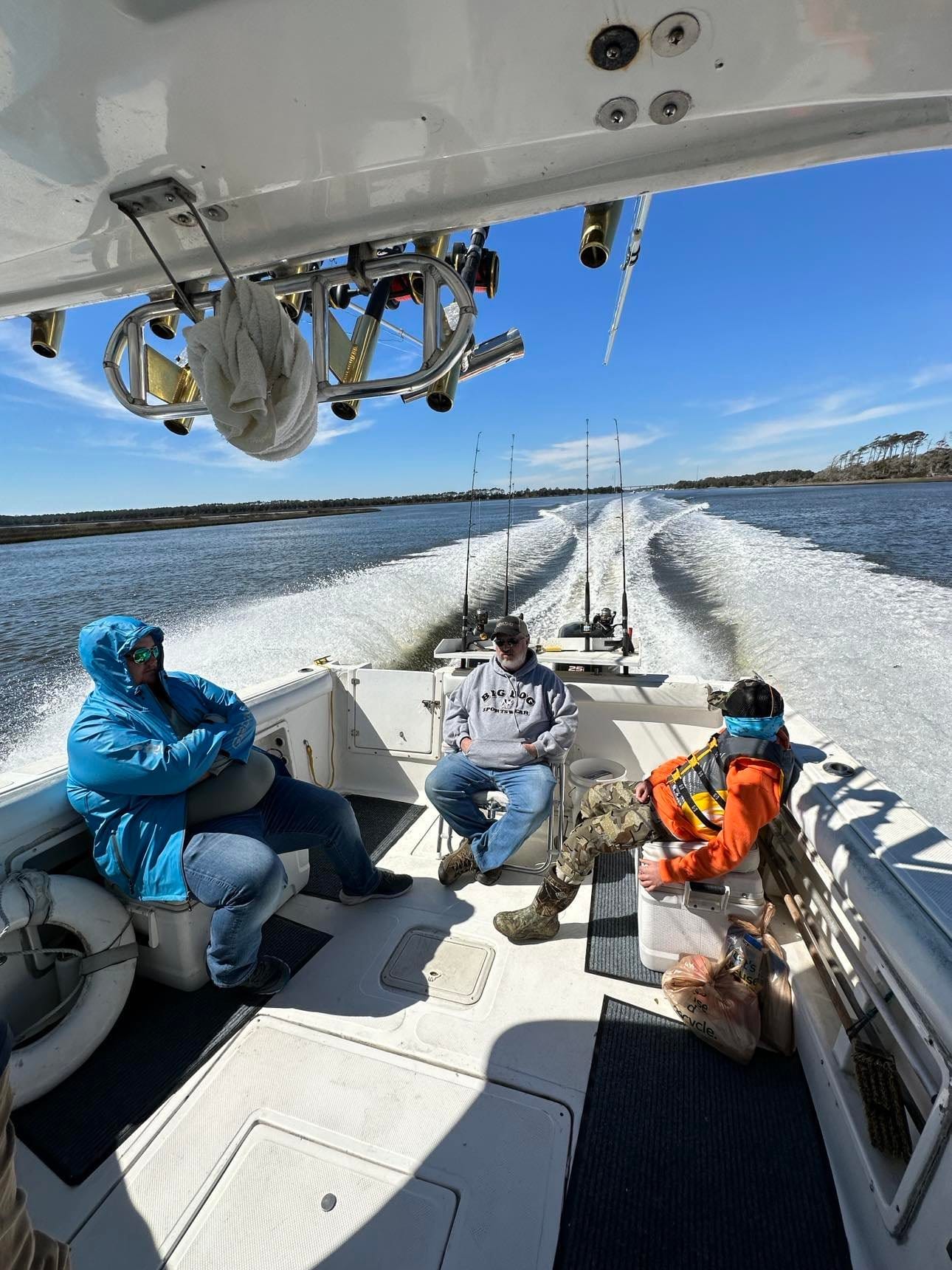
Your day starts early – we're talking 5:30 AM departure to make the most of prime fishing time. The run out to the Gulf Stream takes about 2-3 hours depending on where we find the best water, but trust me, it's worth every minute of the ride. Once we hit that blue water and the temperature break, you'll see why this area is legendary among serious anglers. The Gulf Stream creates a perfect storm of conditions: warm water, strong current, and an abundance of baitfish that attract every pelagic species you dream about catching. We'll be watching the fish finder, looking for temperature breaks, weed lines, and structure that holds fish. The boat stays busy with multiple lines out, and when something hits, everyone springs into action.
Trolling the Blue Water
We fish the Gulf Stream primarily by trolling, running a spread of lures and rigged baits that cover different depths and speeds. You'll see everything from skirted ballyhoo to high-speed wahoo lures working behind the boat. We typically run 6-8 lines at different positions – rigger baits, flat lines, and maybe a few on the outriggers. The key is covering water and presenting baits at the right speed for whatever species we're targeting that day. When the bite is on, we might switch to live bait or chunk bait around floating debris or weed lines. The gear is all top-shelf stuff – heavy spinning reels and conventional tackle that can handle anything from a 10-pound mahi to a 200-pound marlin. Don't worry if you've never fought a big fish before; we'll coach you through every step of the battle.
Species You'll Want to Hook
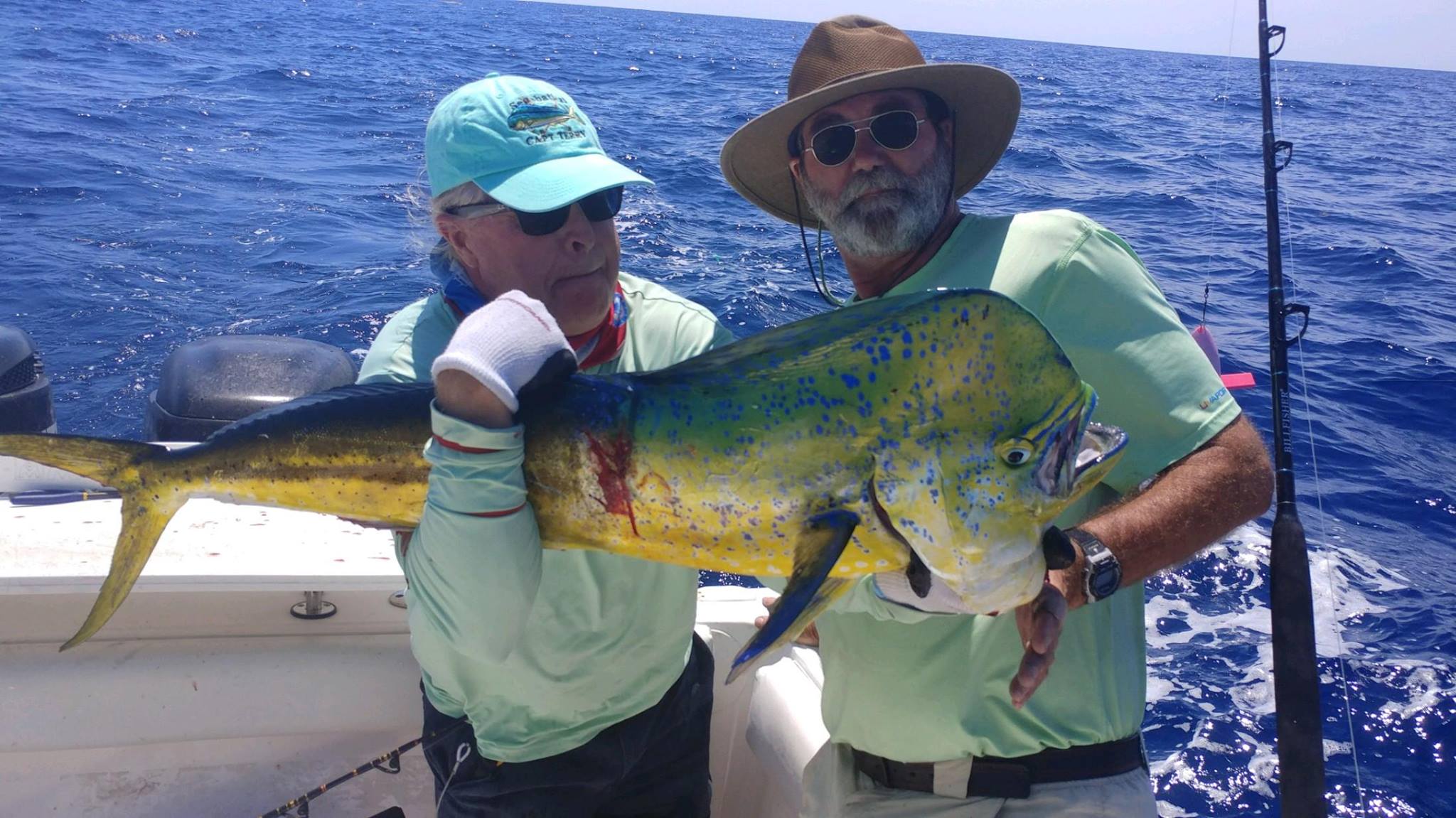
Mahi mahi are the bread and butter of Gulf Stream fishing, and for good reason. These fish are absolute torpedoes when they hit, often jumping clear out of the water multiple times during the fight. They travel in schools, so when you hook one, there's usually more around. The best action happens from late spring through early fall when they're following the warm water. What makes mahi special is their aggressive nature – they'll hit just about any lure or bait you put in front of them, and they're beautiful fish with those electric green and gold colors.
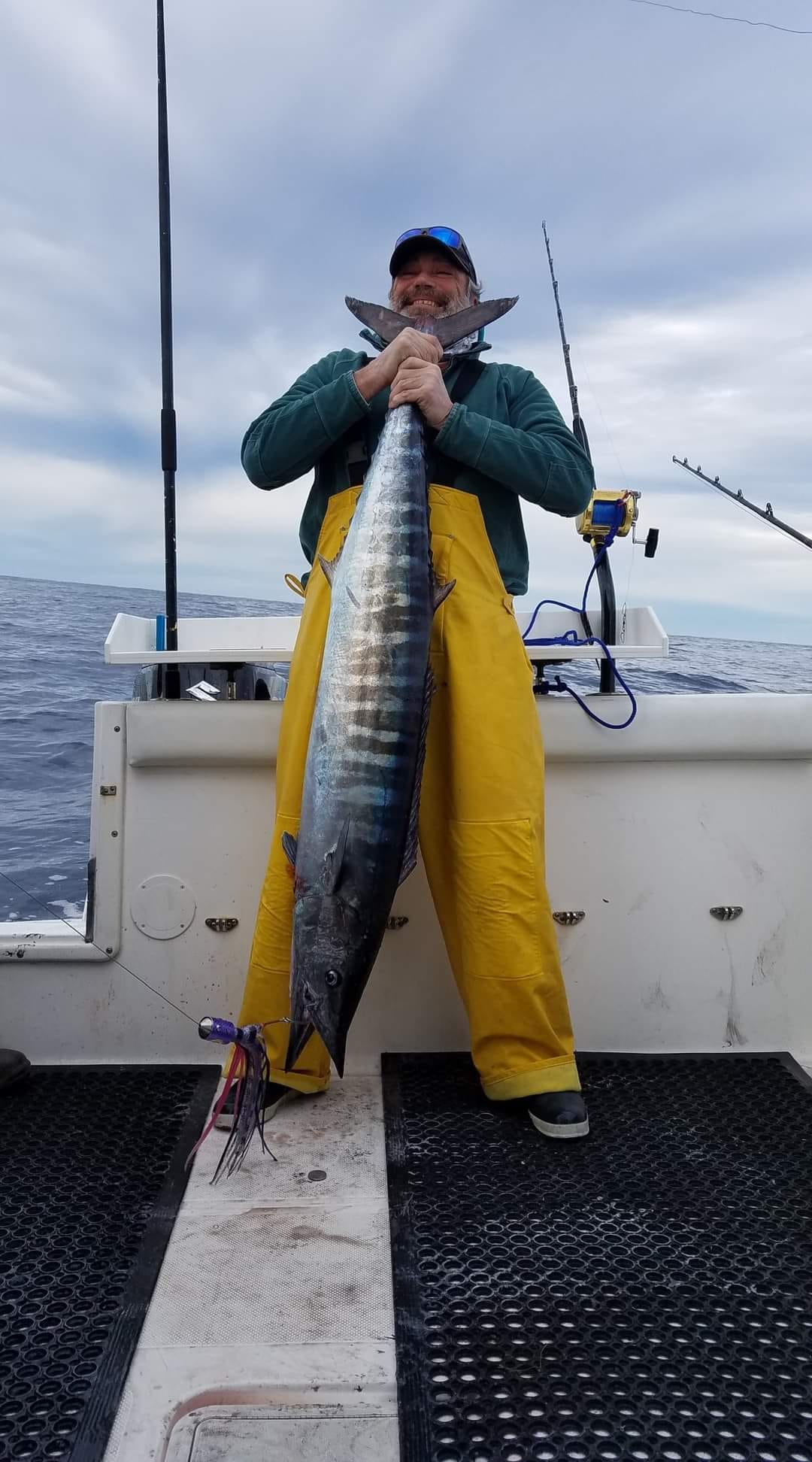
Wahoo are the speed demons of the offshore world, capable of hitting 50+ mph when they strike your bait. These fish are built for speed with torpedo-shaped bodies and razor-sharp teeth that can slice through wire leader like butter. Peak wahoo season runs from late fall through early spring when the water cools down slightly. They're ambush predators that typically hit high-speed lures trolled at 12-15 knots. The fight is usually short but intense – they make one or two blistering runs before tiring out. Landing a 40+ pound wahoo is a bucket list experience for any angler.
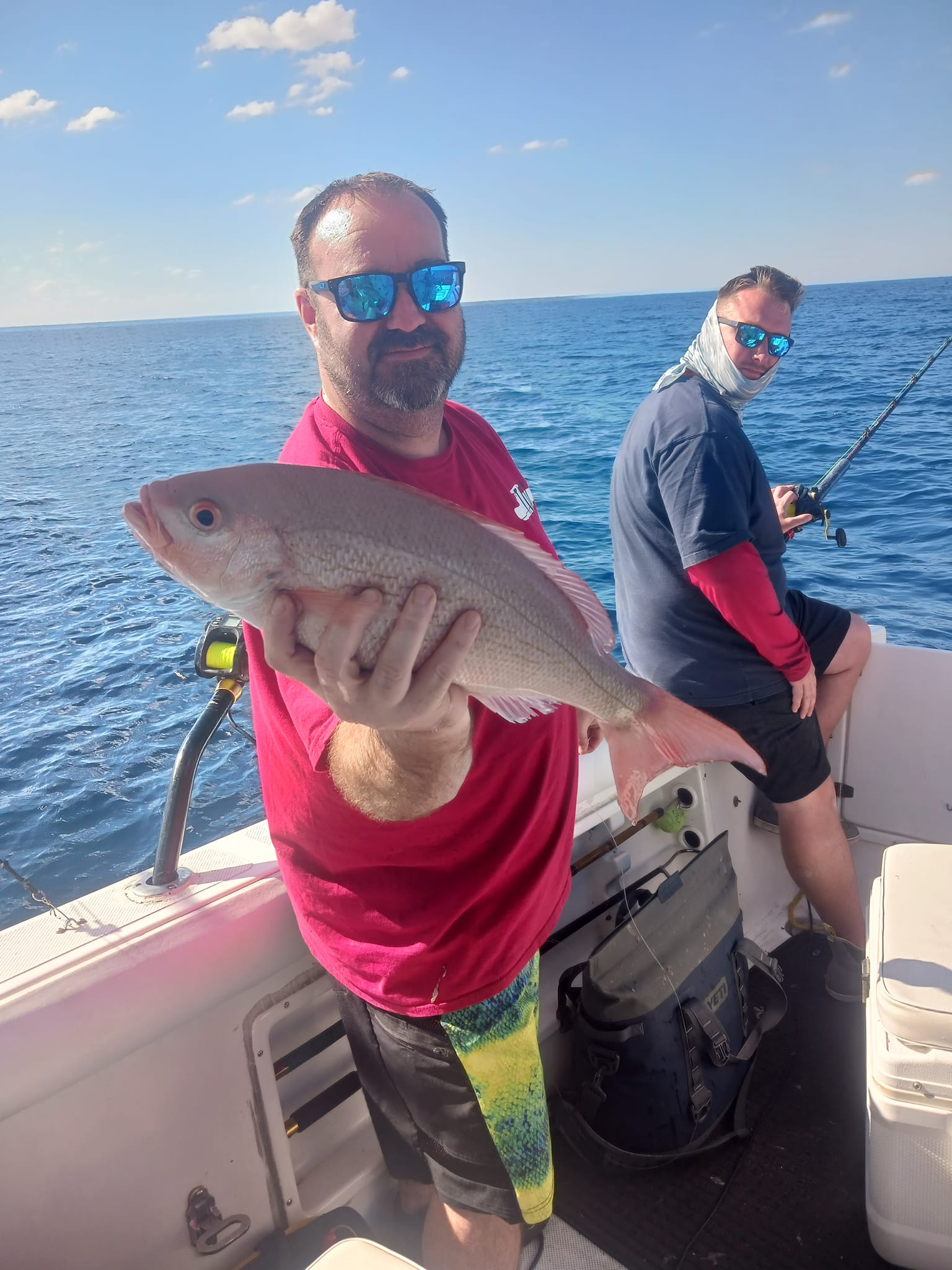
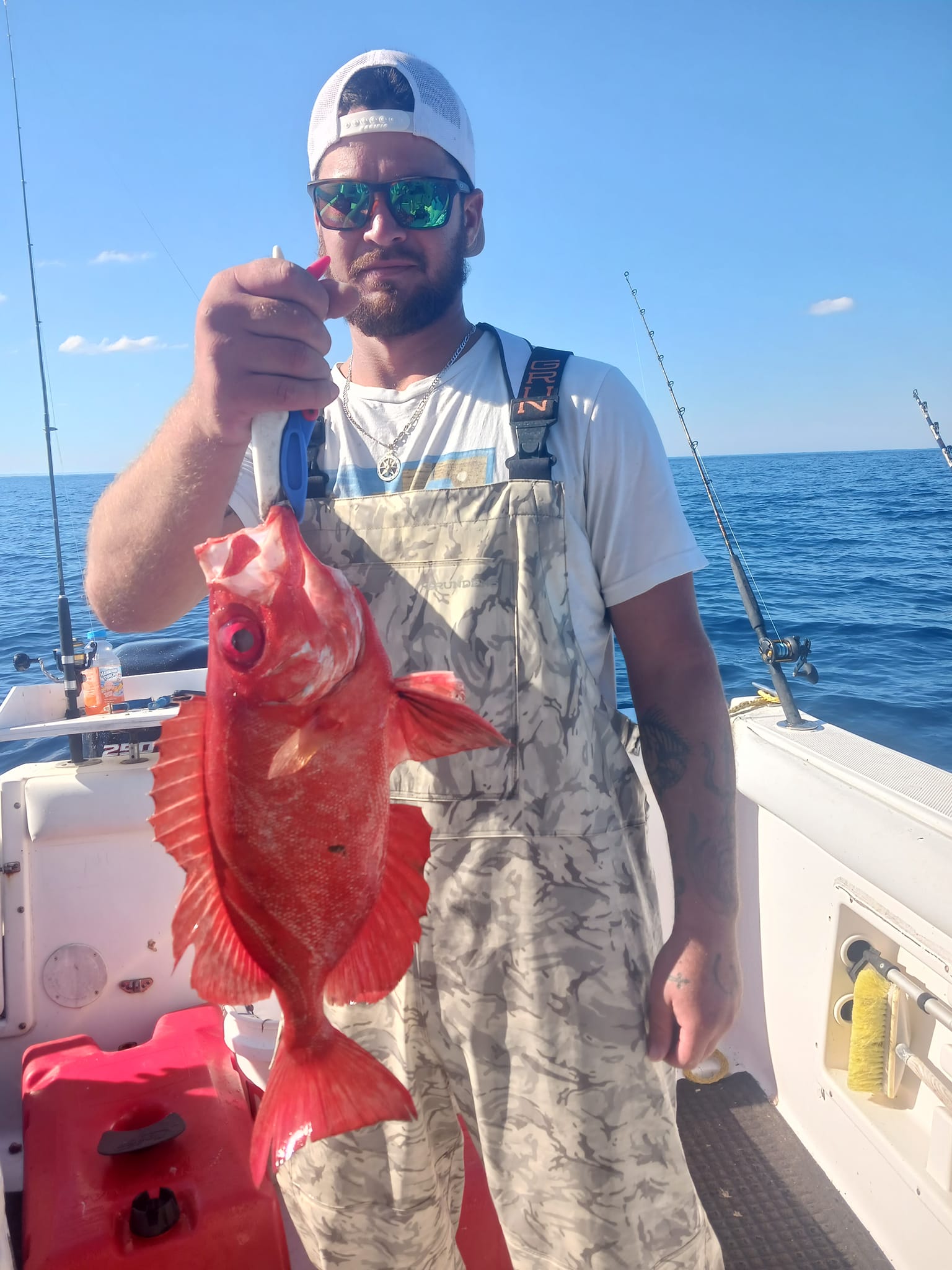
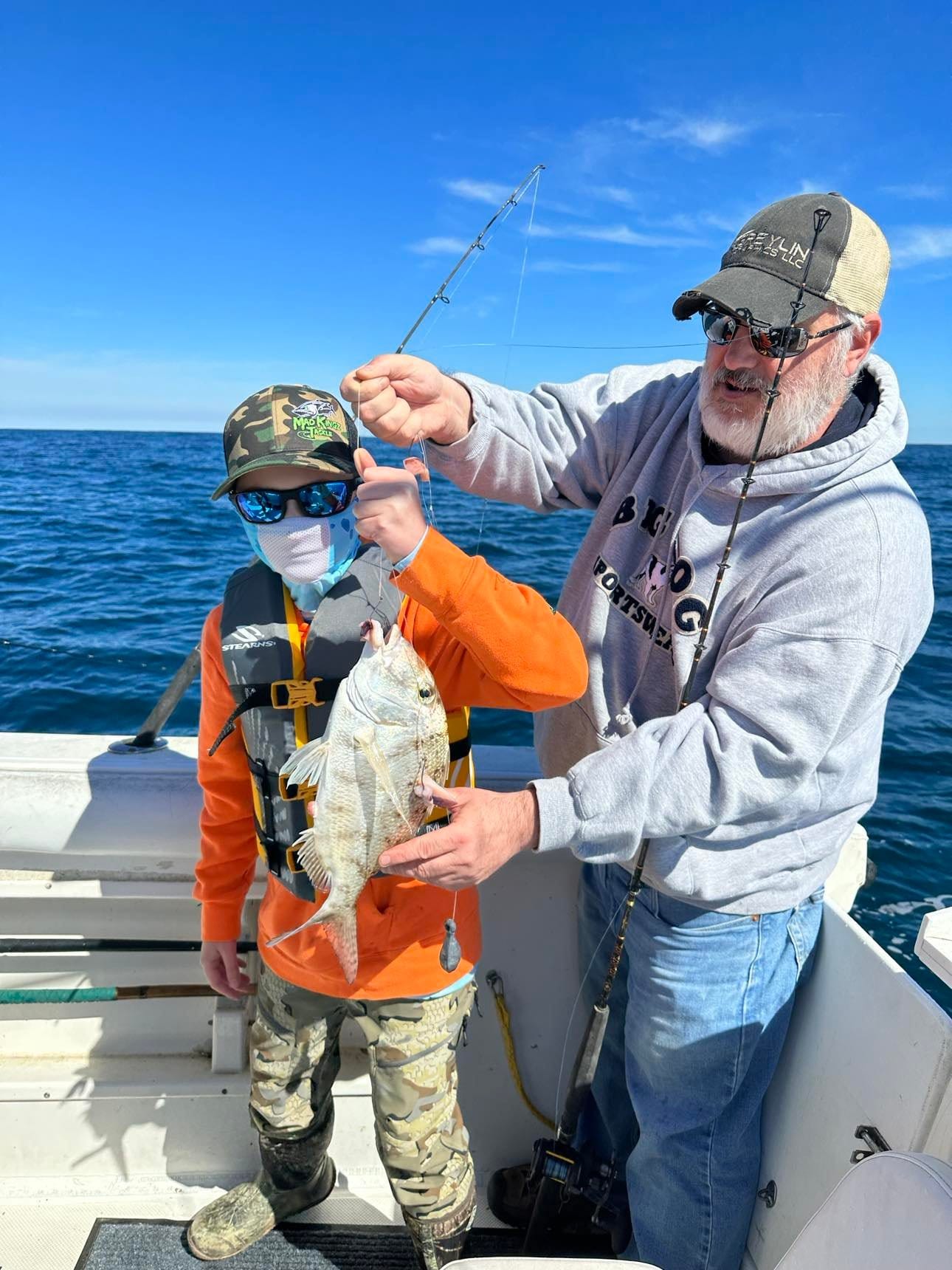
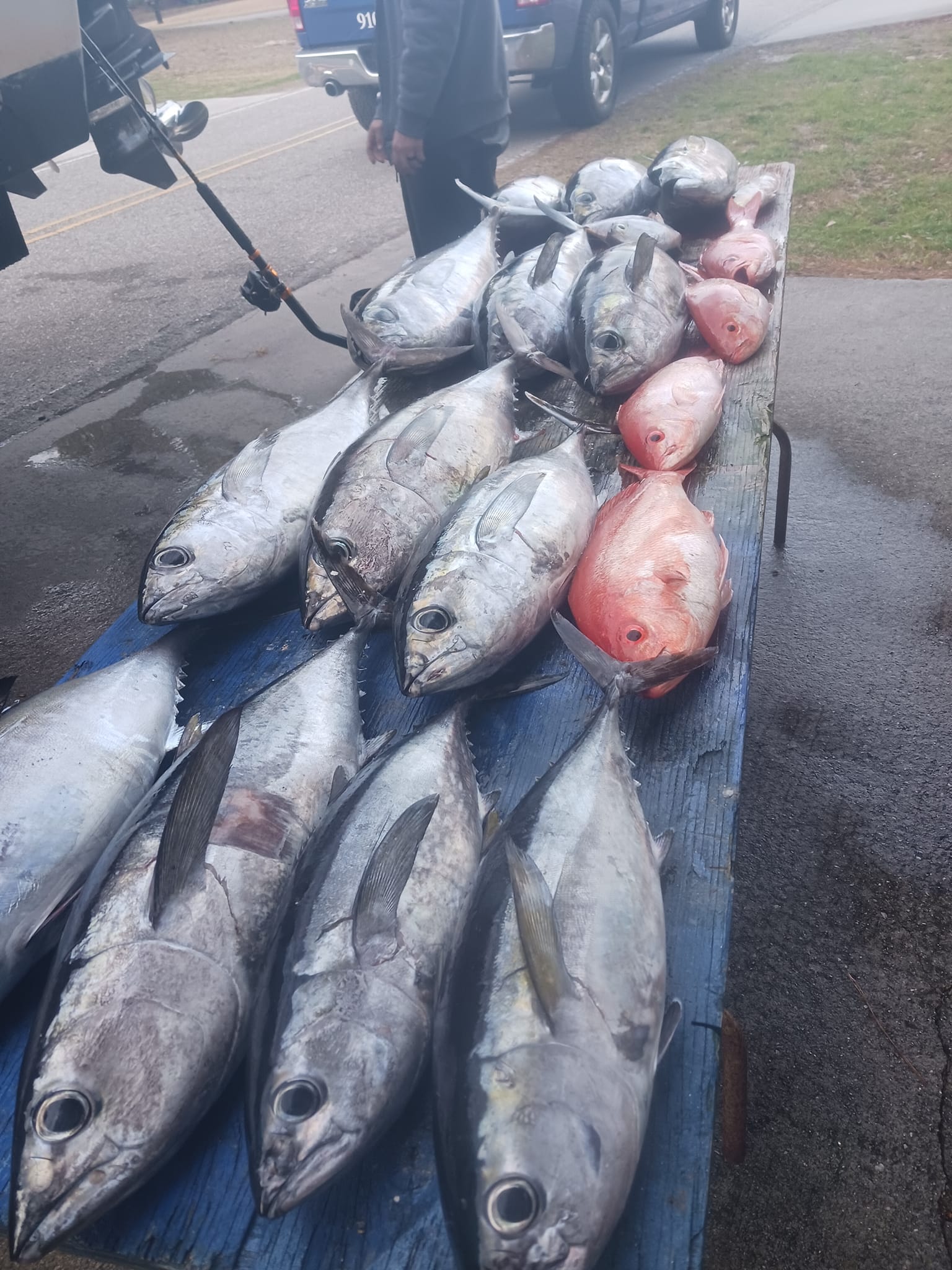
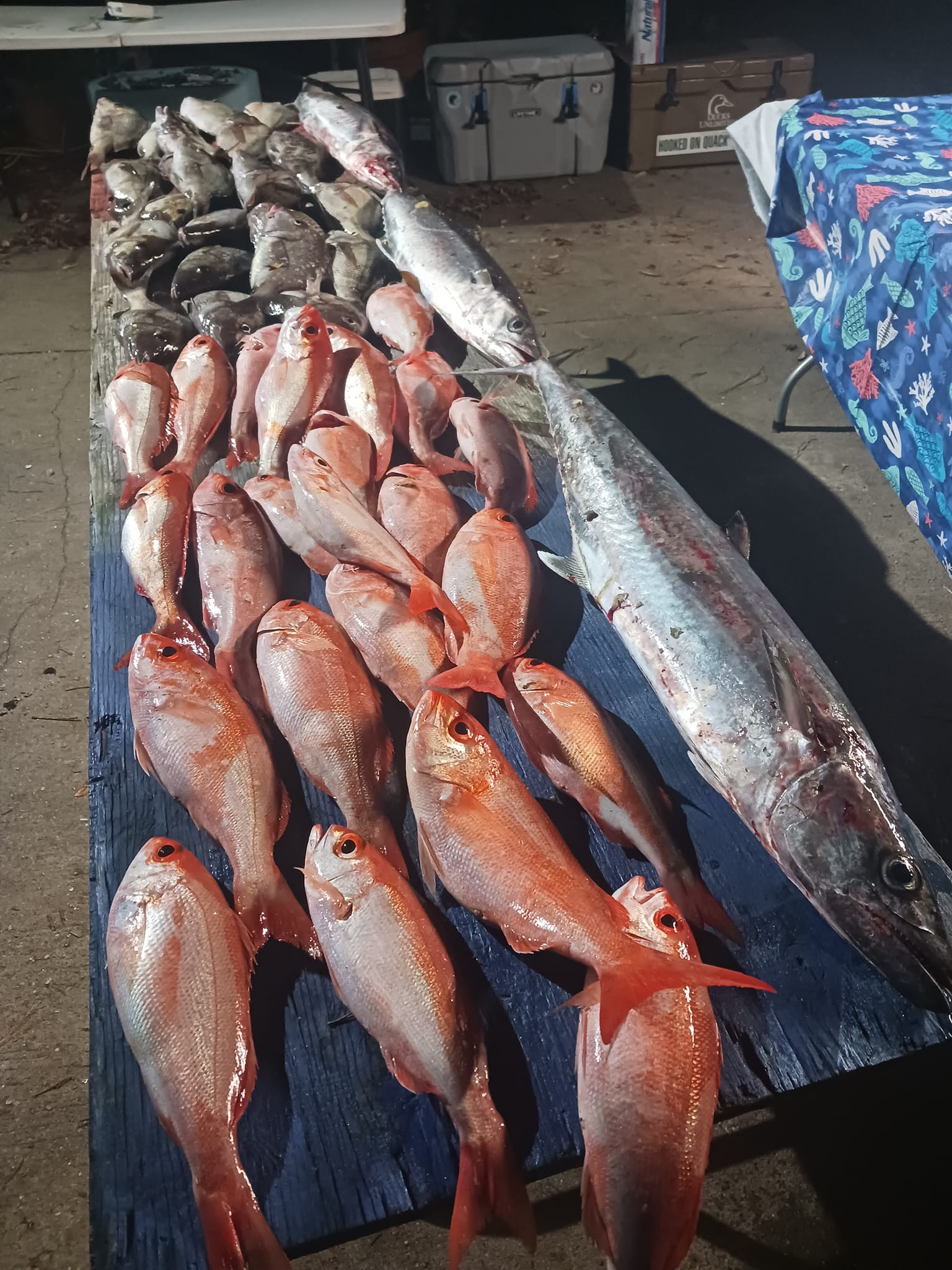
Red snapper might seem like bottom fish, but we find them around structure in 100-200 feet of water on our way to and from the Gulf Stream. These are some of the best eating fish in the ocean, and they put up a solid fight on lighter tackle. Snapper season is tightly regulated, so timing is everything. When they're open, we'll often make a few drops on the way out to load the cooler with dinner before heading to the blue water for the glamour species.
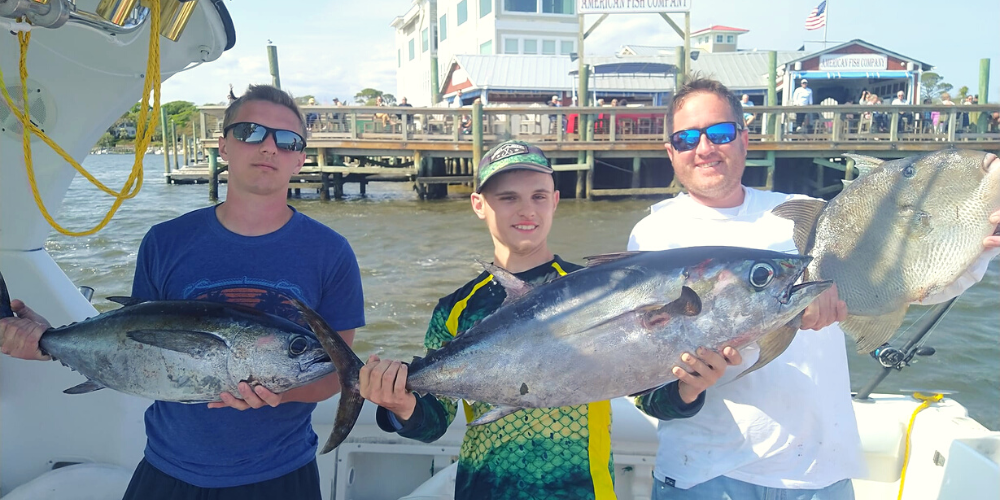
Blackfin tuna are the most underrated fish in North Carolina waters. They're available year-round but peak in the cooler months when they school up in massive numbers. These fish are pure muscle and will test your endurance on spinning tackle. They're also fantastic table fare – think sashimi-grade tuna that's perfect for the grill. We usually find them around temperature breaks and current edges, often mixed in with other species.
Atlantic sailfish are the crown jewel of Gulf Stream fishing. These billfish are most active from late spring through early fall when the water temperature is just right. Sailfish are known for their spectacular aerial displays – they'll dance across the surface on their tail when hooked. Most captains practice catch and release with sails, but the photo opportunities are priceless. Hooking into a sailfish on light tackle is an experience that separates the casual anglers from the serious offshore crowd.
Time to Book Your Spot
This 12-hour Gulf Stream trip represents the pinnacle of North Carolina offshore fishing. You're not just booking a fishing charter – you're investing in stories you'll tell for years and potentially the catch of a lifetime. The Gulf Stream doesn't fish well every day, but when conditions align, it's absolutely world-class. Weather plays a huge role in offshore fishing, so flexibility in your travel dates gives you the best shot at optimal conditions. The spring and fall months typically offer the most consistent fishing with comfortable weather. Book your dates now and get ready to see what all the fuss is about when it comes to North Carolina's legendary offshore fishing scene.
 Private Trip
 Offshore Fishing
 Wilmington


 12-hour Gulf Stream charter targets wahoo, marlin, and mahi