Port O'Connor Shore Fishing for Reds & Drums
Texas Fins and Feathers knows what serious anglers want – direct access to productive waters without the hassle of boat ramps or rough seas. Our Port O'Connor shore fishing trips put you right on the jetties where redfish, black drum, and other inshore favorites cruise the structure looking for an easy meal. Whether you've got 4 hours or want to spend the whole day casting, we'll set you up with everything needed to make the most of these world-class fishing grounds. Port O'Connor's jetties are legendary among Texas anglers for good reason – the fish are here year-round, and you don't need a PhD in fishing to catch them.
What to Expect on the Water
Your guide meets you right at the jetty, gear in hand and ready to get lines wet. No long boat rides or early morning launches – just walk up and start fishing some of the most consistent structure on the Texas coast. The jetties create perfect ambush points where predators wait for baitfish to get swept through the rocks. You'll work different sections depending on tide, wind, and where the fish are showing up that day. Half-day trips run 4-5 hours and give you plenty of time to dial in your technique and land some quality fish. Full-day adventures stretch up to 7 hours, letting you explore different sections and adjust your approach as conditions change throughout the day. With only 3 anglers max, everyone gets personal attention and prime casting spots along the rocks.
Techniques That Work Here
Shore fishing the jetties is all about reading structure and presenting baits where fish expect to find them. Your guide brings everything – rods rigged for different species, tackle boxes loaded with proven lures, and fresh bait that gets results in these waters. You'll learn to work soft plastics along the granite blocks, bounce bottom rigs through channels, and cast topwaters around current breaks. The jetties create natural feeding lanes where fish funnel through, so positioning matters more than fancy gear. Live shrimp under popping corks work magic on trout and redfish, while cut bait on the bottom calls in black drum and flounder. Your guide reads the water conditions and adjusts tactics throughout the trip – sometimes that means switching from artificials to live bait, or moving to deeper water when the bite slows in the shallows.
Top Catches This Season
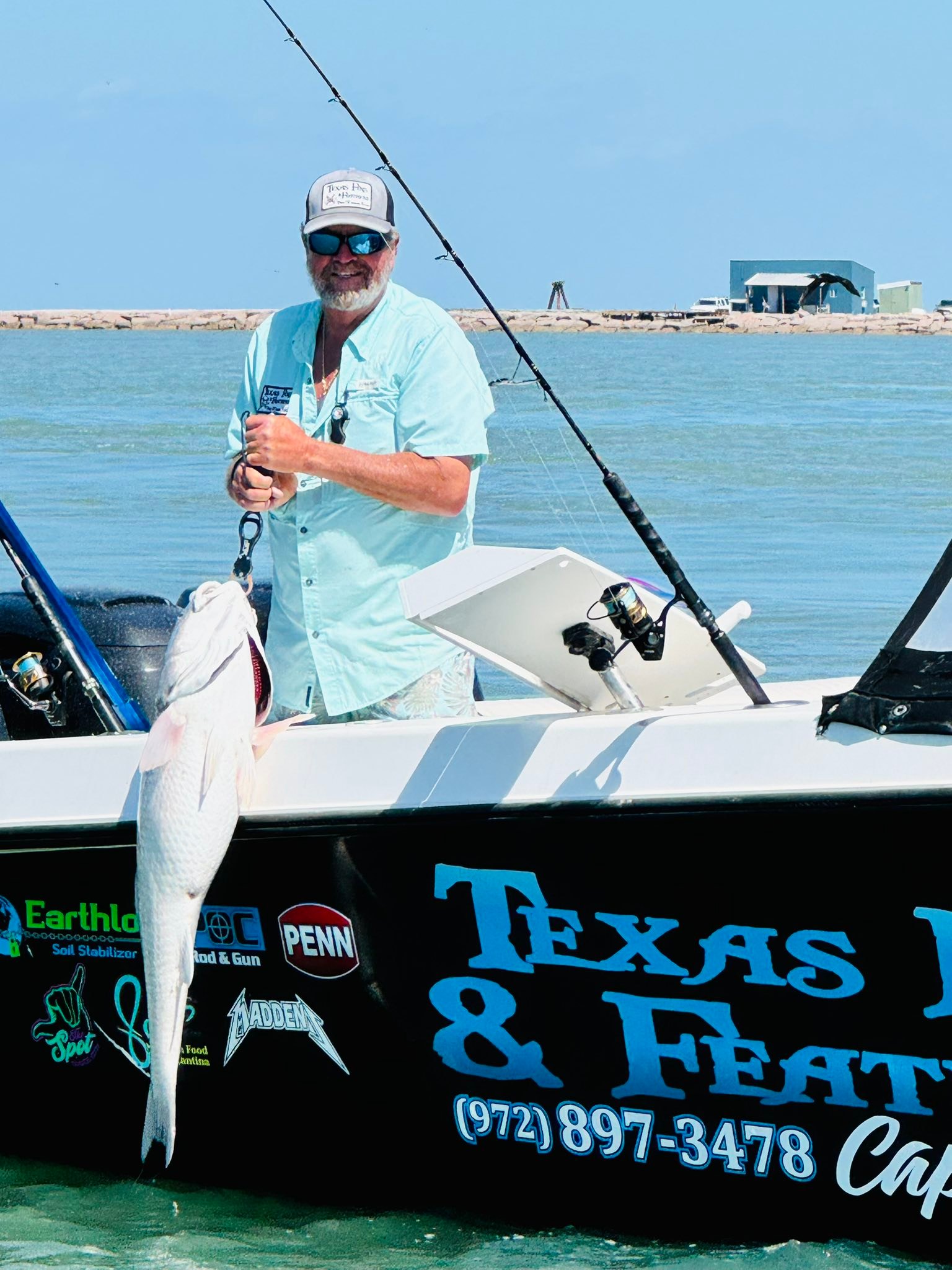
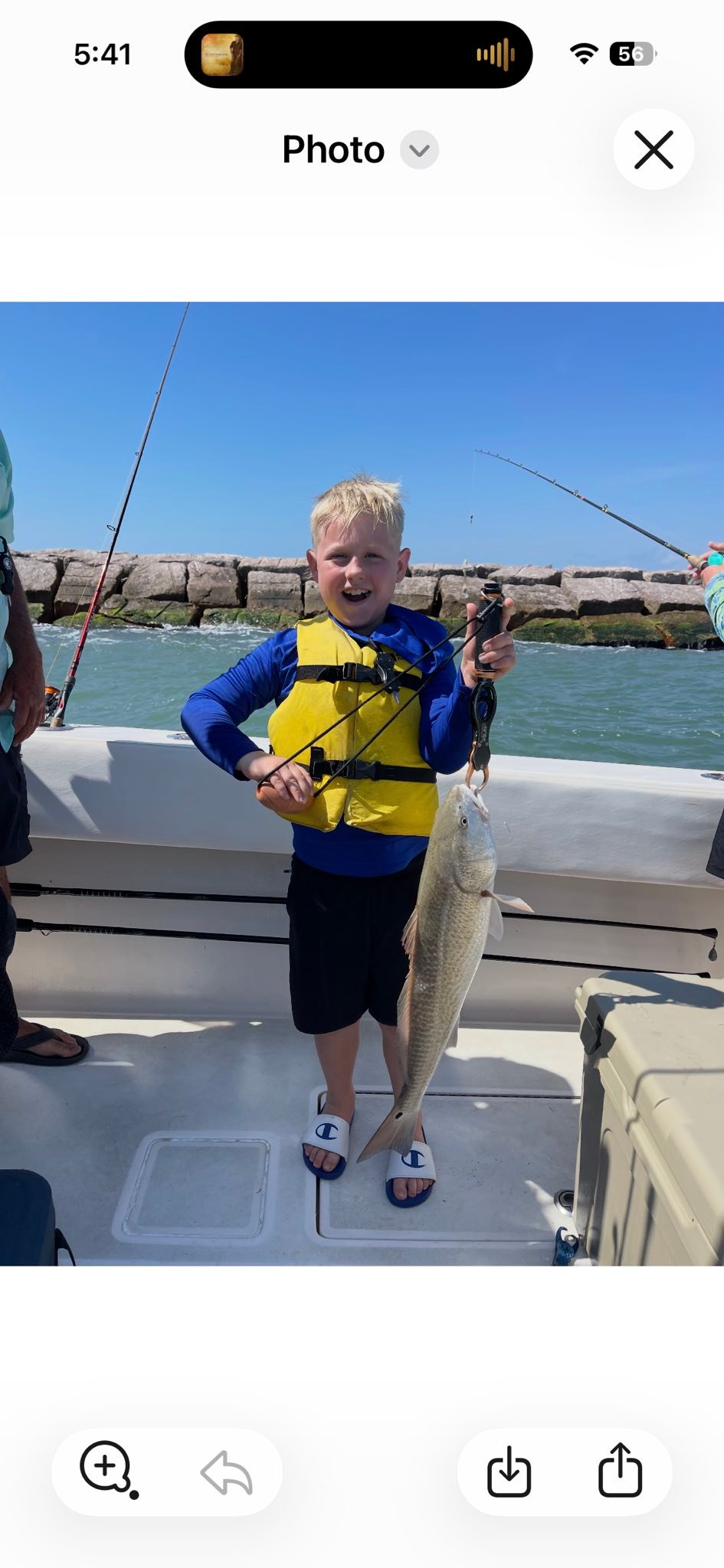
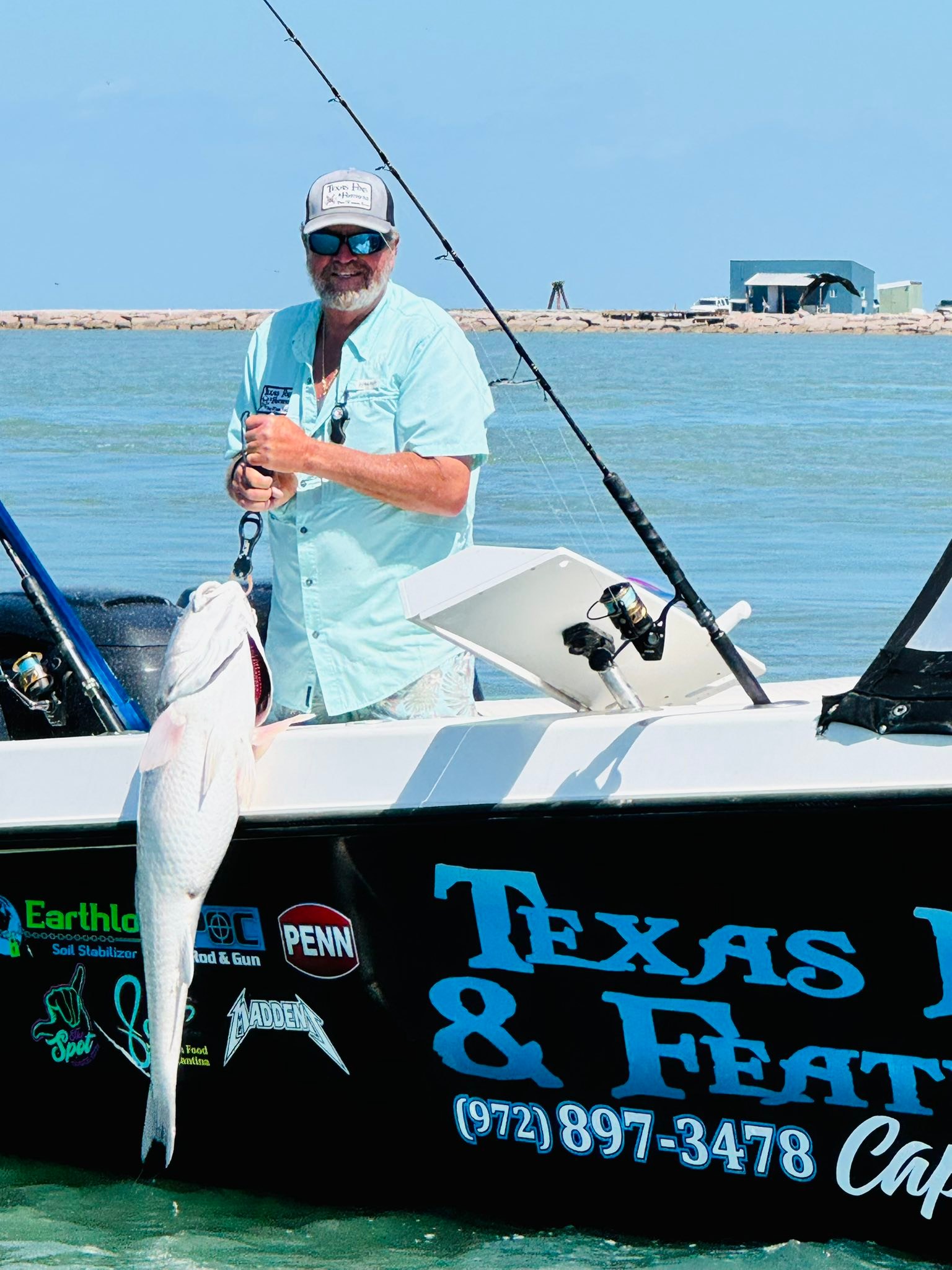
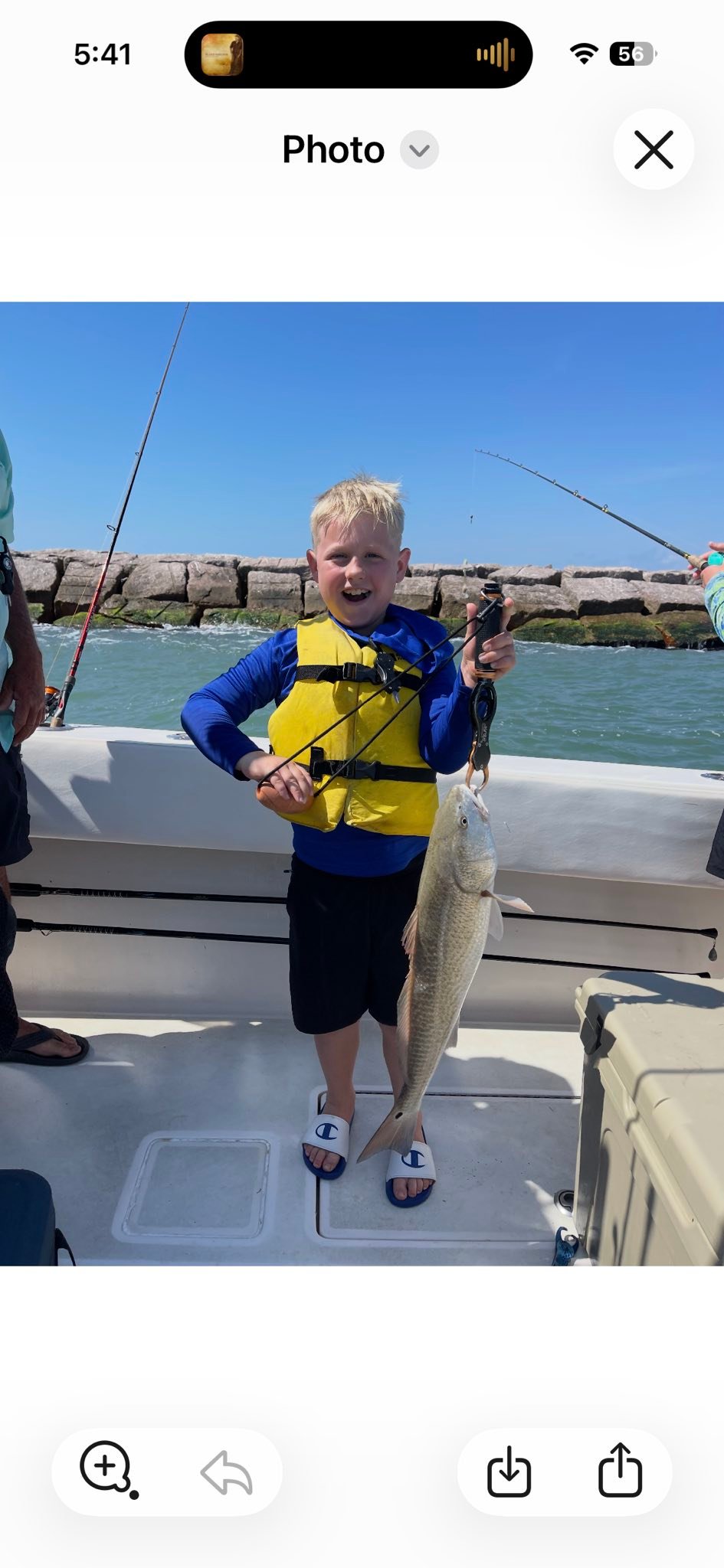
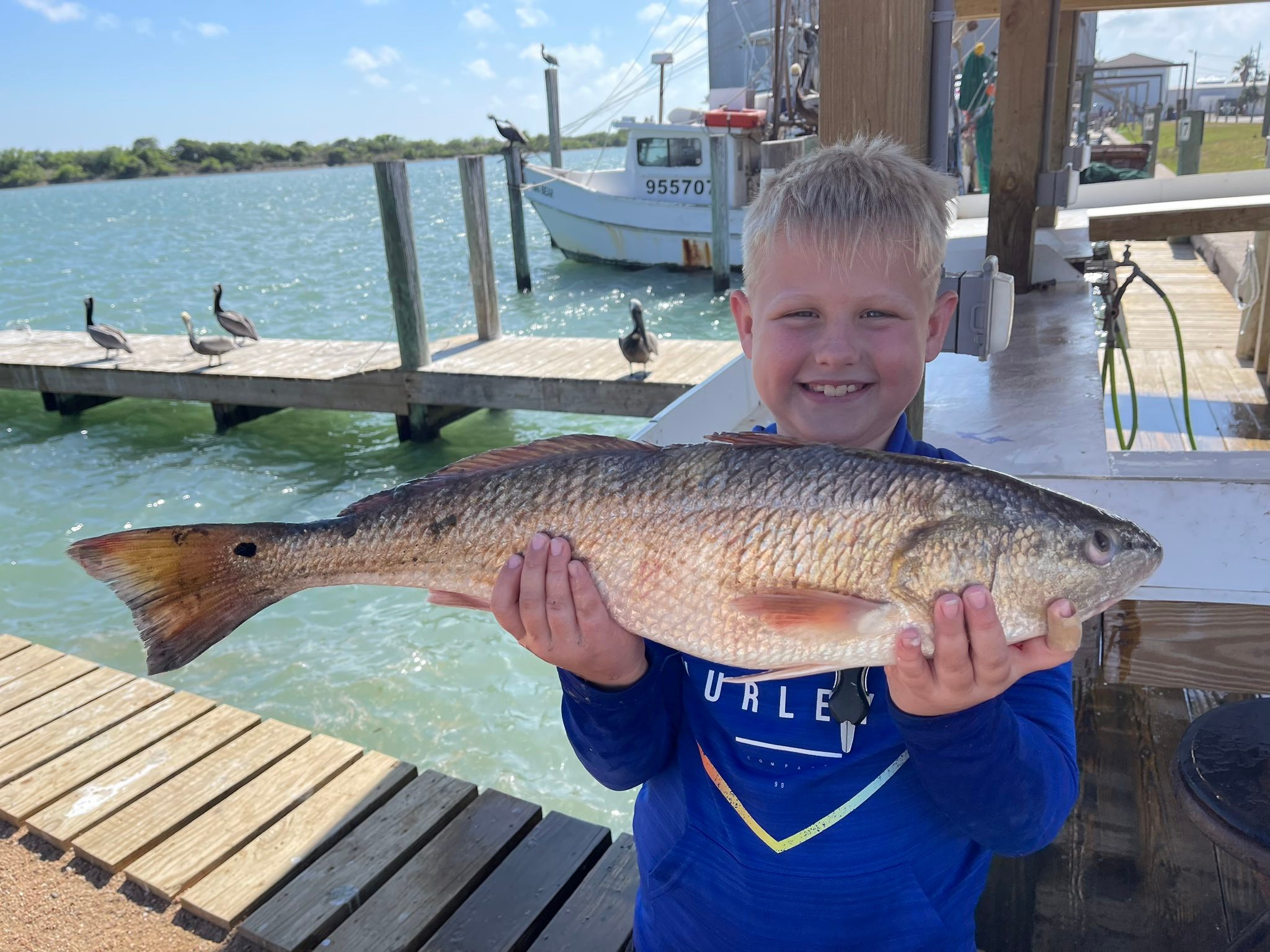
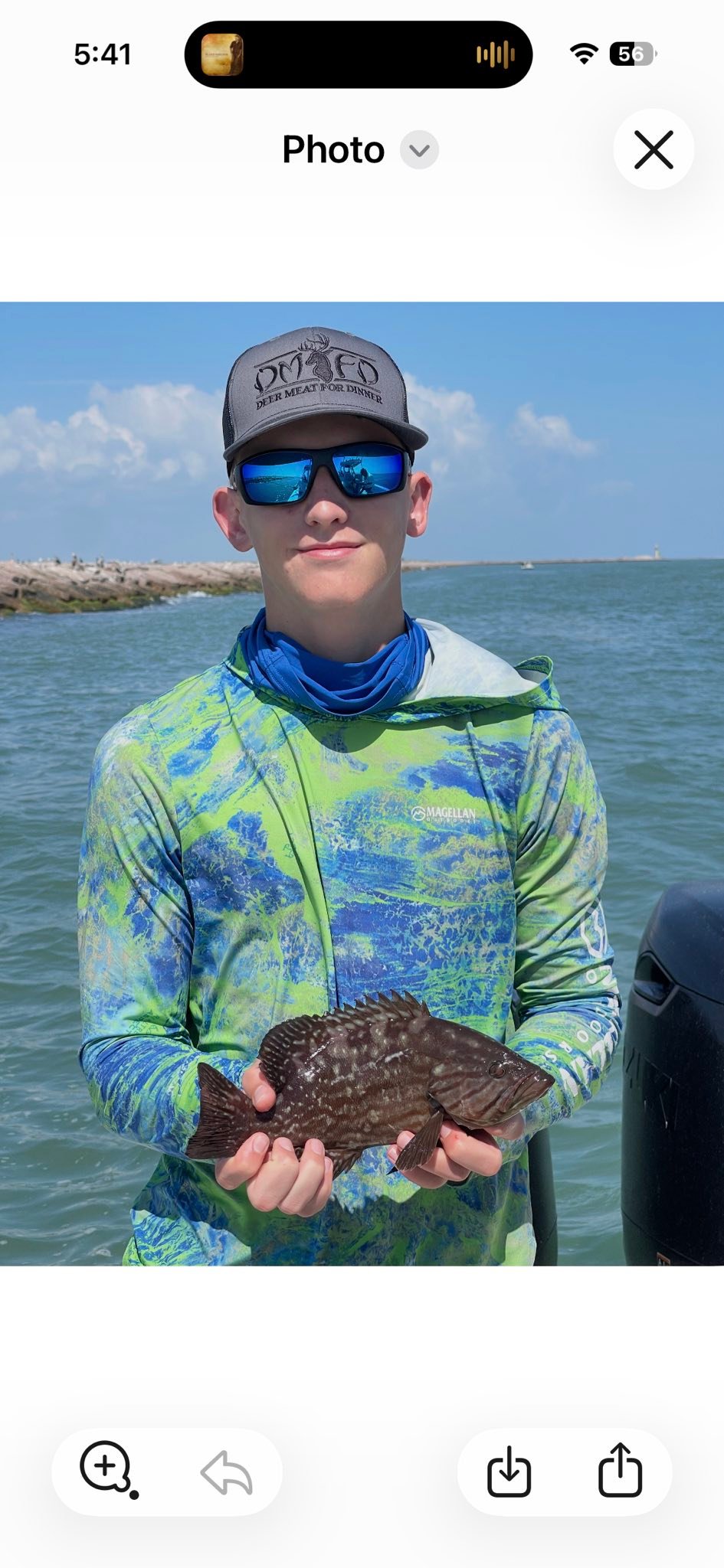
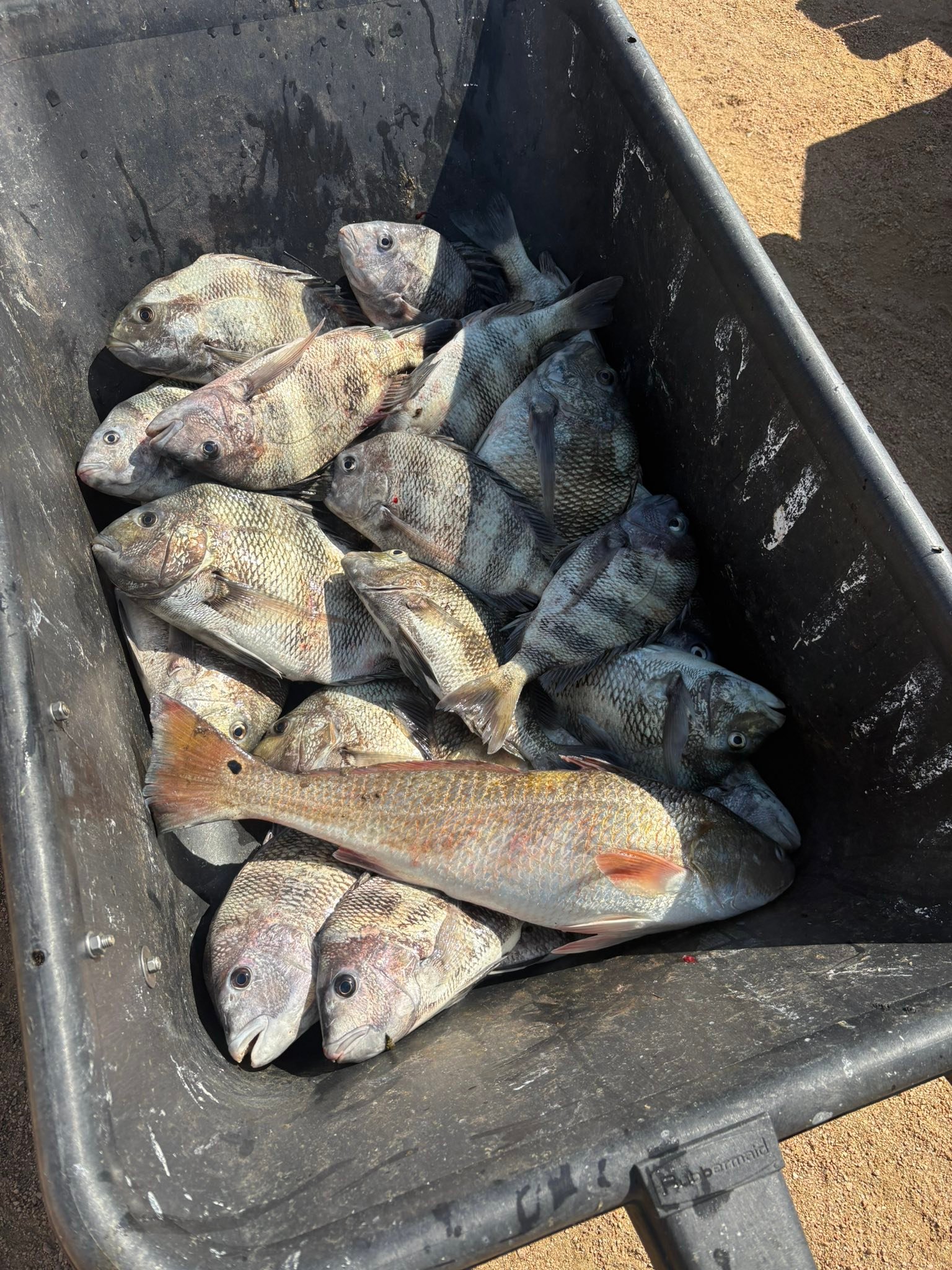
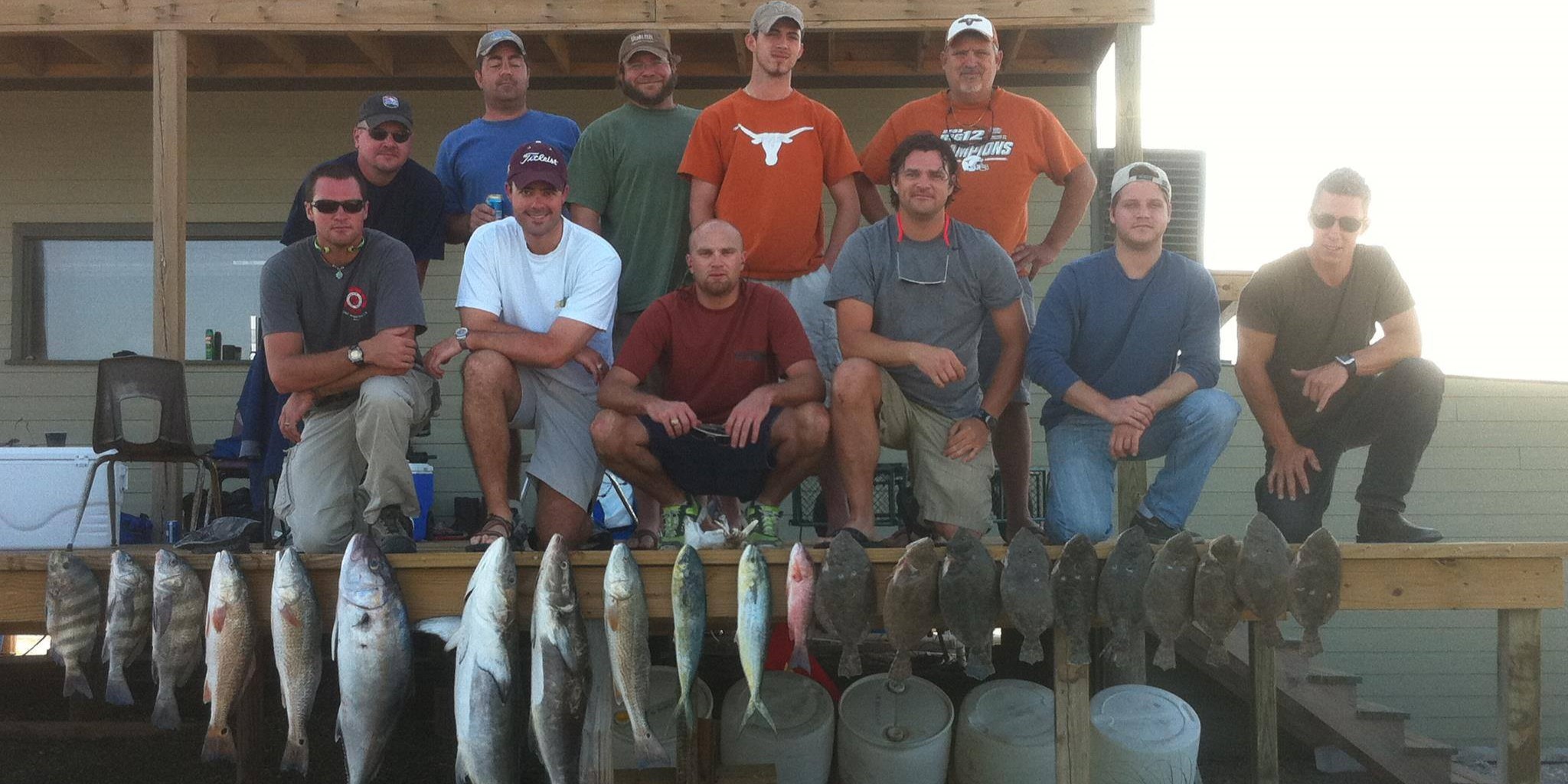
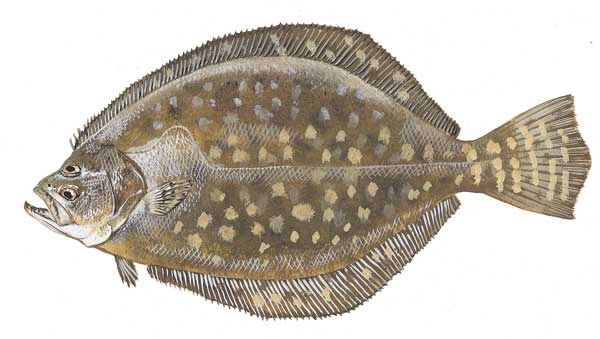
Redfish are the bread and butter of Port O'Connor jetty fishing, and these copper-colored bruisers provide the kind of fights that keep anglers coming back. Look for reds in the 18-27 inch range cruising the rocks year-round, with peak action during spring and fall transitions. They'll crush topwater plugs at first light, then switch to soft plastics as the sun climbs higher. What makes redfish so appealing is their willingness to eat and their stubborn fighting style – they use the current and structure to their advantage, making every hookup a battle. Black drum are the heavyweights of the jetties, with fish pushing 20-30 pounds not uncommon around the deeper sections. These bottom huggers love fresh-cut bait and provide arm-burning fights that test your drag system. Spring brings the biggest drum as they move shallow to spawn, but you'll find keeper-sized fish here almost any month. Southern flounder lie in ambush along sandy pockets between the rocks, especially where current creates washouts and drop-offs. These flatfish are masters of camouflage and explosive strikes – one second your bait is sitting still, the next you're fighting a doormat that's trying to wrap your line around every rock in sight. Fall months bring the best flounder action as they fatten up before heading to deeper water. Sea trout round out the slam opportunities, with speckled beauties roaming the grass flats adjacent to the jetties. These silver bullets love live shrimp and soft plastics, providing fast action when other species are being finicky. Early morning and late evening produce the most consistent trout action, though overcast days can keep them biting all day long.
Time to Book Your Spot
Port O'Connor's jetties fish well year-round, but the beauty of shore fishing is you're not fighting weather like offshore trips. Your guide knows which sections produce best under different conditions and has backup spots when one area gets crowded or the fish move. Half-day trips perfect for families or anglers wanting a taste of jetty fishing, while full-day adventures give you time to really dial in techniques and target multiple species. All gear included means you just show up ready to fish – no need to invest in specialized tackle or figure out local bait shops. This top-rated shore fishing experience consistently delivers for both rookie anglers and seasoned pros looking to add some variety to their fishing routine. Book your Port O'Connor jetty trip and see why these granite rocks have earned their reputation as some of the most productive shore fishing on the Texas coast.
 Private Trip
 Shore Fishing
 Port O'Connor


 Private shore fishing from Port O'Connor jetty for redfish