Extended Half Day Catfish And Crappie Fishing Trip
Lake Texoma sits right on the Texas-Oklahoma border and serves up some of the best mixed-species fishing you'll find in the region. This six-hour charter gives you serious time to work the water and target everything from hard-fighting stripers to tasty crappie and monster catfish. You're not just getting a quick trip here – this is a full morning or afternoon on one of the most productive fisheries in the south. With plenty of time to switch tactics and chase different species, you'll maximize your chances of filling the cooler while enjoying the laid-back atmosphere that makes Lake Texoma fishing so special.
What to Expect on the Water
Your guide knows where the fish are holding and will adjust tactics throughout the day based on what's biting. Six hours gives you the luxury of patience – you can work structure thoroughly, try multiple spots, and really dial in what the fish want. The boat stays comfortable for up to two anglers, so you won't feel crowded even during the hottest action. Expect to cover different depths and areas as you target various species. When the stripers are cooperative, you might reach your limit early and switch gears to fill out your catch with crappie or catfish. The guide handles all the technical stuff like finding fish on electronics, rigging baits, and suggesting the best techniques for current conditions. You just focus on setting hooks and enjoying the fight.
Techniques and Tackle Setup
Lake Texoma fishing requires different approaches depending on your target species and the season. For stripers, you'll likely troll umbrella rigs or work live bait around submerged structure and drop-offs. The guide provides all tackle, but expect medium to heavy action rods that can handle these bruising fish. Crappie fishing shifts to lighter tackle with jigs, minnows, or small plastics worked around brush piles and standing timber. Catfishing might involve bottom rigs with cut bait or live offerings near deeper channels and creek mouths. The beauty of this extended trip is switching between techniques without feeling rushed. Your guide reads the water and adjusts accordingly – maybe starting deep for stripers at dawn, then moving shallow for crappie as the sun comes up, or targeting catfish holes during midday when other species go quiet.
Customer Stories
"Look forward to future guides" - Jason. "It was fantastic. Told the captain "do me a solid, since we haven't ever fished here before, treat us as though we had never fished before" He did... Baited our hooks, unhooked our fish, and I was simply waiting for the " be quiet you will scare the fish away". Caught some massive fish and was excited to have time to relax and talk about boxing. This is a memory I can hold on to" - Travis. "Enjoyed the trip caught plenty of fish while it rained. Will be a great memory" - Calvin.
Species You'll Want to Hook
Crappie are the bread and butter panfish that keep anglers coming back to Texoma year after year. These slab-sided fighters typically run 10 to 14 inches with occasional monsters pushing 16 inches or better. Spring brings the best crappie action when they move shallow to spawn, but you can catch them year-round by adjusting depth and presentation. They school heavily around submerged timber, brush piles, and creek channels. What makes crappie special is their delicate bite – you need to stay focused and set the hook at the first tick. Plus, few fish taste better in the pan, making them a perfect target for keeping dinner.
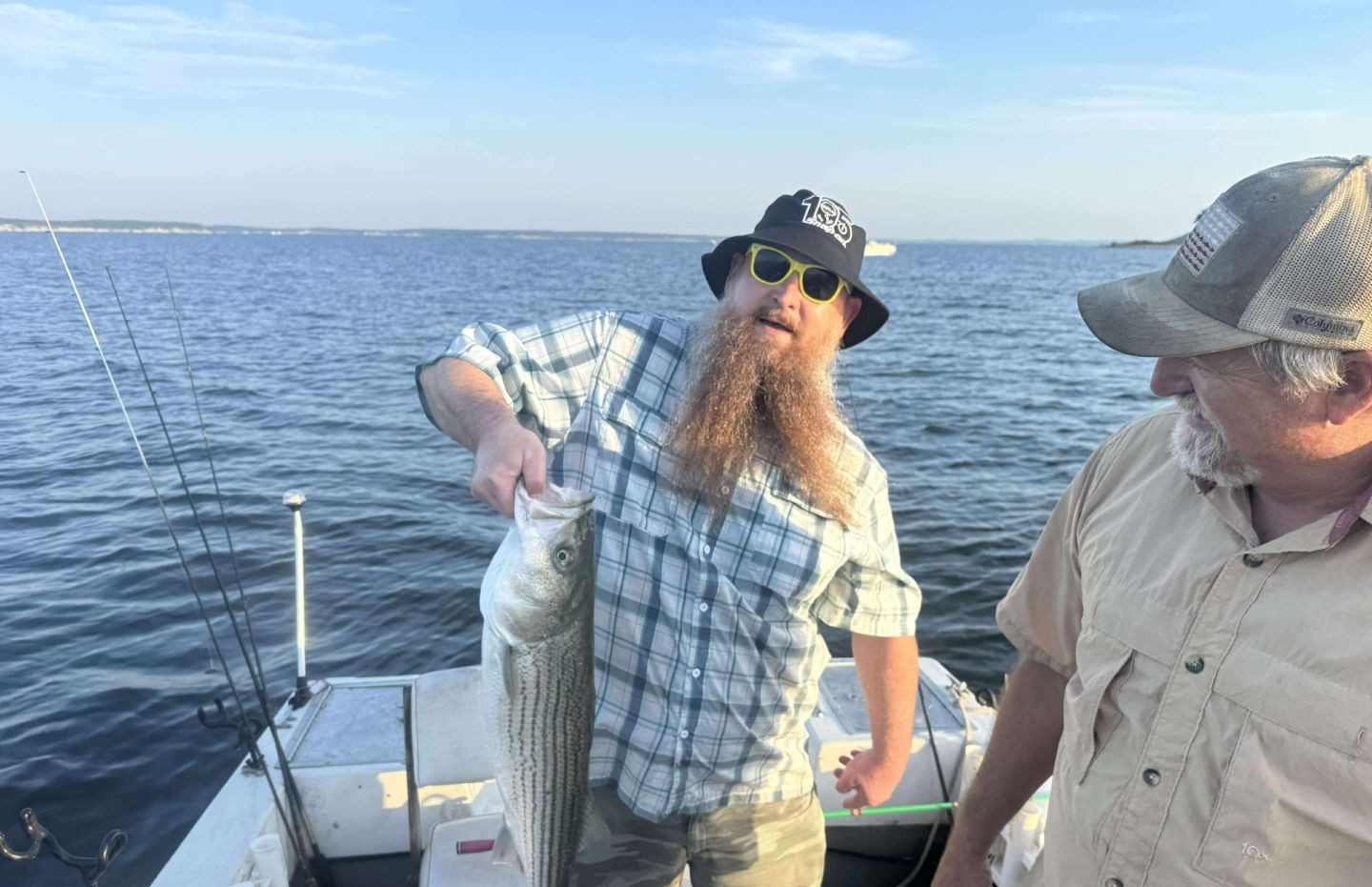
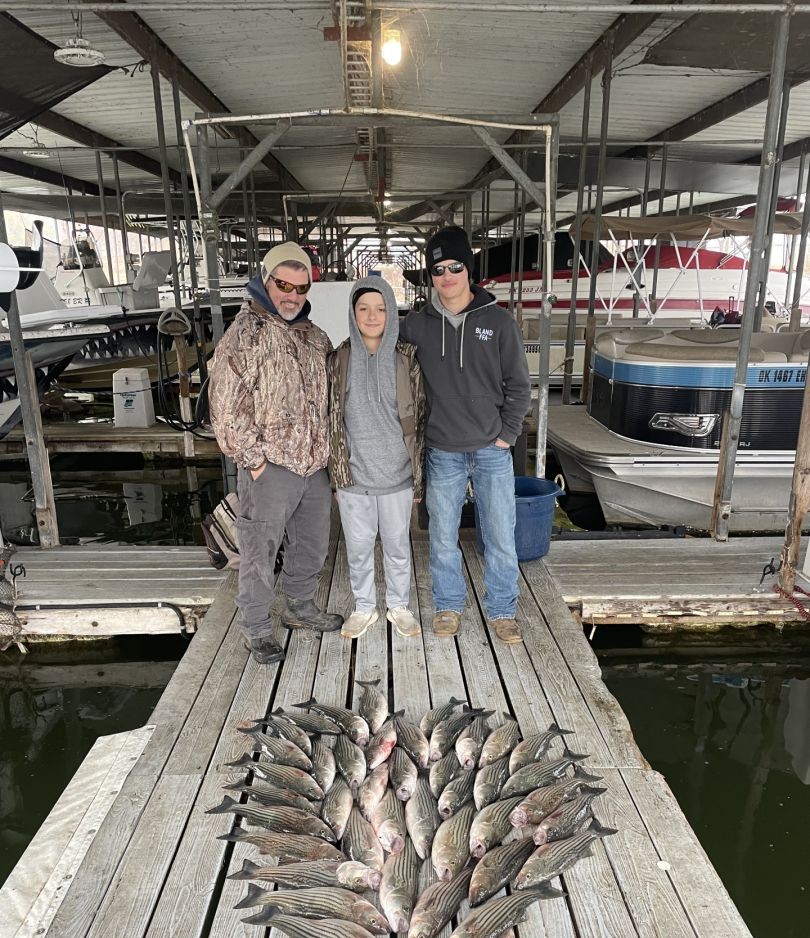
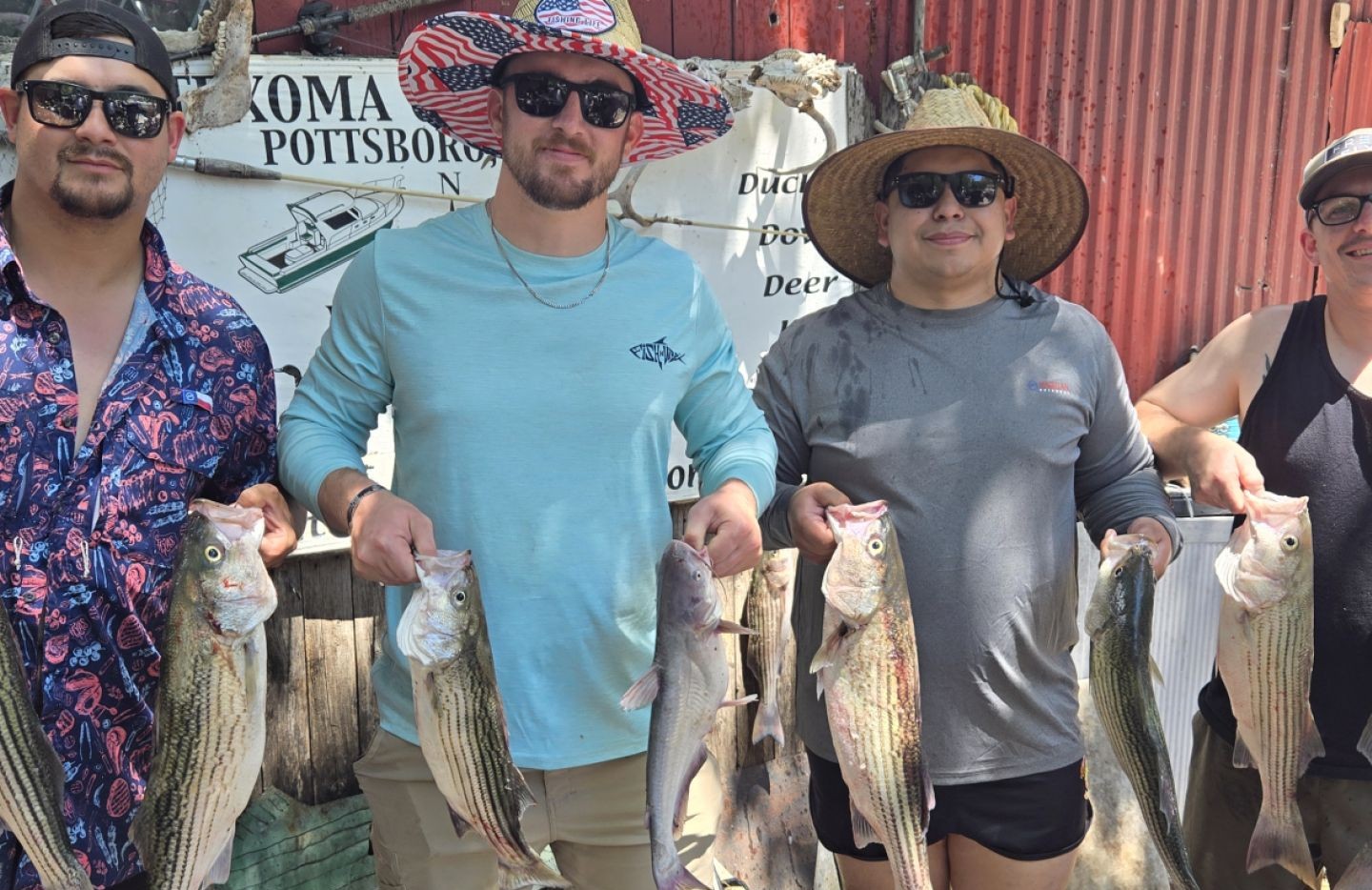
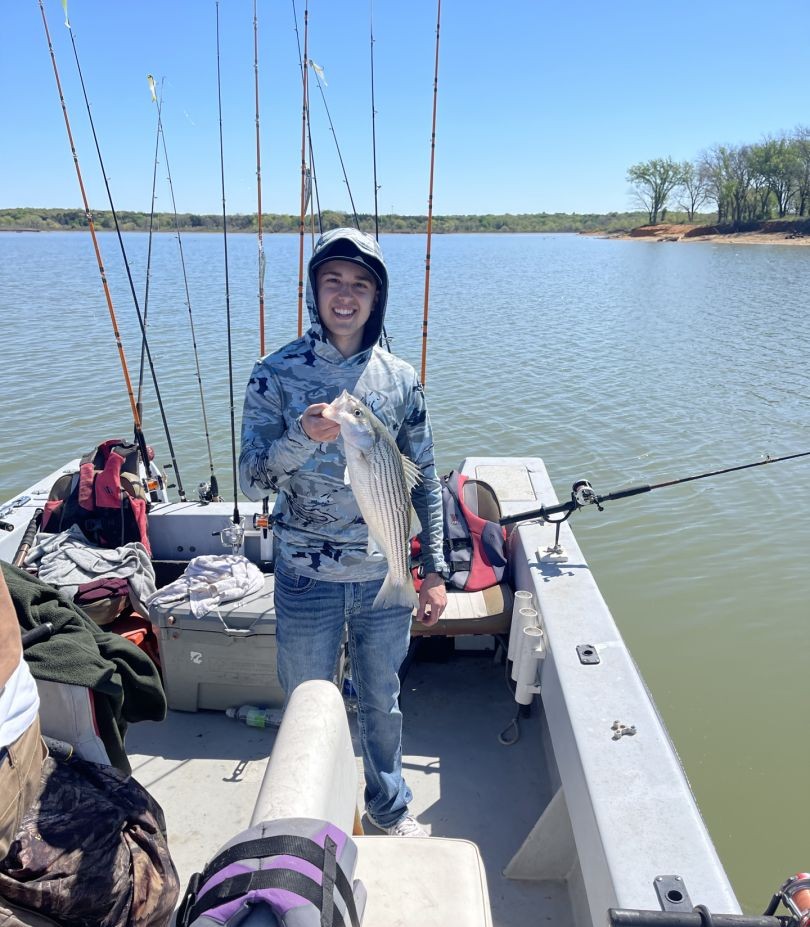
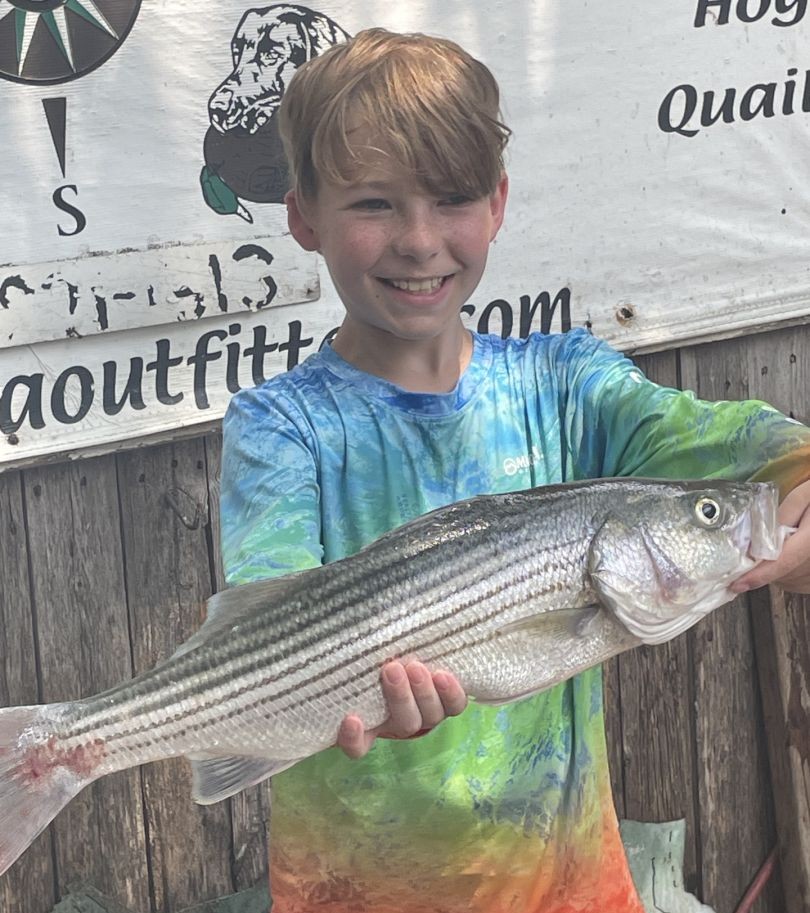
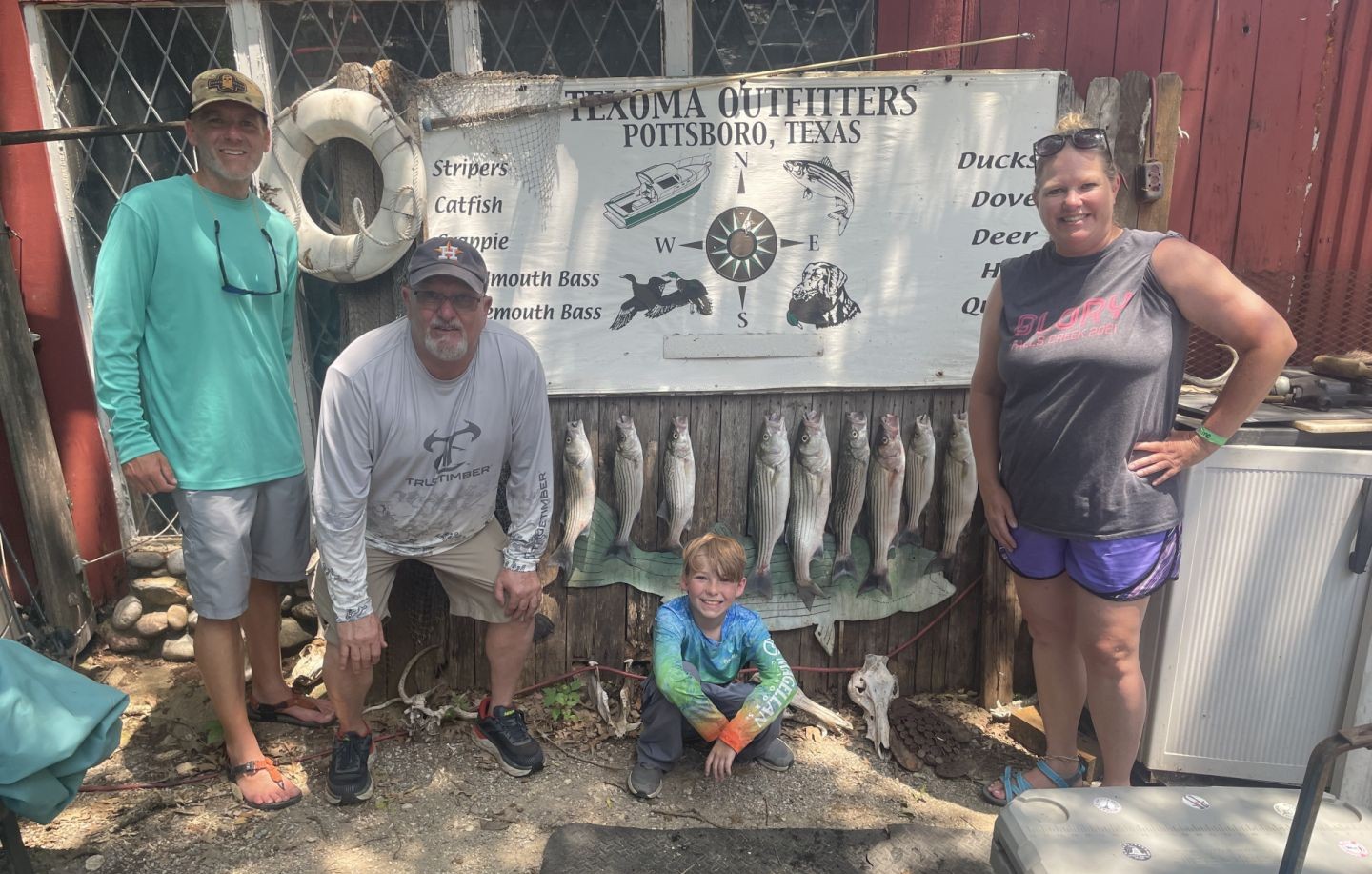
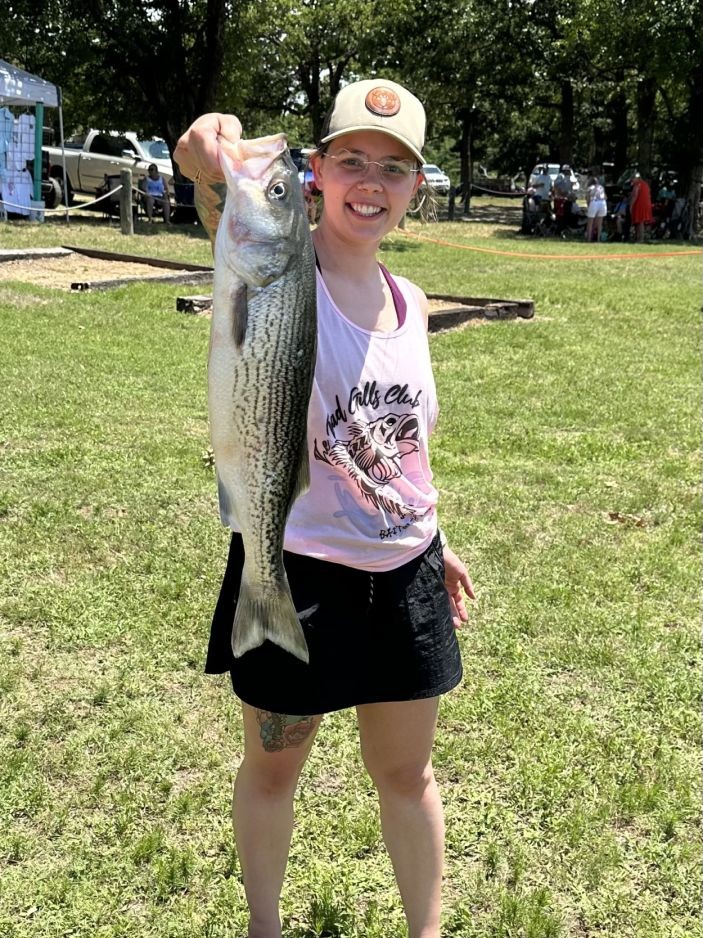
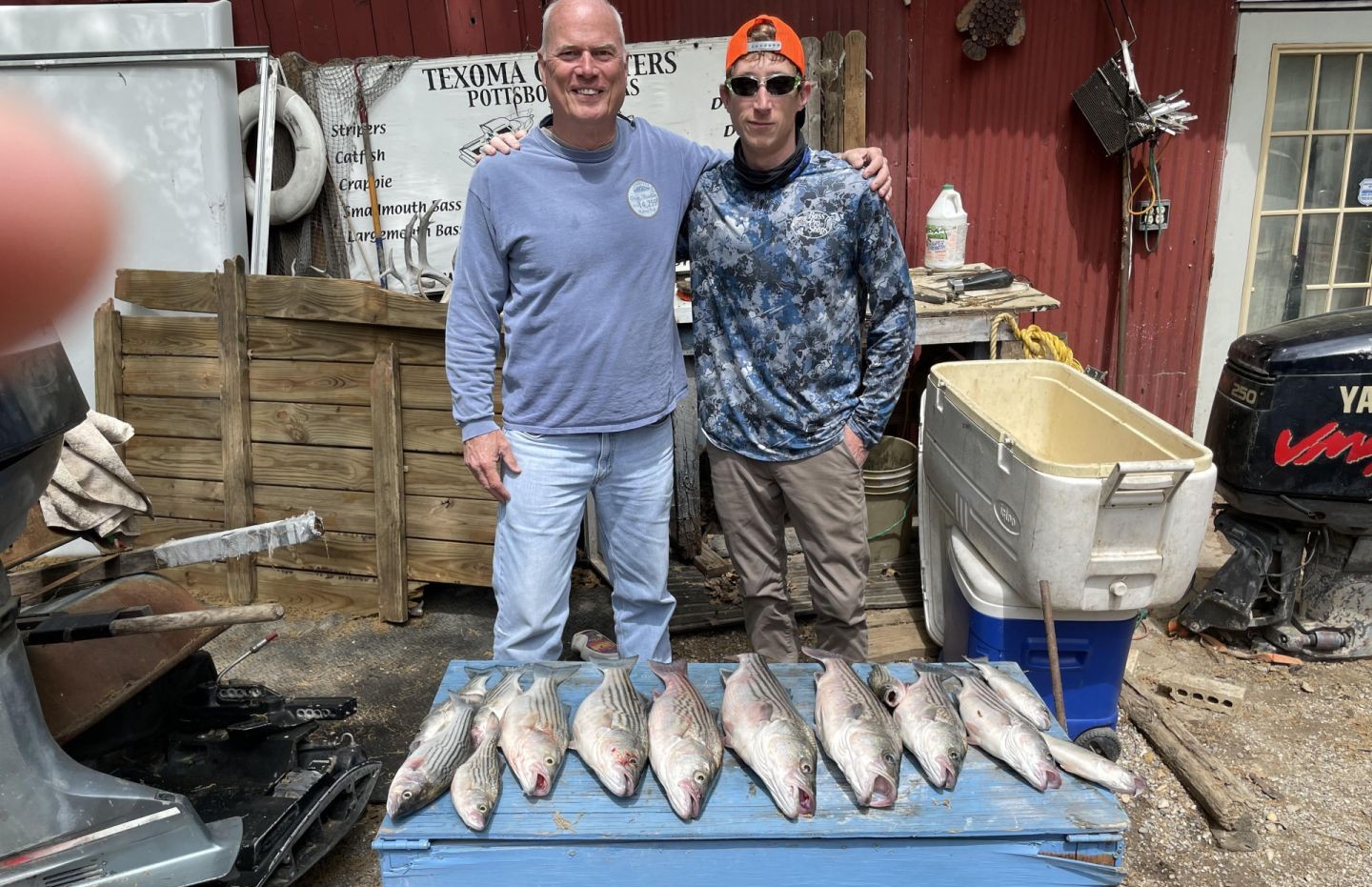
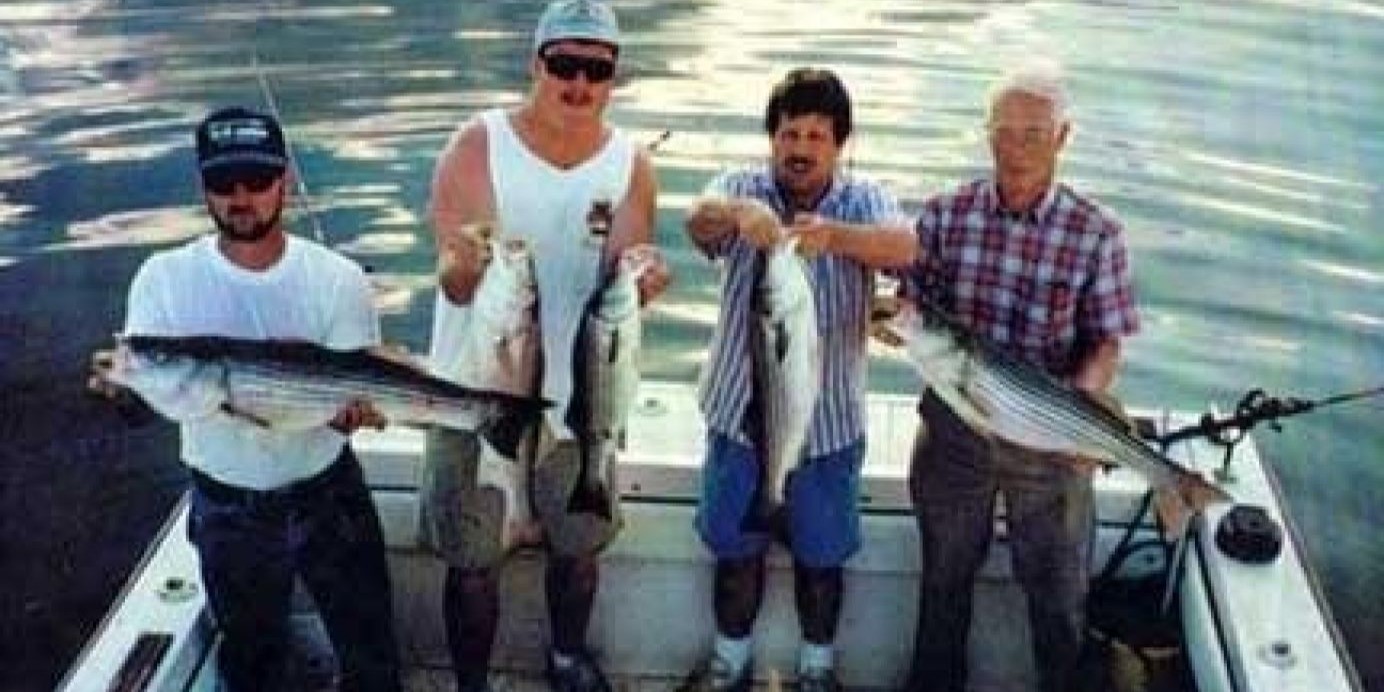
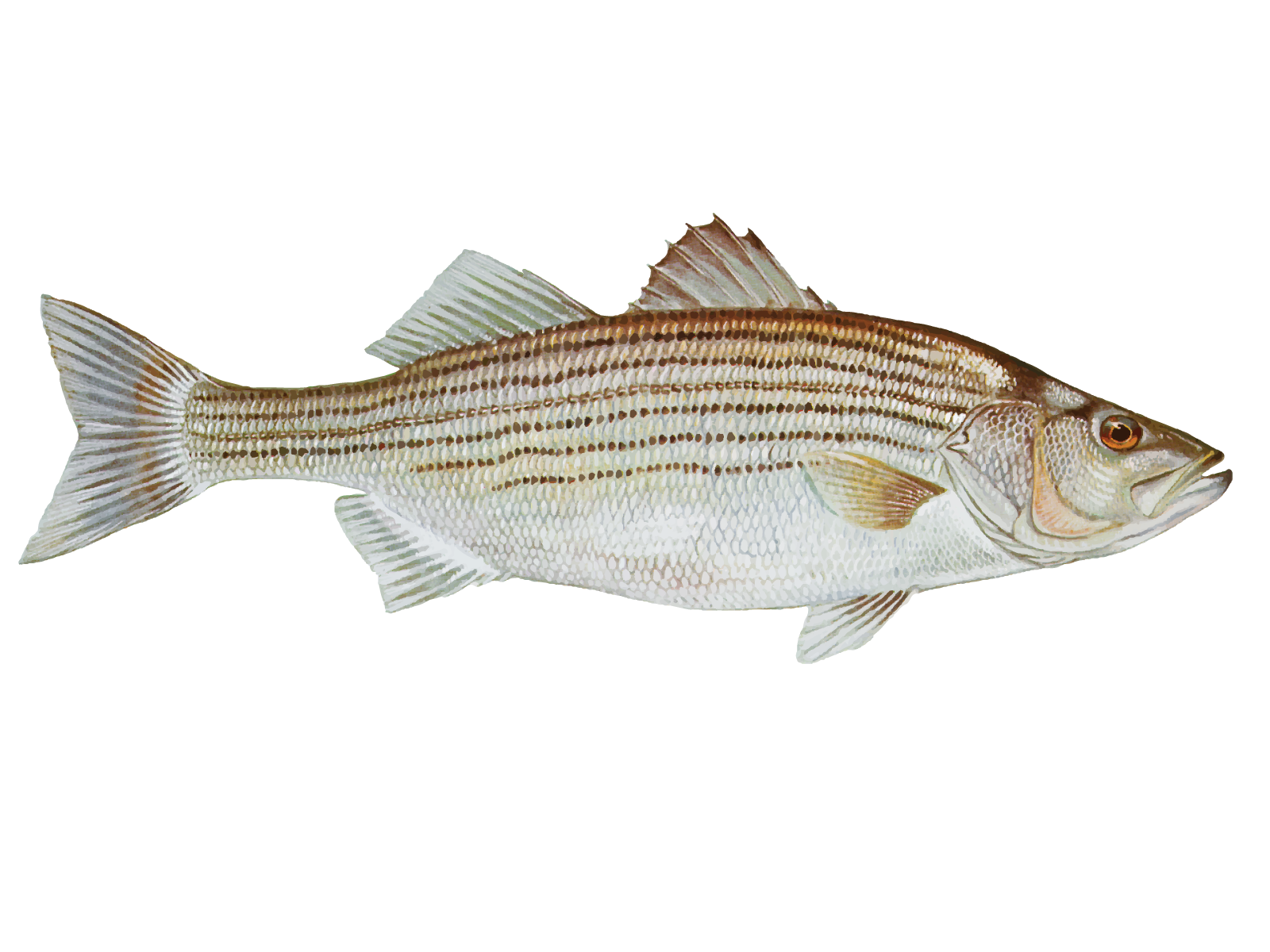
Striped Bass are Lake Texoma's premier gamefish and the reason this lake gained its reputation. These silver rockets average 3 to 8 pounds but can easily reach 20 pounds or more in these fertile waters. They're most active during cooler months and low-light periods, often feeding in massive schools that create surface feeding frenzies. When you hook a good striper, expect multiple runs and head shakes that test your drag system. The limit helps protect the fishery, but reaching it means you've had a successful day. Stripers feed heavily on shad, so matching that baitfish profile is key to consistent success.
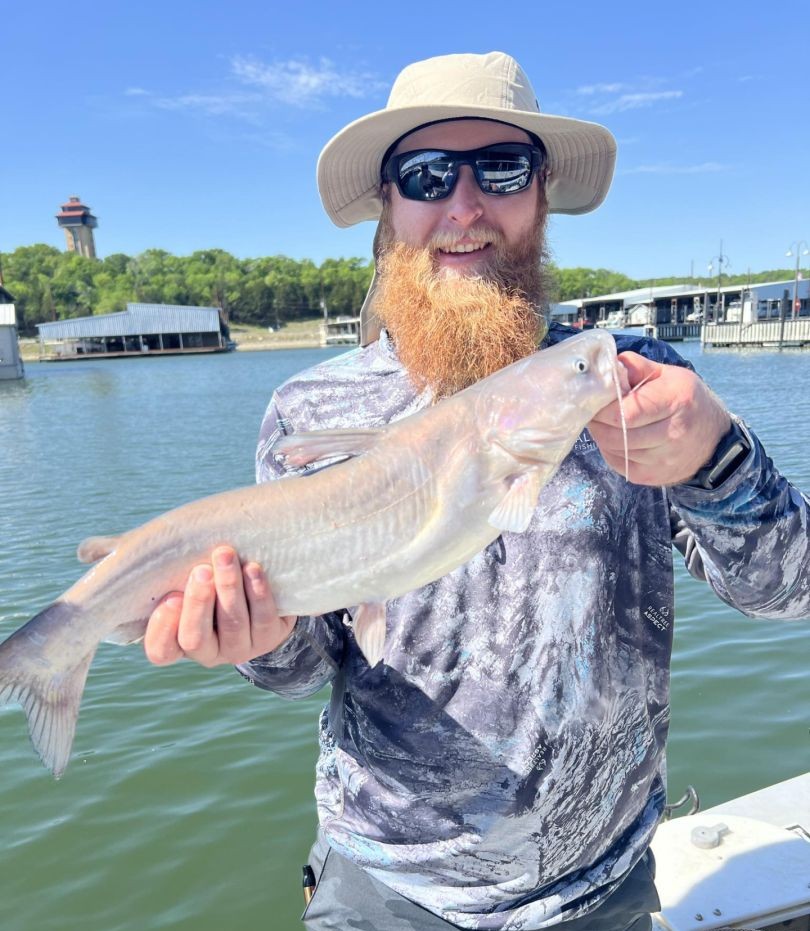
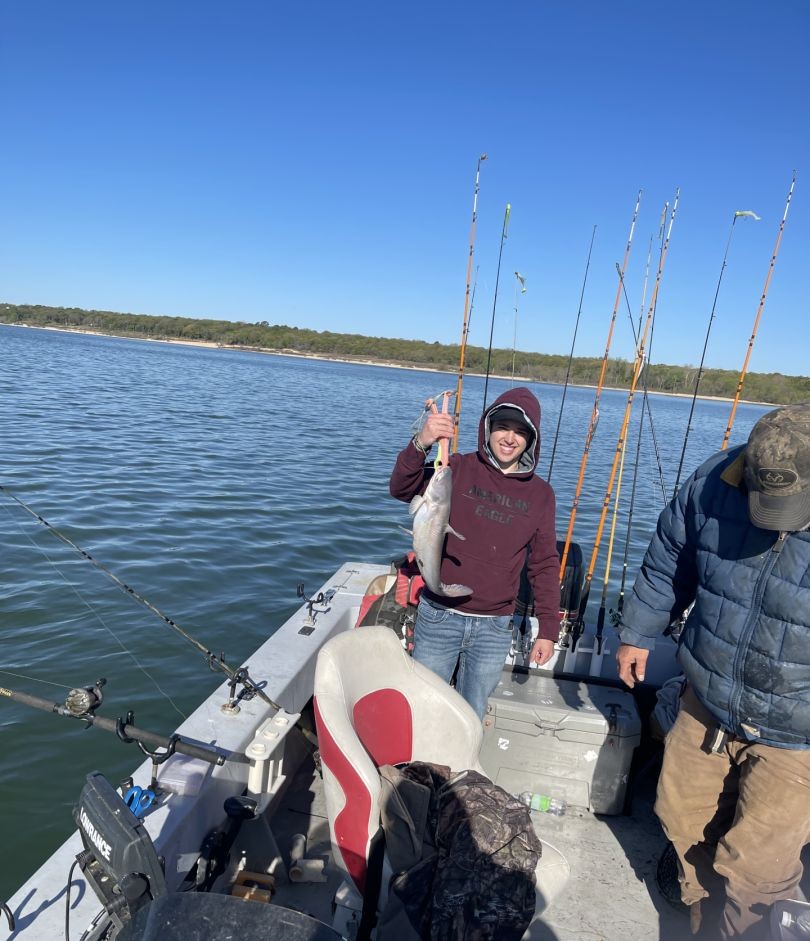
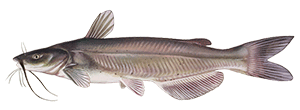
Channel Catfish provide steady action when other species get finicky, especially during hot summer days and cold winter periods. Texoma's channels typically weigh 2 to 8 pounds and fight harder than you'd expect from a catfish. They respond well to cut baits, live offerings, and prepared stink baits fished near bottom structure. Channel cats are most active at night but can be caught throughout the day in deeper water. Their whiskers help them locate food by smell and taste, making scent-based baits particularly effective.
Blue Catfish grow huge in Lake Texoma's nutrient-rich waters, with fish over 30 pounds caught regularly and giants exceeding 50 pounds always possible. These are the tackle-busters that keep serious catfish anglers coming back. Blues prefer deeper water and current breaks, often relating to the original Red River channel that runs through the lake. They're opportunistic feeders that take cut shad, live bait, and various prepared baits. Landing a big blue requires patience and proper technique – they use their bulk and the current to make long, powerful runs.
Flathead Catfish are the apex predator among Lake Texoma's catfish species, preferring live bait and ambush tactics around heavy structure. These yellow cats can exceed 40 pounds and provide fights that you'll remember for years. They're most active during warm months and feed primarily at night, though deeper daytime spots can produce. Flatheads require specific techniques – live bait near logjams, undercut banks, and deep holes where they wait to ambush prey. Their prehistoric appearance and bulldogging fight style make them a bucket-list catch for many visiting anglers.
Time to Book Your Spot
 5.0(5 Reviews)
 Private Trip
 Lakes/Reservoirs/Ponds Fishing
 Top Rated
 Pottsboro


 Six-hour fishing charter targeting Striped Bass, Catfish, and Crappie