10-Hour Deep Bottom Fishing – 50 to 70 Miles
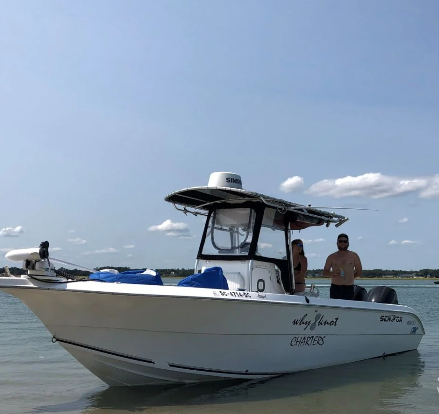
Picture this: you're 50-70 miles out in the deep blue, where the water's so clear you can see straight down, and the bottom structure holds monster fish that rarely see a hook. This isn't your typical nearshore trip – we're talking about a serious offshore adventure aboard our 26' Sea Fox that'll put you on fish that most anglers only dream about. When you venture this far out, you're entering prime territory for grouper that'll test your drag system, snapper that fight like they're twice their size, and cobia cruising the mid-water column like submarines. The ride out takes time, but trust me, every mile is worth it when you're battling fish in water that sees maybe a handful of boats each month.
What to Expect on the Water
This 10-hour charter starts early – we're talking first light departure because we've got serious ground to cover. The Sea Fox is built for these long hauls, with plenty of room for our group of four anglers to spread out and work the rails comfortably. Once we clear the nearshore crowds, it's a straight shot to the deep stuff where the real magic happens. Out here, we're fishing structure in 150-300 feet of water, targeting ledges, hard bottom, and artificial reefs that hold concentrations of big fish. The water clarity is outstanding this far offshore, and you'll notice the difference in fish behavior – they're less spooked but way more aggressive when they decide to eat. We'll anchor up on productive spots and work them methodically, rotating positions so everyone gets prime real estate. The boat's equipped with quality rods and reels that can handle the heavy tackle needed for deep dropping, plus we've got a solid fish box and ice system to keep your catch fresh during the long day.
Deep Dropping Techniques
Bottom fishing at these depths requires a different approach than your typical inshore setup. We're using heavy conventional reels loaded with 60-80 pound braid, paired with stout rods that can muscle fish up from the depths without wearing you out completely. The technique is all about reading the bottom structure on the electronics and positioning baits right in the strike zone. We'll rig up with circle hooks and heavy sinkers – usually 8-16 ounces depending on current – to get baits down fast and keep them in contact with the bottom. Fresh bait is key out here, so we'll have a selection of cut bait, squid, and live offerings when available. The drop takes time at these depths, sometimes over a minute to reach bottom, but when something grabs hold down there, you'll know it immediately. Fighting fish from 200+ feet of water is a completely different game – they use the water column to their advantage, and you'll feel every head shake amplified by the depth. I'll coach you through the fight, teaching you when to pump and wind versus when to just hold on and let the drag do its job.
Species You'll Want to Hook
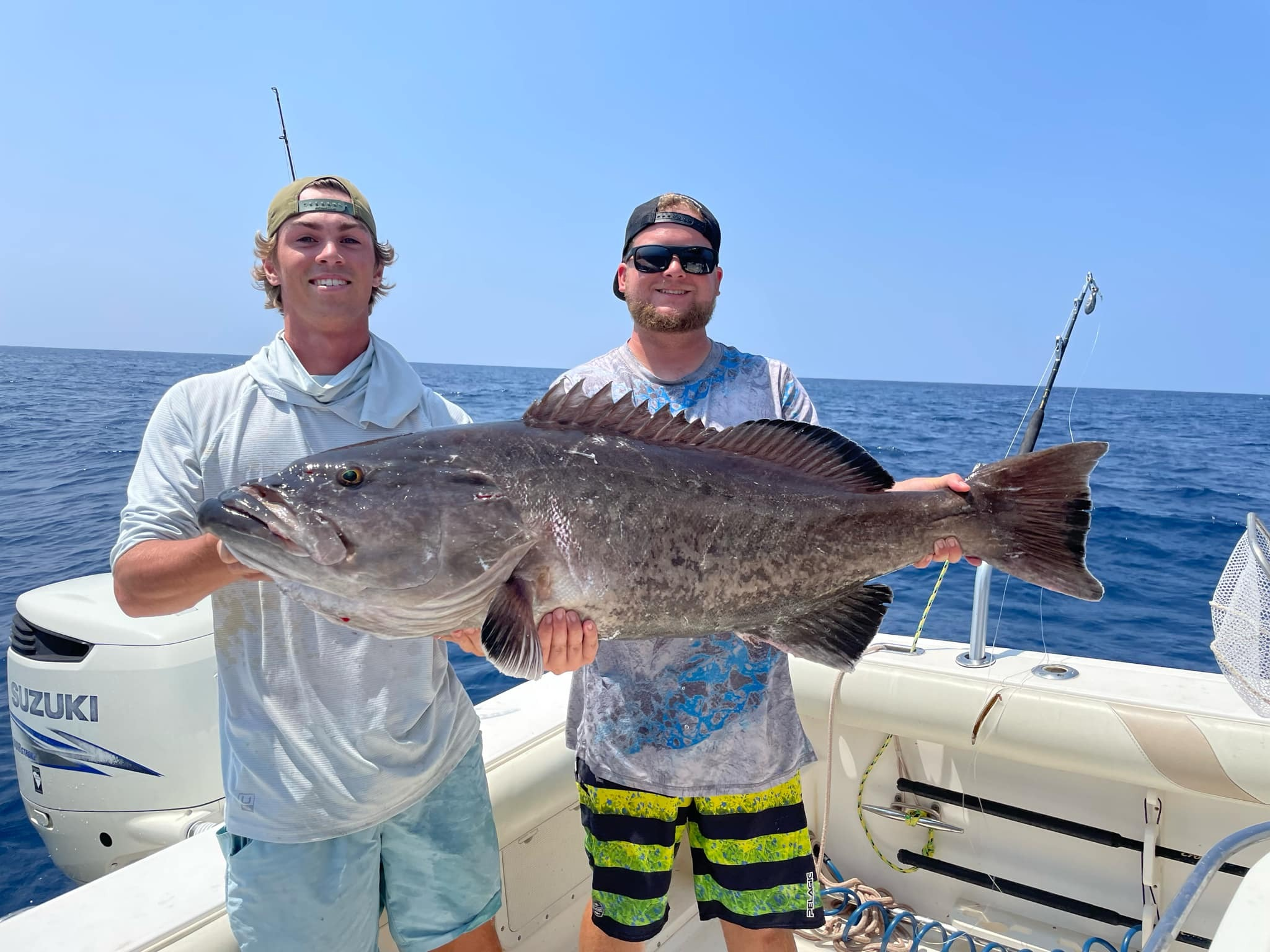
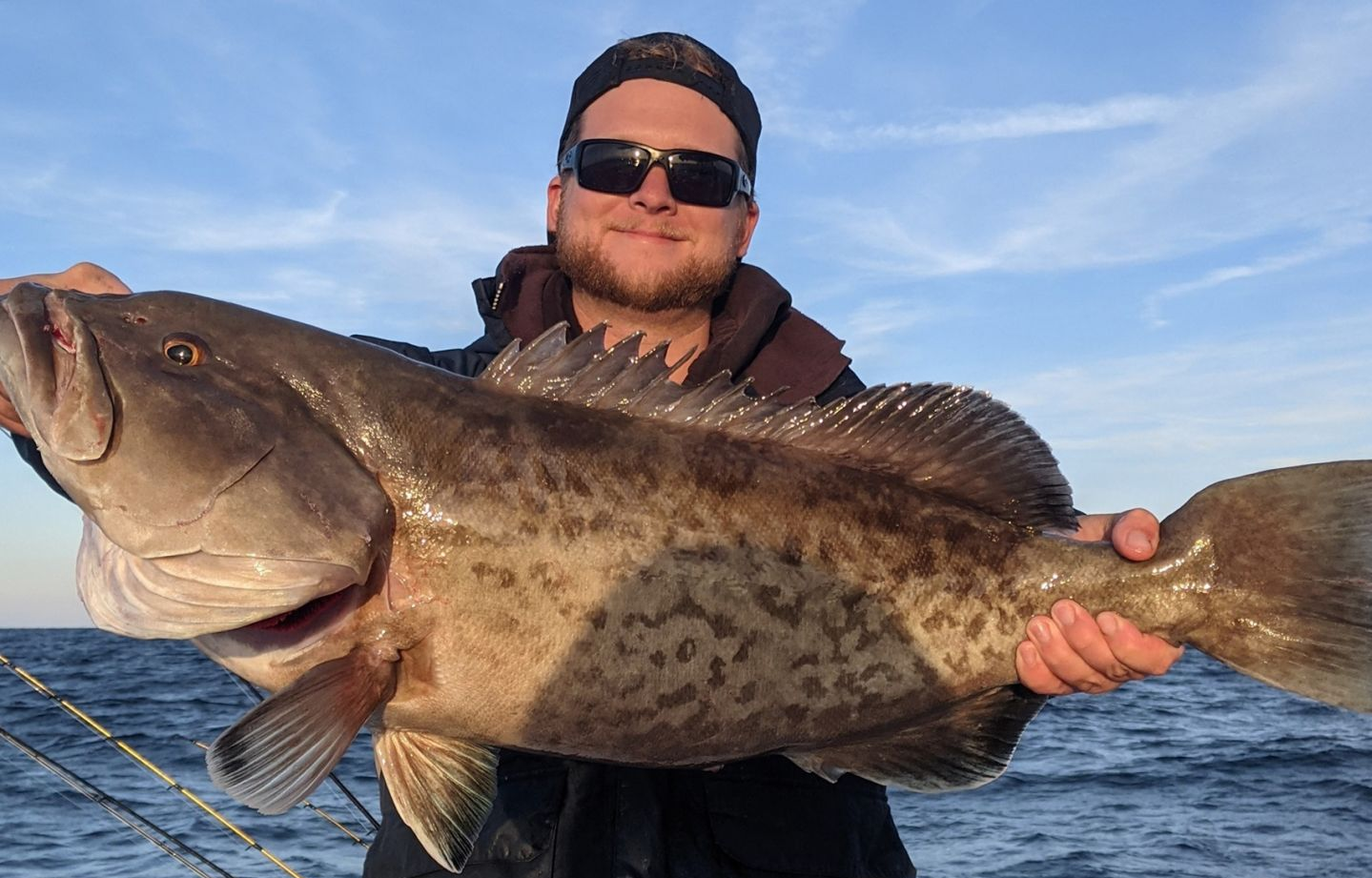
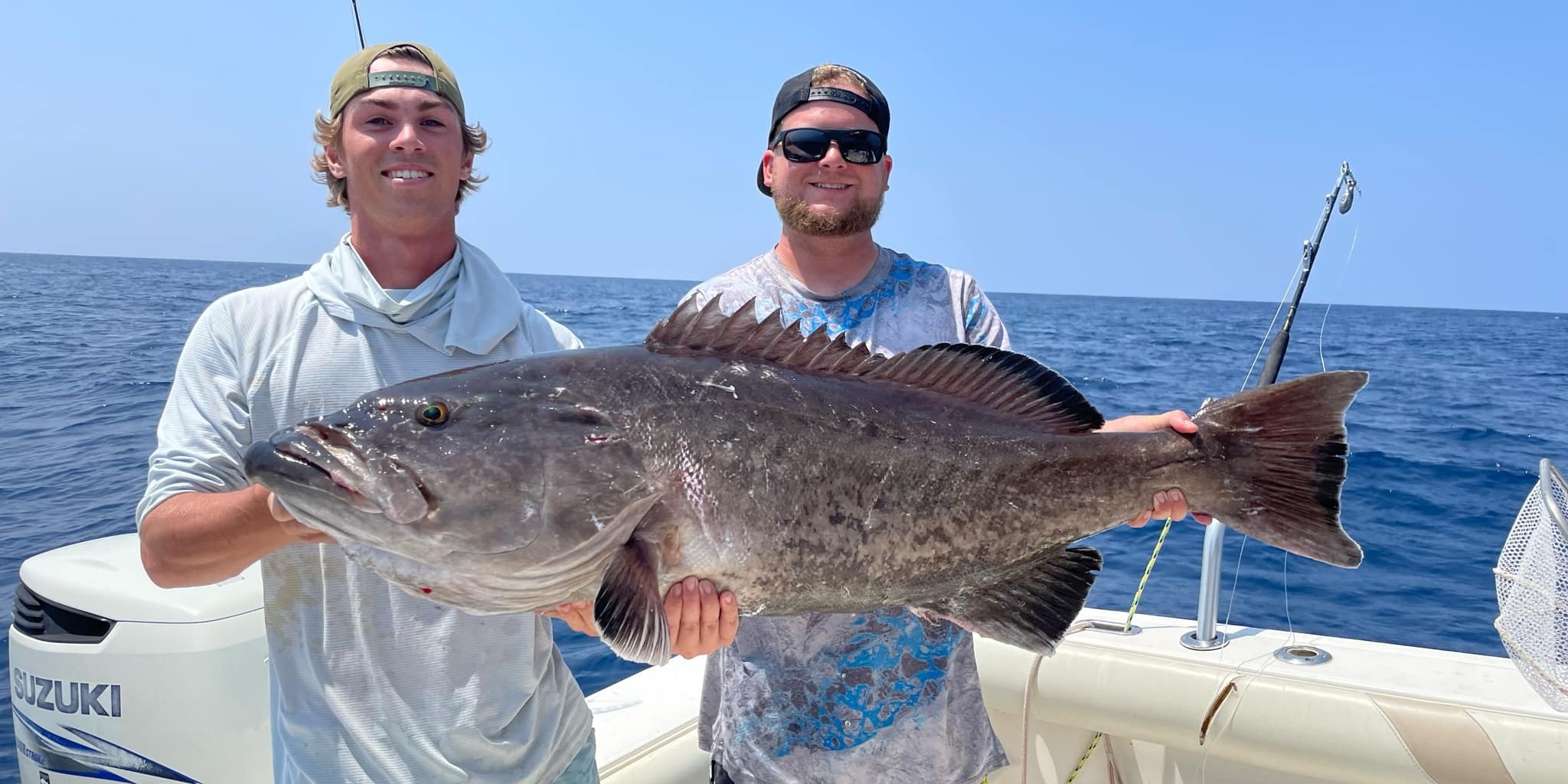
Grouper are the kings of deep structure, and out here we're targeting gag grouper, red grouper, and the occasional scamp or yellowfin grouper that call these depths home. These fish are ambush predators that live in caves and ledges, growing fat on the abundant baitfish and crustaceans. A good grouper will hit like a freight train, then immediately head for the rocks – it's a tug-of-war where you need to turn their head quickly or risk getting broken off. Peak season runs from late spring through early fall, with fish ranging from keeper-sized 24-inchers up to true monsters pushing 40+ pounds. What makes grouper so special is their fight – pure power combined with an intimate knowledge of every cave and crevice on the bottom.
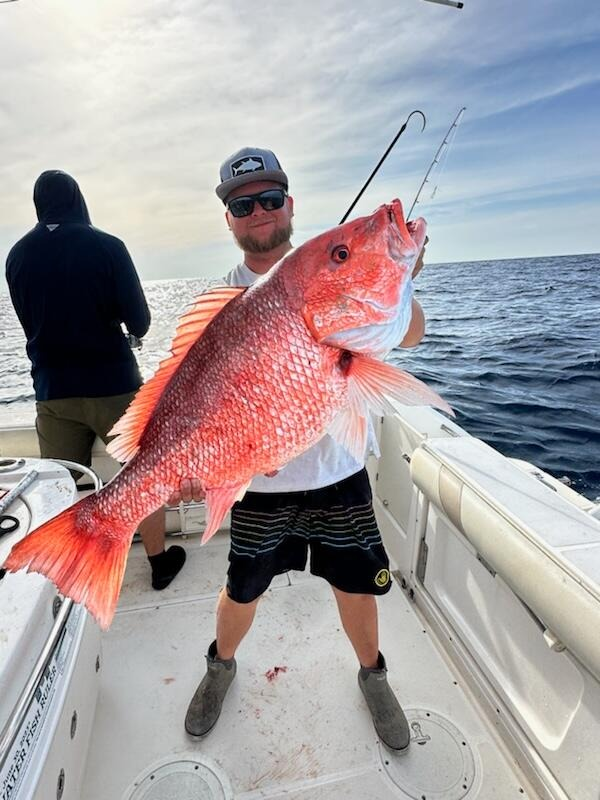
Red snapper are the crown jewel of offshore bottom fishing, and these deep waters hold some real doormat-sized fish that rarely see pressure. Unlike their shallow-water cousins, deep-water reds grow big and chunky, with fish over 10 pounds being common catches. They're incredibly structure-oriented, often stacked up in schools around ledges and artificial reefs. Snapper have excellent eyesight and can be leader-shy, so we'll often downsize terminal tackle despite the deep water. The best action typically happens during moving water, when current brings fresh bait across the structure. When you hook a big red in deep water, they'll make several strong runs toward the bottom, using their broad sides to catch the current. Summer months produce the most consistent action, though we catch quality fish year-round in these depths.
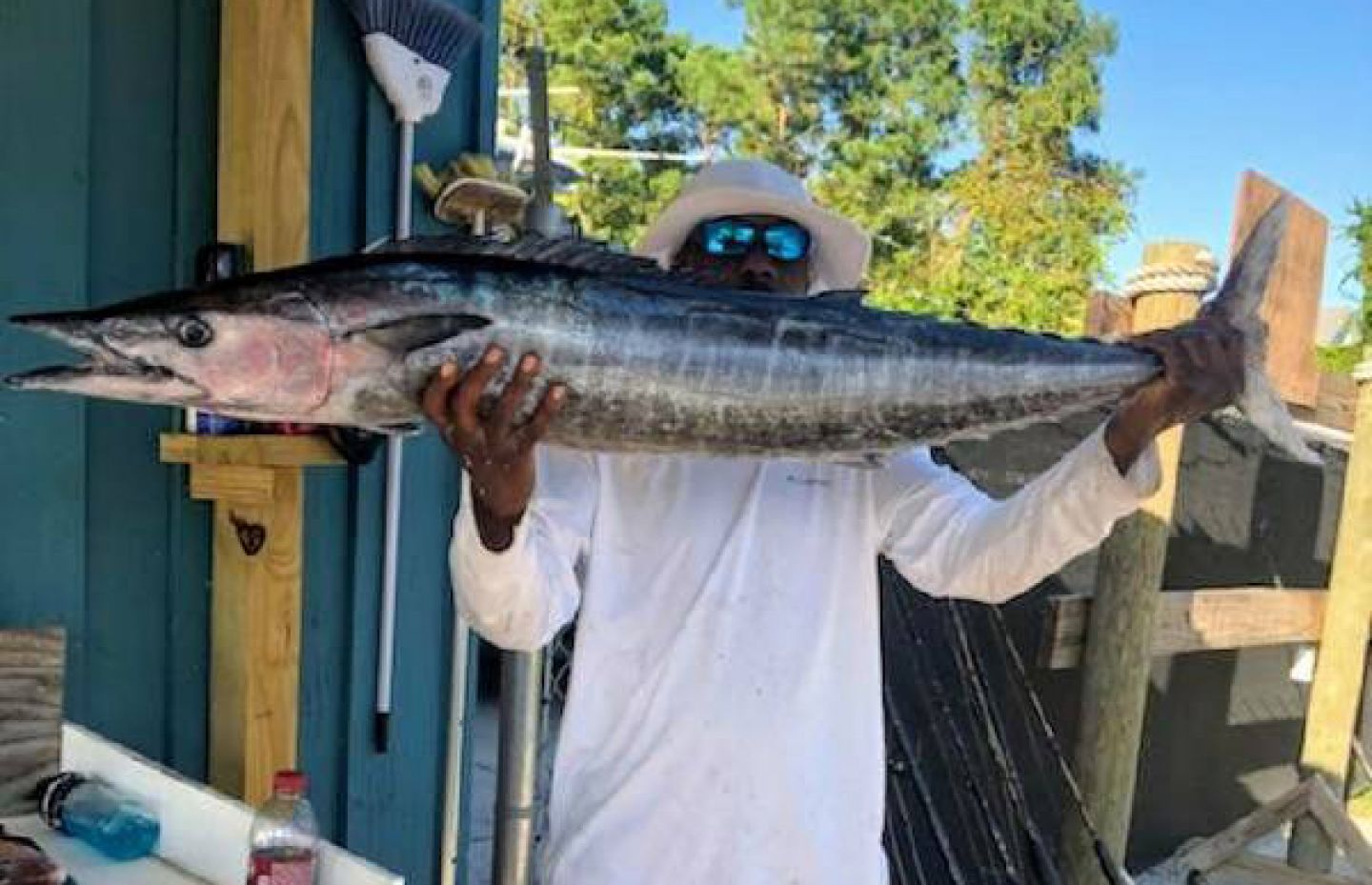
Cobia are the wildcards of deep-water fishing – curious, powerful fish that can show up anywhere from the surface down to 100 feet. These brown sharks, as some call them, are visual feeders that often approach the boat to investigate before deciding to eat. Spring migration brings the best numbers, typically April through June, when fish are moving north along the coast. Cobia fight like underwater bulldogs, making strong runs and using their flat bodies to catch water resistance. They're excellent table fare with firm, white meat that's perfect for grilling or blackening. What makes cobia fishing exciting is their unpredictability – you might be bottom fishing for grouper when a 40-pound brown shark cruises up to check out the commotion.
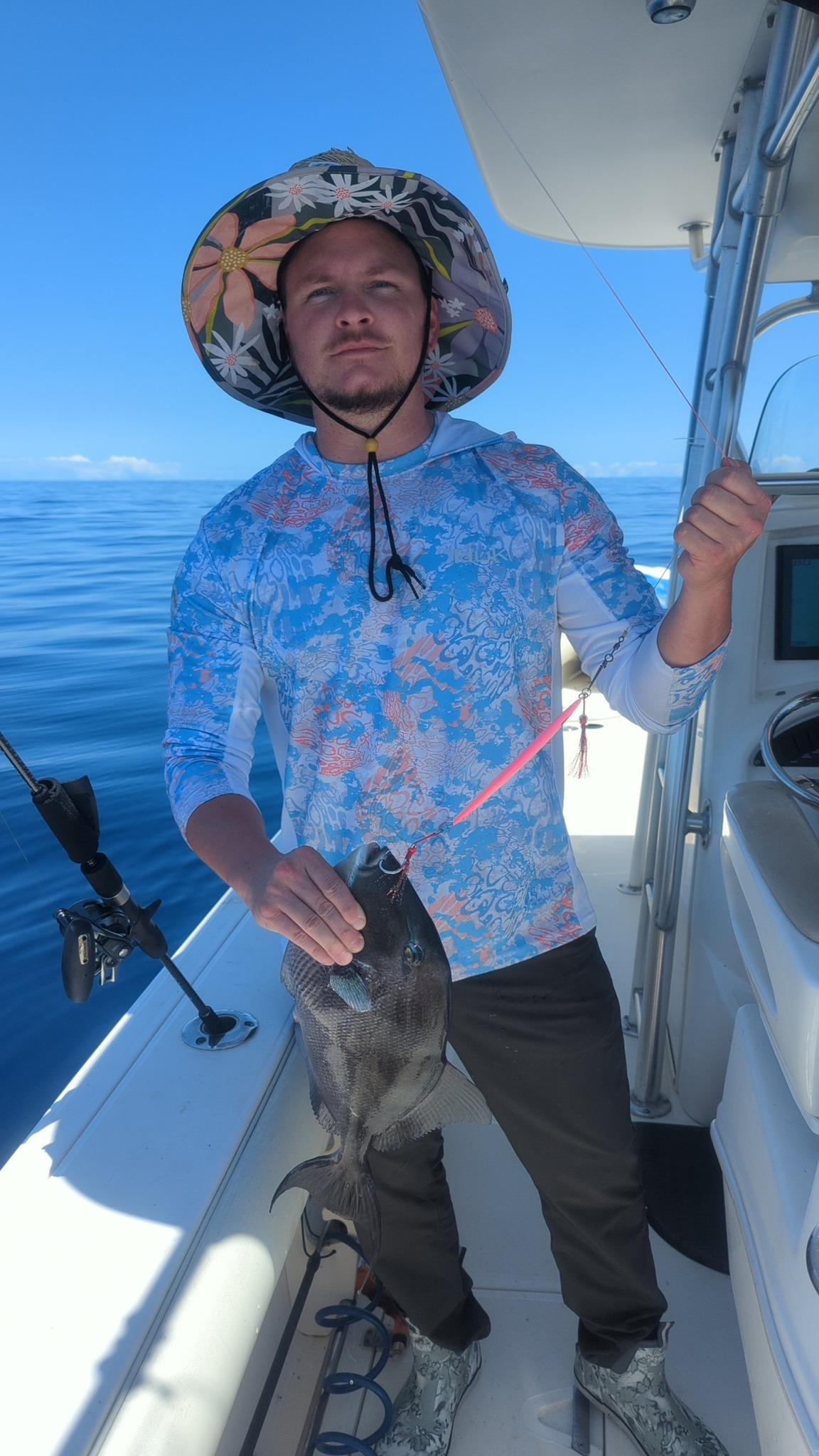
Amberjack rule the mid-water column around structure, and these deep-water AJs are pure muscle wrapped in scales. Greater amberjack in offshore waters commonly exceed 50 pounds, with fish over 80 pounds possible around the best structure. They're aggressive feeders that will attack both live and dead baits, often hitting so hard they nearly pull the rod from your hands. The fight is legendary – long, sustained runs combined with powerful circles that'll test both angler and equipment. Peak season runs from late spring through summer when water temperatures climb and baitfish concentrate around structure. Triggerfish add variety to the mix, with gray triggers being the most common species in deep water. Don't let their size fool you – triggerfish are tough fighters with strong jaws and a
 Private Trip
 Offshore Fishing
 Myrtle Beach, SC
 Extended 10-hour trip targets deep offshore waters 50-70 miles out