Coho Salmon Won't Bite? How Changing Your Retrieve, Lure, and Location can Help
Learn how to catch coho salmon with better lure choices, spinner retrieves, jigging techniques, river locations, and seasonal fishing tips.
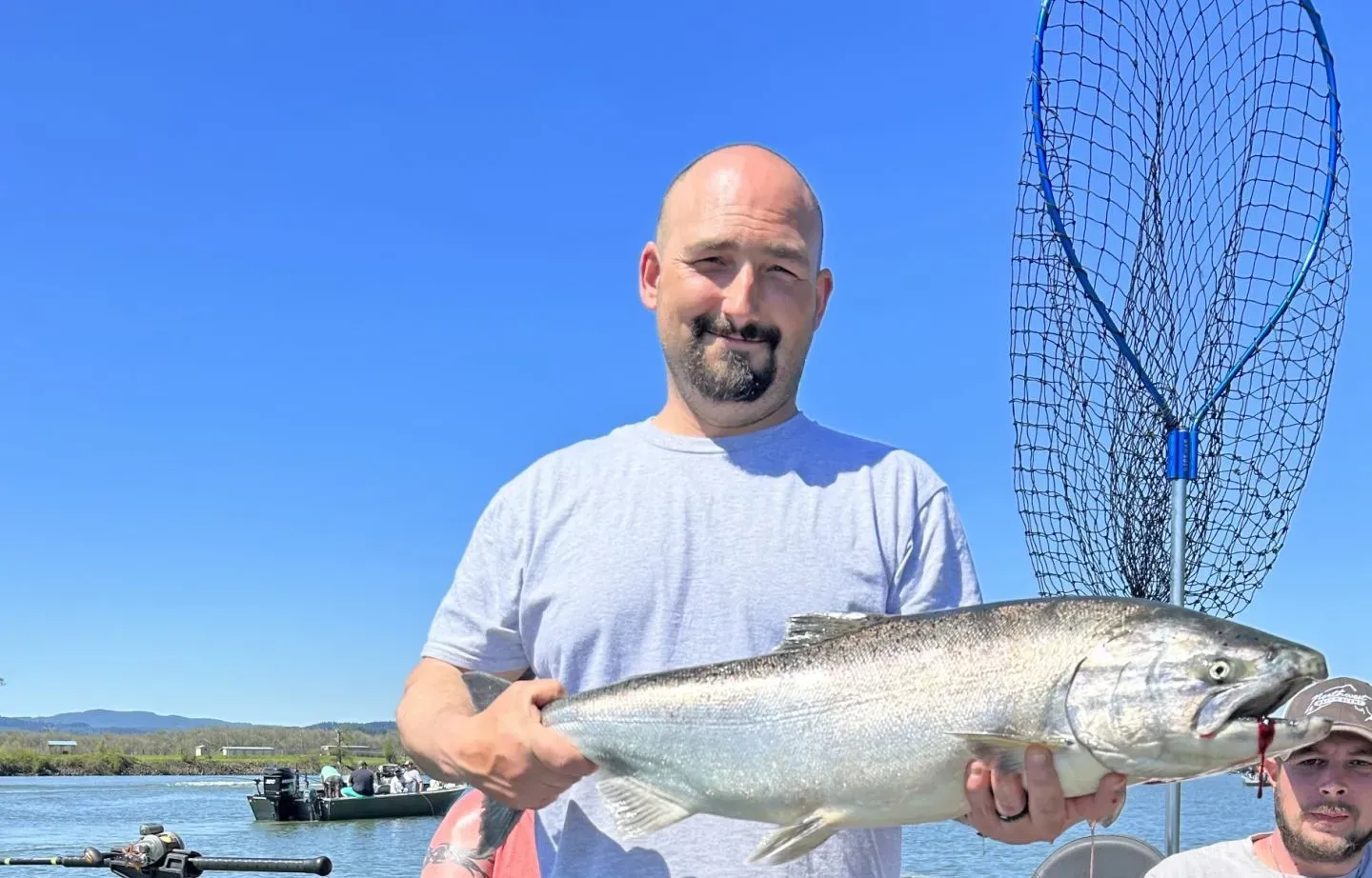


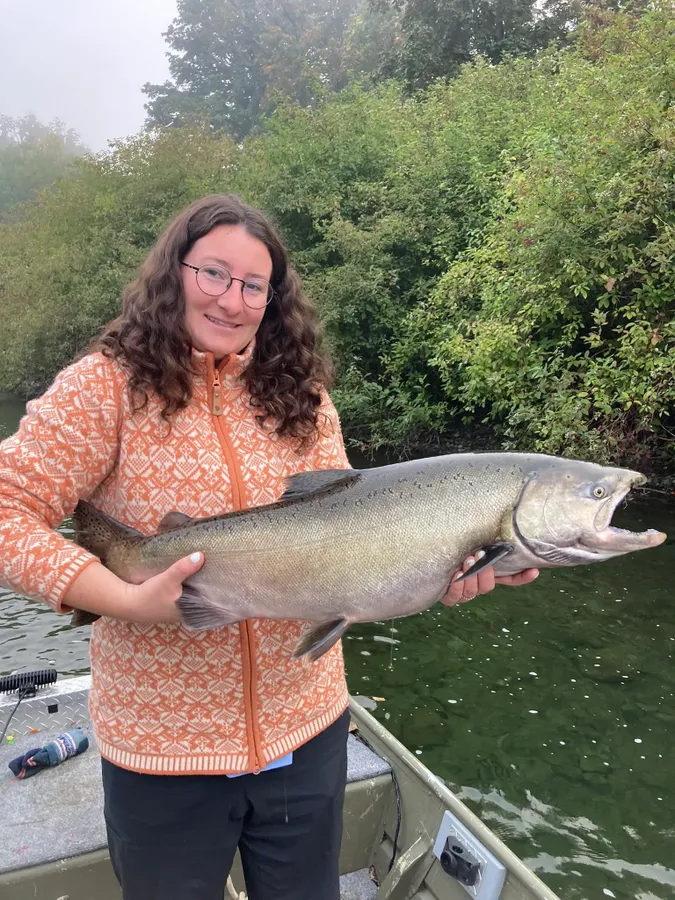
A coho salmon follows your spinner through a run, flashes behind it, then disappears without striking. You cast again, repeat the same retrieve, and get the same result. Meanwhile, fish are rolling farther down the pool.
For experienced anglers, this is where the details matter. The question isn't simply which lure catches coho salmon. It's how to make that lure behave differently, when to switch presentations, and how to work the river when fish won't commit.
Coho fishing offers several ways to approach the same water, from swinging spinners through faster runs to twitching jigs in deeper, slower waters. The trick is matching the presentation to the water you're fishing and recognizing when your current approach isn't reaching the fish in a useful way.
1. How to Catch Coho Salmon When They Won't Bite
The first step is to distinguish between fish that follow a lure, fish that show no response, and water that simply doesn't appear to hold salmon. Each situation calls for a different adjustment.
When Coho Follow Your Lure but Won't Strike
A follow suggests the fish has noticed your presentation. Rather than immediately changing lure color, experiment with how the lure moves through the water.
Change the casting angle: A spinner swinging across the current follows a different path from one retrieved more directly downstream.
Adjust the retrieve speed: Try a different pace to change how long the lure stays in the fish's path.
Alter the depth: Let the lure sink longer before retrieving if you suspect fish are holding deeper.
Switch the action: If repeated spinner passes produce follows but no strikes, try a twitching jig or spoon.
The Oregon Department of Fish and Wildlife describes coho as aggressive fish that may respond to lures invading their territory. Therefore, getting the lure in front of the fish can matter more than finding a particular color.
When Coho Salmon Show no Interest in Your Lure
If coho are rolling but ignoring your lure, don't assume they're holding at the surface. Make a few controlled casts at different sink times to test deeper water, watching your line for sudden pauses or sideways movement that may signal a strike.
Use a twitching jig to vary the pause between lifts to change its fall. If neither depth nor presentation produces a response, try another lure or target a different current seam or pool.
2. How to Retrieve Spinners and Spoons for Coho Salmon
Retrieve technique matters because each lure is designed to move differently. A spinner needs enough movement to keep its blade working, while a twitching jig relies on distinct upward movements and a controlled fall.
How to Retrieve a Spinner for Coho Salmon
Spinners are a popular choice for fishing coho in faster runs and riffles. They can help produce a smooth presentation through the current, allowing the blade to work as the lure crosses the fish's path.
Try these adjustments:
Keep the blade working: Retrieve smoothly rather than allowing the lure to lose its action.
Change the swing: Cast at different angles to cover new paths through the run.
Match the lure to visibility: A size 3 spinner is a reasonable starting point in clear water, moving up to a size 5 when the water is murky, and fish need a bigger profile to find it. Adjust from there based on current speed, depth, and how the fish respond.
Cover the water systematically: Work sections of the run instead of repeatedly casting along the same line.
If a coho follows the spinner, change the speed or angle before assuming the lure itself is wrong.
When Should You Use a Spoon for Coho Salmon
Use a spoon when you want to cover moving water with a lure that wobbles from side to side as it travels. Cast across the current, let the spoon sink to your target depth, then retrieve steadily. If it spins instead of wobbling, slow your retrieve; if it sinks too quickly for the area you're fishing, try a lighter spoon.
Spoons are worth testing when coho ignore your spinner's action. Change the retrieve speed first, then adjust the spoon's weight to control its depth.
If a steady retrieve still isn't getting a strike, twitching a jig gives you another option: instead of moving the lure continuously through the water, you can make it rise and fall in the same area.
3. How to Twitch Jigs for Coho Salmon
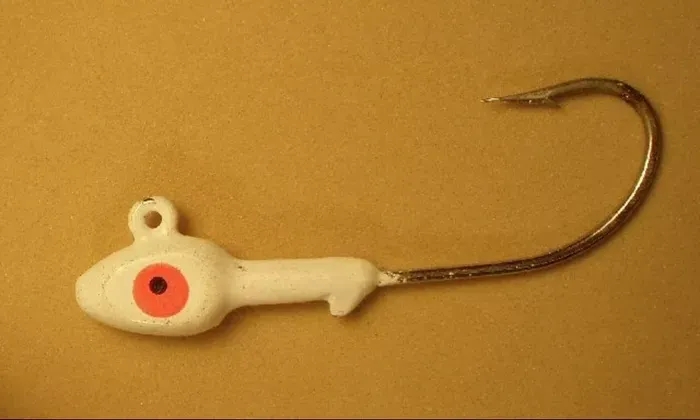
Twitching jigs is particularly useful when targeting coho salmon holding in slower water and soft runs.
You control the lure with short rod movements, lifting it through the water before allowing it to fall.
This lets you work a specific area without immediately pulling the lure away from where fish may be holding.
How to Work a Twitching Jig for Coho Salmon
Start by casting toward the area you want to fish, allowing the jig to sink. Once it reaches the desired depth, lift your rod tip with a short, sharp movement, then lower it as the jig falls. Repeat this motion while keeping enough tension on your line to notice a strike.
The timing matters because the jig needs room to fall between lifts. Pulling it upward before it has time to drop will lose much of the action that makes twitching effective.
Try these adjustments when the jig isn't producing:
Change your twitch: Use shorter, sharper lifts if the jig is moving too far upward or make more controlled movements if you want a slower presentation.
Give the jig time to fall: Pause briefly between lifts, particularly when fishing in deeper areas.
Adjust the weight: A heavier jig can help you reach deeper water or maintain control in stronger current, while a lighter one may suit shallow, slower water.
Experiment with color: If the jig is reaching the right depth and its movement looks right but fish still won't respond, try another color or profile.
A 3/8 to 1/2 ounce jig is a good starting point for river coho, but the right weight depends on the depth and current you’re fishing. Go lighter in slow, shallow water and heavier in faster current or deeper runs. You want the jig to reach the fish without sinking so quickly that you struggle to control its movement.
4. Best Coho Salmon Lures: Which One Should You Choose?
If changing your retrieve hasn't produced a strike, consider whether another lure would work better for the water you're fishing. Spinners cover water with a rotating blade, spoons create a wobbling action, and twitching jigs let you control the lure's movement with your rod. Each offers a different way to present a lure to coho.
Lure | When to Try | What to Adjust |
Spinner | When fishing moving water and covering a run | Retrieve speed and casting angle |
Spoon | When coho ignore your spinner and you want a side-to-side wobble instead | Sink time and retrieve speed |
Twitching jig | When you want to work a specific depth with a lift-and-fall motion | Jig weight, twitch length, and pause |
When Should You Change Lure Color or Size?
Before changing color, make sure your lure is reaching the intended depth and moving properly. If a coho follows but turns away, try a different retrieve or casting angle first. If the presentation still doesn't produce a strike, experiment with a different size or color.
Water clarity can help guide your choice: a more visible lure may be easier for fish to detect in murky water, while a subtler presentation may suit clearer conditions. However, lure size, current speed, and depth also matter, so treat color as one variable rather than a guaranteed solution.
5. Where to Find Coho Salmon in Rivers
Even a well-presented lure won't help much if you're fishing water the salmon aren't using. Coho move through rivers as they migrate, and the areas worth targeting can change with water levels, current, and the shape of the riverbed.
Where to Fish for Coho Salmon in Low Water
When water levels drop, coho tend to bunch up in the deepest pools until conditions improve. Concentrate on those pools and their edges, where slower water meets the current, and on deeper pockets near rocks or submerged wood
Work each section methodically. A twitching jig lets you control the lure's movement at a particular depth, while a spinner can cover a wider path through the current.
Where to Fish for Coho Salmon When River Levels Rise
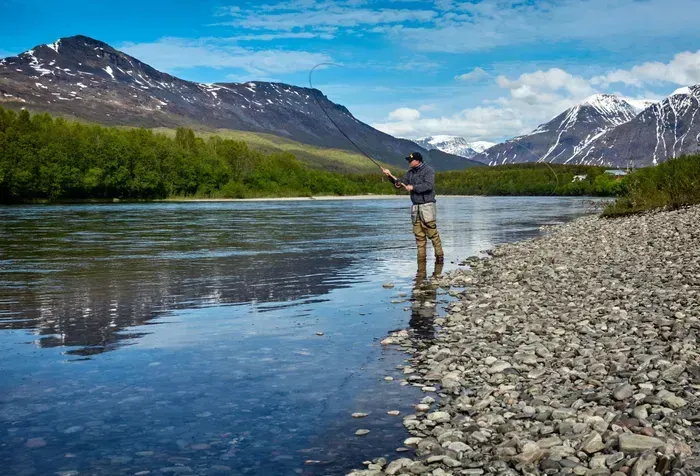
As water levels rise, coho may move through sections that were difficult to access in lower flows.
Look for runs connecting deeper water, the edges of faster current, and transitions between deeper sections and shallower water.
Watch how the current moves through the river. If it's too strong for your jig to stay near the depth you're targeting, adjust its weight or try a spinner that you can retrieve through the run. If fish aren't responding after you've covered a section thoroughly, explore another stretch rather than repeating the same cast.
When to Change Fishing Spots for Coho Salmon
Rolling or jumping fish can help you identify where coho are present, but surface activity doesn't guarantee they'll strike your lure. If you've seen fish but haven't had a response, try changing your presentation and working a different part of the area before leaving.
If you aren't seeing fish and have covered the likely holding water without success, explore another section. Look for suitable depth and current rather than simply moving farther along the river.
6. What to Change When Coho Salmon Stop Striking
When coho salmon stop striking, the next move depends on what you've observed. A fish following your spinner but turning away calls for a different adjustment than a jig that isn't reaching the right depth or a stretch of river with no visible activity. Use this quick guide to identify what might be going wrong and decide what to change next.
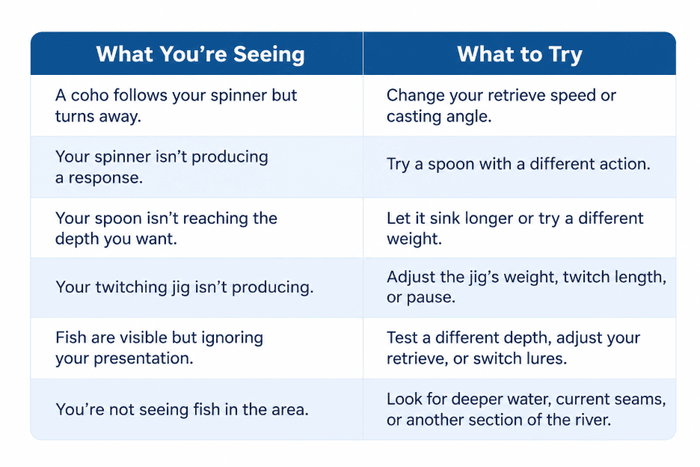
Coho salmon won't always respond to the same presentation, even when fish are present. Learning to read their reactions and adapt to changing river conditions will help you make better decisions on the water. The key isn't to keep changing lures, but to understand when a different approach makes sense.
You Might Also Like: 7 of Our Favorite Bait Types
When Is the Best Time to Fish for Coho Salmon?
Fall is the prime season for coho salmon fishing in many parts of North America. As summer transitions into fall, adult coho begin moving from the ocean into freshwater rivers to spawn. The exact timing depends on the river system but runs commonly begin in late summer and continue through fall, with some extending into early winter.
Late summer to early fall: Early coho runs begin in some rivers, making this a good time to target salmon starting their migration upstream. Run timing varies, so not every river will have fish entering freshwater this early.
Mid to late fall: This is the peak season for many coho populations. More salmon may be moving through rivers during this period, creating more opportunities for anglers to encounter actively migrating fish.
Late fall to early winter: Some rivers have later running coho, extending the fishing season beyond the main fall period. However, opportunities depend on the local run schedule and applicable fishing regulations.
Expert Advice: Coho salmon do not follow one universal fishing calendar. Runs can differ considerably between rivers, even within the same region, so the most productive weeks in one location may not match those in another.
Things to Consider Before You Head Out for Coho Salmon Fishing
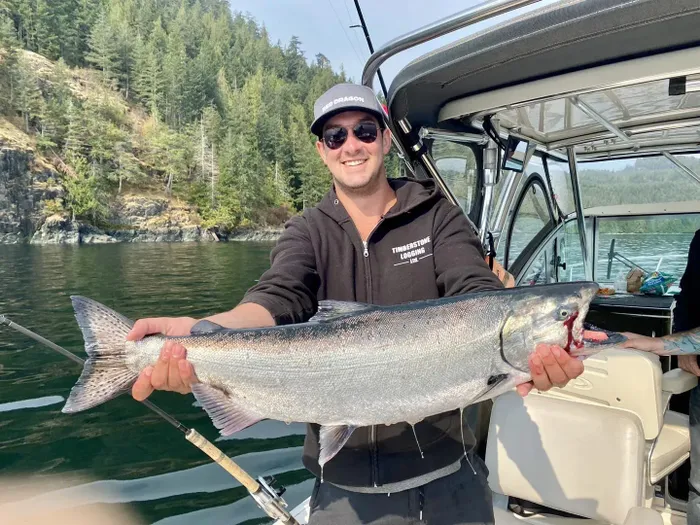
Getting coho salmon to strike takes more than finding the right lure.
Water conditions, retrieve speed, and the way you work your presentation can all influence your results.
Before heading out, prepare for changing weather conditions and keep a few alternatives ready so you can adapt when your usual approach stops working.
Check river conditions: Water levels and current speed can affect where coho hold and which lures are easiest to work.
Keep your lure options simple: Carry a few spinners, spoons, and twitching jigs so you can change presentations without overcomplicating your approach.
Pay attention to the fall: When twitching jigs, give the lure time to drop between lifts, as coho may strike during the fall.
Check local regulations: Confirm seasonal openings, retention limits, and tackle restrictions before fishing.
If you're looking to refine your coho salmon strategy on unfamiliar water, fishing with a local guide can offer a different perspective on river conditions, holding areas, and presentation choices. Explore coho salmon fishing trips on Guidesly to find experienced guides who know the local fishery and can help you adapt your approach to the conditions.