Charter Fishing Hatteras | 4 to 6 Hours Fishing Trips
Looking for a solid day on the water without breaking the bank or burning your whole weekend? Got-em Inshore Charters has you covered with our top-rated 4 to 6-hour fishing trips right here in Hatteras, NC. This isn't some cookie-cutter operation – we're talking about real inshore fishing where the action is consistent and the fish are hungry. Whether you're bringing the family for their first taste of saltwater fishing or you're a weekend warrior looking to scratch that fishing itch, these waters deliver. We keep our groups small at just 4 anglers max, so you're not fighting for rod space or waiting your turn to land a fish. Pack your cooler with snacks and drinks, and we'll handle everything else – rods, reels, tackle, bait, and most importantly, putting you on fish.
What to Expect on the Water
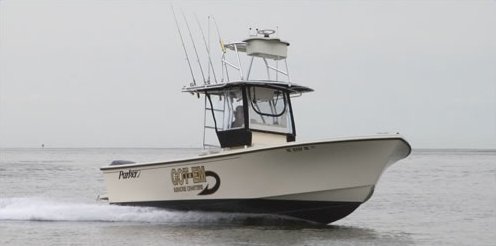
Hatteras inshore fishing is all about variety and action, and that's exactly what you'll get on these trips. We launch from the sound side where the water is calmer and the fishing is hot year-round. The beauty of these 4 to 6-hour trips is we can adapt to what's biting and what conditions look best. Some days we're working the grass flats for reds and trout, other days we're bouncing bottom for flounder and drum. The water around here is shallow enough that you can watch your fish fight, but deep enough in the channels to hold some real quality fish. Our crew knows these waters like their own backyard – every oyster bar, every grass bed, every drop-off that holds fish. You'll spend your time actually fishing, not running around looking for spots. The boat is set up for comfort with plenty of room to move around, and we keep a good supply of different tackle rigged and ready so you're not wasting time retying when the bite is hot.
Tackle and Techniques
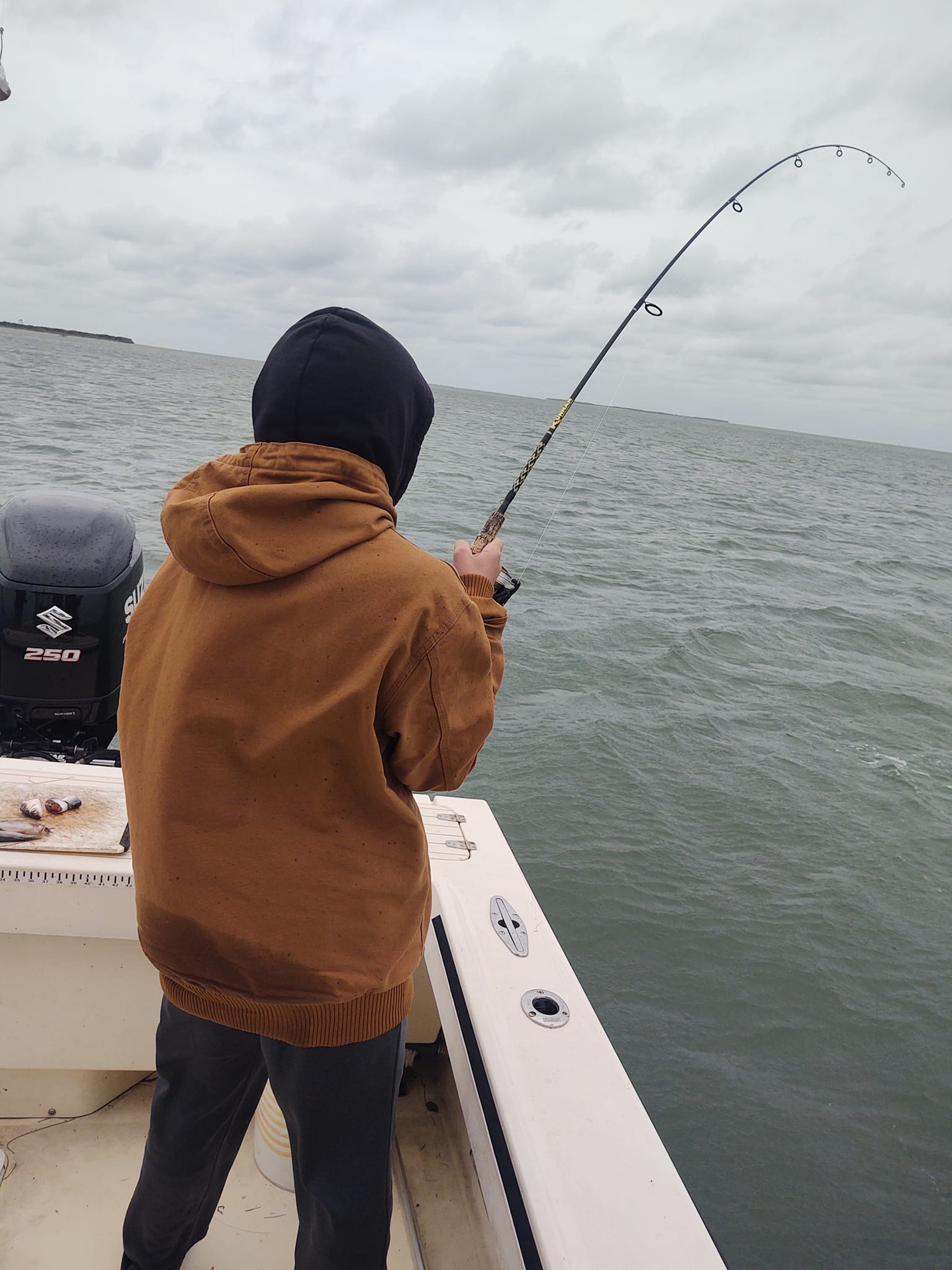
We fish light tackle here – mostly spinning gear in the 2500 to 4000 size range spooled with 15 to 20-pound braid. This setup gives you the sensitivity to feel those light bites but enough backbone to handle a bull red or big cobia when they show up. Depending on what we're targeting, we'll have you throwing everything from soft plastics and spoons to live bait under popping corks. The reds around here love a well-presented mud minnow or finger mullet, while the trout go crazy for soft plastics worked slowly over grass. When we're after flounder, it's all about dragging baits along the bottom near structure and drop-offs. We keep a variety of weights and rigs ready because the current and wind can change your presentation needs quickly. Our guides will get you dialed in on the right technique for the conditions, and if you want to learn something new, they're always happy to show you different approaches. The key in these inshore waters is staying quiet and making good presentations – the fish are spooky in the shallows, but they're also aggressive when you do things right.
Species You'll Want to Hook
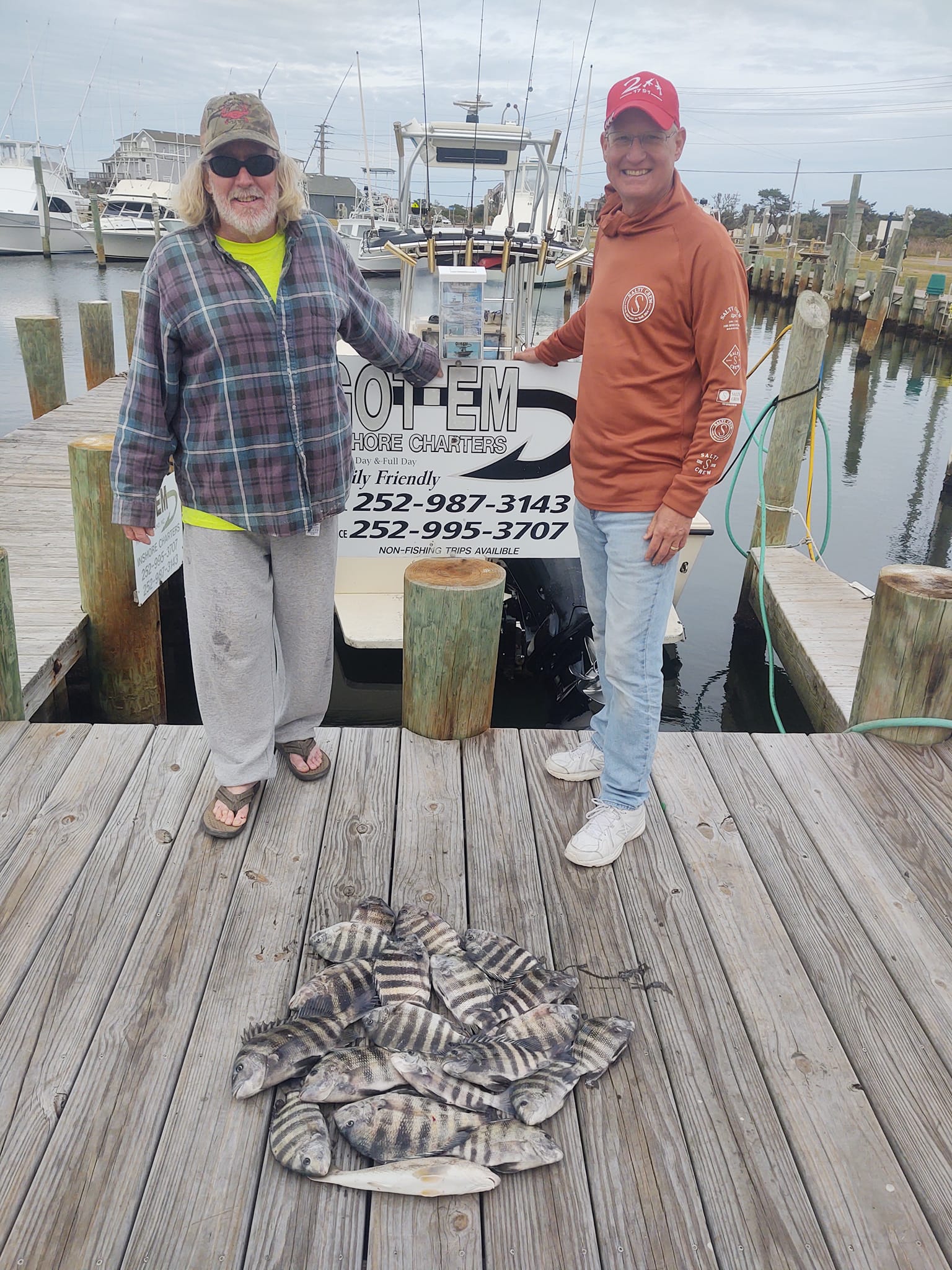
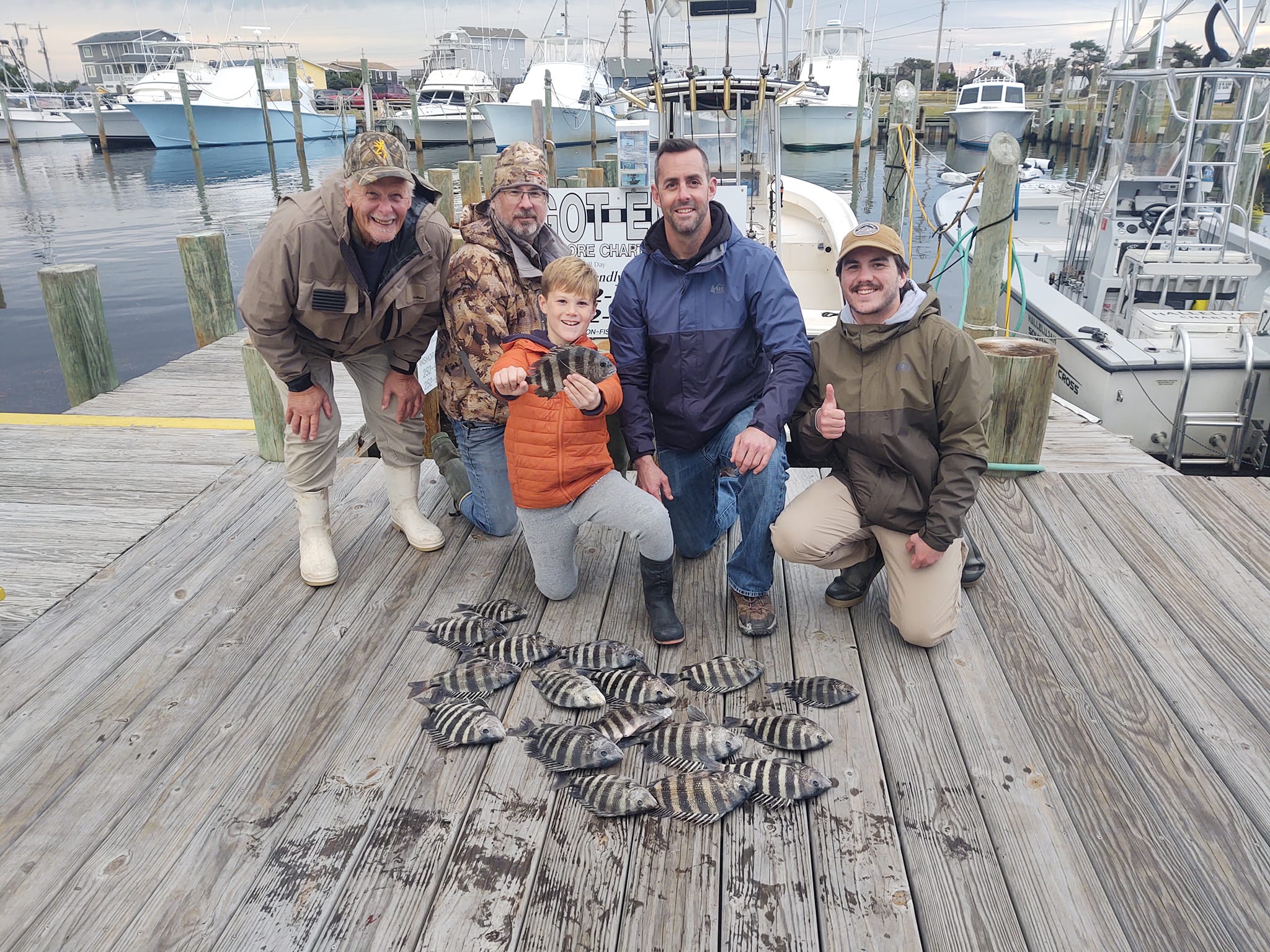
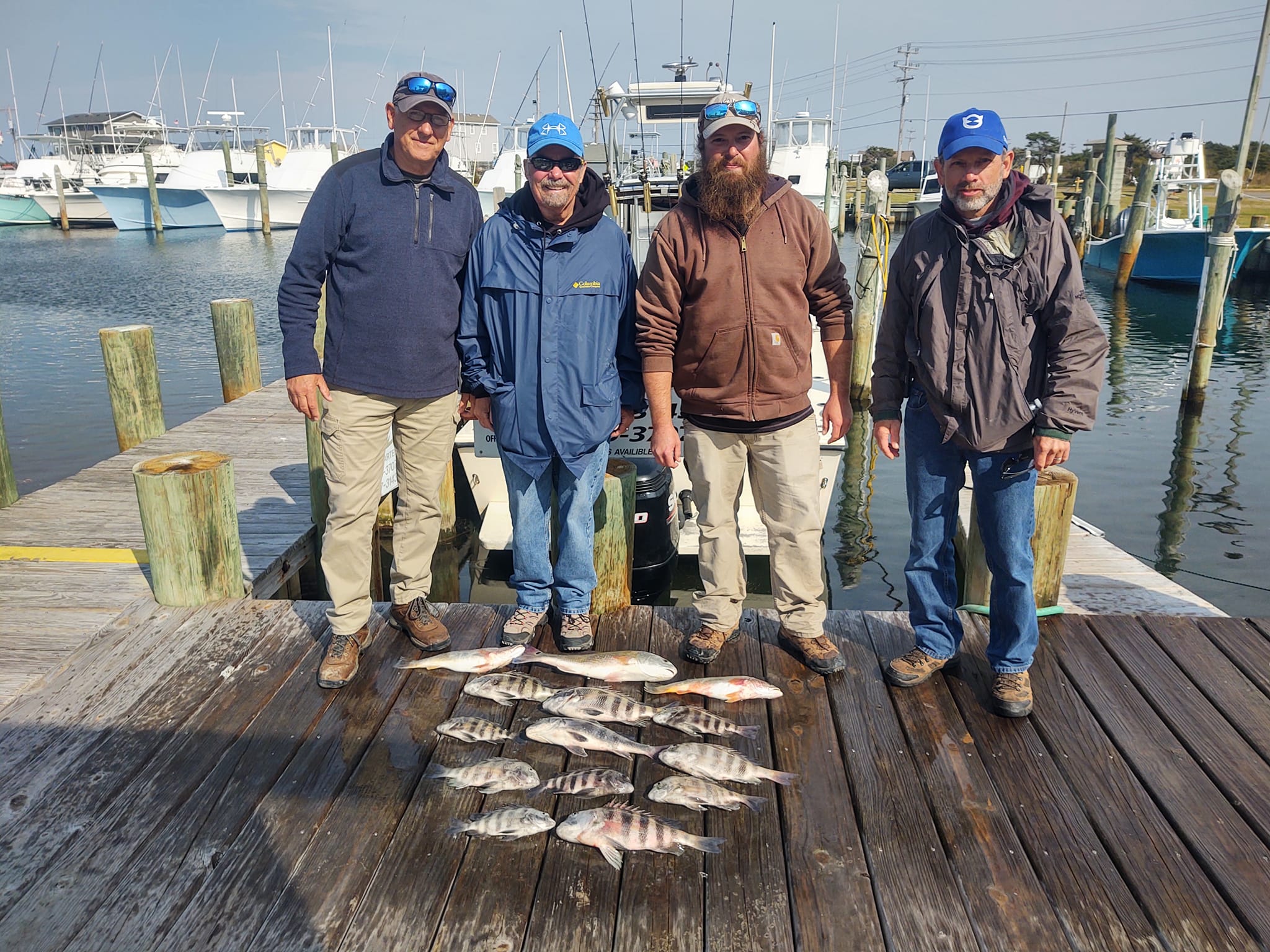
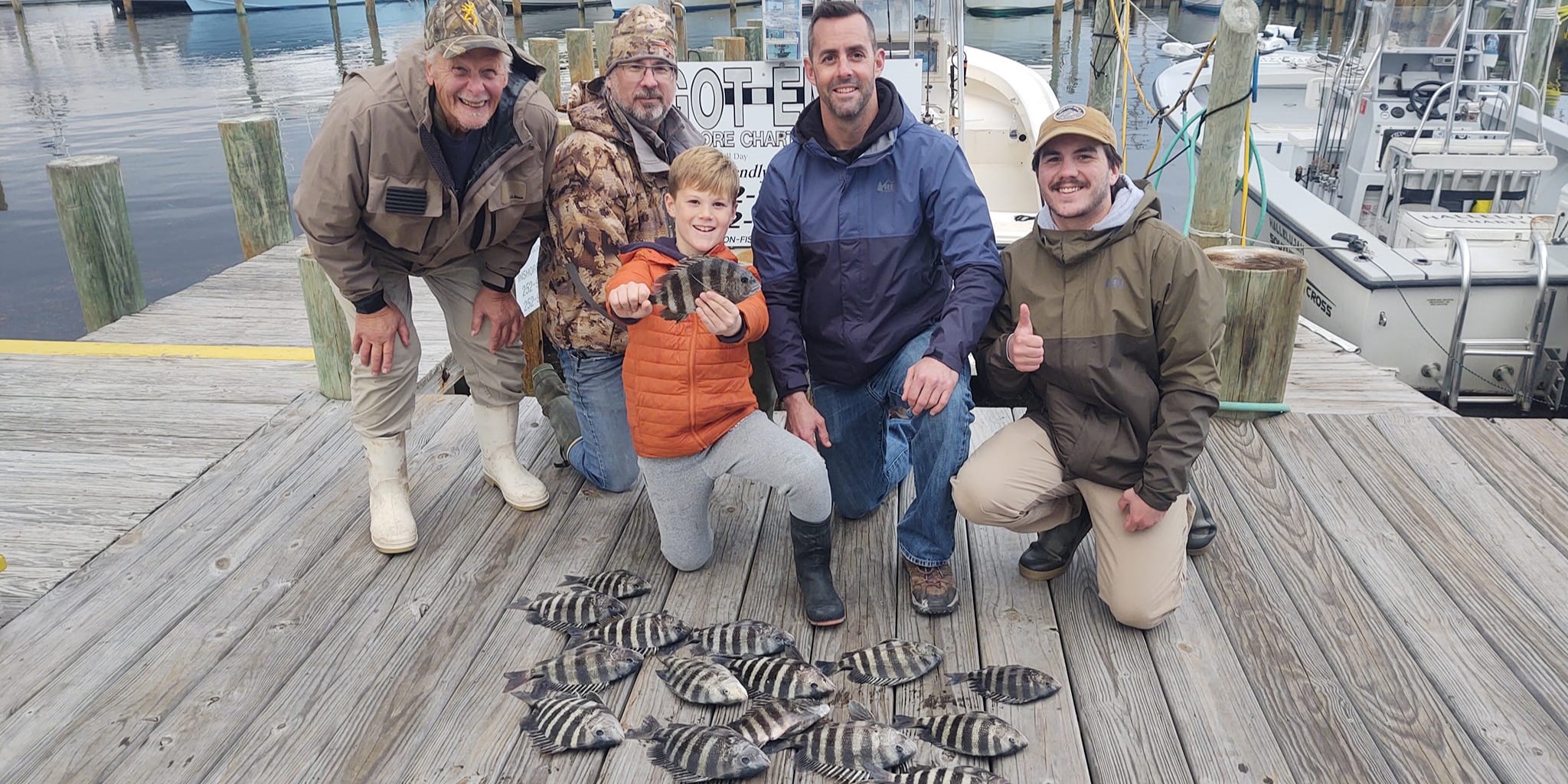
Sheepshead are some of the most underrated fighters in these waters. These black and white striped bait stealers hang around structure – docks, pilings, oyster bars – and they have mouths full of human-like teeth that'll crush a fiddler crab without thinking twice. They're notorious for picking your bait clean without you feeling a thing, but once you hook into a nice one, they'll give you a solid fight with lots of head shakes and runs toward cover. Best time for sheepshead is fall through early spring when they're feeding heavy before and after spawning. What makes them special is they're excellent table fare – firm, white meat that tastes like a cross between snapper and grouper. Plus, they're just plain fun to catch because every bite is a surprise.
Sea trout, or speckled trout as we call them locally, are the bread and butter of Hatteras inshore fishing. These spotted beauties cruise the grass flats in schools, and when you find them, you can usually catch several before they move on. They hit soft plastics hard, especially early morning and late afternoon when they're feeding in the shallows. A good speck will go 2 to 4 pounds, but we see plenty of 5-pounders and the occasional 6-plus-pound gator trout that'll make your drag sing. Spring and fall are prime time, but they bite year-round if you know where to look. What anglers love about specks is they're aggressive, beautiful fish that fight well on light tackle and make fantastic table fare when kept on ice.
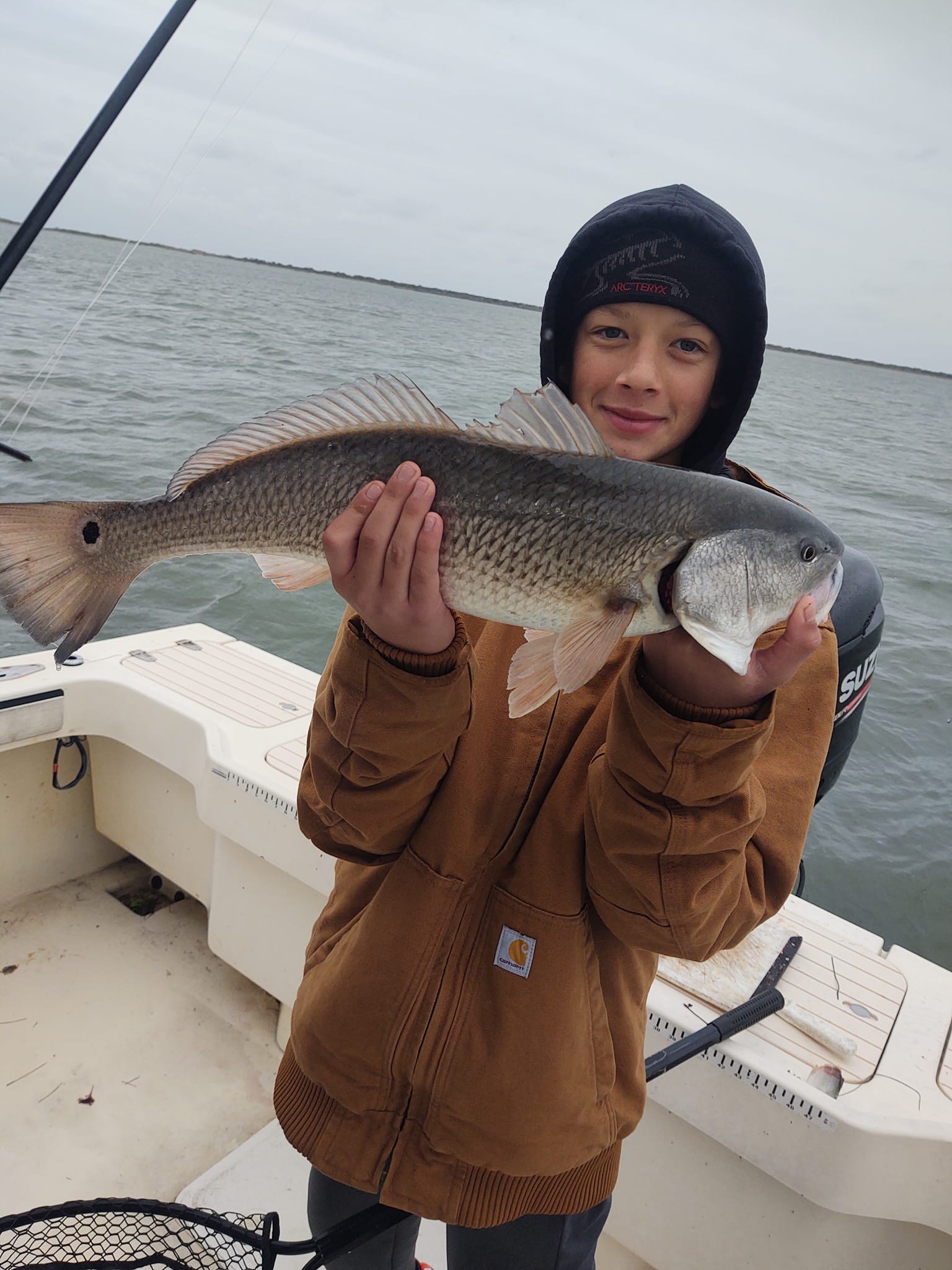
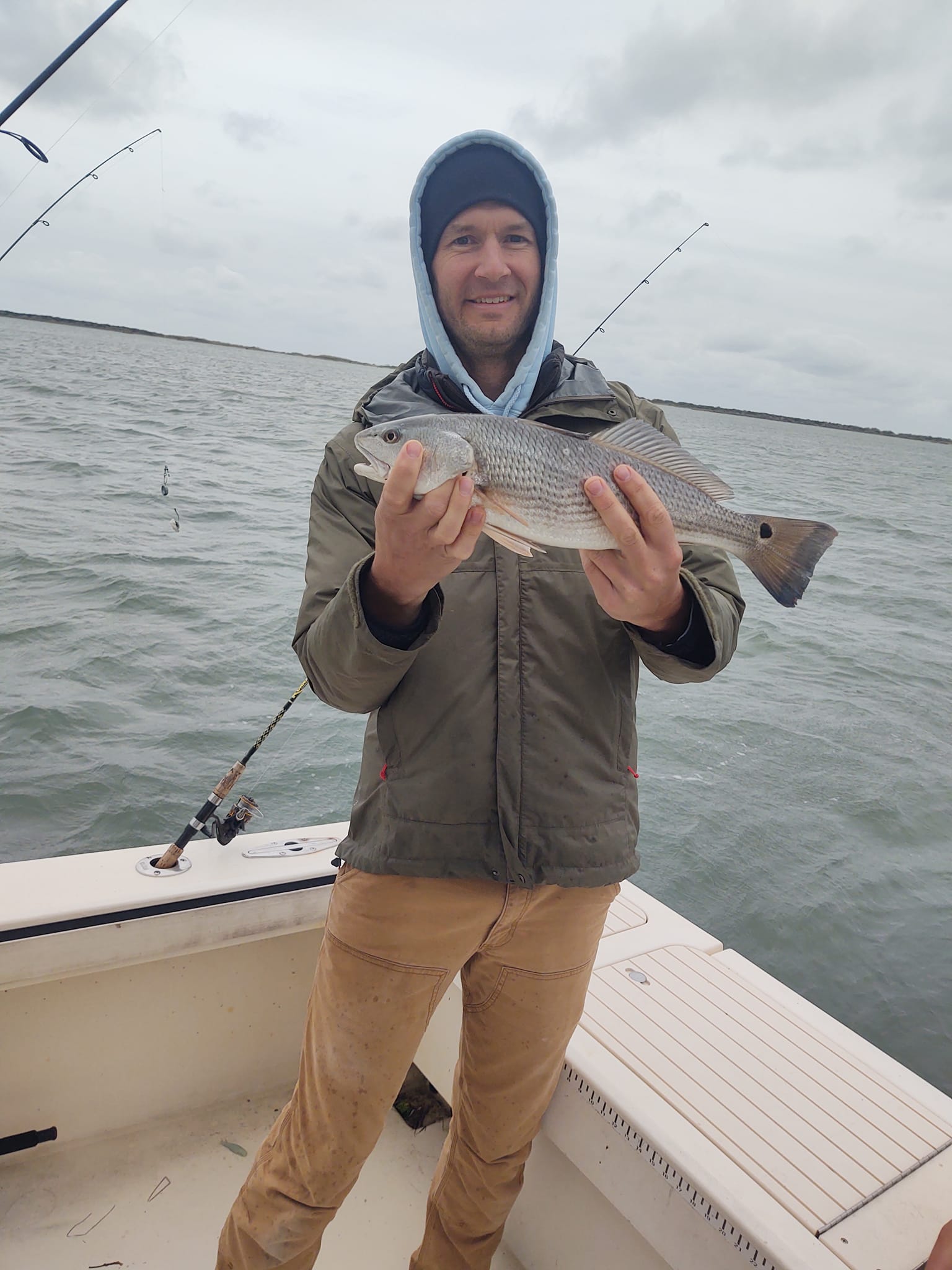
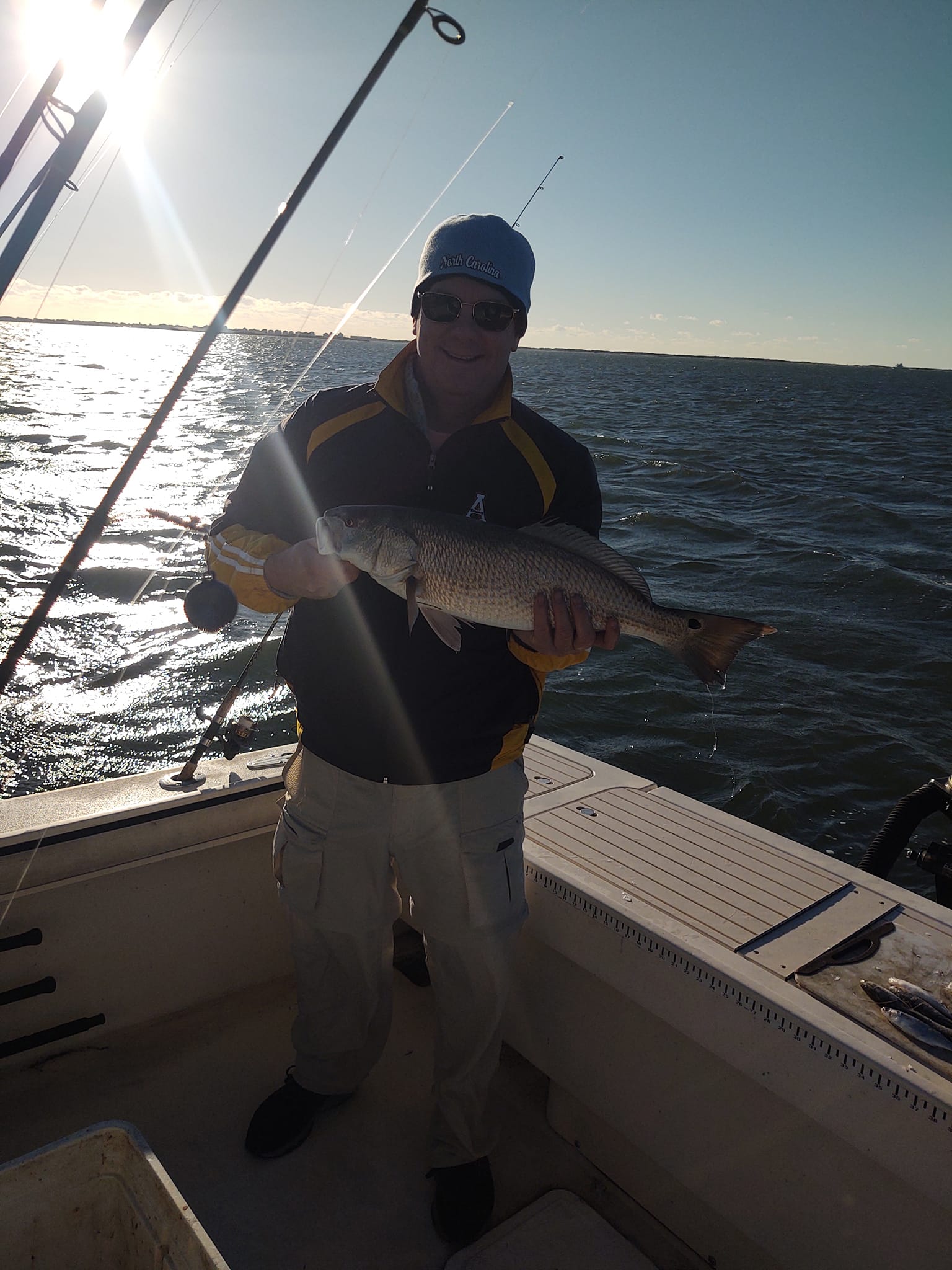
Redfish are the superstars of our inshore waters. These copper-colored bulldogs patrol the shallows looking for crabs and baitfish, and when you hook into a slot-sized red, you're in for a fight. They'll make long, powerful runs and use their broad tails to put serious pressure on your drag. We see reds year-round, but fall is absolutely phenomenal when they school up in massive numbers. A 27-inch red drum will give you all the fight you want on spinning tackle, and the sight fishing opportunities here are world-class. Watching a red crush your bait in 2 feet of crystal clear water never gets old, and these fish are perfect for photos before you release them to fight another day.
Cobia are the wildcards that can turn a good day into an epic day. These brown sharks – that's what they look like when you first spot them – cruise the shallows looking for crabs and small fish. They're curious fish that'll come right up to the boat to investigate, and when they eat, they eat hard. A 20 to 40-pound cobia will test your tackle and your endurance with multiple long runs and powerful head shakes. Late spring through early fall is prime cobia season, and these fish are incredible on the table – firm,
 Private Trip
 Inshore Fishing
 Washington


 Target redfish, cobia, flounder and black drum inshore