NC Fishing Charters with OverFlo Fishing
North Carolina's coastal waters offer some of the best inshore fishing on the East Coast, and our 6-hour and 8-hour charters put you right in the heart of the action. Whether you're a weekend warrior looking to bend some rods or a seasoned angler wanting to target specific species, these extended trips give you the time and flexibility to really dial in on what's biting. We keep our boats to just 4 anglers max, so you're not fighting for rail space or waiting around while someone else battles a fish. Weather permitting, we'll hit both inshore flats and nearshore structure, adapting our game plan based on conditions and what the fish are telling us that day.
What to Expect on the Water
These aren't your typical half-day rushed affairs where you barely get your sea legs before heading back to the dock. With 6 to 8 hours on the water, we have time to really work different areas and techniques. We'll start by checking conditions and recent reports, then head out to where the fish have been most active. The beauty of our longer charters is the versatility – if the redfish are being finicky on the flats, we can run out to some nearshore structure and target cobia or little tunny. Light tackle is our specialty here, which means more fight in every fish and a better connection to what's happening below. You'll feel every head shake and run, making even smaller fish feel like monsters. We provide all the gear, but if you've got a favorite rod setup, bring it along. The boat is rigged with quality electronics to help us locate structure and bait, plus we've got a well-stocked tackle box to match whatever conditions we encounter.
Techniques and Tackle Setup
Light tackle inshore fishing is all about finesse and reading the water. We'll be using spinning gear in the 2500 to 4000 size range, spooled with 15 to 20-pound braid and fluorocarbon leaders. This setup gives you the sensitivity to feel subtle bites while still having enough backbone to turn fish away from structure. Depending on what we're targeting and where we find them, we'll switch between live bait, cut bait, and artificials. For redfish on the flats, nothing beats a well-presented shrimp or finger mullet on a jig head. When we're working deeper water for black drum, we'll drop down fresh crab or clam. Cobia are suckers for a live eel or big shrimp, especially around channel markers and nearshore structure. The key is staying flexible and letting the fish tell us what they want. We carry a variety of jig heads, soft plastics, spoons, and live bait to cover all the bases. The longer charter time means we can really experiment and fine-tune our approach instead of just throwing the first thing that works.
Top Catches This Season
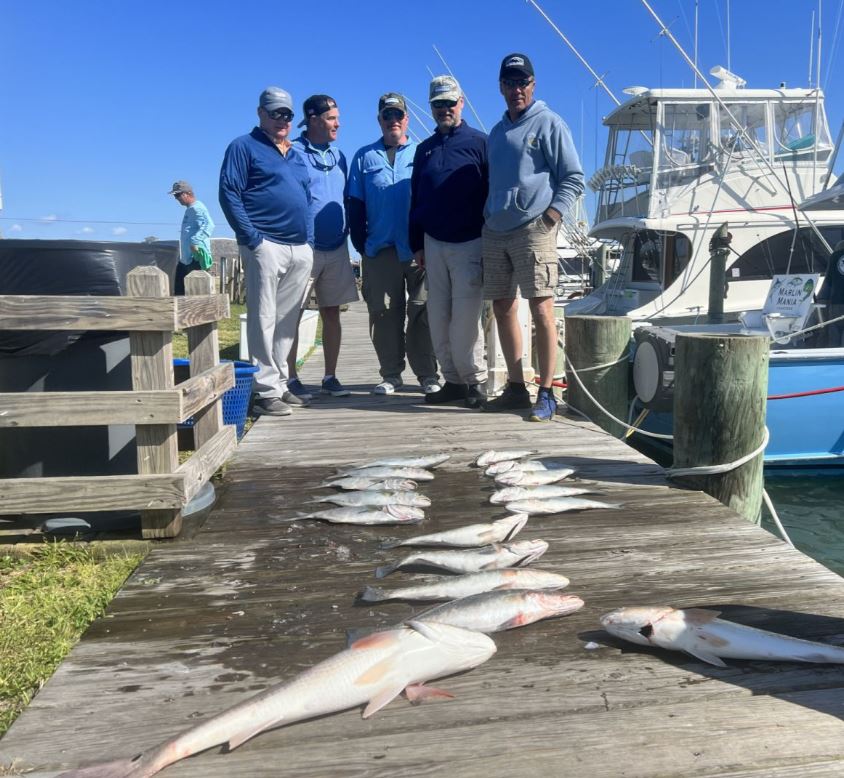
Black drum are the bulldogs of North Carolina inshore waters, and they're absolutely crushing crab baits around oyster bars and channel edges. These fish can push 30-plus pounds and will test your drag system and your patience. They're not flashy fighters, but they'll pull steady and hard, making you work for every inch of line. Best action typically comes on incoming and high tide when they're up feeding in the shallows. What makes black drum special is their predictability – when you find them, they're usually there in numbers.
Sheepshead are the ultimate light tackle challenge, with mouths full of human-like teeth and a bite so subtle you'll swear you're hung up on structure. These convict-striped beauties hang around any kind of hard bottom, pilings, or dock structure, picking barnacles and crabs off the surfaces. They're primarily a winter target here, with February through April being prime time. A perfectly presented fiddler crab on a small hook is sheepshead candy, but you need to set the hook at the slightest tick or they'll rob you blind.
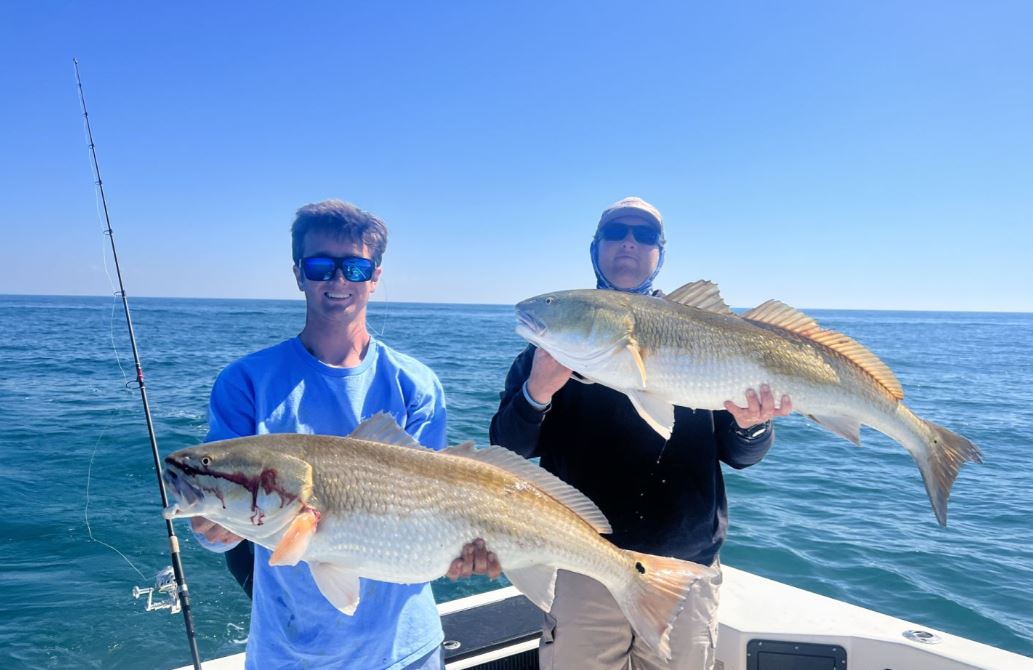
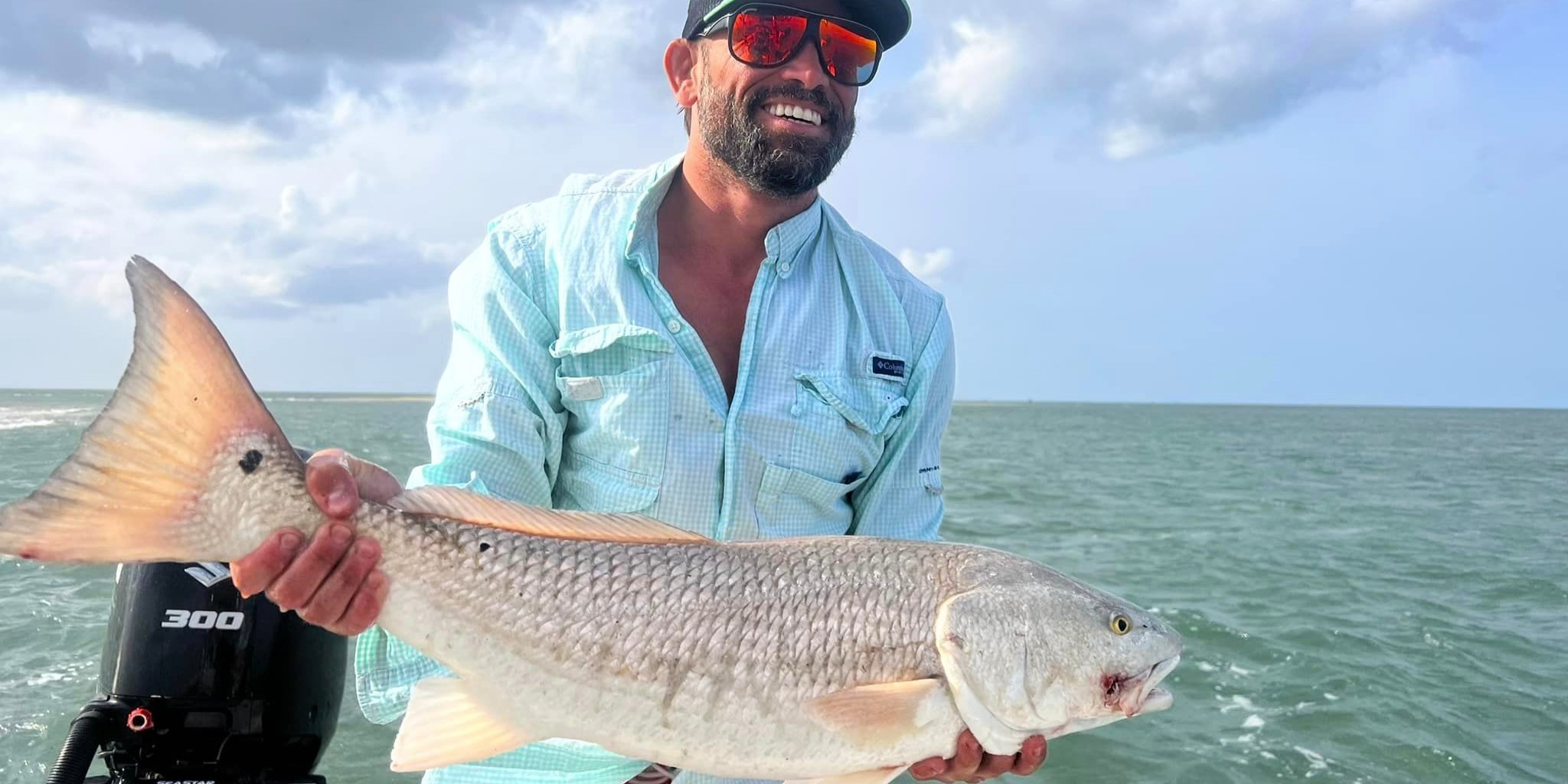
Redfish are North Carolina's signature inshore species and for good reason. These copper-colored bruisers are aggressive, accessible, and put up an honest fight that'll get your heart pumping. Spring and fall are peak times, but we catch them year-round in different areas. Slot-size fish typically run 18 to 27 inches, but we regularly hook into over-slot bulls that'll peel drag and test your knots. They're ambush predators that love to cruise grass flats and oyster bars, making them perfect targets for sight fishing when conditions allow.
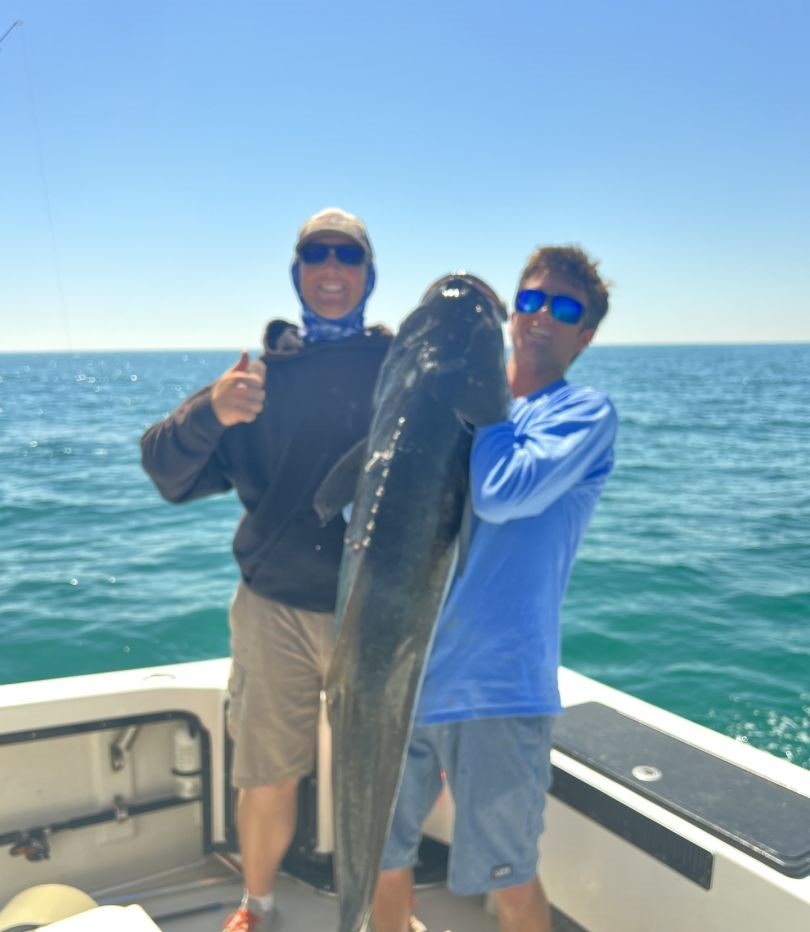
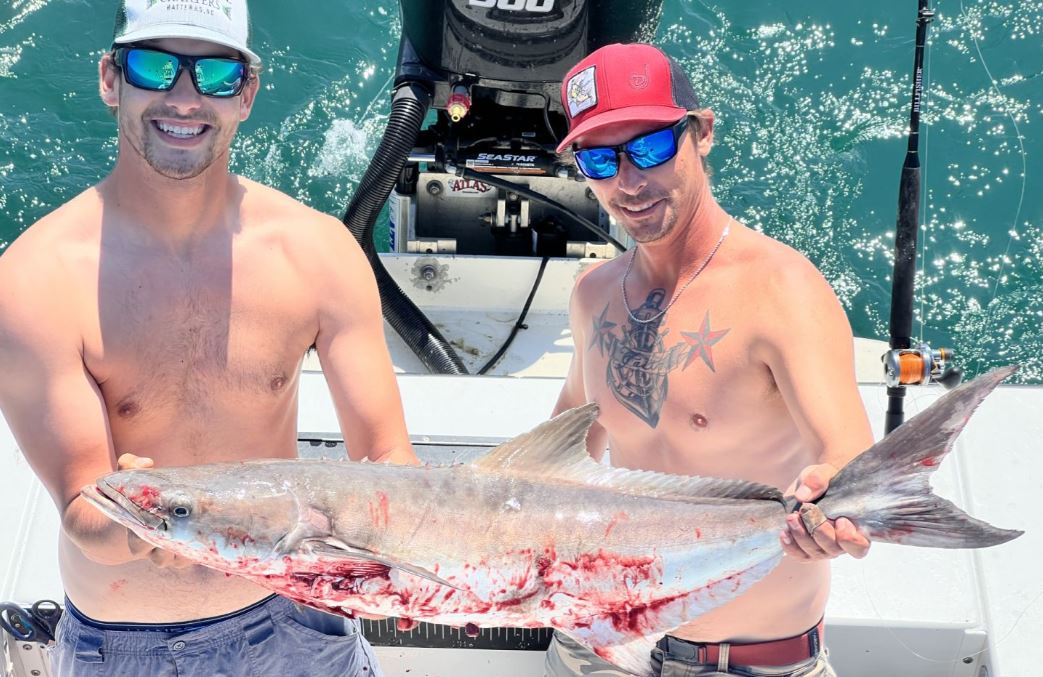
Cobia are the wild cards that can turn any trip into something special. These brown sharks of the inshore world are curious, aggressive, and absolutely explosive when hooked. They'll follow the boat, investigate baits, and generally act like the ocean's golden retrievers until you stick them with a hook. Then they turn into freight trains, making long runs and trying to wrap you around anything solid. May through October is prime cobia season, with fish ranging from 20-pound teenagers to 50-plus-pound monsters.
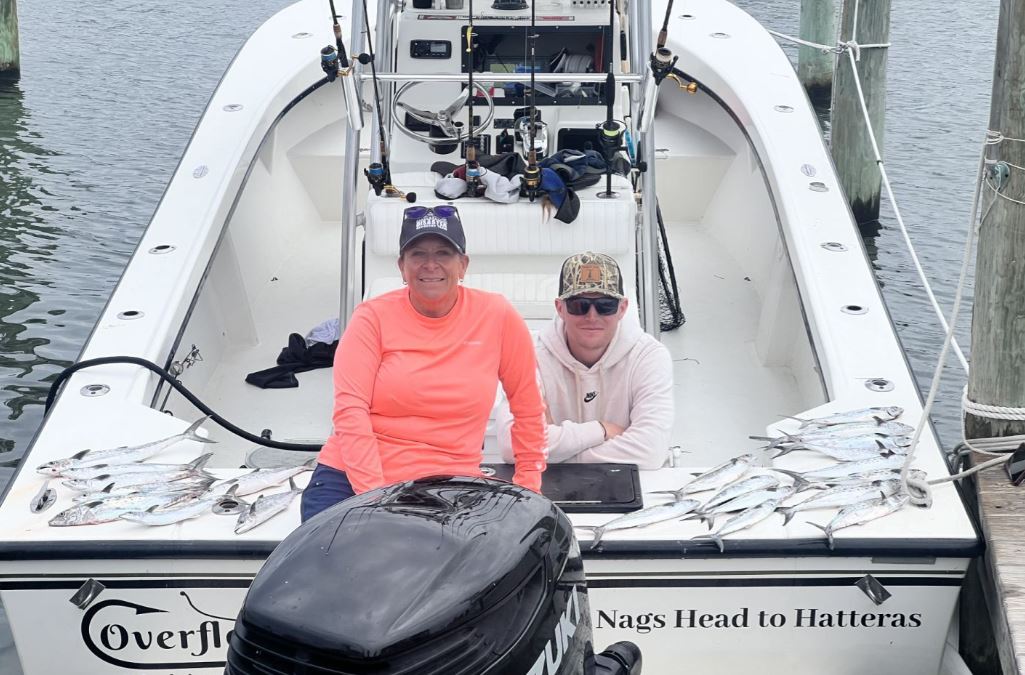
Little tunny might not be table fare for most folks, but they're pure adrenaline on light tackle. These small tunas are speed demons that'll smoke your drag and jump like tarpon. They school up in massive numbers, especially in fall, creating feeding frenzies that attract every predator in the area. When we find working birds and nervous baitfish, there's a good chance little tunny are underneath causing the commotion.
Time to Book Your Spot
North Carolina's inshore fishing scene is world-class, and these extended charters give you the best shot at experiencing everything our waters have to offer. The combination of diverse species, varied techniques, and quality time on the water makes for trips that fishing stories are built on. We're not just running you out and back – we're putting in the work to find fish and make sure you get the most out of your day. With only 4 spots
 Private Trip
 Inshore Fishing
 Raleigh


 6-hour and 8-hour inshore fishing trips available