Gulf Shores Inshore Redfish & Trout Charter
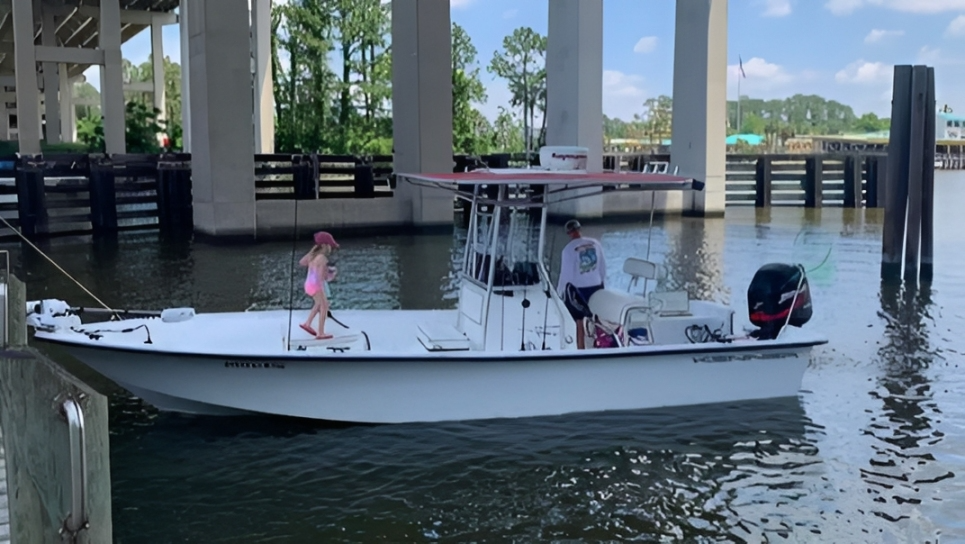
If you're looking to get your line wet in some of the most productive inshore waters along Alabama's coast, this shared charter with Seeley Charters LLC hits all the right spots. Captain Kevin and his crew know these waters like the back of their hand, working everything from the Intracoastal Waterway to Mobile Bay and Orange Beach Pass. This isn't some cookie-cutter fishing trip – they read the conditions daily and adjust the game plan based on what's biting and where the fish are holding.
What to Expect on the Water
Your day kicks off at 8:00 AM with a 3-hour fishing adventure that covers serious ground. Depending on tides, weather, and fish movement, you might find yourself casting toward Dauphin Island's grass flats or working the structure around Bay La Launch. The beauty of this charter is the flexibility – Captain Kevin adapts the route to put you on active fish rather than sticking to some predetermined path. Whether you're a weekend warrior or someone who's never held a fishing rod, the crew takes time to get you dialed in. All your tackle is covered – rods, reels, and live bait – plus you don't need to worry about individual fishing licenses. First Mate Joe keeps everything running smooth, from rigging baits to making sure you're following seasonal regulations. Just bring some non-spray sunblock and polarized sunglasses to cut the glare off the water.
Techniques and Tackle Setup
The crew runs a mixed approach depending on what species they're targeting that day. For redfish, expect to work shallow grass flats and oyster bars with live shrimp or cut bait on circle hooks. When the spotted seatrout are active, they'll set you up with lighter tackle and artificial lures like soft plastics or topwater plugs during early morning feeding windows. The inshore to nearshore transition opens up opportunities for species like mangrove snapper around structure, where you'll drop live pinfish or squid on bottom rigs. Captain Kevin reads the water conditions and adjusts techniques accordingly – if the wind's up, you might focus on protected shorelines with heavier jigs, while calm conditions open up sight-fishing opportunities in skinny water. The gear provided handles everything from finesse presentations to pulling fish away from cover, so you're ready for whatever these Gulf Coast waters throw at you.
Customer Stories
"Great Experience! Took us to a great spot to catch some red snapper and cleaned the fish for us! Kevin is a down to earth guy and his deckhand Joe was a hard worker. Highly recommend! Will return for round 2!" - Kyle
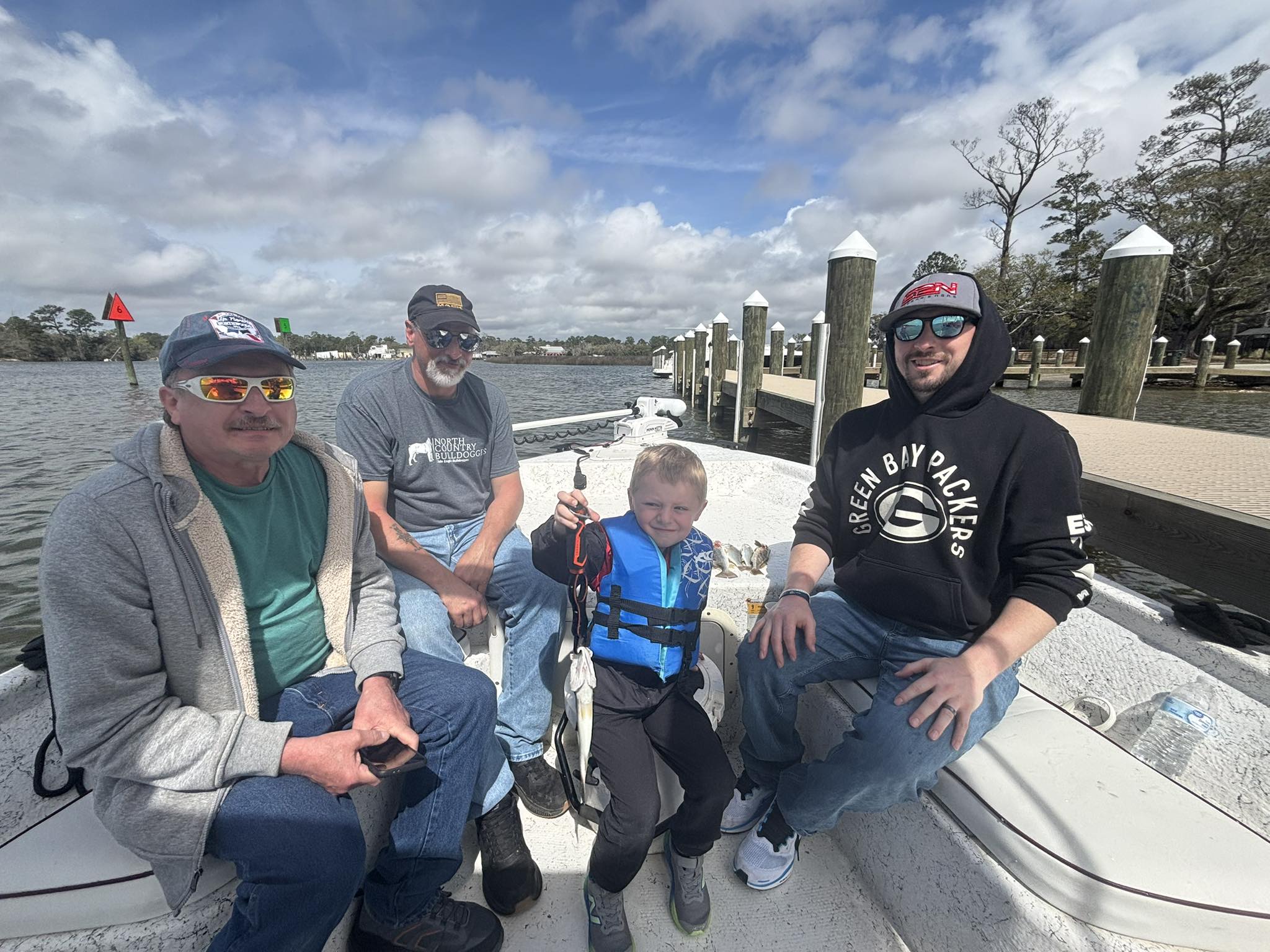
"We had a great time! We had lots of laughs and Kevin and Joe both were great help in teaching us how to do it. They gave lots of tips and explained everything where we understood and were able to catch a lot! They even cleaned our fish for us at the end. From start to end of our trip it was a great experience and we will definitely be back!!" - Abigail
Species You'll Want to Hook
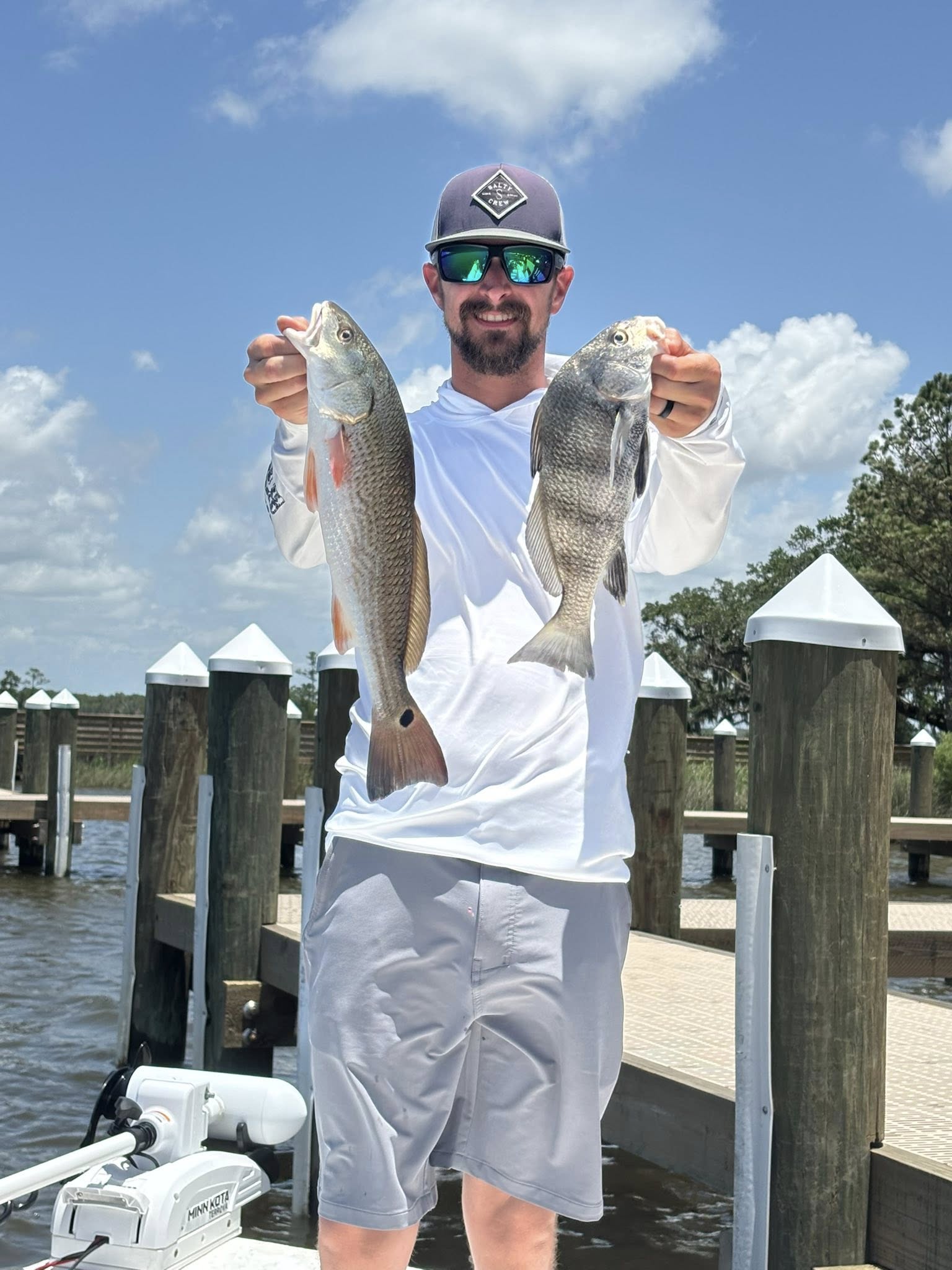
Redfish are the bread and butter of Gulf Shores inshore fishing, and for good reason. These copper-colored bruisers average 20-30 inches in this area and fight like freight trains once hooked. They love shallow grass flats and oyster bars where they cruise looking for crabs and shrimp. Fall and spring offer the most consistent action, but summer early mornings can produce explosive topwater strikes. What makes reds so special is their willingness to eat and their drag-screaming runs – perfect for anglers wanting that authentic Gulf Coast experience.
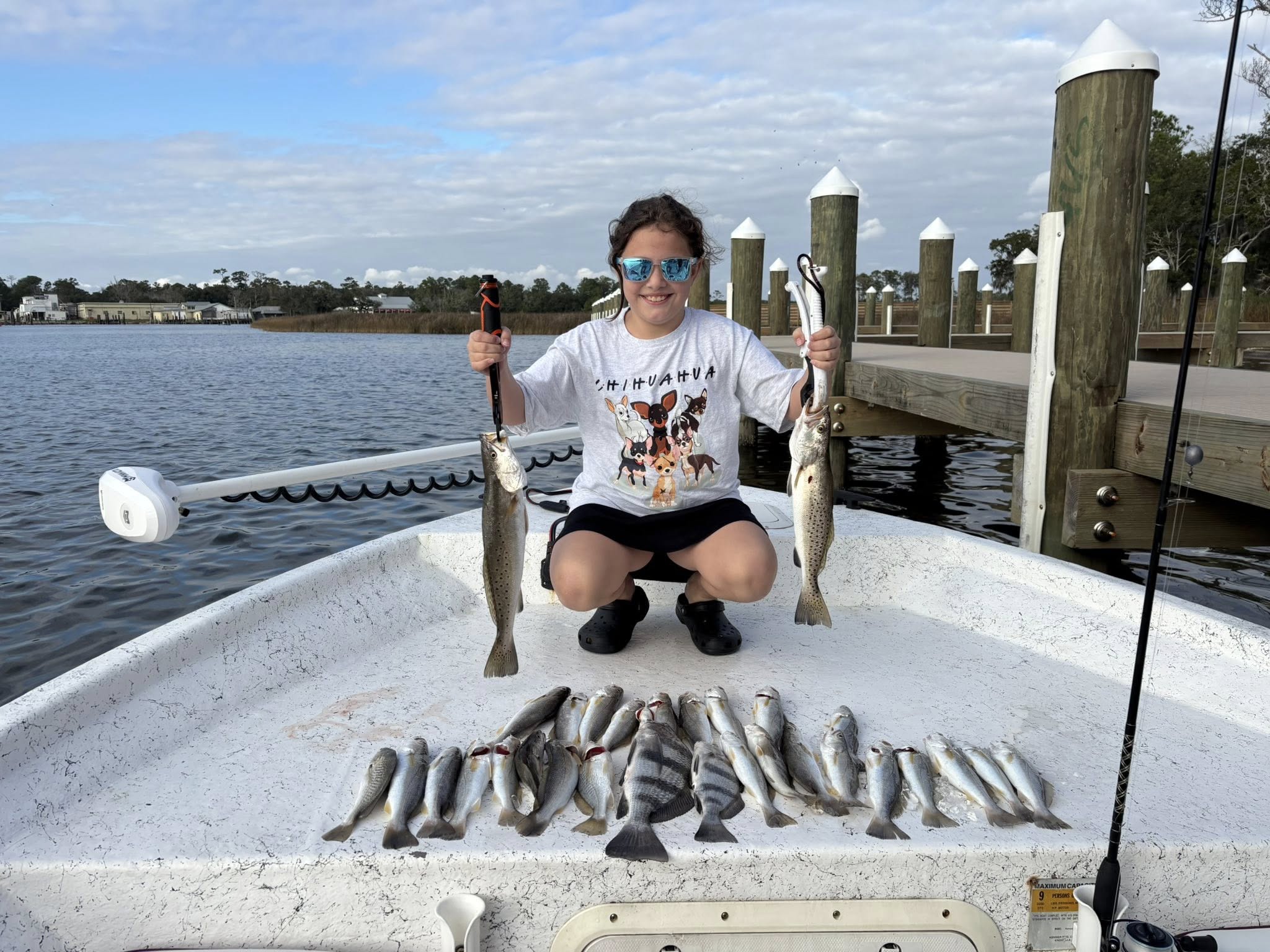
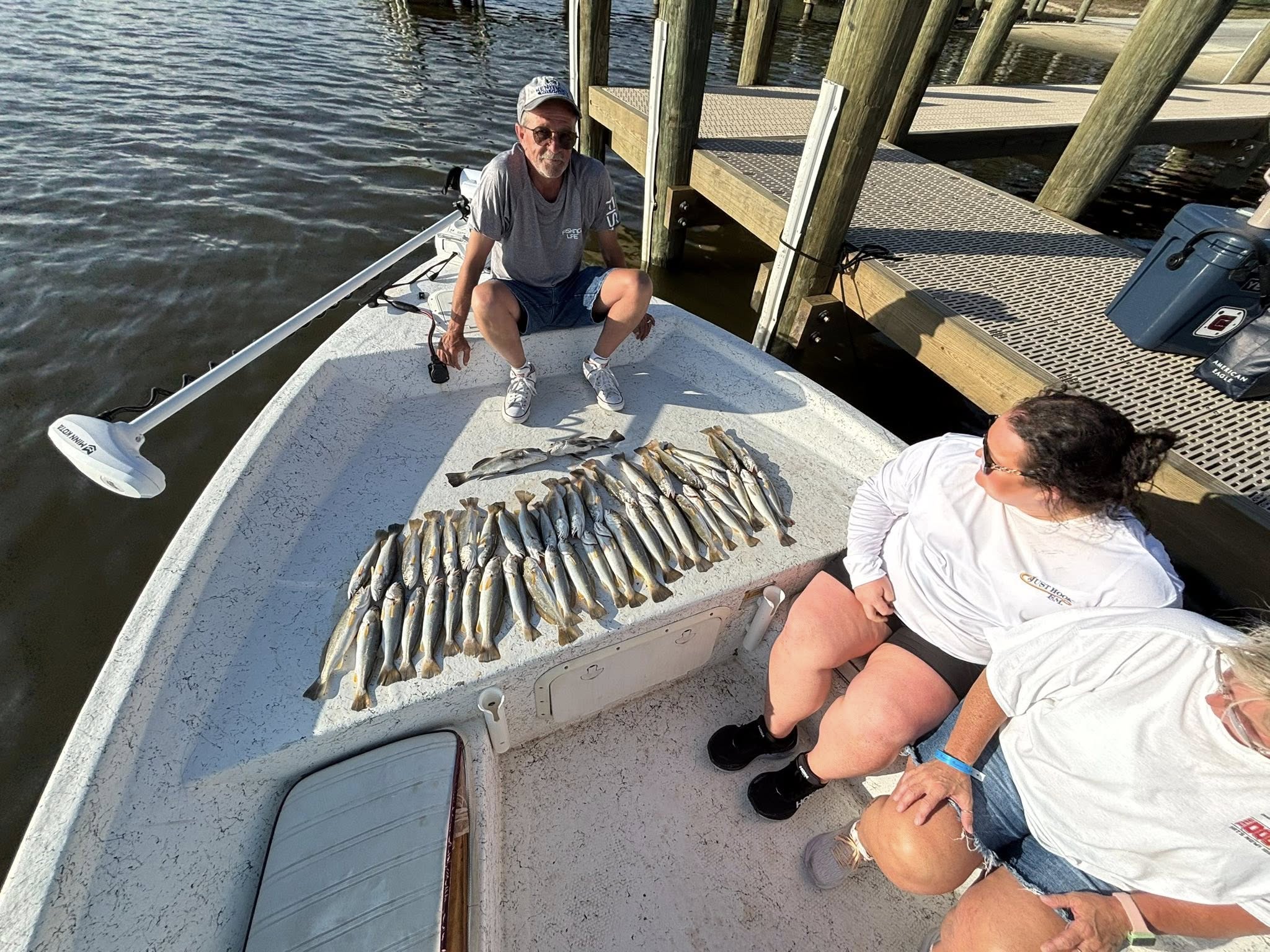
Spotted seatrout, or "specks" as locals call them, provide some of the most technical and rewarding fishing in these waters. These silver-sided predators typically run 14-20 inches and have soft mouths that require finesse. They suspend over grass beds and drop-offs, especially during moving tides. Spring through fall offers prime speckled trout fishing, with cooler mornings being most productive. Their aggressive strikes on topwater lures and acrobatic jumps make them a favorite among light-tackle enthusiasts.
Spanish mackerel show up in numbers during warmer months, providing fast-paced action near passes and structure. These speed demons rarely exceed 20 inches but make up for size with pure aggression and blistering runs. They school heavily around baitfish, creating feeding frenzies that produce multiple hookups. Their razor-sharp teeth and lightning-quick strikes test your reflexes and keep things exciting when other species slow down.
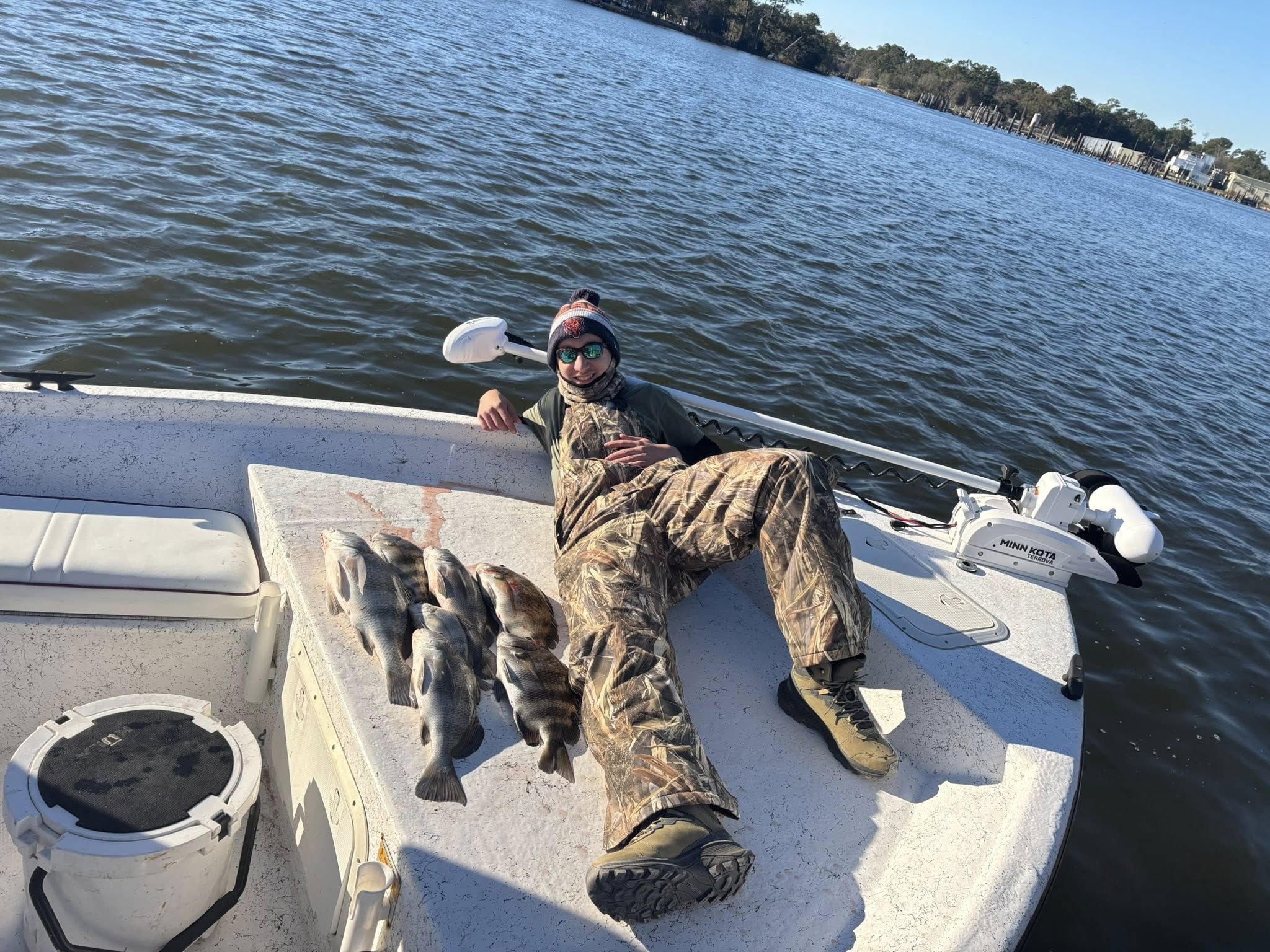
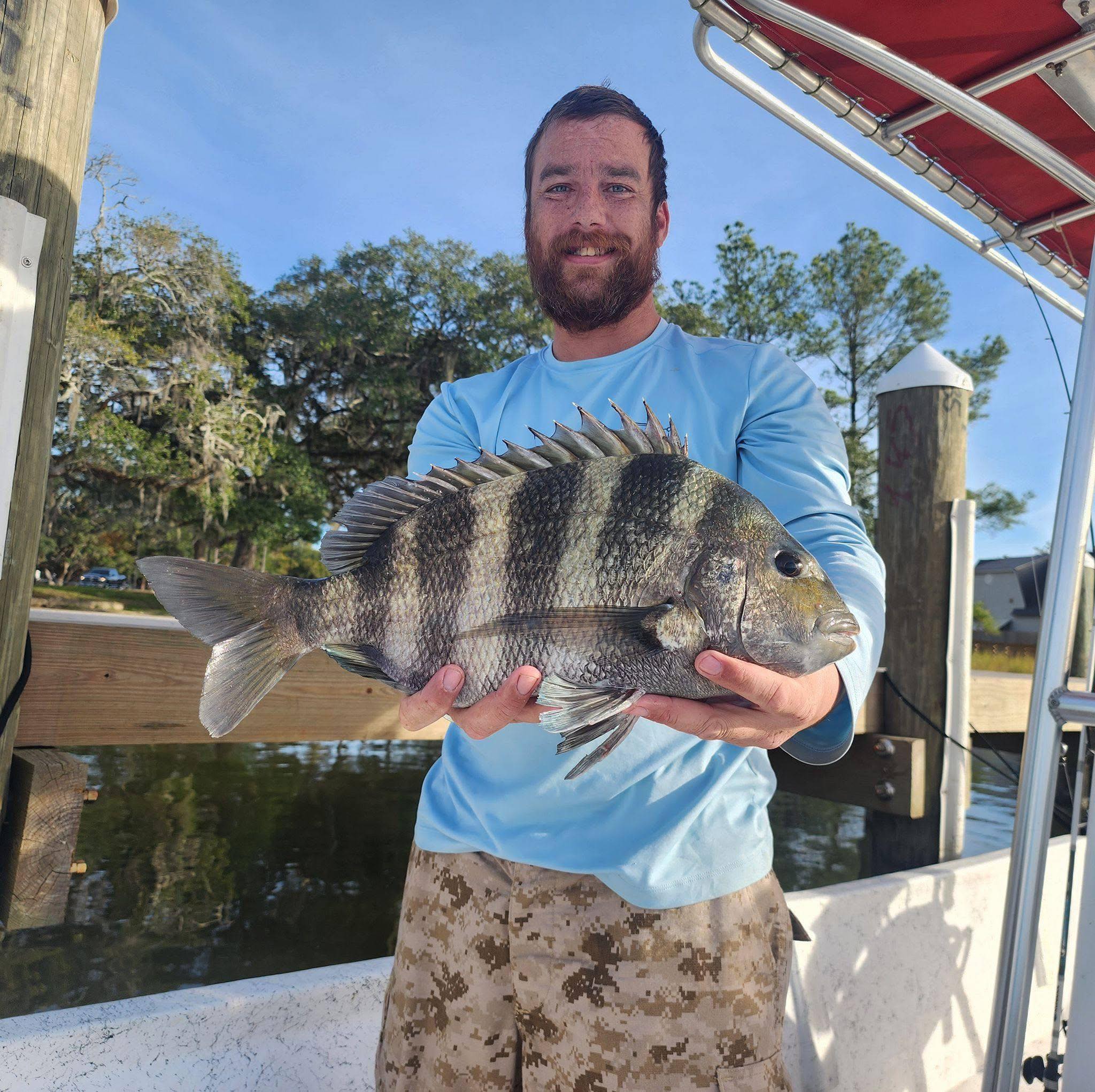
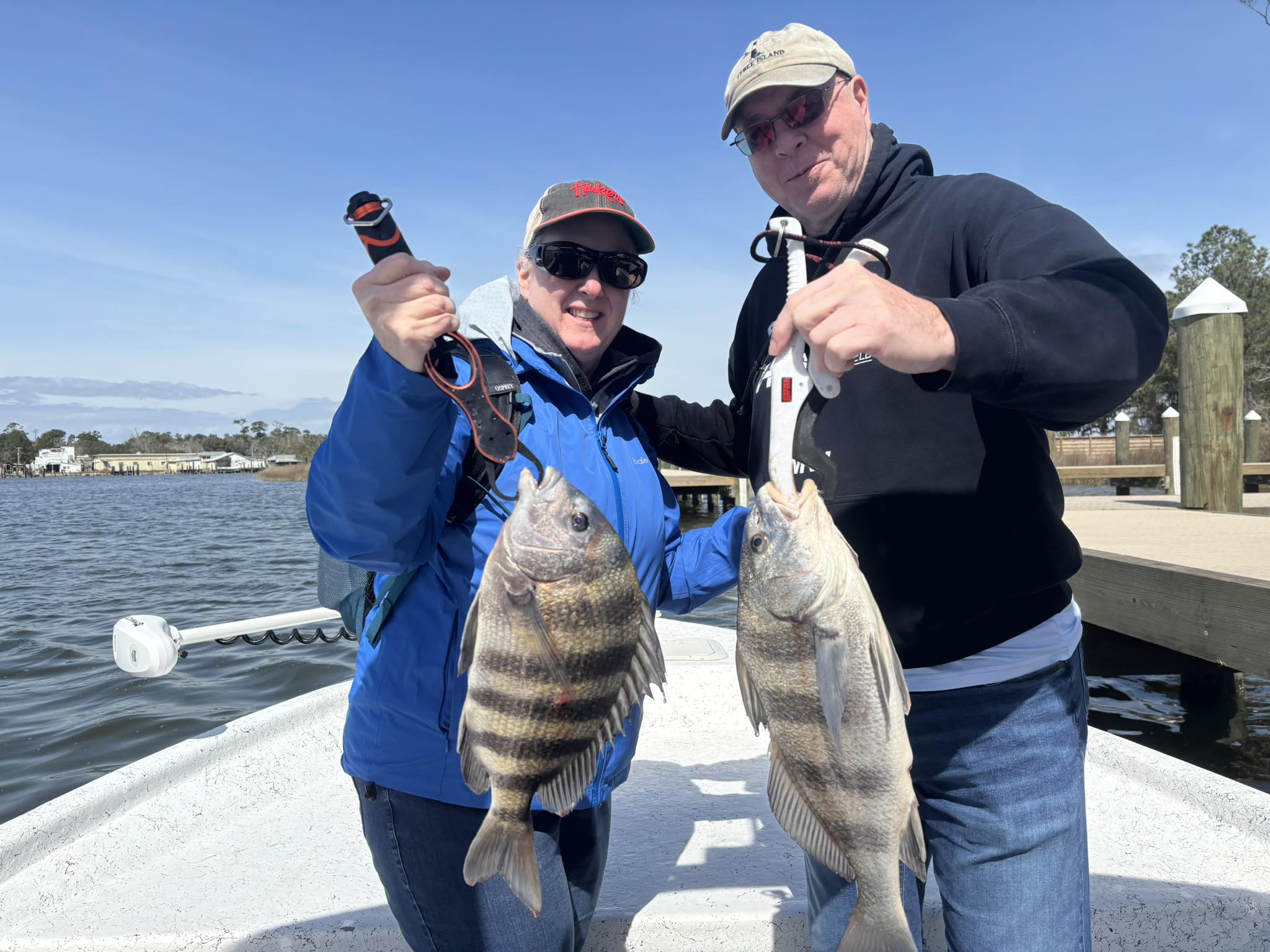
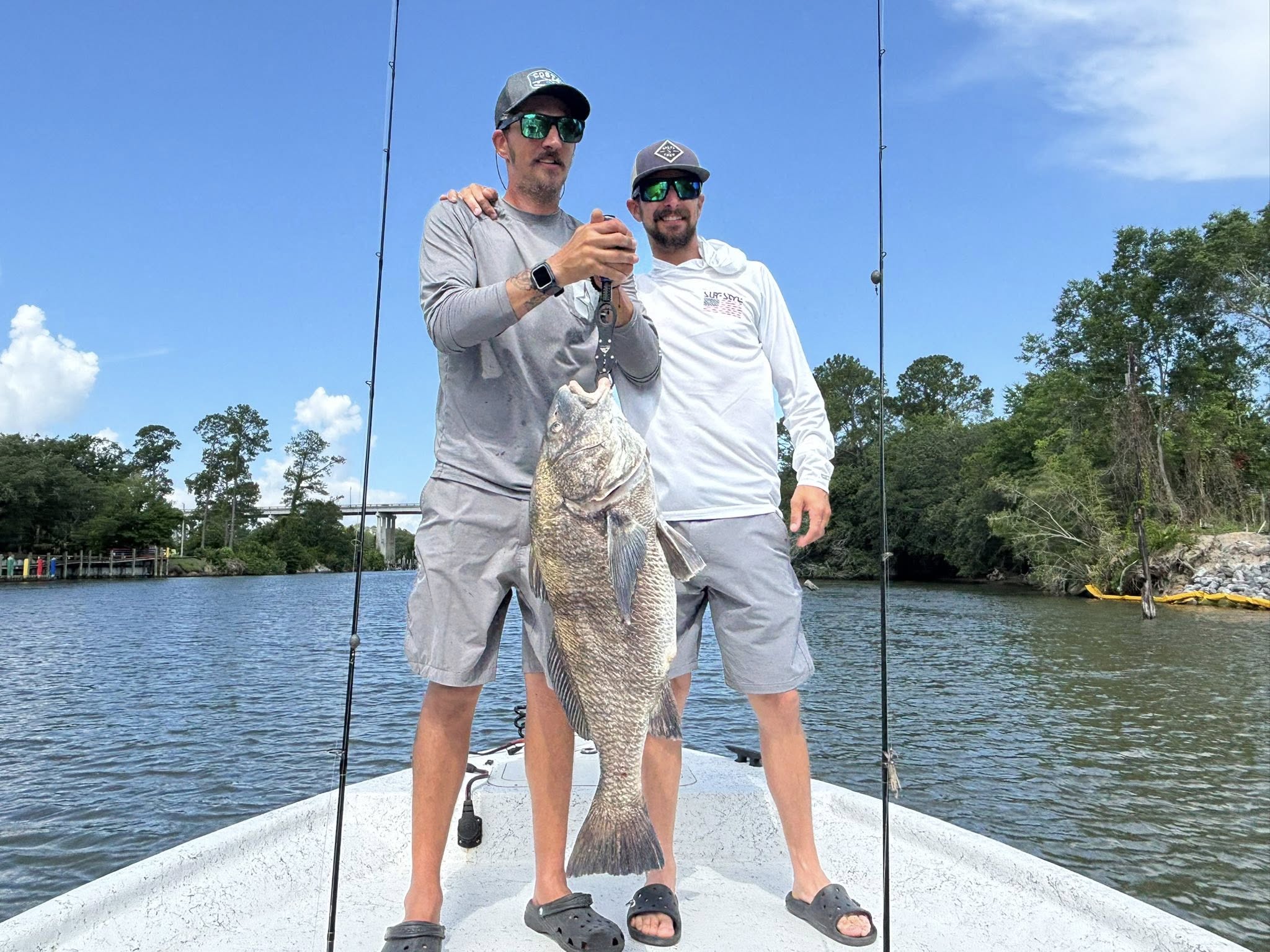
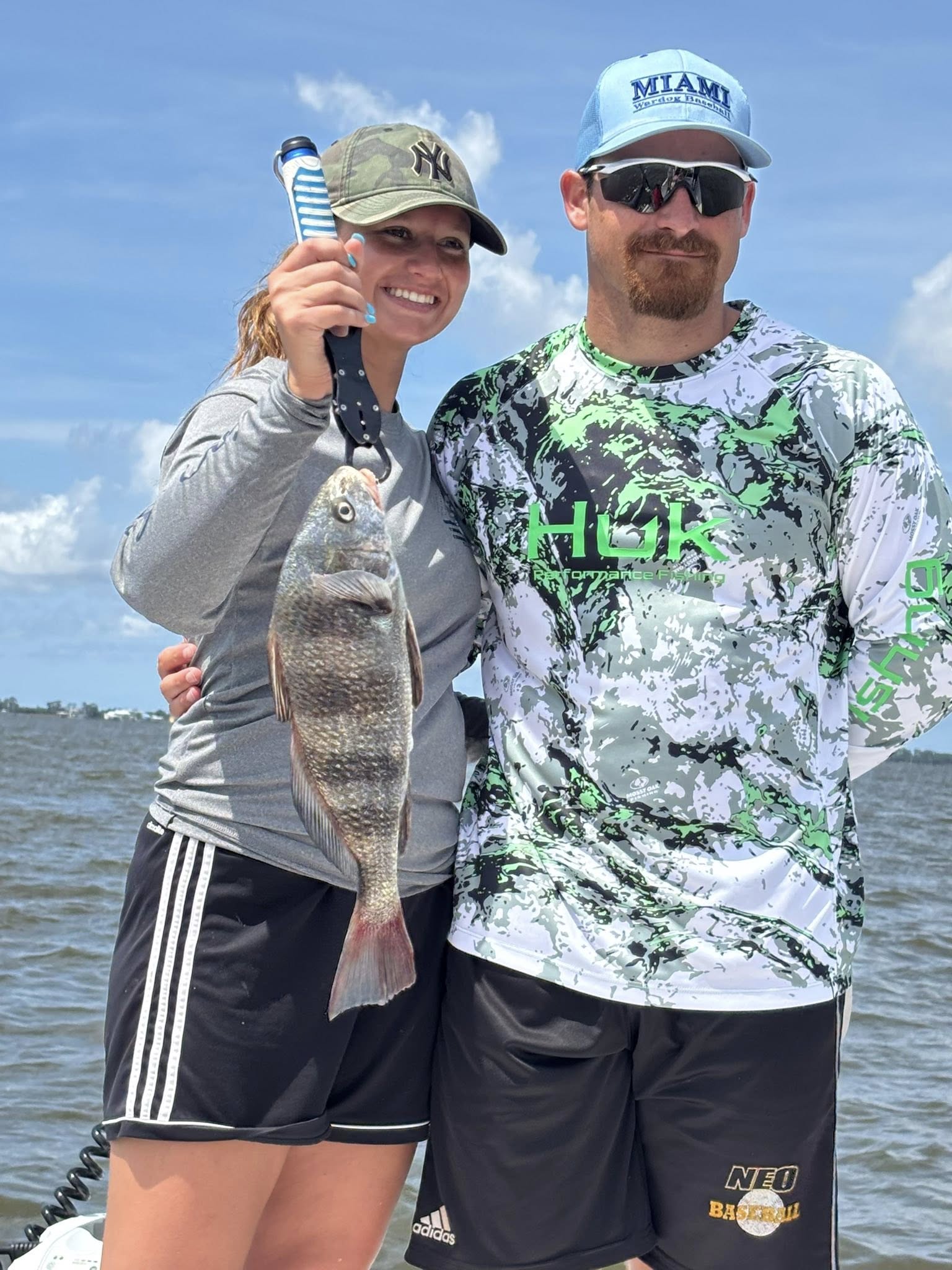
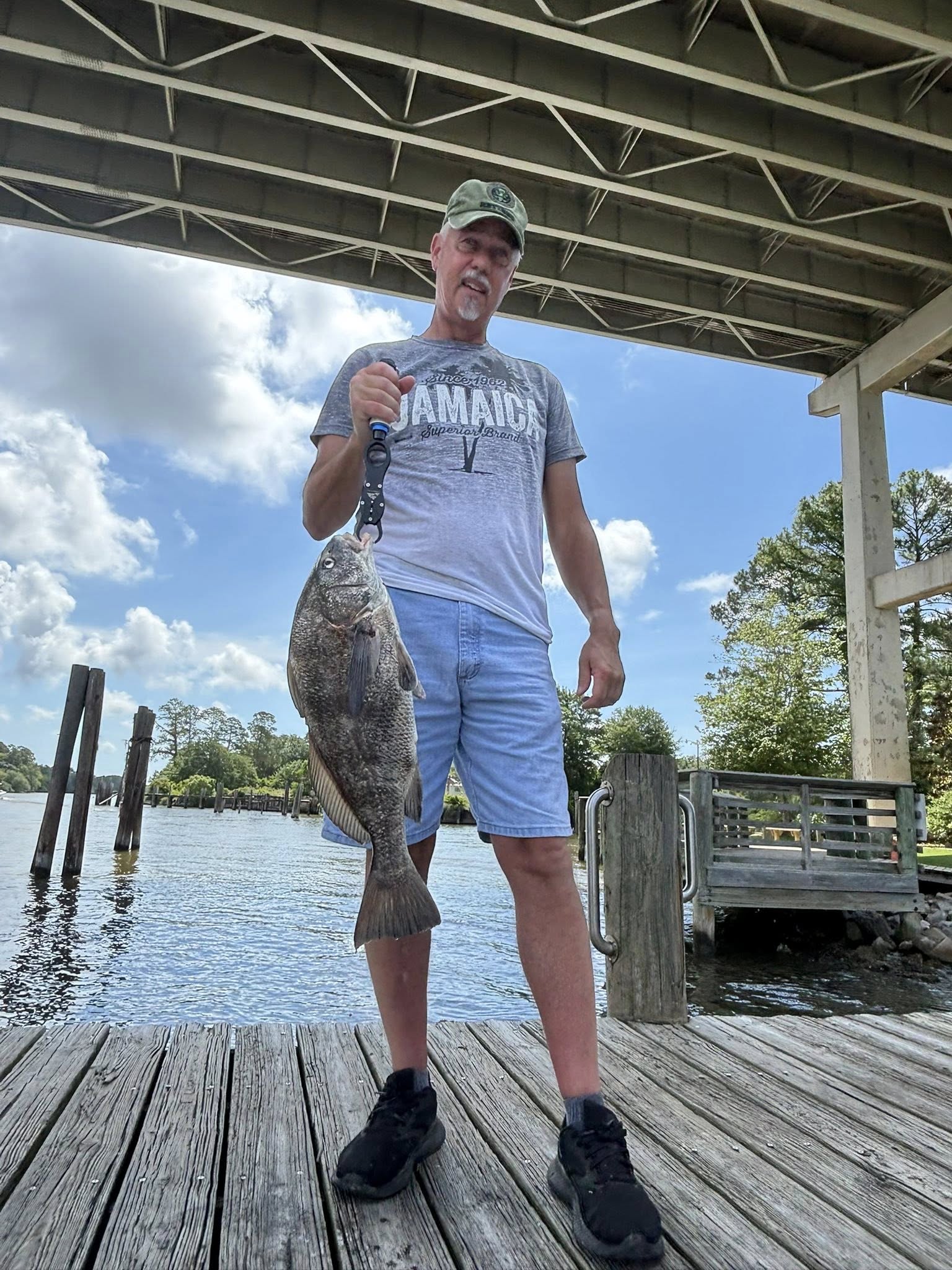
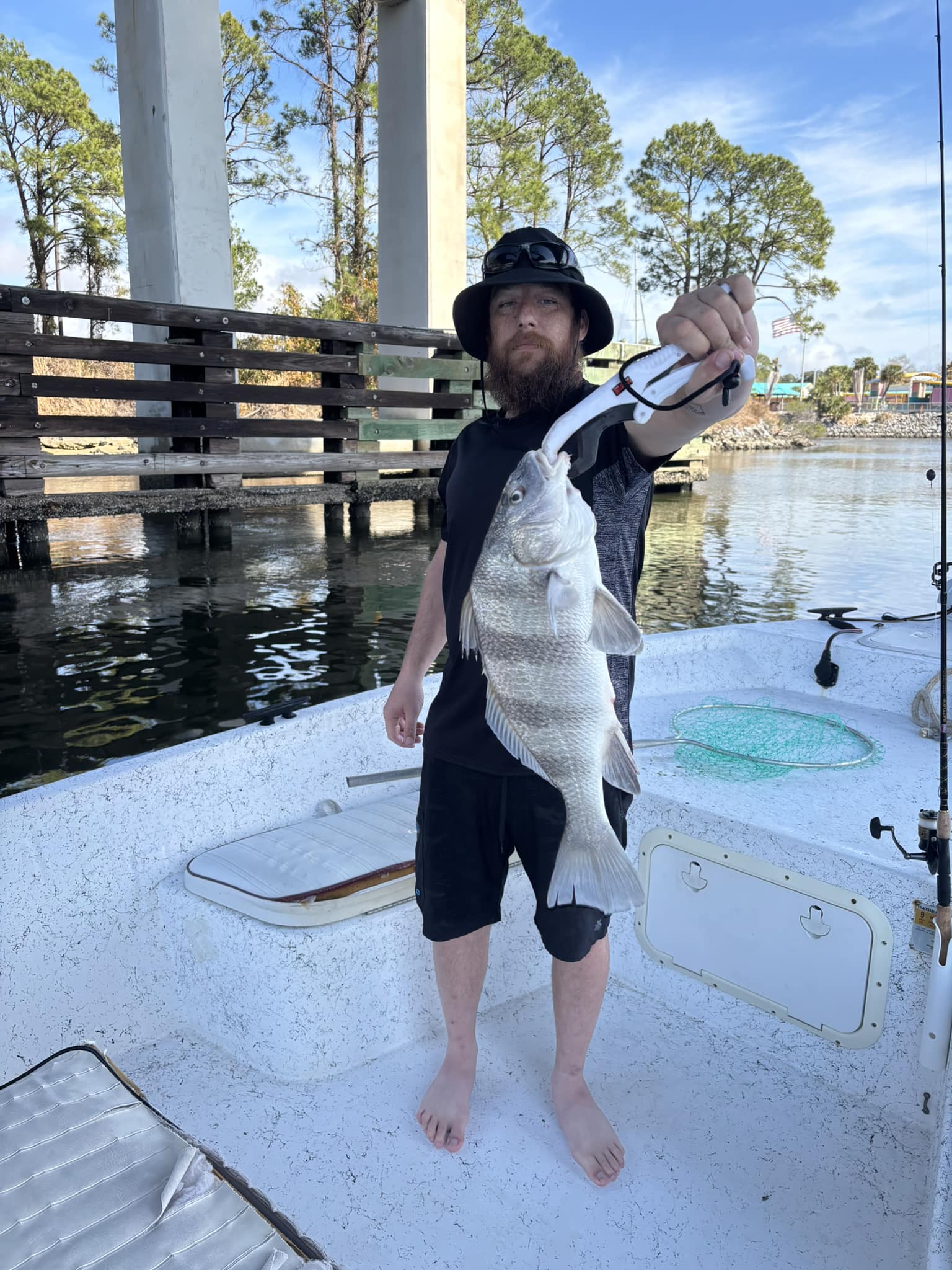
Black drum might not win beauty contests, but these bottom-dwelling powerhouses can surprise you with their size and strength. Averaging 15-25 inches in the inshore zone, they use crushing power rather than speed to fight. They're most active around oyster beds and structure during cooler months, using their pharyngeal teeth to crush shellfish. Landing a quality black drum on light tackle provides a different kind of satisfaction – pure, sustained pressure that tests your drag system.
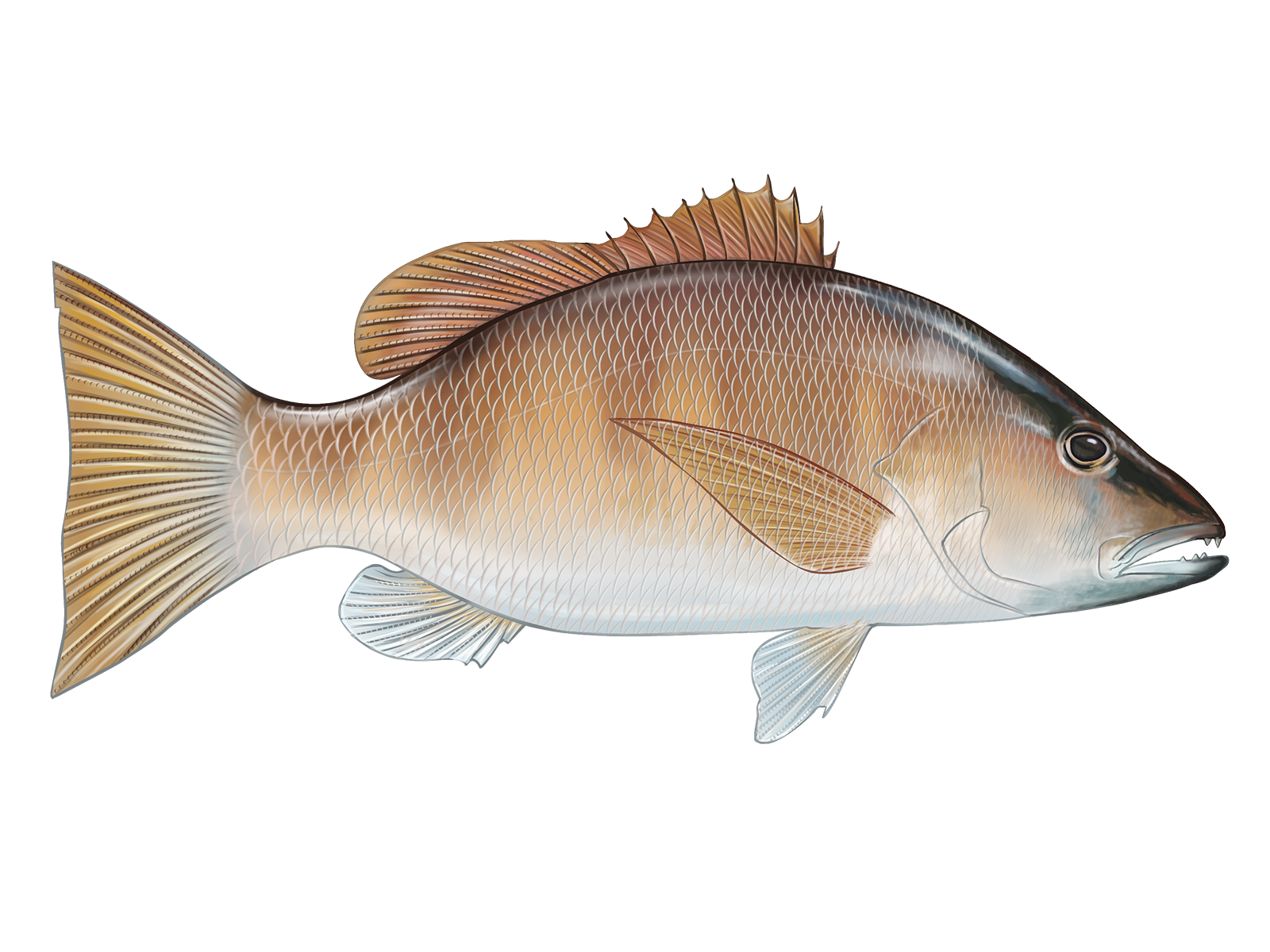
Grey snapper, often called mangrove snapper in these waters, represent some of the best eating you'll find. These structure-oriented fish typically run 12-18 inches and require precise presentations around pilings, rocks, and artificial reefs. They're notorious bait stealers with excellent eyesight, making them challenging targets that reward skilled anglers. Summer and early fall provide peak opportunities, especially during slack tide periods when they venture away from heavy cover.
Time to Book Your Spot
This shared charter gives you access to top-rated Gulf Shores fishing without breaking the bank. Captain Kevin's local knowledge and willingness to adapt to conditions means you're not just buying a boat ride – you're getting a genuine fishing experience tailored to what's working right now. The crew handles everything from gear to fish cleaning, so you can focus on what matters: getting fish in the boat and creating
 5.0(2 Reviews)
 Shared Trip
 Inshore Fishing
 Gulf Shores, AL


 Three-hour shared charter targeting redfish and spotted seatrout