3/4 Day Inshore Fishing Trip - North Carolina
When you're looking for a solid day on the water that won't eat up your whole weekend, this 3/4 day inshore trip with Southern Tides Fishing Charters hits the sweet spot. We're talking about exploring miles of North Carolina's productive coastline, working grass flats that hold fish year-round, and threading through creeks and rivers where the action can get downright hot. With thousands of oyster bars creating perfect ambush points for hungry gamefish, you'll understand why local anglers consider these waters some of the best on the East Coast. Our boat handles up to 6 anglers comfortably, so bring your crew or join up with other fishing enthusiasts for a day that'll remind you why you fell in love with fishing in the first place.
What to Expect on the Water
This isn't your typical half-day rush job where you barely get your lines wet before heading back to the dock. We're giving you real time to work the water properly, moving between different structure and habitat types as conditions and fish activity dictate. The beauty of North Carolina's inshore fishery lies in its variety – one minute you're sight-casting to tailing redfish on a shallow grass flat, the next you're bouncing bottom rigs along an oyster bar where black drum are feeding. The captain knows these waters like the back of his hand, reading tides and wind to put you on fish consistently throughout the trip. You'll cover serious ground, but it's strategic movement based on seasonal patterns and real-time conditions, not just running around hoping to get lucky. Pack your patience along with your tackle box – the fish here reward anglers who work methodically and pay attention to detail.
Techniques and Tackle
Inshore fishing in these North Carolina waters requires a mix of finesse and adaptability. We'll be working with medium-action spinning gear most of the day, switching between live bait presentations and artificial lures depending on what the fish are telling us. Expect to throw soft plastics on jigheads around structure, bounce live or cut bait along oyster bars, and work topwater plugs when the conditions are right. The grass flats call for weedless presentations – Texas-rigged plastics and spoons that won't hang up in the vegetation. When we're targeting sheepshead around the oyster bars, you'll learn why these fish have earned their reputation as notorious bait stealers – it's all about feeling that subtle tap and setting the hook at exactly the right moment. The captain provides all the tackle you'll need, but if you've got a favorite rod or lucky lure, bring it along. Local knowledge combined with your personal touch often produces the best results.
Target Species Breakdown
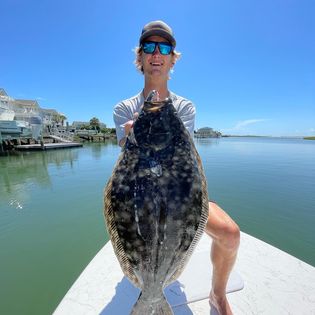
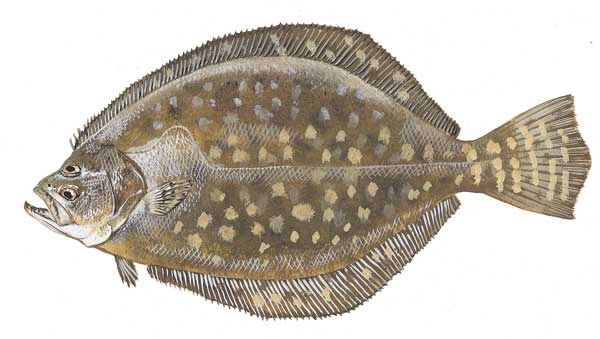
Southern Flounder are the bread and butter of North Carolina inshore fishing, and for good reason. These ambush predators lie in wait along channel edges and grass bed borders, perfectly camouflaged until an unsuspecting baitfish swims within striking distance. Spring through fall offers the best action, with fish ranging from keeper-sized 15-inchers up to genuine doormat flounder pushing 6-7 pounds. What makes flounder so appealing to anglers is their willingness to eat both live bait and artificials, plus they're absolutely fantastic on the dinner table. The strike often feels like you've snagged bottom – until that "bottom" starts swimming away.
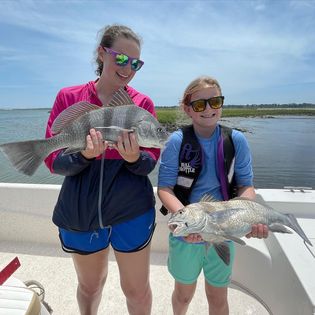
Black Drum bring the muscle to this fishery, with adults commonly weighing 20-40 pounds and the occasional giant topping 50. These powerful fish cruise the oyster bars and grass flats in schools, using their pharyngeal teeth to crush crabs and shellfish. Fall and spring produce the most consistent action, though you can find drum year-round in the right spots. They're not flashy fighters like tarpon, but they'll test your drag system and give you a real workout. The smaller "puppy drum" (under 16 inches) are excellent table fare, while the big bruisers are best released to keep the population healthy.
Sheepshead earned their nickname "convict fish" from the distinctive black stripes running down their silver sides, but anglers know them as one of the craftiest species in the inshore lineup. These bait thieves haunt oyster bars, dock pilings, and any structure where they can pick off crabs and barnacles. Winter months often produce the largest sheepshead, with fish over 5 pounds not uncommon around the right structure. They require patience and sensitivity – sheepshead can strip your hook clean without you feeling a thing if you're not paying attention. When you do connect, they fight with surprising strength and make excellent eating.
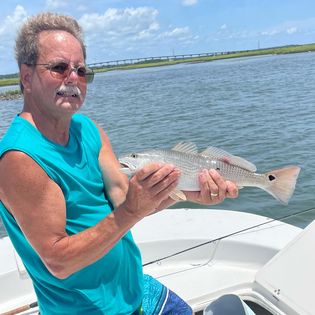
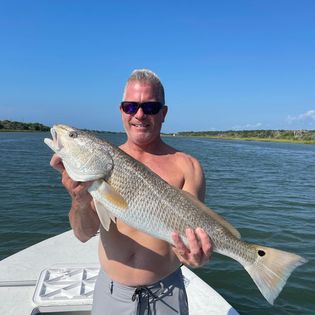
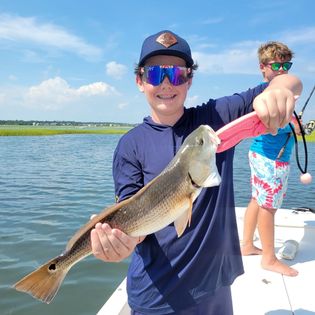
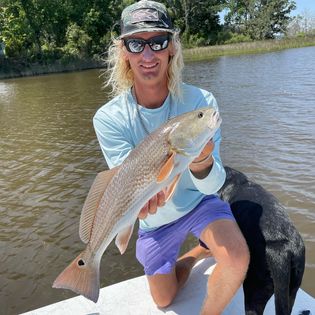
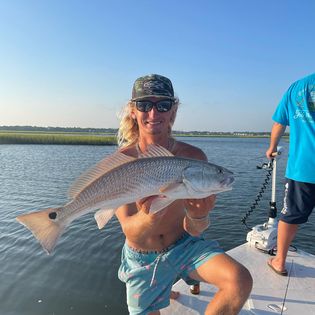
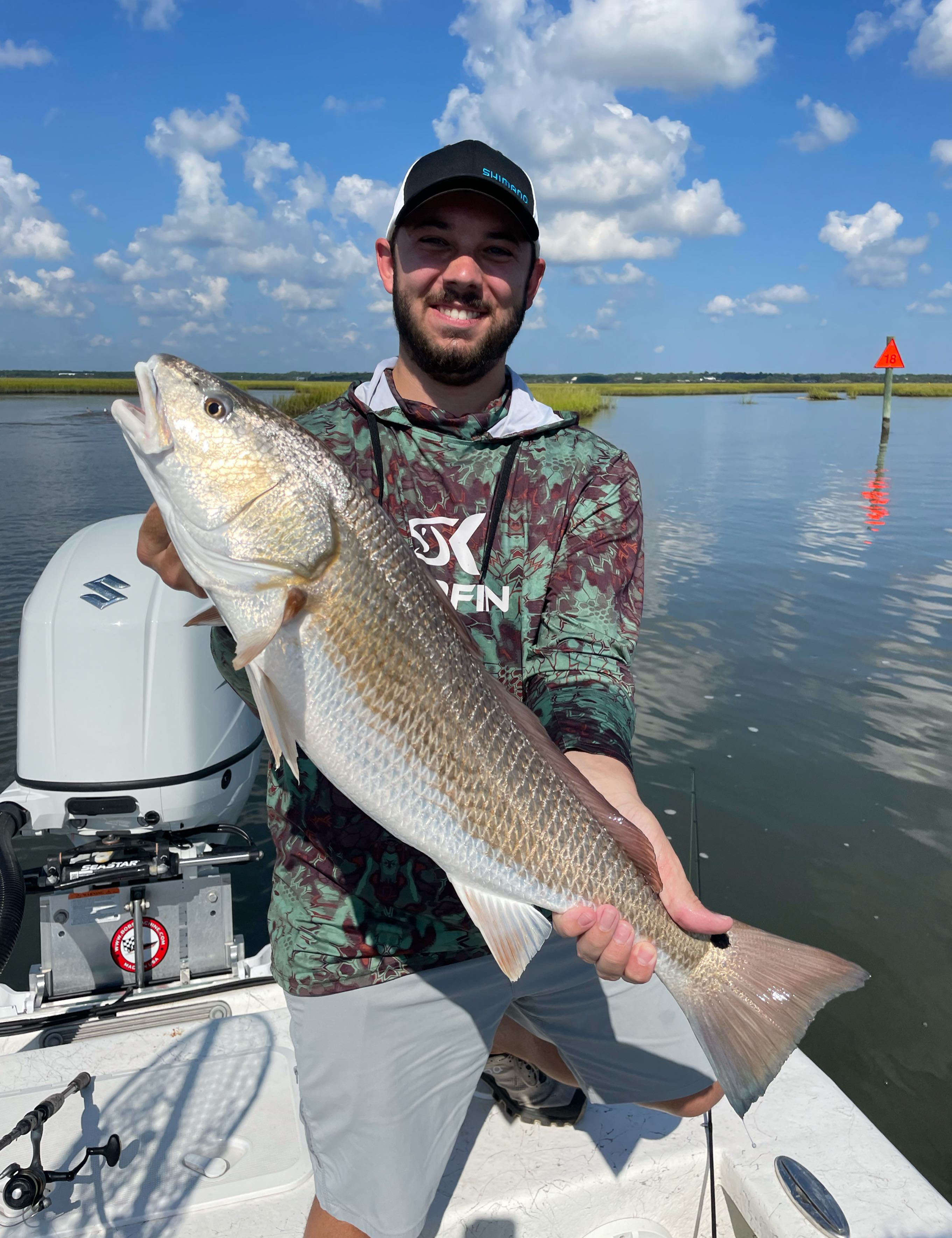
Redfish represent the glamour species of North Carolina inshore fishing, and it's easy to see why. These bronze-backed beauties are aggressive feeders that will crush everything from live shrimp to topwater plugs, often putting on aerial displays that rival any gamefish. The slot-sized fish (18-27 inches) are perfect for the dinner table, while the oversized "bull reds" provide pure adrenaline on light tackle. Fall brings the famous red drum runs along the beaches, but inshore fish are available year-round in the creeks and around structure. Their willingness to eat and spectacular fights make redfish a customer favorite on every trip.
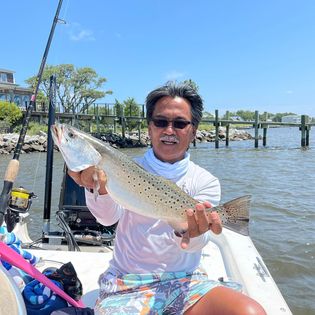
Sea Trout, or speckled trout as locals call them, add speed and excitement to the inshore slam. These aggressive predators roam the grass flats in schools, feeding heavily on shrimp and small baitfish. Spring and fall produce the best trout fishing, with fish ranging from barely legal 12-inchers up to "gator trout" exceeding 5 pounds. What makes specks so much fun is their willingness to hit topwater lures – few things in fishing compare to watching a big trout explode on a surface plug in shallow water. They're also excellent eating, with firm white meat that's perfect for the grill or frying pan.
Time to Book Your Spot
 Private Trip
 Inshore Fishing
 Cedar Point, NC


 Three-quarter day inshore fishing adventure in North Carolina waters