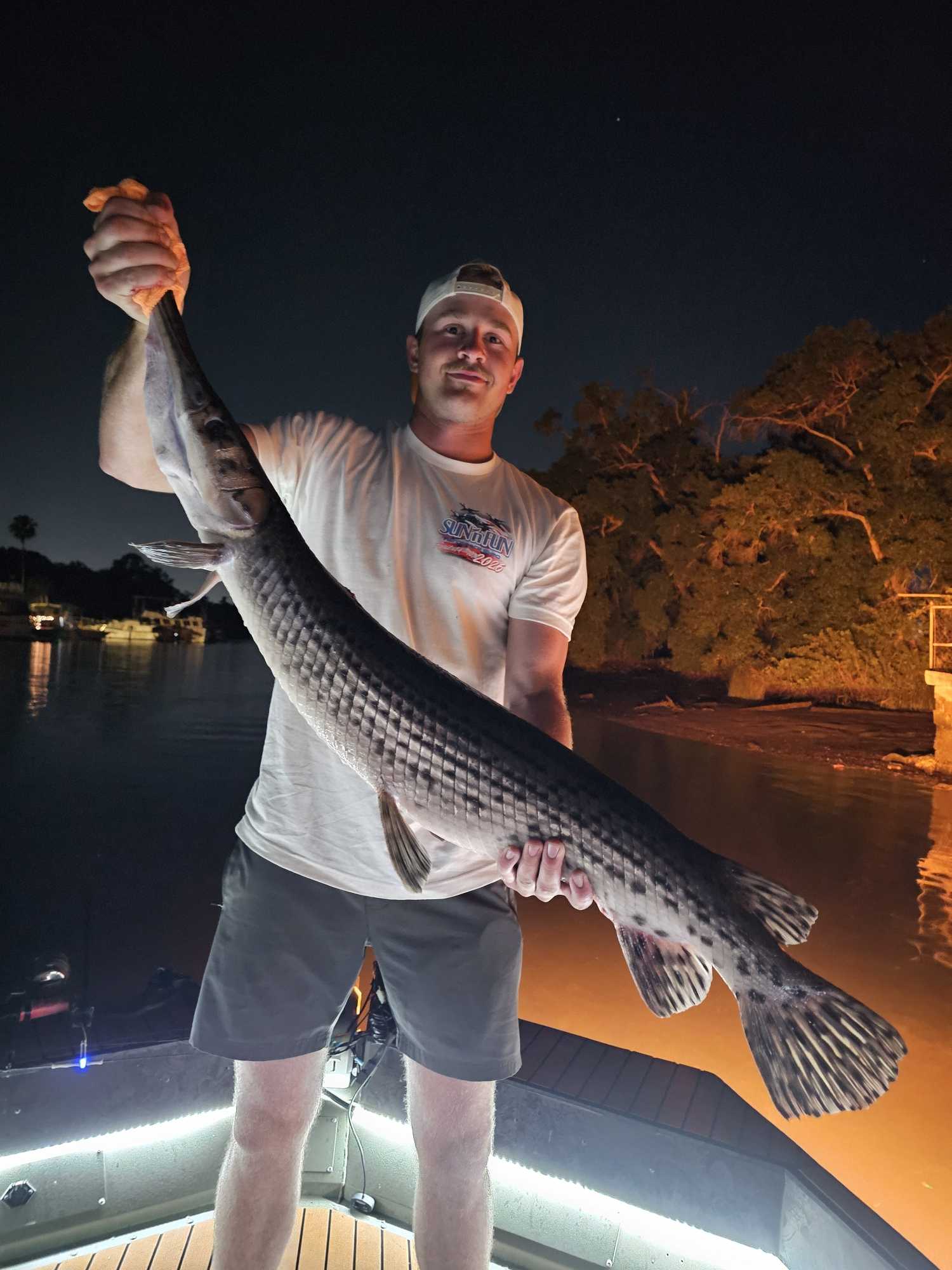
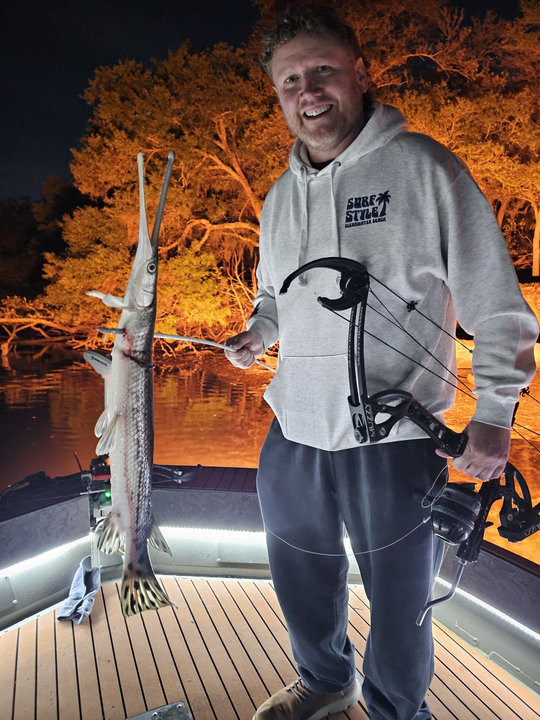
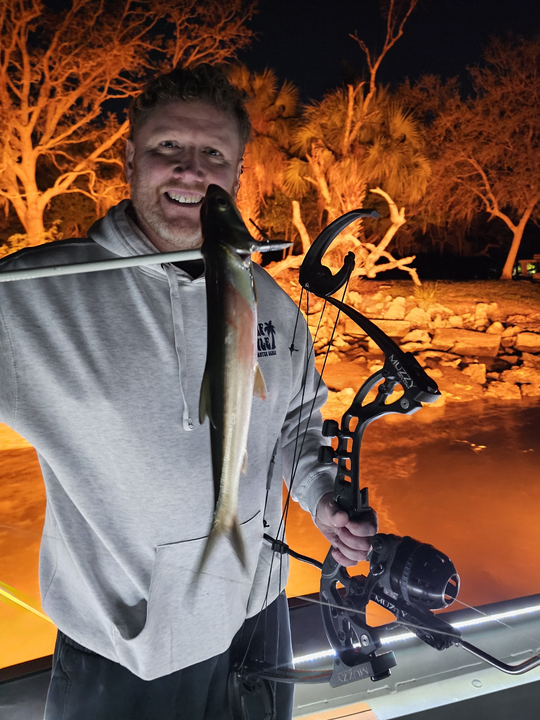
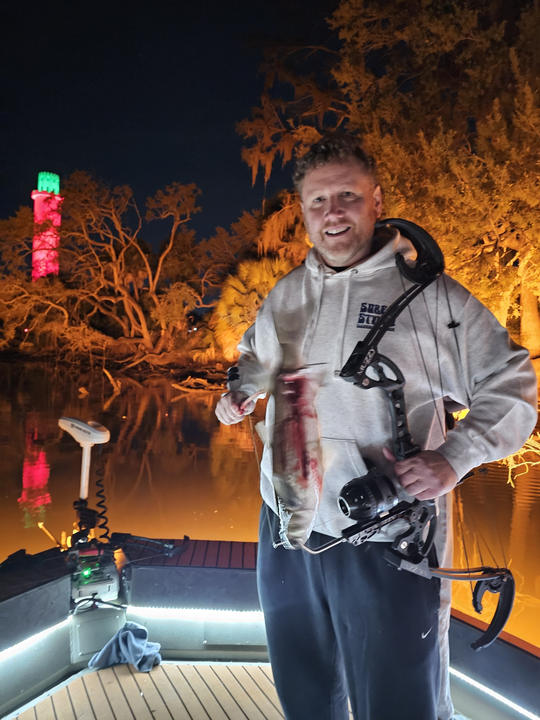
Night Bowfishing Adventure in Tampa Bay
Picture this: you're standing on a custom bowfishing rig as the sun sets over Tampa Bay, high-intensity lights cutting through the darkness to reveal stingrays gliding beneath the surface. Captain Ike's beginner-friendly bowfishing charter turns complete novices into confident archers in one evening, and it's quickly becoming the top-rated way to experience this ancient fishing method in Florida's waters. Whether you've never held a bow or you're looking to try something different from your usual rod-and-reel routine, this 4-hour trip delivers the perfect introduction to one of fishing's most hands-on disciplines.
What to Expect on the Water
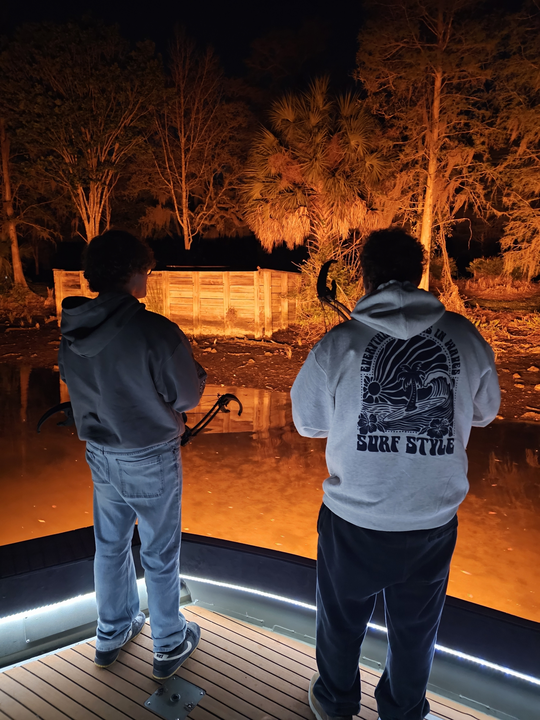
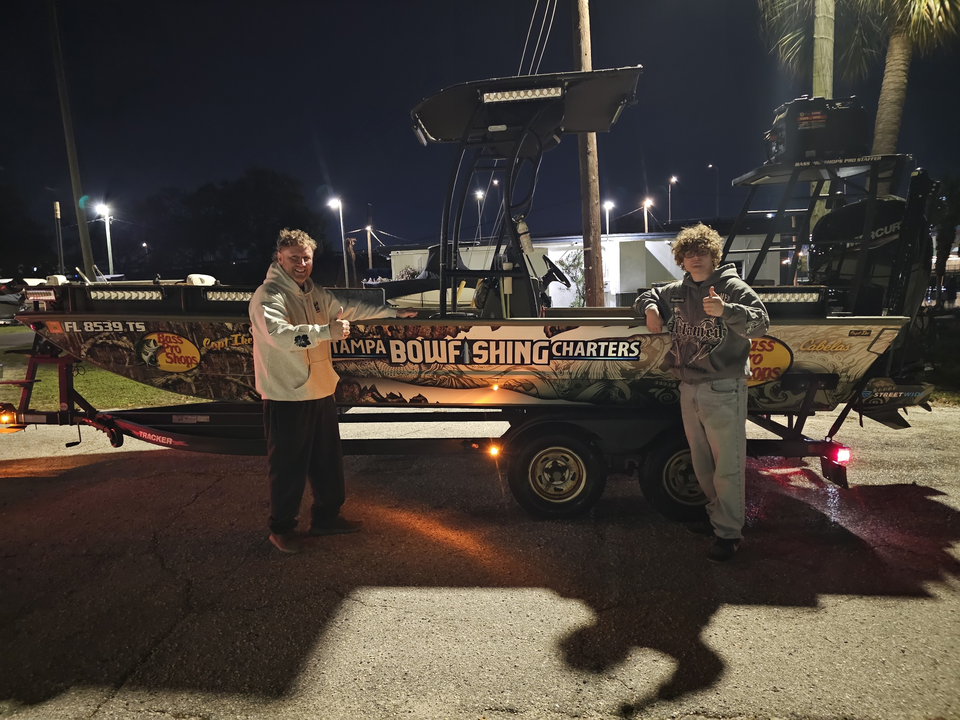
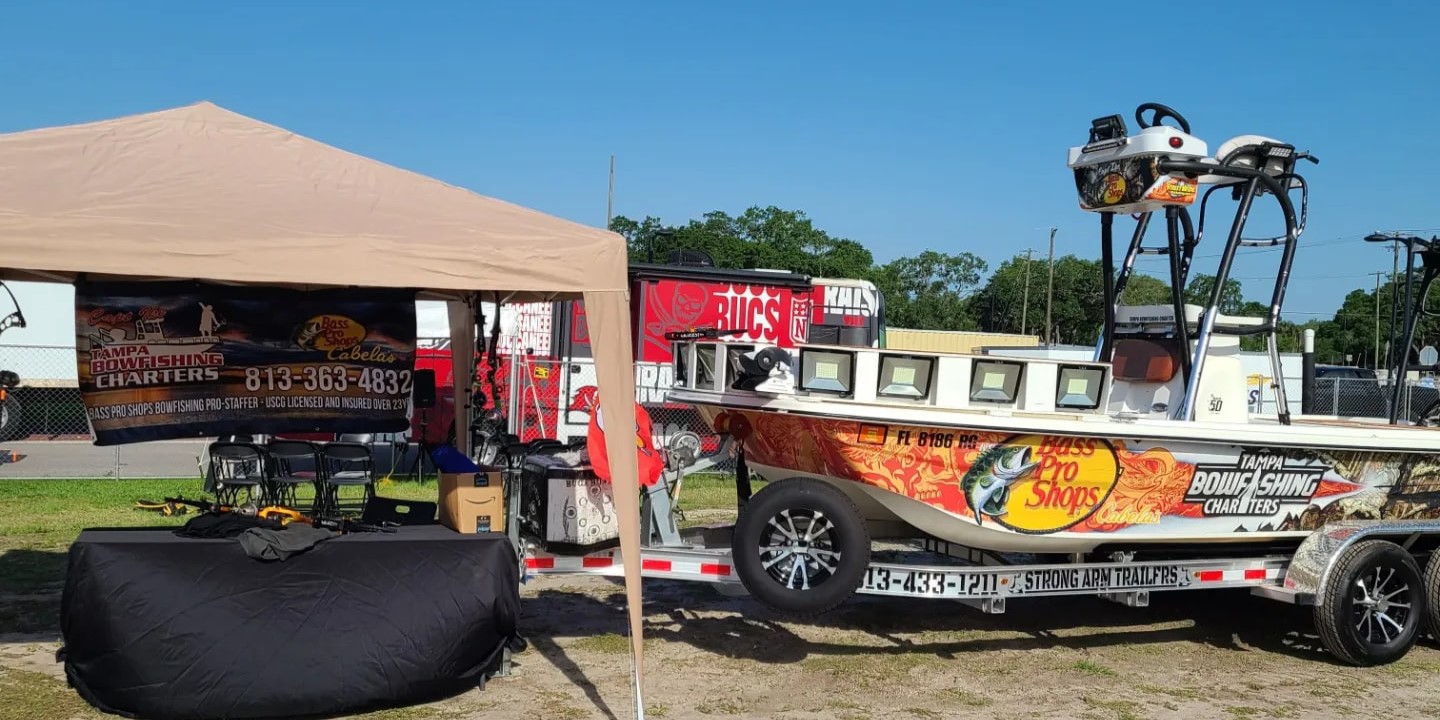
Your evening starts at 7:00 PM sharp at Tampa's Gandy Boat Ramp, where you'll meet Captain Ike and step aboard his purpose-built bowfishing vessel. This isn't your typical fishing boat – it's designed specifically for stalking shallow water targets, with a stable platform that gives you room to draw and shoot comfortably. The captain provides everything you need: recurve bows set up for both righties and lefties, arrows with retrieval lines, and all required fishing licenses. Just give him your group details ahead of time so he can have the right equipment ready to go. The boat's powerful LED light system transforms the nighttime shallows into a clear window, letting you spot fish that would be impossible to see during the day. Tampa Bay's calm evening waters make this the perfect learning environment – no heavy swells or choppy conditions to throw off your aim while you're getting the hang of leading moving targets.
Bowfishing Basics & Gear
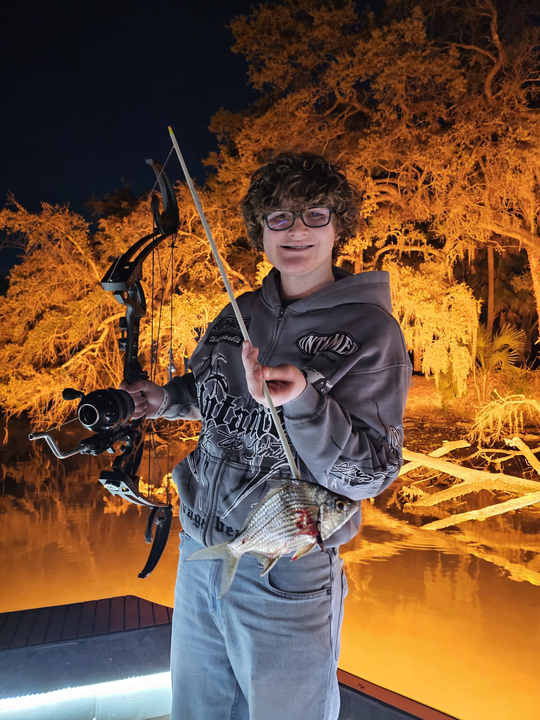
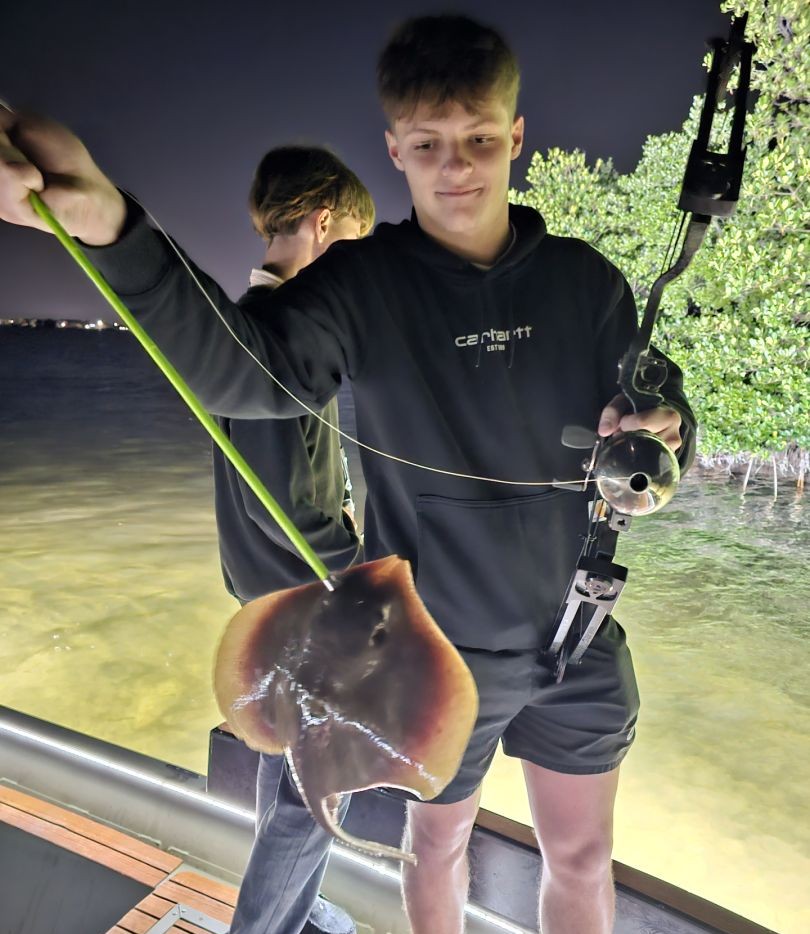
Bowfishing combines archery skills with fishing instincts, but don't worry if you've never done either. Captain Ike walks every guest through proper shooting form, how to account for light refraction in the water, and the timing needed to connect with moving fish. The bows are simple recurves – no complicated sights or releases – just you, the bow, and your target. Each arrow is attached to a heavy line that lets you retrieve your shot and, hopefully, your fish. The key technique is "aiming low and leading the fish," since water bends light and makes everything look higher than it actually is. You'll start with stationary targets to get your form down, then work up to tracking cruising stingrays and drum. The specialized arrows are barbed to hold fish securely, and Captain Ike handles all the netting and boat positioning so you can focus on making the shot. Most guests pick up the basics within the first hour and start connecting regularly by the trip's end.
Customer Stories
"Great experience for the whole family had a lot of fun" - Jayden. "Thank you - it was a great introduction. Maybe next time we'll be ready to get some fish! I hope your boat feels better tomorrow!" - Kim Herbig.
Species You'll Want to Hook
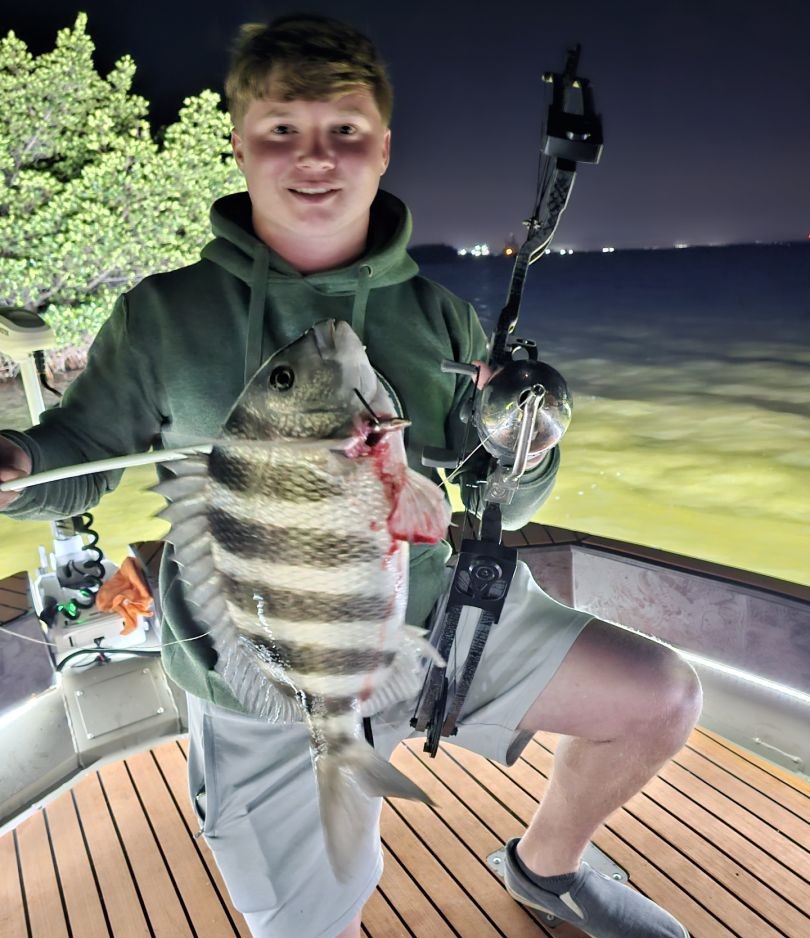
Black Drum patrol Tampa Bay's grass flats year-round, making them reliable targets for bowfishing adventures. These copper-colored fighters typically run 15-30 pounds in these waters and feed by rooting through the bottom for crabs and shellfish. They're perfect bowfishing targets because they move predictably and often feed in water shallow enough to get good shots. When the lights hit them, their dark backs stand out clearly against the sandy bottom. Black drum fight hard once arrowed, so be ready for some arm-burning retrieval work. They're most active during the warmer months, but Tampa's mild winters keep them available almost year-round.
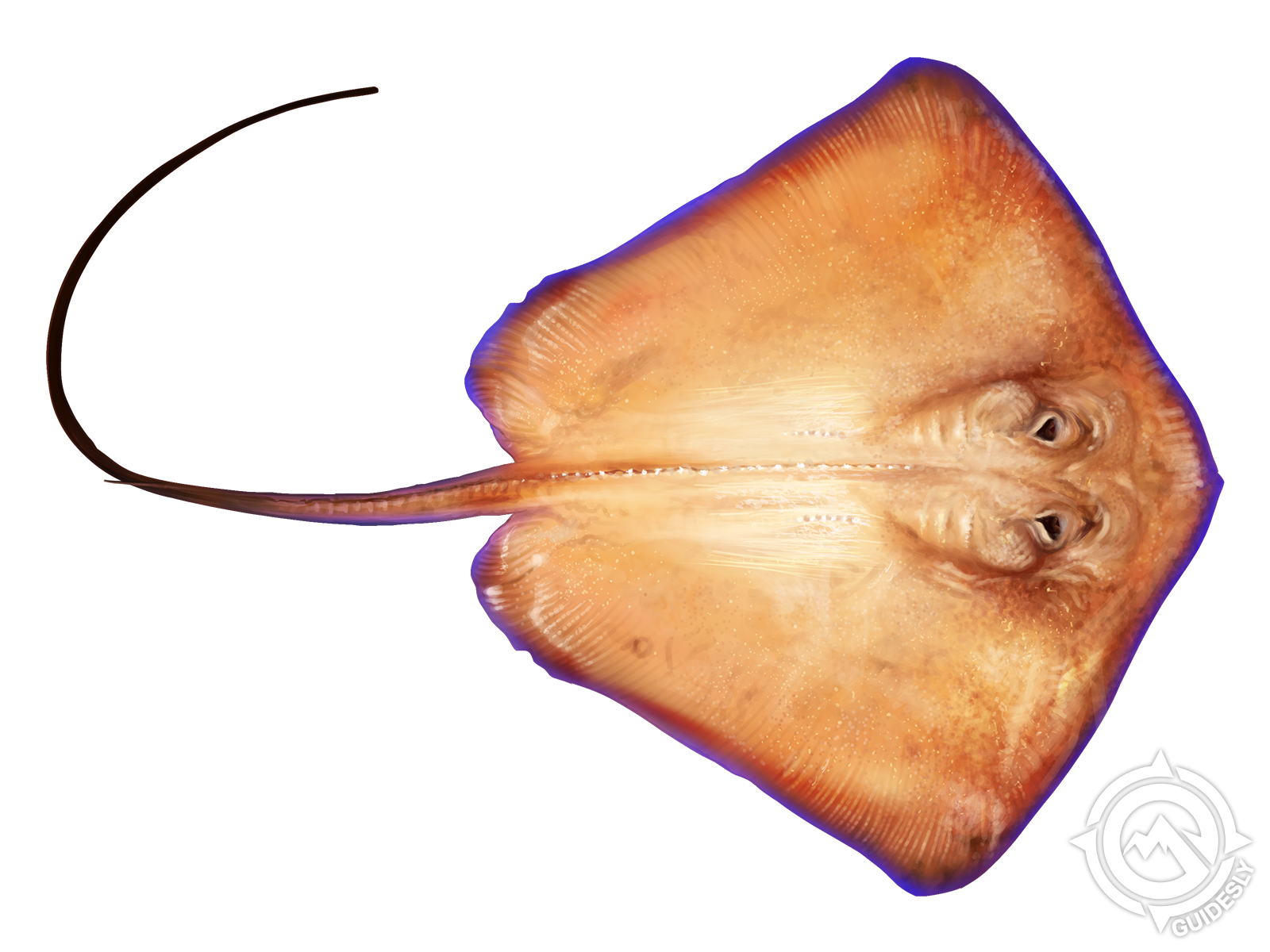
Southern Stingrays are the bread-and-butter species for Tampa Bay bowfishing, and seeing one glide into your light spread never gets old. These flat beauties can span 3-4 feet across and cruise the shallows looking for buried clams and worms. They're surprisingly fast when spooked, but their size makes them excellent targets for beginners still working on their accuracy. Stingrays are most active during spring and summer evenings when water temperatures climb above 70 degrees. Captain Ike knows exactly where they congregate, and his light setup reveals them perfectly as they move across the flats. The retrieve can be interesting since rays tend to dig into the bottom once hit, but that's all part of the challenge.
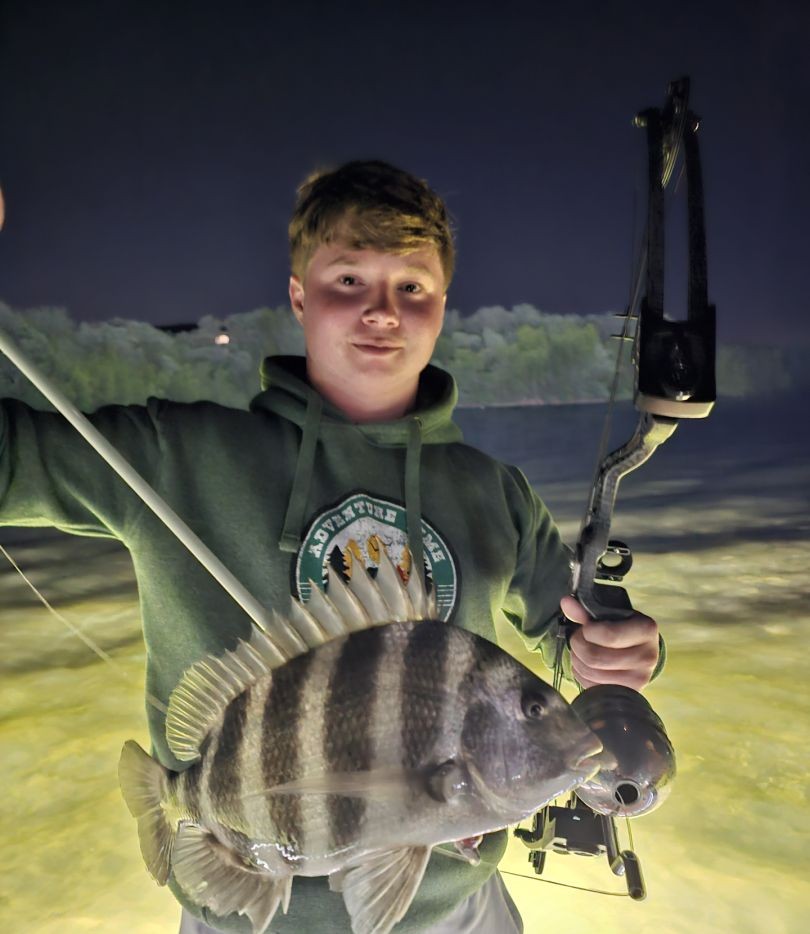
Sheepshead might be the trickiest target on this trip, but they're worth the effort. These black-and-white striped fish love structure and often hang around bridge pilings or dock lines where they pick off barnacles and crabs. In Tampa Bay, sheepshead run 2-8 pounds and require precise shooting since they're smaller and more skittish than rays or drum. They're most abundant during cooler months when they move into the bay to spawn, making this trip timing crucial for consistent shots. Their distinctive stripes make them easy to identify under the lights, and they're considered excellent eating if you decide to keep a few for the table.
Crevalle Jack bring serious excitement to any bowfishing trip when they show up in the lights. These silver torpedoes can weigh 10-20 pounds and move fast through Tampa Bay's shallows, especially during summer months when they hunt in packs. Jacks are ambush predators that often appear suddenly in your light spread, giving you just seconds to draw and shoot before they disappear. They're challenging targets that test your quick-draw skills, but connecting with a big jack creates memories that last long after the trip ends. These fish fight incredibly hard once arrowed, often making multiple runs and testing both your equipment and your grip strength during the retrieve.
Cobia represent the trophy potential of Tampa Bay bowfishing, though they're less common than other species on this list. These brown sharks-lookalikes can reach 30-50 pounds and cruise the flats looking for crabs and small fish. Cobia are curious by nature and sometimes investigate the boat lights, giving patient shooters opportunities at fish of a lifetime. They're most active during warmer
 5.0(2 Reviews)
 Private Trip
 Inshore Fishing
 Tampa
Tampa


 Evening bowfishing trip targeting stingrays, sheepshead, and drum