Catching Crappie in Fall: Finding Schools, Choosing Jigs, and Fishing the Right Depth
Catch more fall crappie by locating schools, reading your fish finder, adjusting jig weight, and presenting your bait at the right depth.
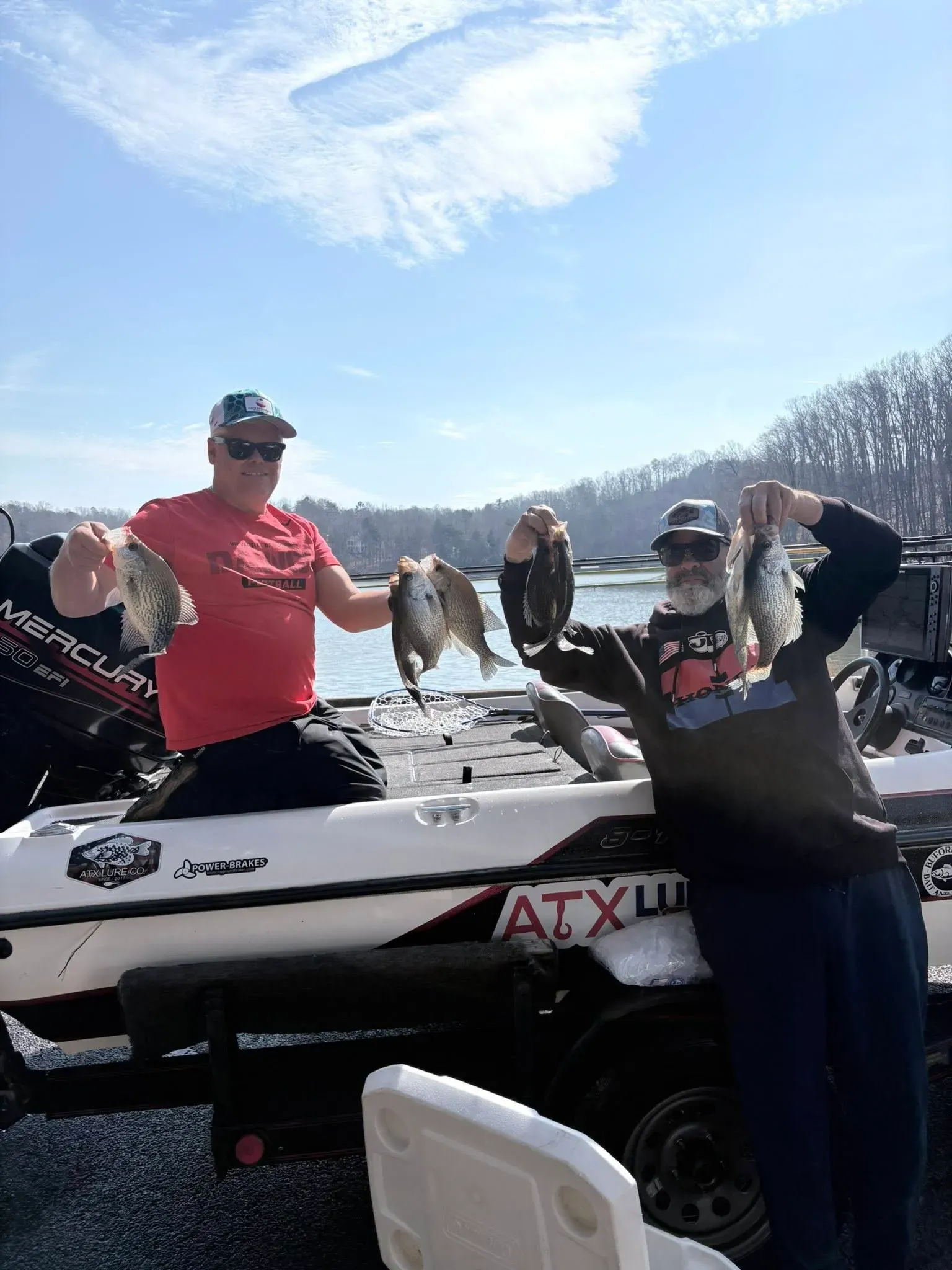


Spring gets most of the crappie attention when they push into the shallows to spawn. But fall deserves a spot on your calendar too.
As the water cools, crappie become more active in many lakes, feeding on baitfish around creek channels, brush piles, and submerged timber. There are good schools to be found, but they won’t always be in the same spot or at the same depth.
One day they’re tucked up around shallow cover, and the next they’re suspended over a deeper channel. Knowing where to look, which jig to tie on, and how deep to fish it will help you stay on the bite as the season rolls on.
Where to Find Schools of Crappie in Fall
Once you understand how crappie move through the season, the next step is figuring out where they’re actually gathering. Fall fishing can have you checking several different types of cover, sometimes on the same lake. Instead of fishing every brush pile or shoreline you come across, focus on areas that give crappie access to deeper water while keeping baitfish nearby.
Listed below are spots that should be on your radar.
Creek Channels and Channel Swing Banks
Creek channels are great to explore throughout fall, particularly where they bend close to shallow flats, points, or submerged cover. These bends create changes in depth and give crappie places to hold while they move between feeding areas and deeper water.
Look for channel edges that run alongside brush piles, standing timber, or rocky banks. Crappie may suspend along the edge instead of sitting on the bottom of the channel. If you’re fishing from a boat, work along these bends and try different depths before moving to another stretch.
Brush Piles, Standing Timber, and Submerged Trees
Crappie are often found in structures, and fall is no exception. Brush piles, submerged trees, standing timber, and fallen branches can all attract schools, often when they're close to deeper water.
When fishing in a brush pile, anglers often make the mistake of assuming that fish are sitting right in the middle of it. They could very well be holding around the outer branches or suspended just above the cover. Start by working around the edges, then move your jig closer to the structure if you’re not getting bites.
Another place to keep an eye out for is near creek channels in standing timber. If you’re using electronics, scan the trees for fish before you drop your jig. It can save you from wasting time on empty cover.
Weed Lines, Docks, and Shallow Cover
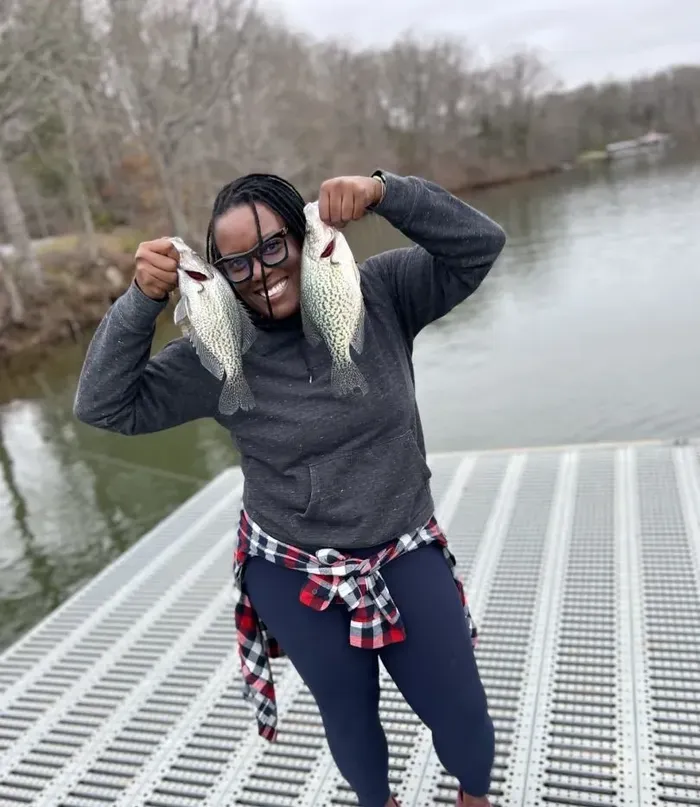
Fall crappie aren’t always found in deep water. Healthy vegetation can still attract baitfish, and crappie may be present along weed edges or around shallow cover when conditions are right for feeding.
Docks are another place to check, with a focus on those sitting near deeper water. Fish may gather around pilings, shaded areas, and submerged brush under or alongside the dock.
Cast a small jig around the edges and let it sink alongside the structure instead of retrieving it straight back right away. If you're seeing baitfish near the bank or noticing activity around shallow cover, give those spots a try.
Checking out a few shallow locations before committing to deeper water can help you figure out where the fish are holding that day.
Look for Baitfish Before Committing to a Spot
Baitfish can narrow your search when you're moving between locations. Crappie often follow schools of shad and other small forage, so areas with visible baitfish activity deserve a closer look.
Watch for baitfish on your electronics, surface disturbances, or birds feeding over the water. Creek mouths, channel edges, points, and submerged cover can all turn productive when baitfish move through.
If an area has plenty of bait, but you’re not getting bites, try fishing beneath or around the baitfish before you pick up and move. Crappie may be holding at a different depth, and adjusting your jig’s position could be all it takes.
Reading Your Fish Finder to Pinpoint Crappie Schools
Finding fish on your sonar is only part of the job. You also need to figure out whether they're positioned around cover, suspended over open water, or following baitfish through a particular depth. In fall, crappie can gather in large schools, making electronics useful for narrowing down productive water before you start fishing.
Look for Suspended Schools Rather Than Just Bottom-Hugging Fish
Don't limit your search to fish sitting directly on the bottom or tucked into brush piles. Fall crappie often suspend in the water column, sometimes over much deeper water. You can use a traditional sonar to look for groups of fish marks between the surface and bottom, particularly around channel edges, basin areas, and submerged structure.
If you're marking fish at 10 feet in 25 feet of water, don't automatically move into shallower water. The depth they're suspended at may be more important than the depth of the bottom beneath them. Check nearby areas with similar depth readings, even if the bottom contour changes.
Use Side Imaging to Search and Down Imaging to Investigate
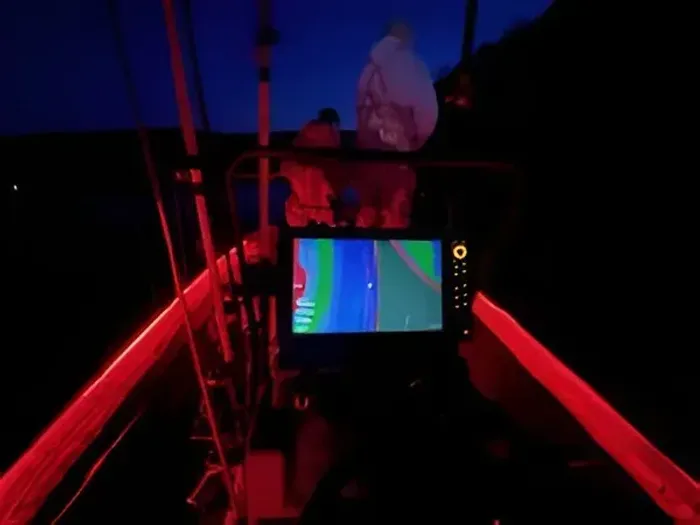
Side imaging is useful when covering water because it can reveal submerged timber, brush piles, dock pilings, and fish away from your boat's path.
Once you find something interesting, use down imaging or traditional sonar to examine what's directly beneath you. Pay attention to whether fish marks appear above the cover, along its edges, or inside it.
Crappie may be present around a brush pile rather than buried in the branches, so don't assume you need to drop your jig directly into the thickest part of the structure.
Separate Baitfish Activity from Fish Holding Nearby
Large clouds of baitfish can appear quite different from individual fish returns, but sonar readings aren't always clear enough to identify a species with certainty. Look for individual marks around or beneath baitfish concentrations, particularly where the forage is gathering along a channel edge or over deeper water.
If your screen shows bait but no obvious crappie, don't abandon the area immediately. Check different depths and make another pass. The crappie may be positioned below the bait, off to one side, or moving through the area rather than sitting directly in the middle of the forage.
Pay Attention to How the School Is Positioned
Once you locate a school, note whether the fish cluster tightly together, spread out, sit above open water, or gather near structure. Their positioning can help you choose how to present your jig.
A tightly grouped school may allow you to target fish vertically, while a more scattered group could require casting beyond the marks and bringing your jig through them. If you're using forward-facing sonar, you can also watch how individual fish respond to your lure and adjust its movement accordingly.
More importantly, don't run directly through a school just because you've located it. Position your boat outside the fish, then approach with your trolling motor or cast toward them. Suspended crappie can be sensitive to boat disturbance, and keeping some distance may help you get more natural presentations.
Your fish finder can tell you more than just where the fish are. It can show you their depth, their position around cover, and how tightly they group together. Use those details to position your boat and work your jig through the school instead of fishing blindly.
Choosing the Right Jig Weight for Fall Crappie
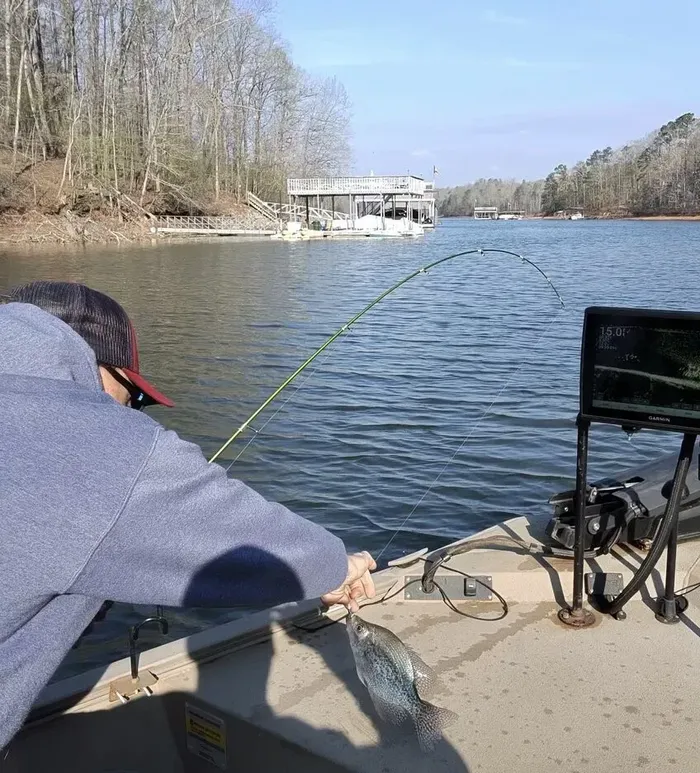
Jig weight affects more than how quickly you reach the fish. It changes how your bait falls, how much control you have over the line, and how long the jig stays in front of crappie. When you're targeting schools at a particular depth, you need enough weight to reach them without making the jig drop through the strike zone too quickly.
A 1/16-ounce jighead makes a good starting point when you're casting in relatively calm conditions. It gives your jig a slower fall, which can help when crappie are willing to inspect the bait or aren't chasing aggressively. When wind, deeper water, or boat movement makes it difficult to control that presentation, try moving up to a 1/8-ounce jighead.
When to Go Lighter
A lighter jig gives the bait more time to fall through the strike zone. This can help when you're fishing shallow water, when crappie show little interest in chasing bait, or when they follow your jig without committing.
If you're fishing a school at a specific depth, a slower fall also gives you more control over how long your jig stays in front of those fish. You can count it down, let it descend gradually, and work it through the school without pulling it out of their range too quickly.
When to Go Heavier
Wind can make a light jig difficult to fish accurately. It creates slack and a bow in your line, making it harder to track the jig's descent or detect subtle bites. A heavier head cuts through the water more quickly and gives you better control over your presentation.
The same applies when you fish deeper water or vertical presentations. If your jig takes too long to reach the fish or drifts away from the depth you're targeting, increase the weight.
Let the Fall Rate Guide Your Decision
Don't automatically switch to a heavier jig just because you're fishing deeper. If a lighter jig still reaches the fish and gives you enough control, it may produce a better presentation.
Pay attention to what happens after the jig reaches the school. If crappie follow it but turn away, try slowing its fall with a lighter head. If wind or line movement prevents you from keeping it at the right depth, go heavier.
You should aim to use the lightest jig you can control effectively under the conditions. Start with your depth, account for wind and boat movement, and adjust the fall rate based on how the fish react.
How to Keep Your Jig in the Strike Zone
Finding crappie at a certain depth doesn't guarantee you'll catch them. Your jig needs to pass through that same zone, and you need to control its movement well enough to keep it there. A fast retrieve can pull it above the school, while an uncontrolled drop may send it below the fish before you notice.
Use a Countdown to Repeat Productive Casts
When you get a bite, pay attention to how long your jig took to reach that depth. For example, if crappie hit your jig after a five-second fall, repeat that countdown on your next cast. You don't need to measure the depth perfectly every time; the countdown gives you a consistent way to put your jig back in front of the fish.
Adjust the count as you fish. If you start getting bites sooner, let the jig sink for less time. If you're not getting any action, allow it to fall a little deeper before retrieving. This helps you work through different depths without changing your entire setup.
Control Your Retrieve Instead of Pulling the Jig Out of the Zone
Once your jig reaches the fish, avoid reeling continuously if that takes it above the school. Try a slow, steady retrieve with occasional pauses, or use gentle lifts of the rod tip followed by a controlled fall.
Watch your line during the pause. Crappie often take the jig as it falls, and the bite may appear as a slight twitch, a sudden slack line, or the line moving sideways. Reel in any slack carefully so you can respond without pulling the jig away from the fish.
Adjust Your Presentation to the School's Position
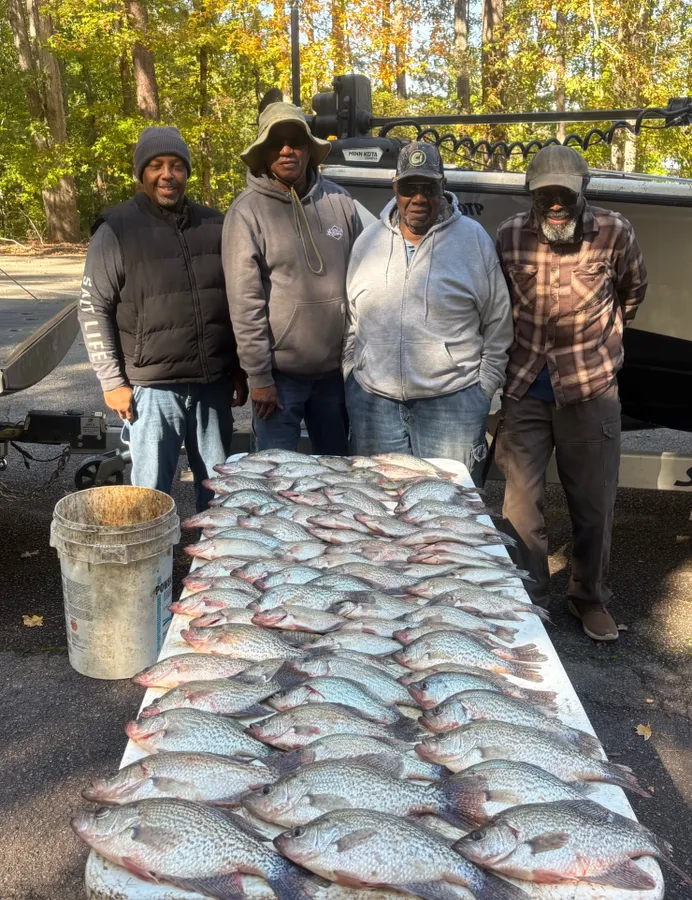
If crappie gather in a tight group, vertical jigging can help you keep your bait directly above them.
Lower the jig to the target depth, then make small movements rather than repeatedly lifting it several feet. When fish spread out or sit beyond your boat, cast past the school and let the jig sink to their depth.
A controlled retrieve through the fish gives you a better chance of reaching multiple crappie without moving your boat directly over them. If the school changes depth, adjust your countdown or jig position rather than continuing to fish the depth that produced bites earlier. Crappie may move as baitfish shift, so keep checking your electronics and make small adjustments to stay in front of them.
What to Change When Crappie Won't Bite
Seeing crappie on your electronics but failing to get a bite can be frustrating. Before leaving the area, change one part of your presentation at a time. The fish may respond to a slower fall, a smaller profile, or a different movement.
Slow Down or Change Your Jig's Movement
If crappie follow your jig but turn away, stop working it aggressively. Reduce the movement to subtle rod-tip lifts, short pauses, or a slow fall. If the fish approach your bait as it drops, let it fall naturally instead of immediately starting your retrieve.
Downsize Your Jig
When crappie repeatedly inspect your lure without striking, try a smaller jig or a more compact plastic. A smaller profile can make your presentation less intimidating, particularly when fish have plenty of natural forage around them.
You can also experiment with a different color, but avoid changing your jig size, color, and movement all at once. Give each adjustment a few casts so you can identify what actually triggers a bite.
Recheck Your Depth
If bites suddenly stop, check your electronics before assuming the school has left. Crappie may move a few feet higher or lower in the water column as baitfish shift. Adjust your countdown or jig position and work through the new depth before abandoning the area.
If you've tried different depths and presentations without getting a response, move away and return later. A school that stops biting may become more active after conditions change.
Conclusion
Fall crappie fishing can change quickly as baitfish move and water temperatures drop. You may find fish around shallow cover one day and deeper water the next. The key is to keep checking your electronics, pay attention to the depth where you get bites, and adjust your jig's weight and presentation rather than sticking with the same approach all day.
Once you locate a productive school, repeat what works and make small adjustments when the bite slows. If you're looking to make your next fall fishing trip more productive, book a crappie fishing trip with an experienced local guide on Guidesly to find the right spots and learn how to fish them effectively.