Catching Striped Bass During the Fall Lake Turnover: Techniques to Watch
Learn how to catch Striped Bass during fall lake turnover with proven techniques, bait tips, sonar strategies, and post-turnover fishing advice.


Fall is prime time for Striped Bass. As the water cools, Stripers often feed more actively, making this one of the most exciting times to be on the water. Then the fall turnover arrives, and the fishing patterns that were working a few days ago can suddenly stop making sense.
The fish haven't disappeared. They're responding to a lake that's changing from top to bottom. As the water mixes, temperature and oxygen levels shift, and Striped Bass may scatter, suspend, or move into areas with more stable conditions
The key is knowing what the lake is telling you. Here's how fall turnover works, how to recognize it, where to look for Striped Bass, and which techniques can help when the usual fall pattern falls apart.
What Is the Fall Lake Turnover?
Deep lakes generally establish three distinct thermal layers throughout summer. Light, warm water floats on top, cold water rests beneath, and the thermocline (separation layer) separates both zones. While stable initially, this lower layer gradually depletes its oxygen supply. Organic decay consumes available oxygen, whereas upper thermal strata block atmospheric replenishment. Eventually, seasonal weather changes arrive. Chilly nights rapidly drop surface water temperatures. As this upper layer grows dense, it sinks through the thermocline while displacing warmer water upward, collapsing the established thermal layers. Additionally, strong autumnal winds accelerate this mixing process.
The overall lake appearance and fishing conditions begin to transform drastically. Low-oxygen deep water circulates throughout the entire system, water clarity shifts, and gamefish must adapt. Once mixing concludes, uniform oxygen levels normalize across all depths. That entire sequence constitutes fall turnover.
Suggested read: How Fish Behave in Each Fishing Season
How to Tell If a Lake Is Turning Over
Visual and environmental cues usually reveal active turnover long before depth finders confirm it. The most common ones are:
Smell: Strong sulfur or rotten-egg odors indicate oxygen-starved bottom water reaching the surface. Note any sudden foul scents on usually fresh lakes.
Water color: Normally clear reservoirs rapidly turn murky brown, vibrant green, or milky white. Rapidly shifting clarity strongly signals active water column inversion.
Debris and bubbles: Watch for surface foam, floating leaves, or rising gas bubbles. Internal mixing continuously forces bottom debris toward the surface.
Sonar: A thermocline displays as a faint, blurry horizontal line on fish finders. During turnover, this line fades significantly before vanishing completely.
Turnover timing varies regionally; northern waters churn by September, whereas deep southern impoundments delay until late fall.
Why Striped Bass React to Fall Turnover
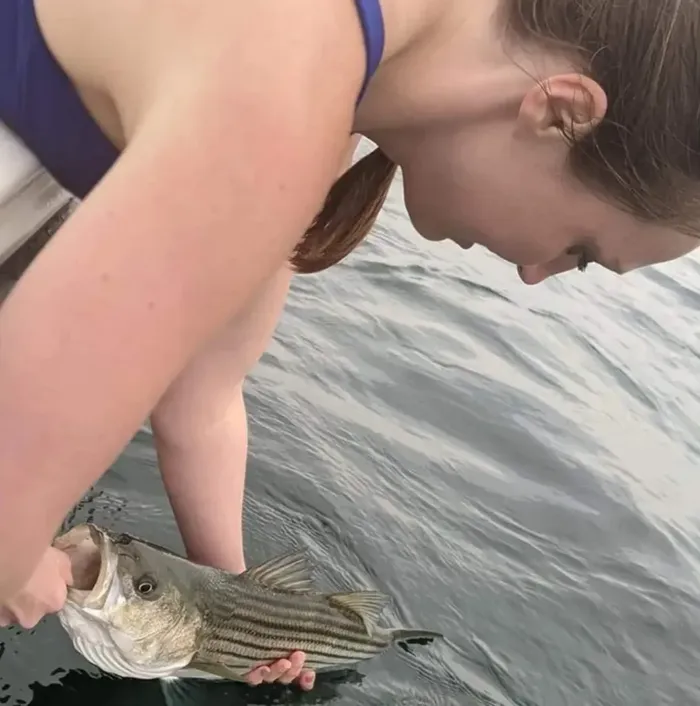
Striped Bass require cool, oxygen-rich environments, yet reservoir populations endure warm, highly stratified summer waters.
Consequently, late summer forces the Striped Bass into narrow, precise depth corridors offering suitable temperature and oxygen. The fall lake turnover completely dismantles their summer habitat.
As bottom layers mix upward, comfortable Striper zones shift or dissolve entirely. Schooling fish immediately abandon familiar depths, choosing to suspend, disperse, or migrate toward cleaner water. Furthermore, the turnover presents physiological challenges beyond altering feeding habits.
Extremely low oxygen levels heavily stress Striped Bass, occasionally triggering severe fish kills in select reservoirs. Therefore, locating stable water quality supersedes foraging behavior during peak turnover periods.
Where to Look When Fall Turnover Starts
Anglers can often make the mistake of assuming that an entire reservoir turns over at the same time. Large reservoirs rarely work that way. While one arm can be showing obvious signs of turnover, the other can have relatively stable water. That gives you an important option; to move and find a better spot. Here’s how.
Find the Cleanest Water
Start by checking different sections of the reservoir instead of immediately settling into your usual spot. If the upper end looks poor, try moving toward deeper water. If the dam area is showing signs of turnover, check out the upper lake or river arm. Shallower sections generally turn over sooner, while deeper sections can take longer. Your goal during the first part of the day is to find the water that looks and fishes the best, not necessarily to find your favorite structure.
Look for Moving Water
Some areas don't develop the same strong layers as the main lake. River arms, creek mouths, bridge funnels, and tailraces can all provide moving water, which helps maintain more stable conditions. The upper portion of a reservoir can also be worth checking, particularly where river inflow keeps the water moving. If you're fishing below an upstream dam, check the generation schedule before heading out, since releases can create a strong source of current and oxygenated water. Wind can help, too. Windblown points and banks receive more mixing at the surface and can also push baitfish toward structure.
For anglers still narrowing down a destination, Guidesly's Best Places to Fish for Striped Bass guide includes freshwater options such as Lake Texoma.
Find the Bait Before You Chase the Bass
Once you've found stable-looking water, don't immediately start fishing your favorite structure. During fall, the bait can tell you more about where the Striped Bass are than the structure itself.
As water temperatures fall, shad begin forming larger schools and moving toward creek arms, coves, and other areas where they can find food. Striped Bass follow them. Birds are one of the easiest clues. Gulls and terns working over a patch of water can point you toward bait and feeding Stripers. On sonar, look for concentrated bait balls in creek arms and along channels. Once you find the bait, check beneath it and around its edges for suspended Striped Bass.
Techniques to Watch During Fall Turnover
Scattered fish demand active searching, whereas tightly grouped schools require precise vertical presentations. Here's how you can select fishing techniques based directly on Striped Bass behavior.
Slow-Trolling Live Bait
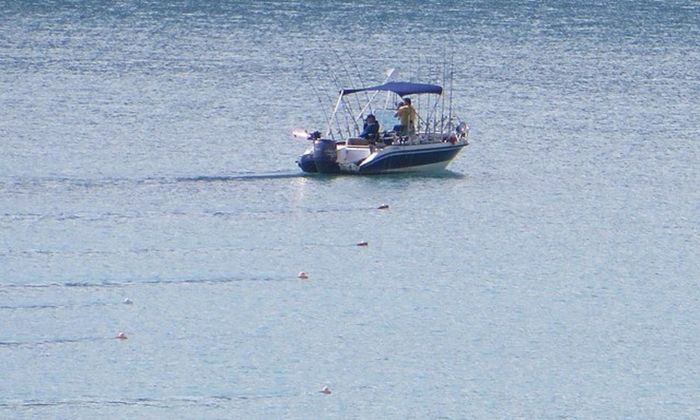
When Striped Bass scatter, anchor fishing stalls out. Slow trolling live shad or herring lets you search vast stretches of open water without killing the bait’s natural action.
Keep boat speed around one knot.
Run planer boards to pull outer lines into clean water away from motor noise and let freelines drift off the stern for deeper fish.
Watch the rod tips closely as panicked bait pulse the line right before a strike.
Vertical Jigging
When sonar marks Stripers stacked directly under bait schools forty feet down, horizontal casting wastes time. Park right over the fish and drop a heavy metal spoon straight to their depth. Lift the rod tip smoothly, then lower it immediately, so the spoon flutters back down on a slack line. Striped Bass almost always rush to ambush what looks like a dying baitfish tumbling out of the school.
Trolling Umbrella Rigs
An umbrella rig mimics an entire pod of fleeing forage rather than a single target. Stringing multiple soft-plastic swimbaits onto heavy wire arms creates a massive visual presence that triggers impulse strikes. Drag these rigs slowly along main channel ledges and deep open flats. Use heavy tackle and line-counter reels to track depth accurately, running the rig just two feet above the main fish arches marked on your screen.
Topwater Plugs
Striped Bass only push bait against the surface ceiling during low-light windows like dawn, dusk, or heavy overcast days. When surface blowups erupt, avoid casting dead-center into the frenzy; a heavy plug landing in the middle can spook the school. Cast past the edge instead. Work a walking plug or pencil popper back along the perimeter with rhythmic wrist twitches, making it splash and side-step like escaping bait.
Check out the Best Lures for Striped Bass guide for topwater options and when they can be useful.
Casting Jigs & Swimbaits
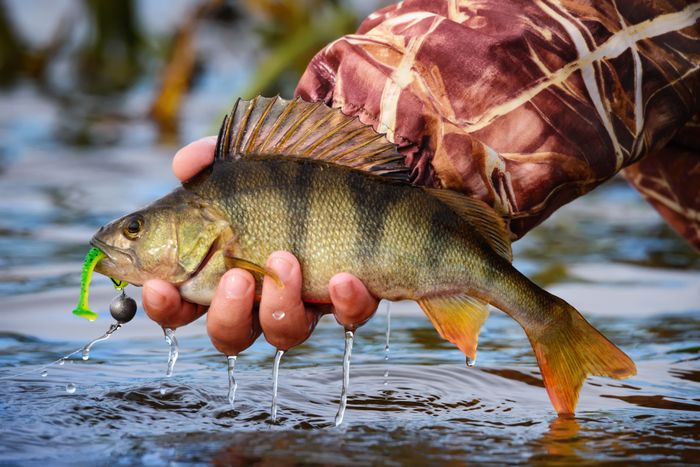
When fish move shallow along banks, points, and laydowns, trolling gear snags instantly. Switch to casting bucktails or paddle-tail swimbaits around windblown cover where current traps forage. Reel paddle tails steadily so the tail thumps like a live shad. For bucktail jigs, hop them gently along sloping gravel or swing them through moving current near drop-offs, letting the hair flare dynamically to draw reaction strikes. Fall turnover mixes water layers, throwing oxygen levels into flux, and scattering fish overnight.
Avoid guessing. Start by idling main-lake points and river channels to scan for bait. If fish are pinned deep, drop vertical jigs. If they scatter across open water, set up live-bait boards or drag umbrella rigs. When fish push bait shallow, switch to topwater or swimbaits. Let your electronics dictate your next move.
Your Fall Turnover Game Plan
You don't need to spend the whole day trying to figure out what's happening. Start with the conditions in front of you and let the water and your electronics guide the next move.
Check the weather first: A stretch of cool nights can get turnover moving, especially after a sudden drop in temperature. If the weather has changed quickly, expect the lake to fish differently.
Scan the reservoir: Check a few different areas before settling down. Look at the river arms, mid-lake sections, and deeper water near the dam. Pay attention to water clarity, unusual smells, and what your sonar is showing.
Find the bait: Use sonar along creek channels and main-lake points to locate forage. Keep an eye out for diving birds, too. If you find the bait, you're much closer to finding the Stripers.
Cover different depths: Use freelines and planer boards to search across the water. If your sonar shows fish deeper, switch to downlines and put your bait where the fish are holding.
Focus on low-light periods: Dawn and dusk can be productive when the lake is unsettled. Cloudy or overcast conditions can also give you longer feeding windows.
Keep a flutter spoon ready: If you mark suspended Stripers beneath a bait school, drop a spoon to their depth and work it through the fish.
Slow things down when needed: If the Stripers aren't chasing, don't keep speeding the lure past them. A slower retrieve gives the fish more time to notice and hit your presentation.
You might also like: Top Baits for Trout, Bass, and Saltwater Species
What Happens After Fall Lake Turnover?
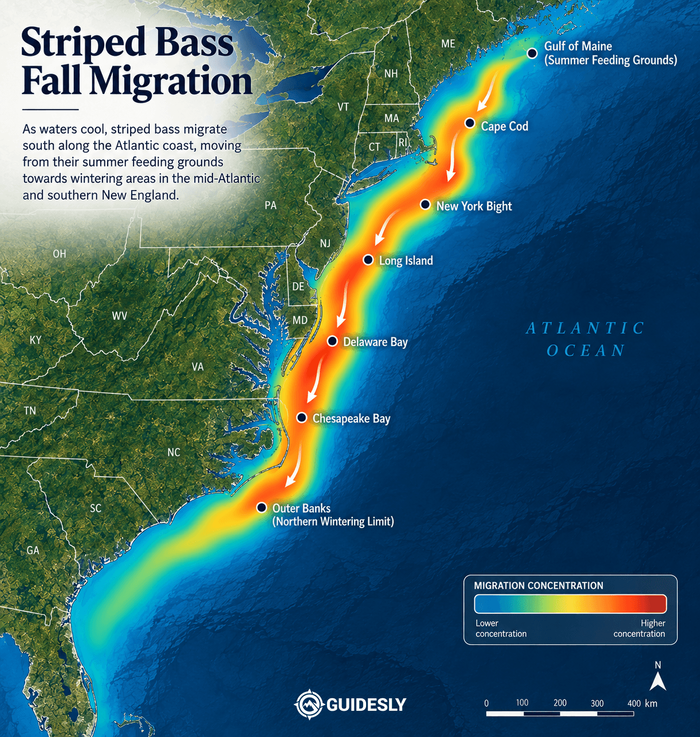
The good news is that turnover doesn't last forever. A single section of a lake may settle within a few days, while a large reservoir can take a week or two to fully work through the process as different arms turn over at different times.
Once the lake settles and the Stripers' migration is over, fishing can change quickly. Cooler, well-oxygenated water gives Striped Bass more room to roam, and they can start moving into shallower areas again. The bait moves with them. As shad work their way into creek channels, coves, and other shallow areas, Stripers follow close behind. When they push bait toward the surface or against structure, those feeding windows can be some of the most exciting parts of the fall.
Don't assume a spot is finished just because it was quiet during turnover. Check your fish finder, watch for birds, and keep track of where the bait is moving. Stripers can relocate quickly when the forage moves, so being willing to leave a quiet area can make a big difference.
Making the Most of the Post-Turnover Bite
Fall turnover can make Striped Bass harder to find for a few days, but it also marks the transition into one of the best stretches of the season. Instead of relying on the pattern that worked before turnover, pay attention to what the lake is doing now. Find the cleaner water, locate the bait, and adjust your depth and presentation as the fish move.
And if you'd rather spend your day fishing than figuring out which part of the reservoir has settled, a local guide can save you some of that guesswork. Guides who fish in the same lake regularly already know its seasonal patterns and where Stripers tend to move as fall sets in.
So, pick a trip that fits your plans and spend your next fall day on the water with a local expert who knows where the Stripers are moving.