Los Angeles Offshore Fishing: 12-Hour Bluefin Hunt
When you're serious about targeting trophy bluefin tuna off Los Angeles, you need more than just a few hours on the water. This 12-hour offshore charter with Mystic Queen Sportfishing takes you where the big fish live – 30 to 50 miles out into the deep Pacific blue. We're talking about a full commitment here, the kind of trip that separates weekend warriors from dedicated anglers. With only 4 spots available, you'll get the personalized attention and prime fishing real estate that makes all the difference when you're chasing fish that can tip the scales at 200-plus pounds.
What to Expect on the Water
This isn't your typical half-day trip close to shore. We're heading into serious bluefin territory, where the continental shelf drops off and the water turns that deep cobalt blue that gets every angler's heart racing. The ride out takes about an hour and a half, giving you time to rig up, grab some coffee, and watch the LA coastline fade into the distance. Once we hit the grounds, it's game time. We'll be trolling with top-shelf lures and live bait when available, covering water until we find the schools. The captain knows these waters like the back of his hand – he's been tracking the bluefin movements all season and knows exactly where to position the boat for the best shots. Don't expect to just sit back and relax though. When these fish are biting, everyone needs to be ready to jump on a rod and work together to boat multiple fish.
Tackle & Offshore Techniques
We come loaded with state-of-the-art gear designed specifically for these California bluefin. We're talking heavy conventional reels spooled with 80-pound test, paired with rods that can handle the punishment these fish dish out. The spread typically includes a mix of cedar plugs, feathers, and poppers, all rigged on heavy-duty hooks that won't bend out under pressure. When we mark fish on the sounder, we'll switch to live bait fishing with sardines or anchovies on circle hooks. The key is matching your technique to what the fish want on any given day. Sometimes they're aggressive and hitting surface iron, other times you need to drop down with a sinker rig and wait for them to find your bait in the water column. The crew will coach you through each setup and make sure you're fishing the most effective method for the conditions we're facing.
Species You'll Want to Hook
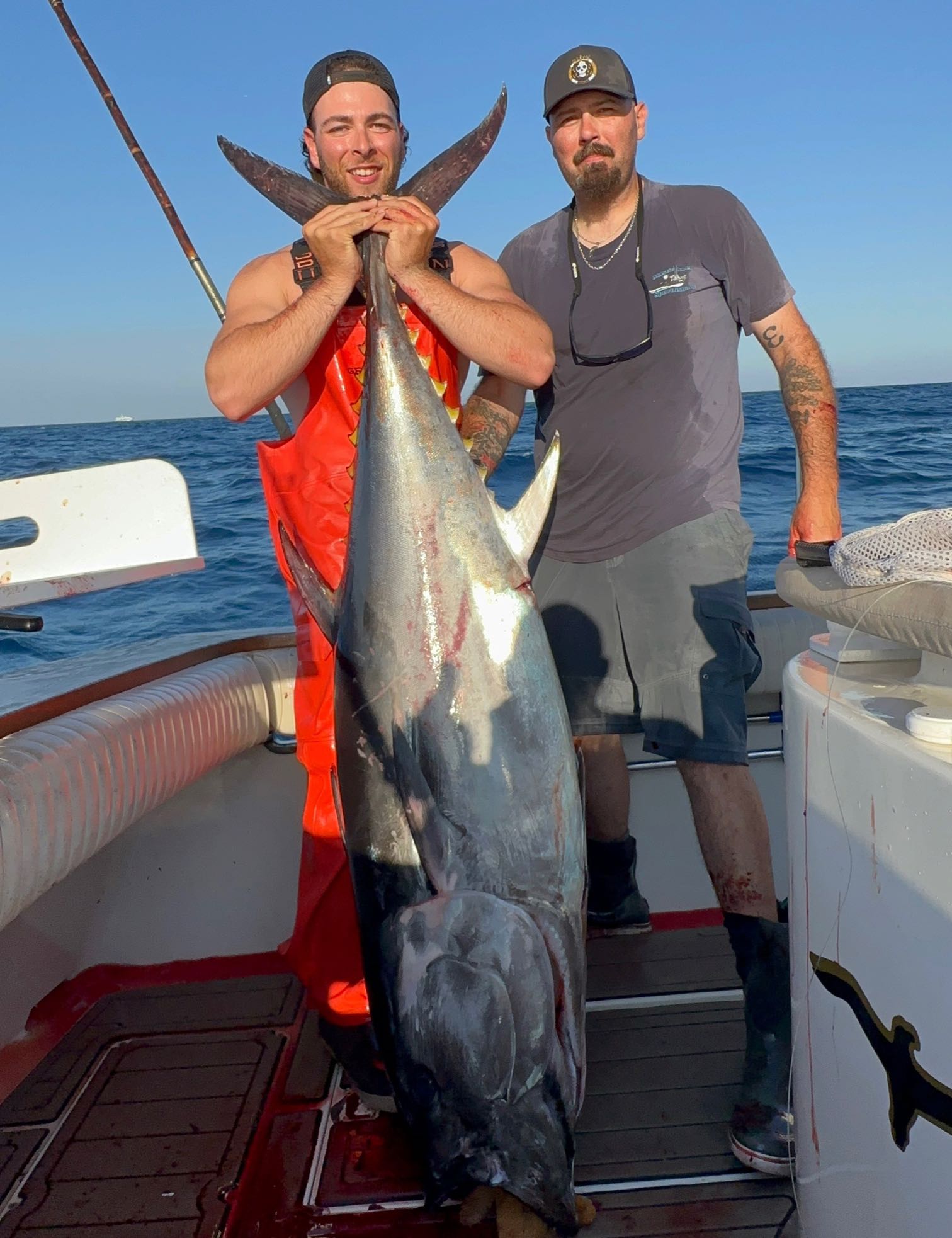
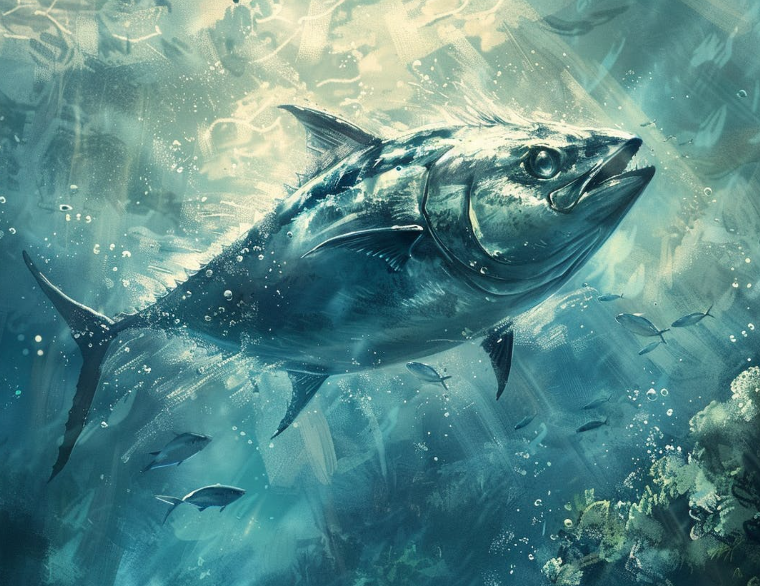
Bluefin tuna are the crown jewel of Southern California offshore fishing, and for good reason. These are apex predators that grow fast and fight harder than just about anything else in these waters. The fish we've been seeing this season range from 40 to 300 pounds, with most falling in that sweet spot between 80 and 150 pounds. They show up in good numbers from late spring through early fall, following the bait schools and warming water temperatures. What makes them so special is their raw power – a 100-pound bluefin will test every ounce of your strength and technique. They make blistering runs, dive deep, and never give up until they're in the boat. The meat quality is world-class too, perfect for sashimi or grilling.
Yellowfin tuna are another top-tier target that frequent these same offshore grounds. They're typically smaller than the bluefin, ranging from 20 to 80 pounds, but they make up for size with sheer numbers and willingness to bite. Yellowfin are more predictable feeders and often travel in larger schools, which can lead to some fast and furious action when you find them. They prefer the warmer water layers and are most active during dawn and dusk periods. The fight is different from bluefin – more acrobatic with lots of direction changes, but they don't have quite the same bulldogging power.
Mahi mahi, or dorado as the locals call them, are the wild cards of the offshore scene. These fish are pure excitement when they show up – they hit lures aggressively, jump like crazy, and their brilliant colors make them a favorite for photos. They're typically found around floating debris, kelp paddies, or temperature breaks where baitfish congregate. Size-wise, they range from 10 to 40 pounds in these waters, with the occasional bull pushing 50. They're seasonal visitors, showing up in good numbers during warmer water years when El Niño conditions push them north.
Yellowtail amberjack round out the lineup as consistent producers throughout much of the year. These fish are built for speed and endurance, making long powerful runs that test your drag settings and arm strength. They're structure-oriented fish that relate to rocky bottom areas and underwater ridges, but they also cruise open water following bait schools. The fish we catch offshore tend to be larger than their nearshore cousins, with 20 to 40-pound fish being common and occasional monsters pushing 60 pounds or more.
Time to Book Your Spot
This season has been absolutely dialed for offshore fishing, and the bluefin bite shows no signs of slowing down. With fish up to 200 pounds already in the books and water temperatures holding steady, conditions are prime for trophy hunting. The 4-angler limit means you'll have plenty of room to work and won't be fighting crowds when the fish are biting. Remember, this is a 12-hour commitment that starts early and ends late, but that's what it takes to reach the best fishing grounds and give you maximum time with lines in the water. Pack your sunscreen, bring some snacks and drinks, and get ready for the kind of fishing that keeps anglers coming back to Los Angeles waters year after year. These offshore trips fill up fast, especially during peak season, so don't wait around if you're serious about getting after some world-class bluefin tuna.
 Private Trip
 Offshore Fishing
 Los Angeles


 12-hour offshore charter targeting trophy bluefin tuna up to 300 lbs.