5 Hour Inshore Fishing Trip - North Carolina
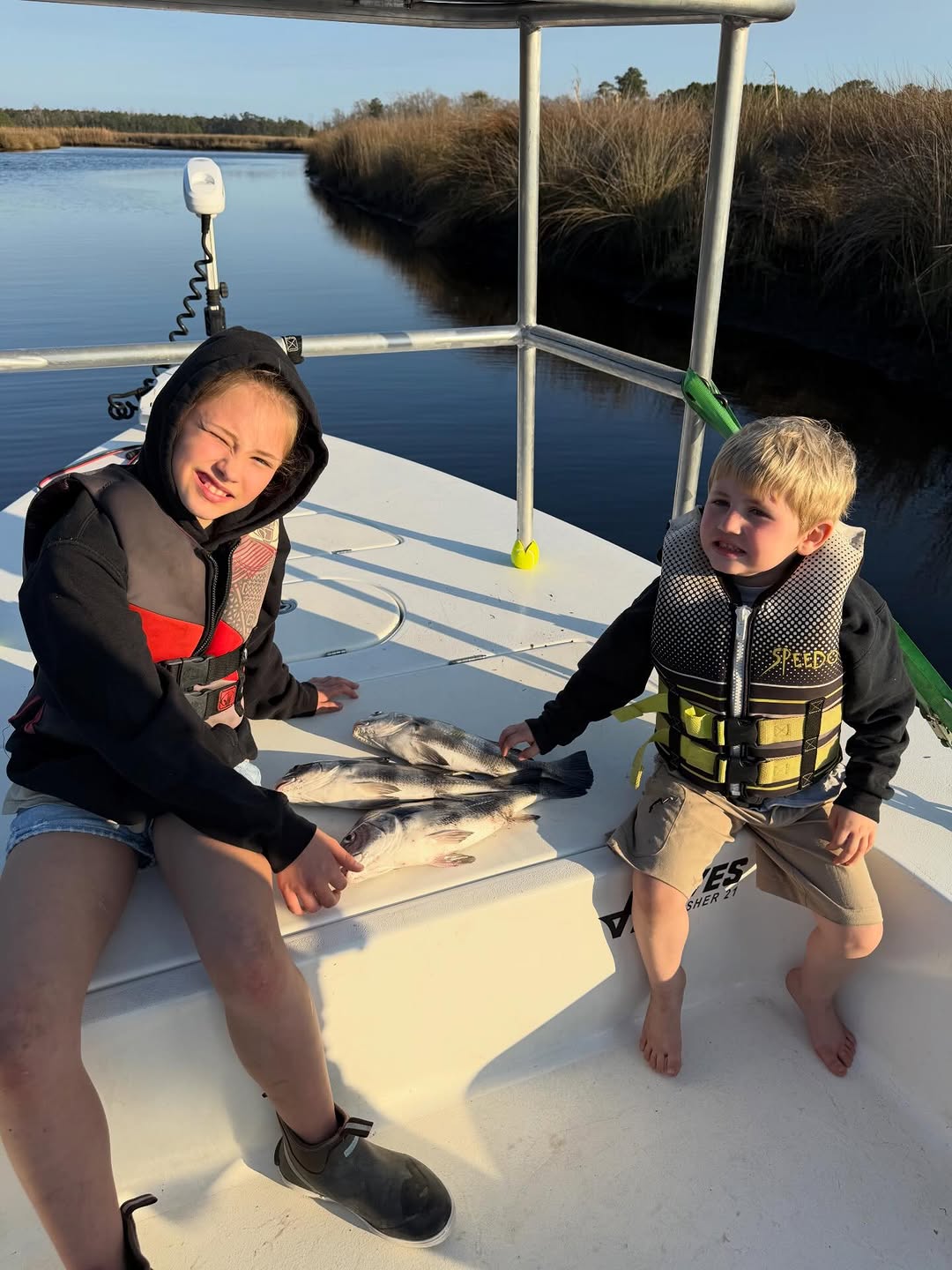
North Carolina's inshore waters around Cedar Point offer some of the most consistent fishing action on the East Coast, and this 5-hour trip with Guide Ryan Dolph puts you right in the thick of it. Whether you're bringing the kids for their first taste of saltwater fishing or you're a seasoned angler looking to dial in your inshore game, these productive waters deliver. You'll work the local creeks, shallow flats, and marsh edges where Redfish, Black Drum, Southern Flounder, Bluefish, and Spanish Mackerel make their living. With just 2 guests max, you get personal attention and plenty of room to work without bumping elbows.
What to Expect on the Water
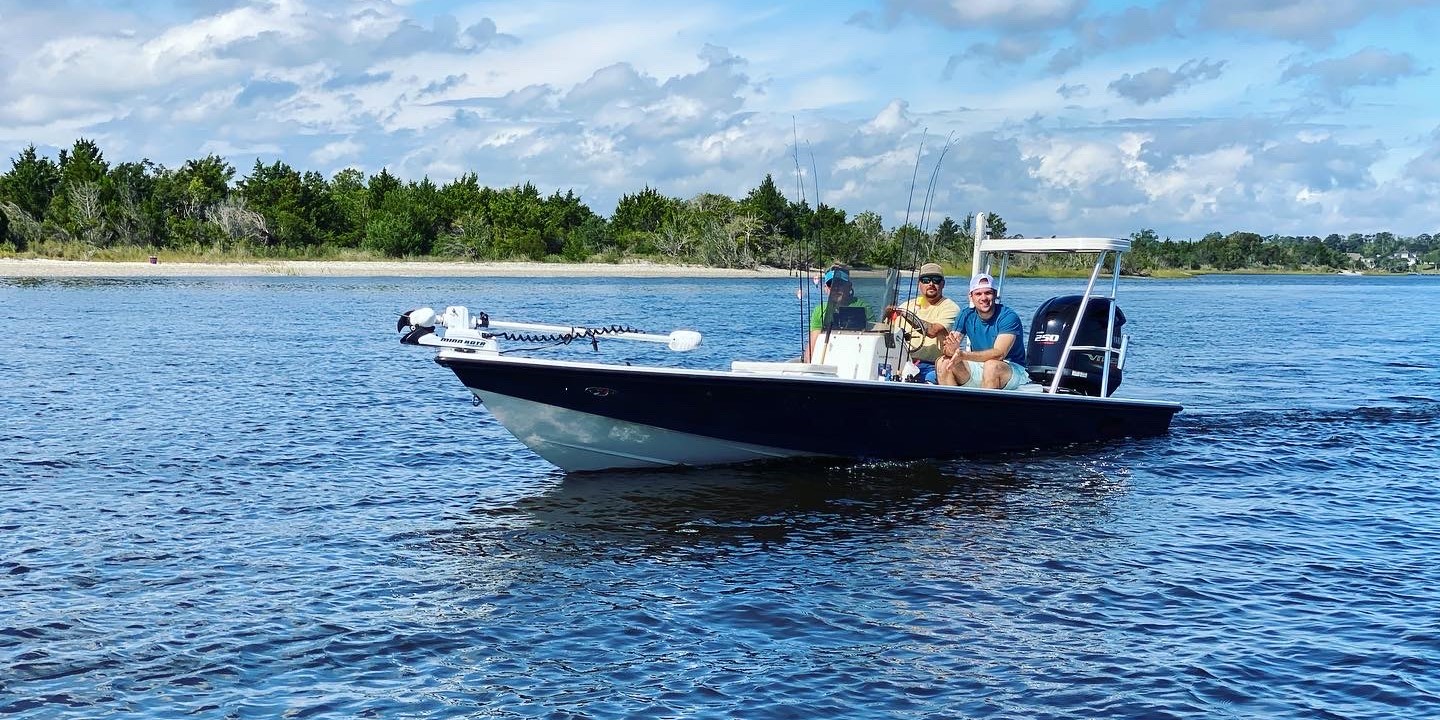
Starting from Cedar Point, you'll cover a variety of inshore structures that hold fish year-round. Ryan knows these waters like the back of his hand - from the grass flats where reds cruise in skinny water to the deeper creek bends where black drum stack up during cooler months. The trip moves with the tides and conditions, so you might start working oyster bars at first light, then shift to deeper channels as the sun gets up. Don't worry about bringing gear - quality rods, reels, and tackle are all provided. Ryan's boat is rigged for inshore work with a shallow draft that gets you into spots bigger boats can't reach. The small group size means you get hands-on instruction whether you need help with casting technique or want to learn how to read the water.
Techniques & Tackle
Inshore fishing around Cedar Point is all about adapting to what the fish want on any given day. You'll likely throw everything from live shrimp under popping corks to soft plastics worked along drop-offs. When the Spanish mackerel are running, you might switch to small spoons or jigs to match their aggressive feeding. Ryan keeps the tackle selection dialed in for the conditions - lighter spinning gear for finesse work in shallow water, and something with more backbone when targeting bigger drum in the channels. Expect to work both artificials and live bait depending on what's biting. The guide handles all the rigging and re-baiting, so you can focus on feeling the bite and setting the hook. If you're new to inshore fishing, you'll learn to read your rod tip and feel the difference between a fish pickup and bottom structure.
Top Catches This Season
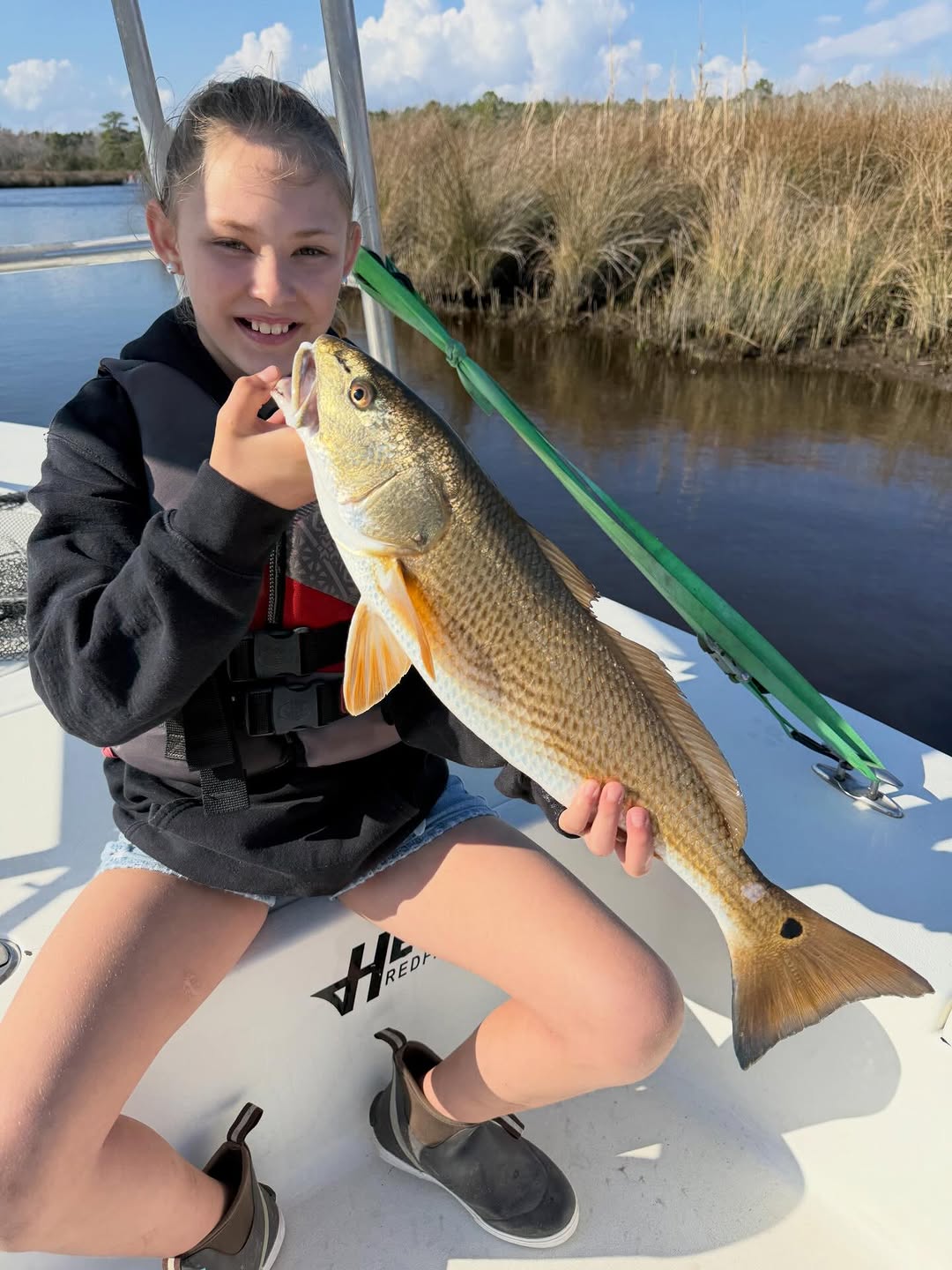
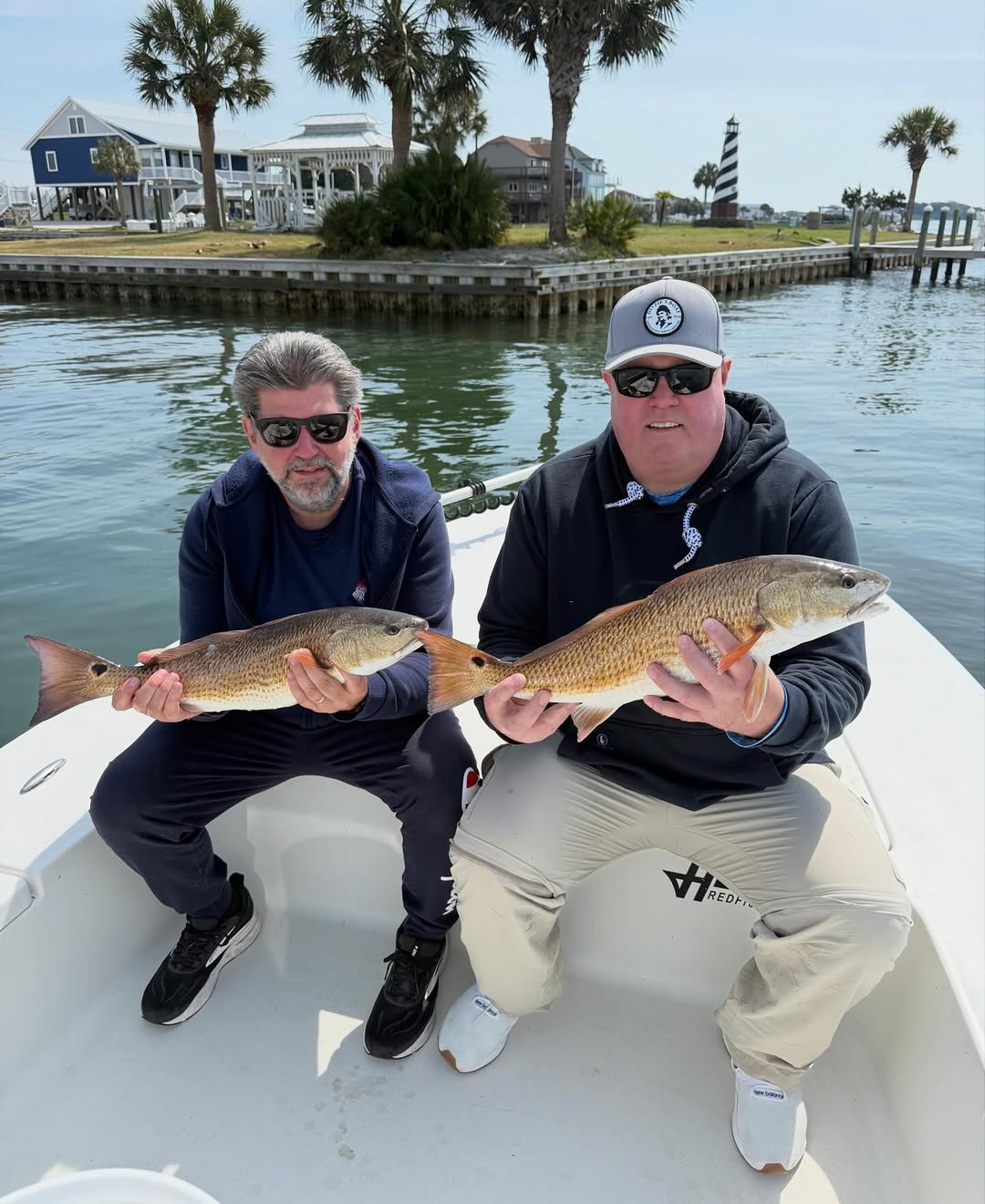
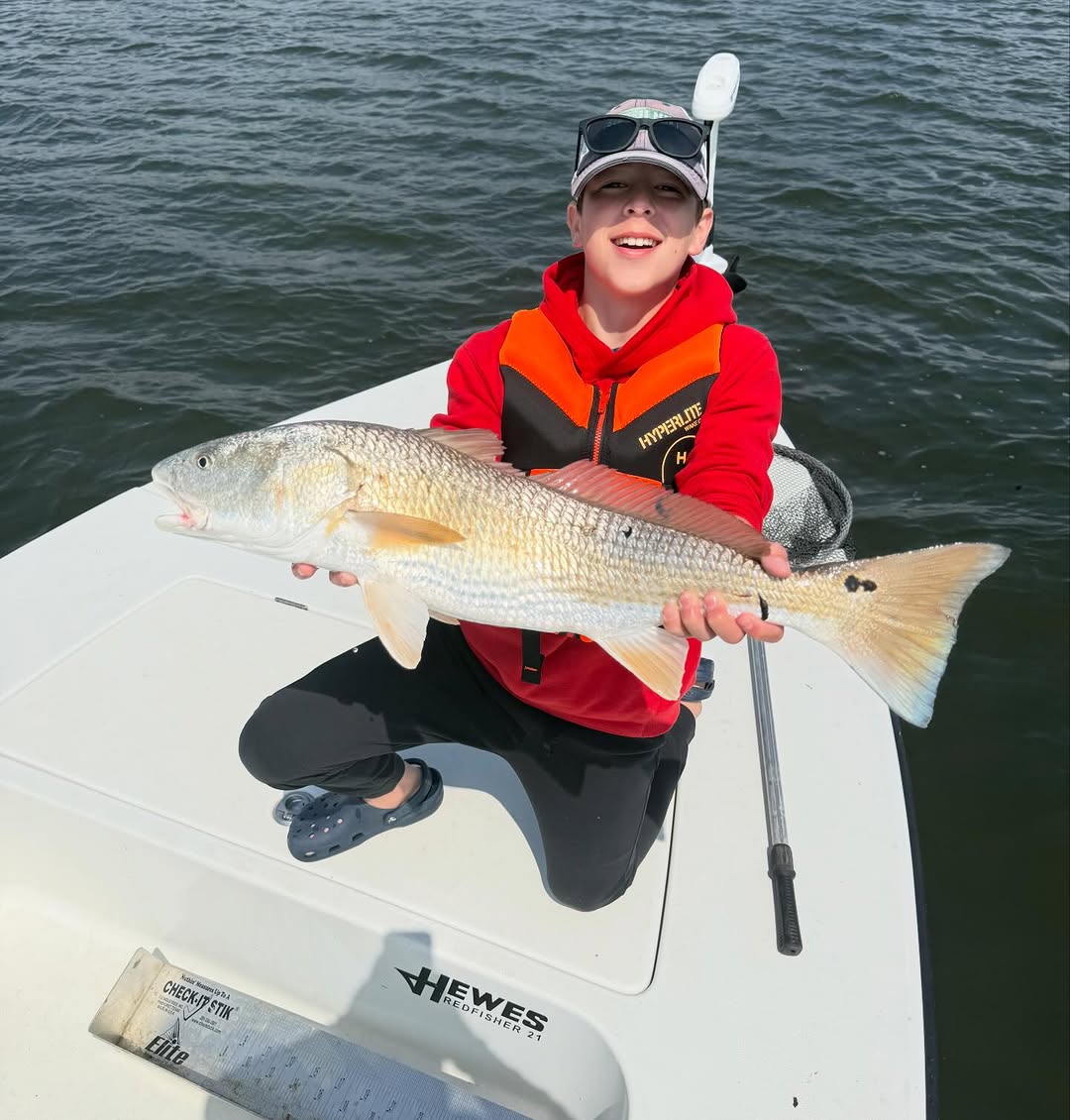
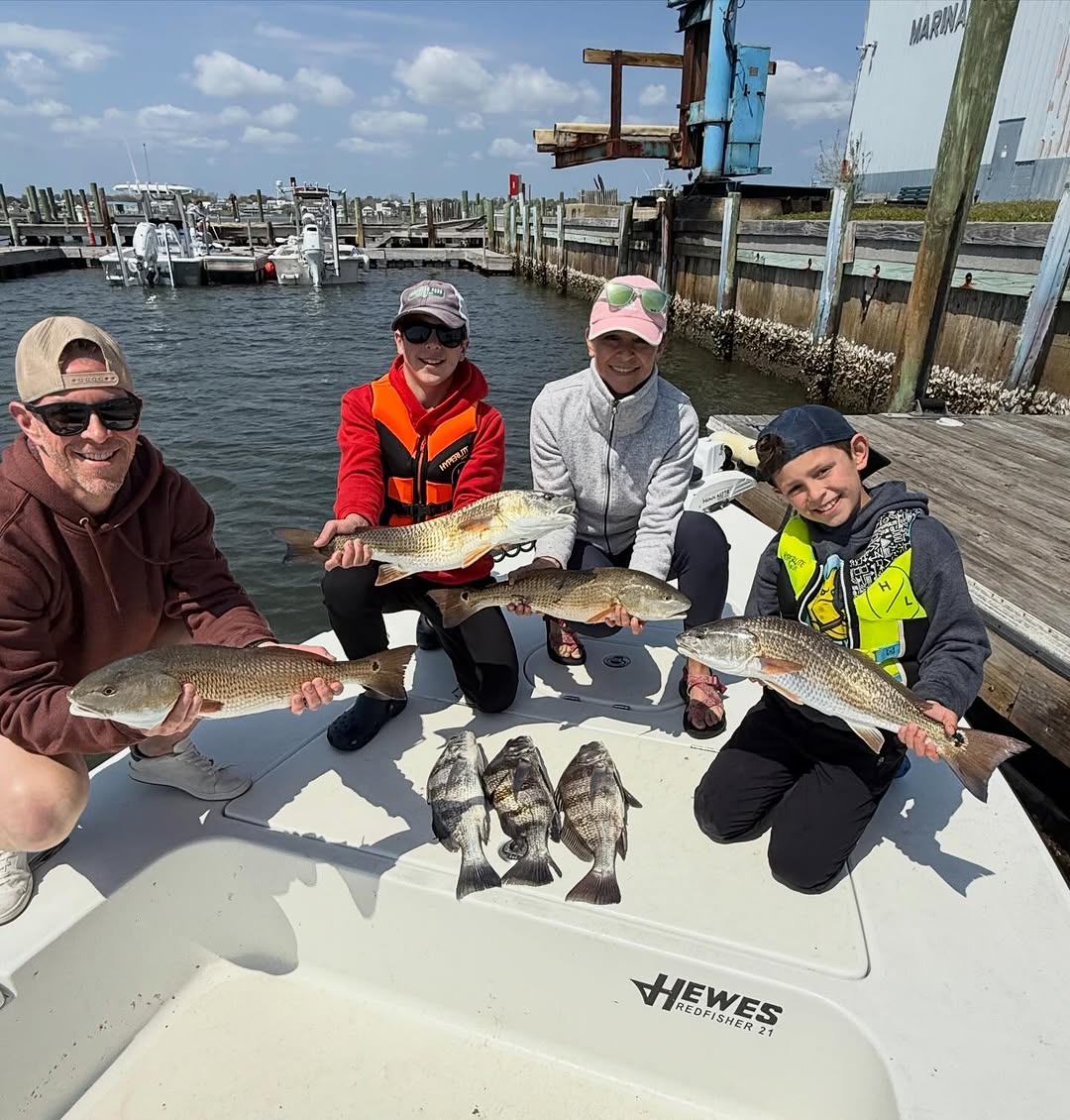
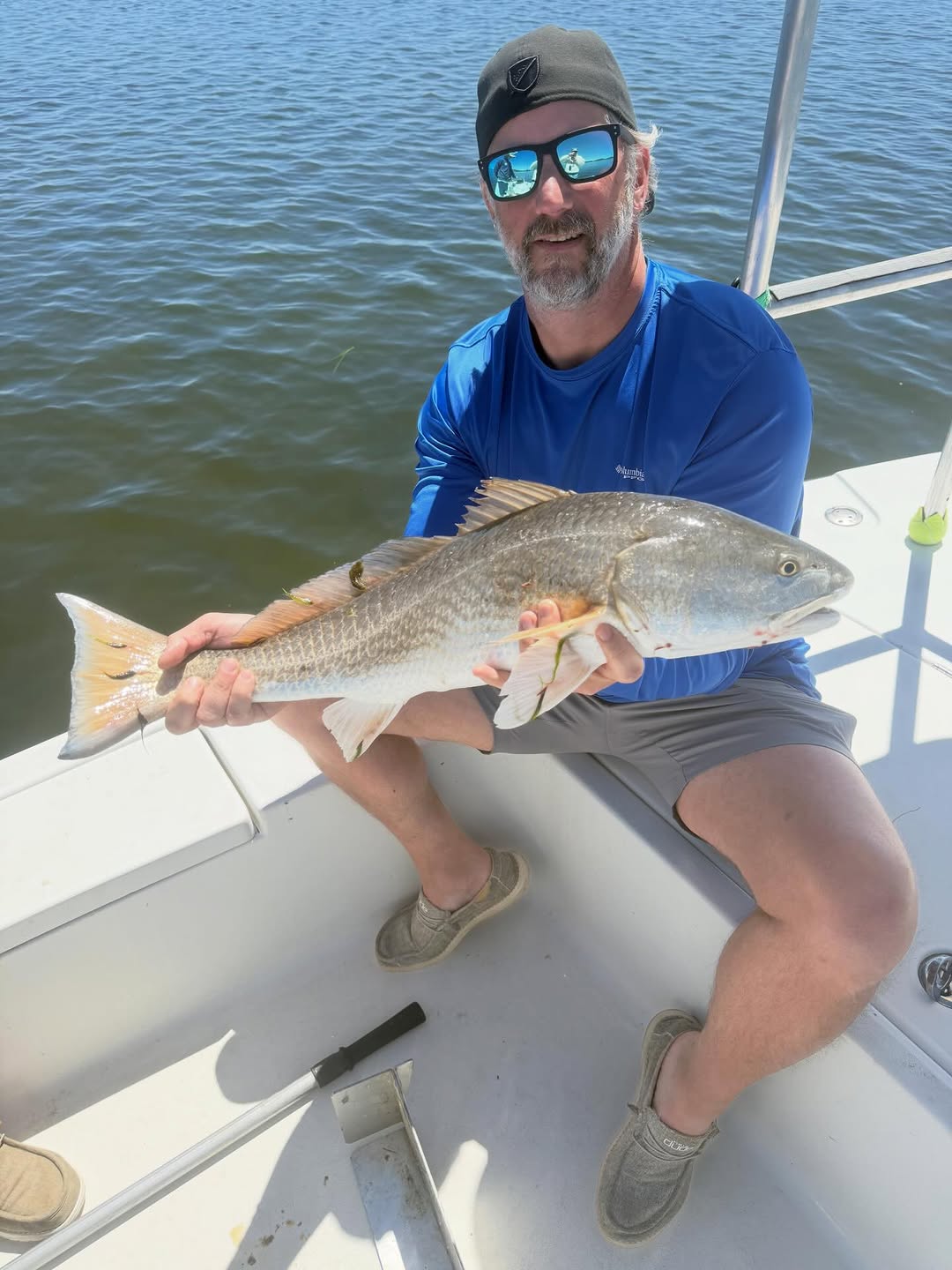
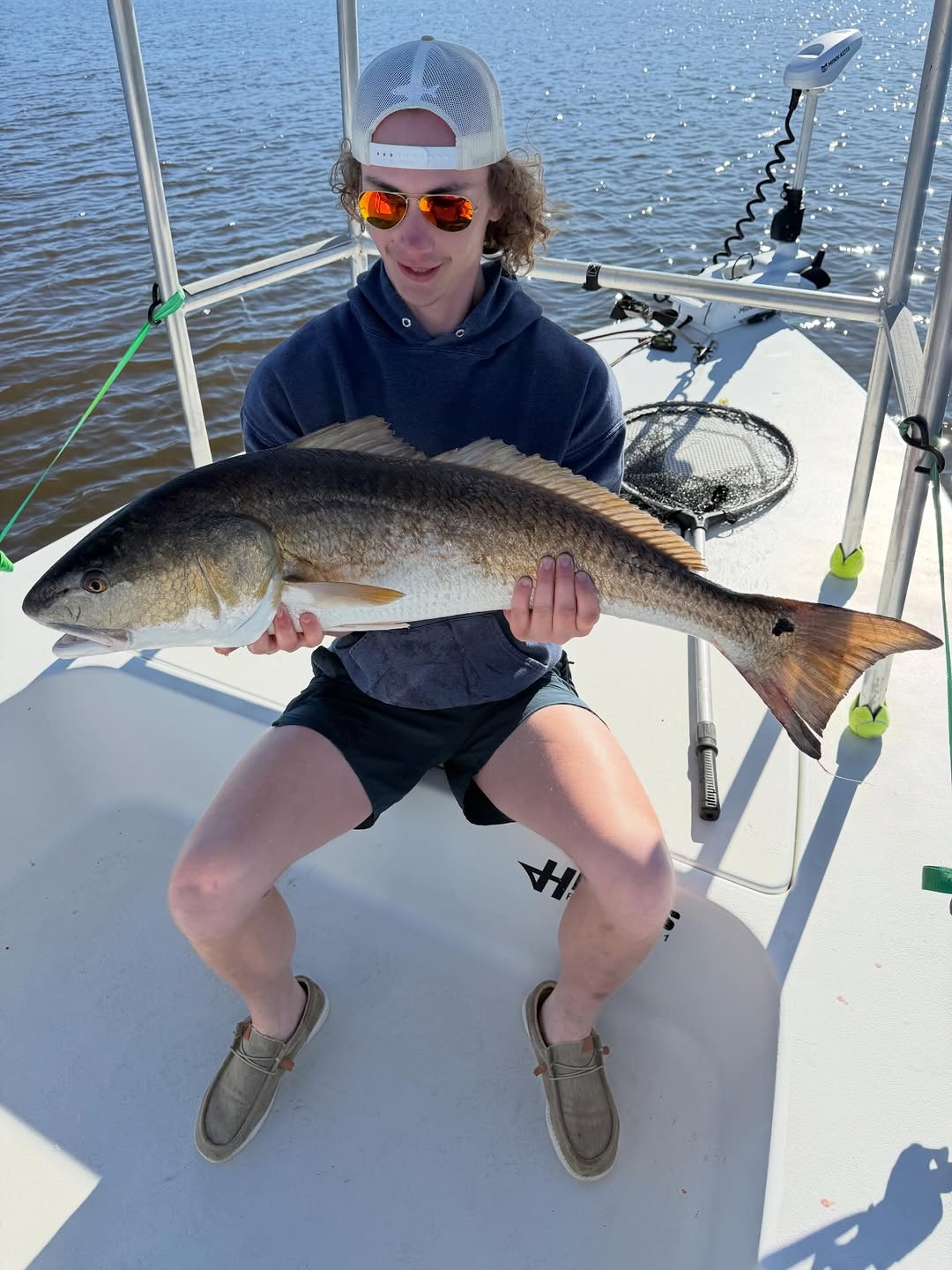
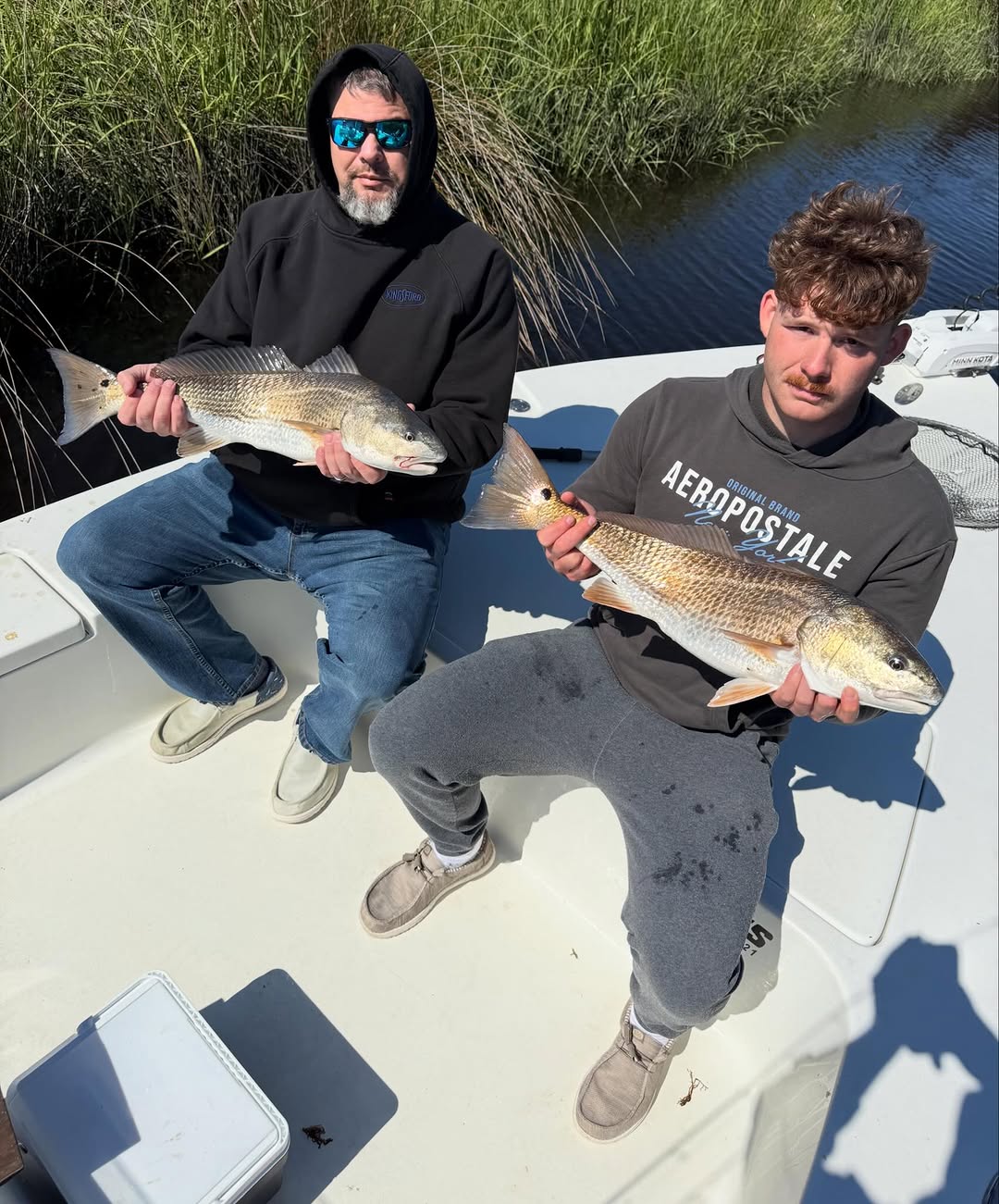
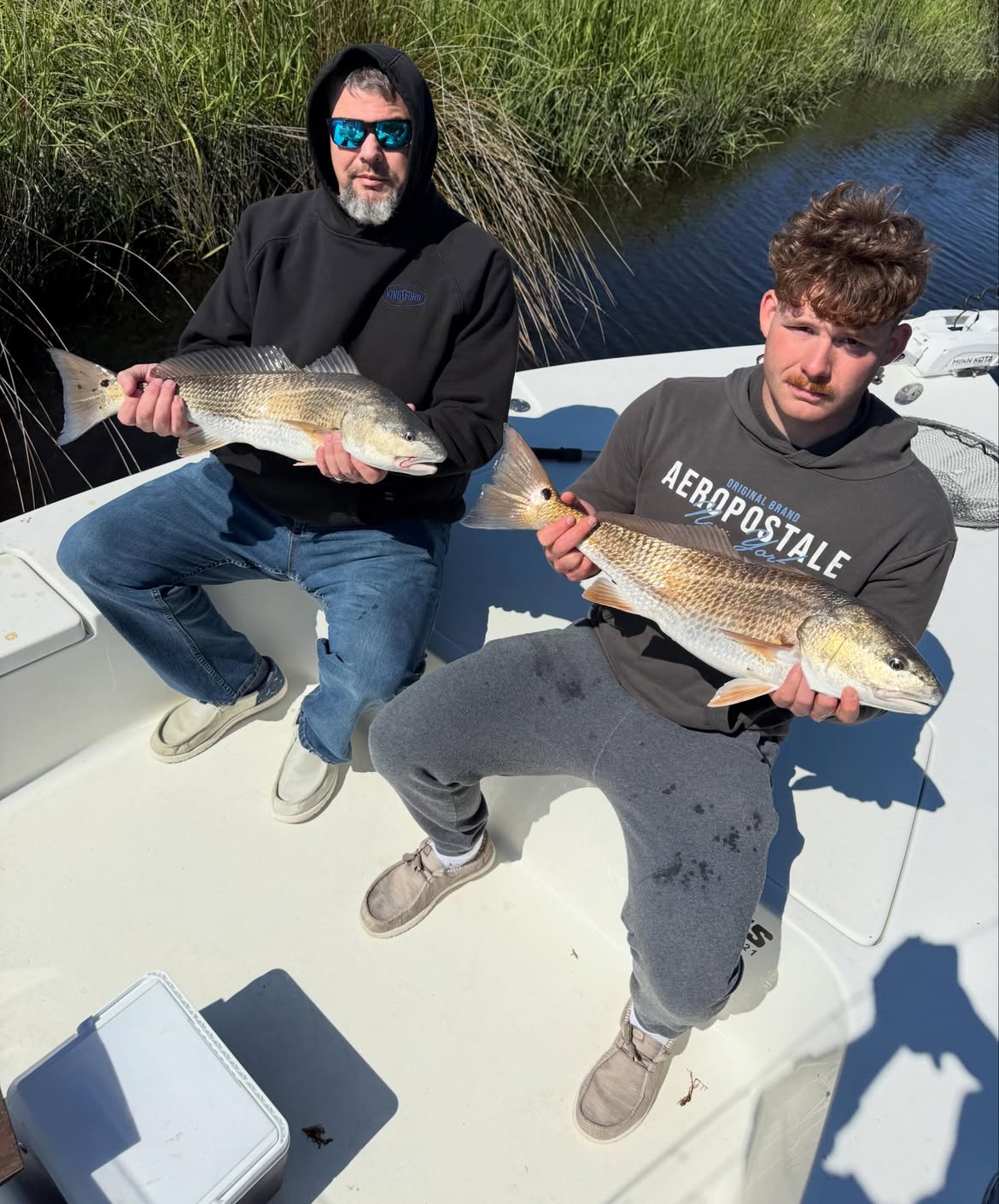
Redfish are the bread and butter of North Carolina inshore fishing, and for good reason. These copper-colored bruisers average 18-27 inches around Cedar Point, with slot fish providing excellent table fare and the occasional over-slot bull giving you a real arm workout. Reds feed aggressively in shallow water, especially around oyster beds and grass edges where they hunt crabs and baitfish. Fall months are prime time when schools of reds move through the area, but you can find them year-round if you know where to look. What makes them so exciting is their willingness to eat and their habit of feeding in water so shallow you can see their backs.
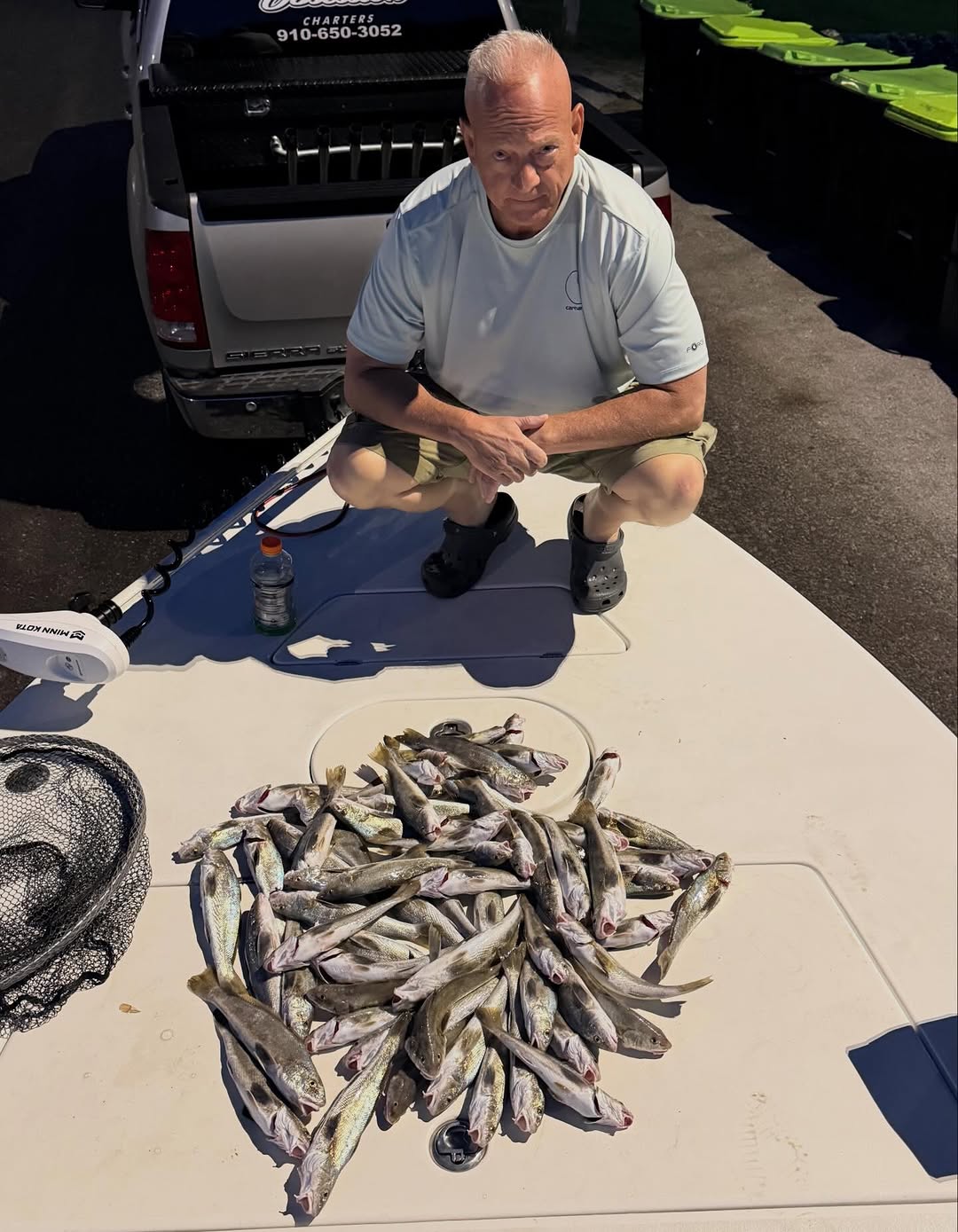
Spanish Mackerel show up in big numbers during spring and fall migrations, turning slow days into non-stop action. These speed demons hit fast and fight hard for their size, typically running 12-16 inches. They school up around structure and baitfish, so when you find one, there are usually plenty more. Kids especially love targeting Spanish because they bite aggressively and don't require perfect technique. The bite often happens quick, so stay alert when they're in the area.
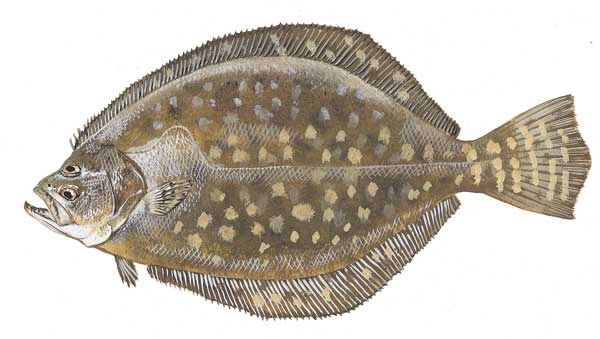
Southern Flounder are the ultimate ambush predators, lying buried in sandy bottom waiting for an easy meal. These flatfish can be tricky to target, but when you dial in the technique, they're incredibly rewarding. Flounder around Cedar Point range from keeper size at 15 inches up to genuine doormat fish pushing 5-6 pounds. They're most active during warmer months and provide excellent eating. The key is working your bait slow and steady along the bottom - flounder won't chase, so you need to put the bait right in their face.
Bluefish bring raw power to the inshore scene, especially when they're feeding in schools. These toothy predators average 2-5 pounds in the inshore waters and fight way above their weight class. Blues are notorious for their aggressive strikes and blistering runs, making them a favorite target when they move through the area. They're seasonal visitors, but when conditions line up, the action can be fast and furious.
Black Drum are the heavyweights of the inshore world around Cedar Point. Adult drum can push 20-40 pounds and provide a serious test of your tackle and technique. These bottom feeders love structure like oyster beds, bridge pilings, and channel edges. They're most active in cooler water, making fall through early spring prime time. What makes black drum special is their sheer pulling power - they won't jump or make flashy runs, but they'll test your drag system and your patience with their bulldogging fight style.
Time to Book Your Spot
A 5-hour inshore trip around Cedar Point gives you serious time to work different techniques and locations without feeling rushed. Guide Ryan Dolph brings the local knowledge and quality equipment that makes the difference between a good day and a great day on the water. Whether you're after your first redfish or trying to land a personal-best black drum, these productive inshore waters consistently deliver. The small boat capacity means you get personalized instruction and plenty of space to work. Don't wait too long to book - the best inshore fishing windows fill up fast, especially during peak seasons when the Spanish mackerel are running or the fall red drum bite is in full swing.
 Private Trip
 Inshore Fishing
 Swansboro



 Five-hour inshore fishing trip targeting multiple species year-round