Chesapeake Bay Fishing | Shared 6 Hour Weekend Trip
There's nothing quite like spending a full day on the Chesapeake Bay with your line in the water and the chance to land some serious stripers. Our weekend shared fishing trips give you six solid hours to work the best spots on the Bay, and we're talking about waters that consistently produce fish year after year. Whether you're a weekend warrior looking to get your hands dirty or someone who's been chasing rockfish for decades, these trips are designed to put you on fish while keeping things relaxed and fun. We run these trips from May through mid-November when the Bay is absolutely alive with baitfish and the stripers are feeding heavy.
What to Expect on the Water
You'll be fishing alongside one other angler, which means plenty of room to work and personalized attention from your captain. We're not cramming folks onto the boat like some of the party boat operations – this is quality fishing time. Your trip includes everything you need to be successful: valid Maryland fishing license, quality rods and reels that can handle Bay stripers, all terminal tackle, and fresh bait or proven lures depending on what the fish are hitting. We'll clean and package your catch so it's ready for the cooler when you head home. The only thing you need to worry about is bringing your own food and drinks for the day. We've got coolers with ice on board, so pack whatever keeps you happy during those longer drifts when we're waiting for the bite to turn on.
Techniques and Tackle
The beauty of Chesapeake Bay fishing is adapting to what the fish want on any given day. Early and late in the season, we'll often troll with umbrella rigs or work structure with jigs and soft plastics – techniques that cover water and locate active schools. But here's where it gets interesting: during the peak summer months from July through September, we switch gears completely and go to spinning tackle with live or cut bait. The stripers change their behavior when the water heats up, and they become much more selective about what they'll eat. Live spot, cut bunker, or fresh bloodworms can be absolute magic during these warmer months. We're constantly reading the fish finder, watching for bait schools, and adjusting our approach based on tides, weather, and what we're marking on the bottom. You'll learn to read the signs that indicate feeding fish, and by the end of the day, you'll have a much better understanding of what makes these Bay stripers tick.
Top Catches This Season
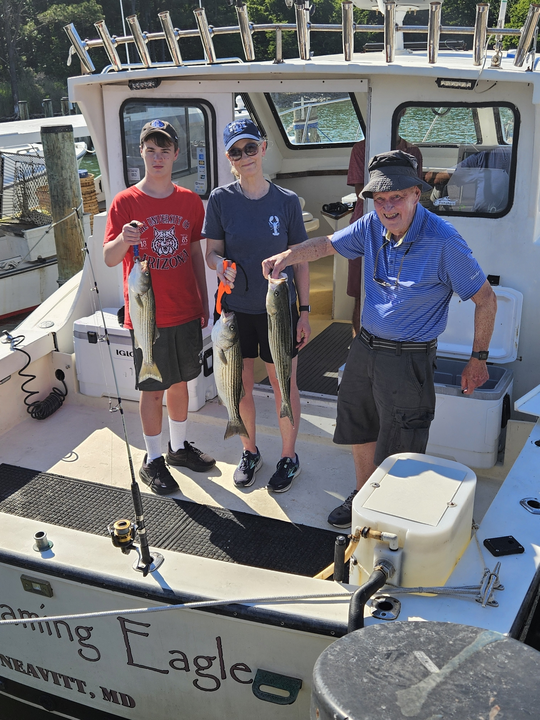
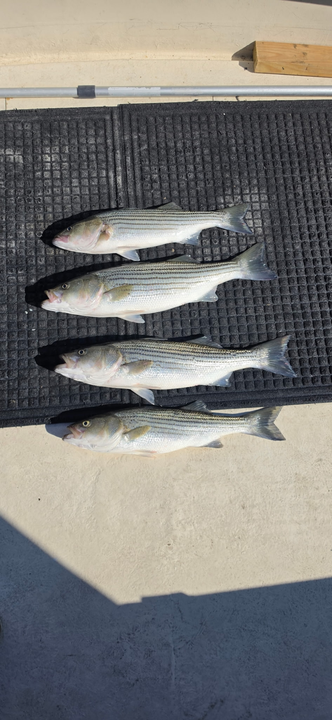
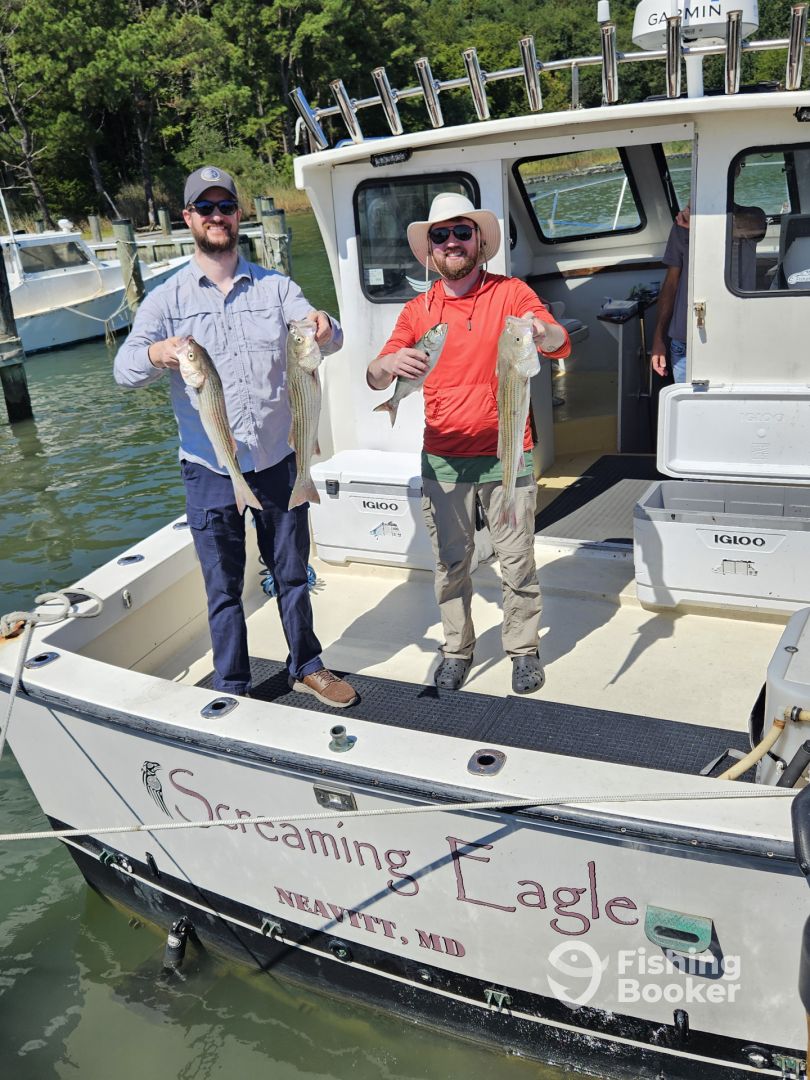
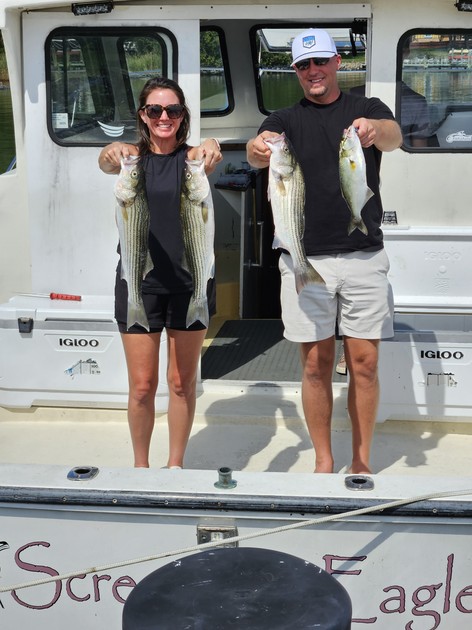
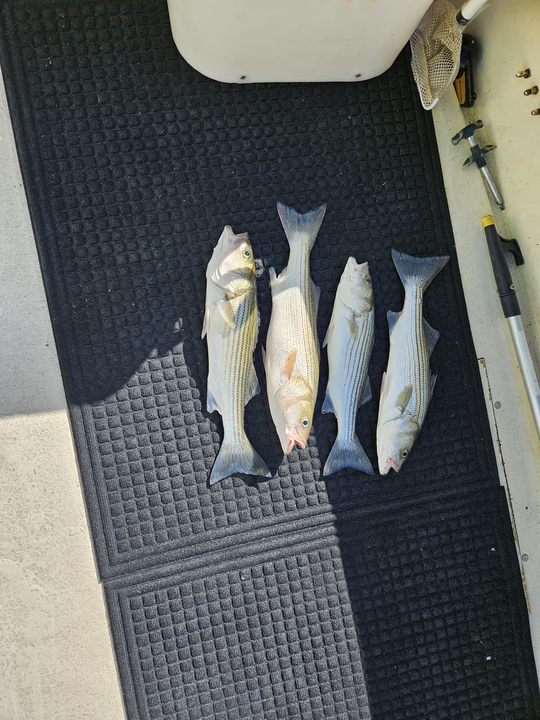
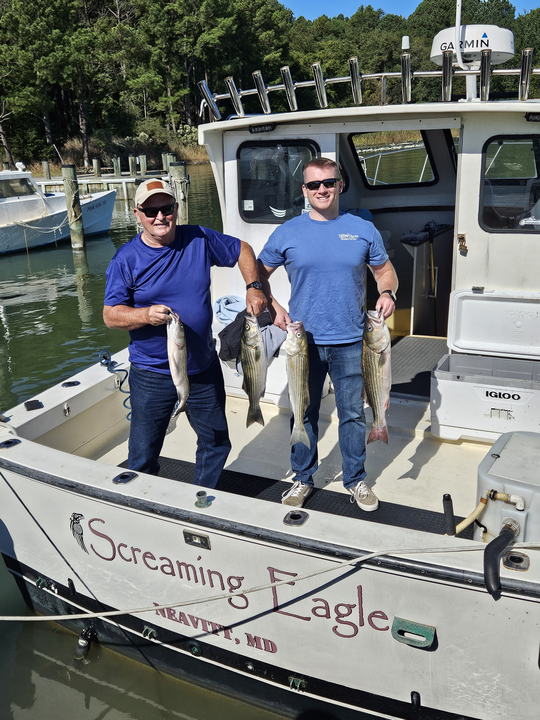
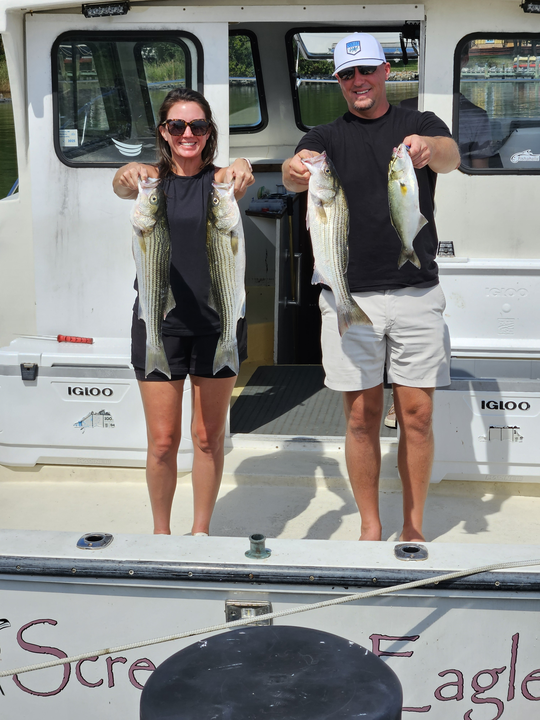
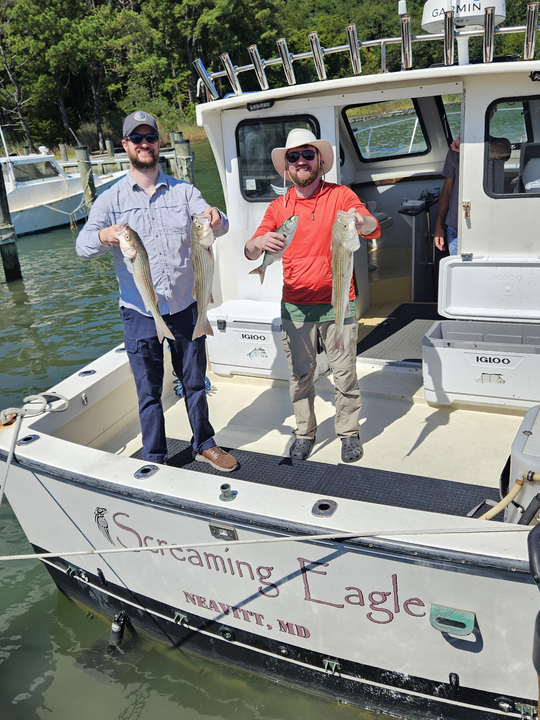
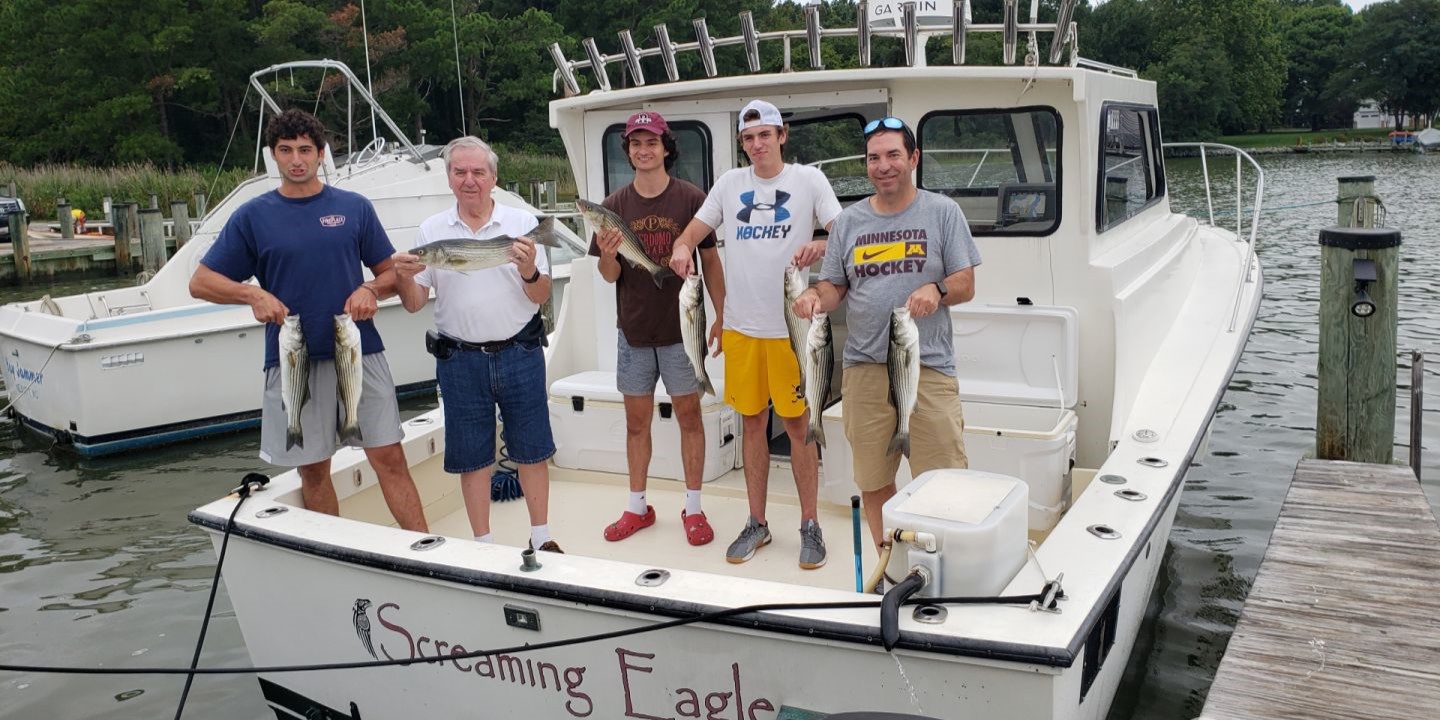
Striped bass are the main event here, and for good reason – these fish are built for the Chesapeake Bay's structure-rich environment. We're targeting keeper rockfish in that sweet 19" to 31" slot, and you're allowed to take home two fish per person within this range. These aren't just any stripers either; Bay fish are thick, healthy, and fight like they mean it. A 24-inch rockfish from the Chesapeake will give you a battle you won't forget, especially on the spinning gear we use during summer months. Spanish mackerel show up in good numbers during the warmer months, and these speedsters are pure fun on light tackle. They hit fast, fight hard, and make excellent table fare. When schools of Spanish move through, the action can be non-stop. Bluefish round out our target species, and when they're around, you know it. Blues are aggressive predators that will crush anything that moves, and they're perfect for anglers who want consistent action. They're also fantastic on the grill when prepared right, with a rich flavor that pairs well with simple seasoning and high heat.
Species You'll Want to Hook
Striped bass are the heart and soul of Chesapeake Bay fishing, and there's a reason locals call them rockfish – they love structure, drop-offs, and rocky bottom areas where baitfish get trapped by current and tides. These fish are most active during moving water, especially the first two hours of incoming or outgoing tide. Peak season runs from May through October, with some of the best fishing happening in late spring when schools of breeding-age fish move into the Bay to spawn. What makes stripers so exciting to catch is their intelligence and wariness. They're not always easy, and when you do connect with a good one, you know you've outsmarted a fish that's seen every lure and trick in the book. A slot-size striper will make multiple runs, use the current to its advantage, and test your drag system properly.
Spanish mackerel arrive in the Bay when water temperatures climb into the 70s, typically from June through September. These fish are built for speed, with razor-sharp teeth and an attitude to match. They travel in schools and feed aggressively on small baitfish, making them perfect targets for light spinning gear with small spoons, jigs, or cut bait. Spanish mackerel rarely exceed 3-4 pounds in the Bay, but what they lack in size they make up for in pure energy. They'll hit your bait like a freight train and immediately head for open water, stripping line off your reel in a hurry. The fight is fast and furious, and they're notorious for throwing hooks if you don't keep steady pressure on them throughout the battle.
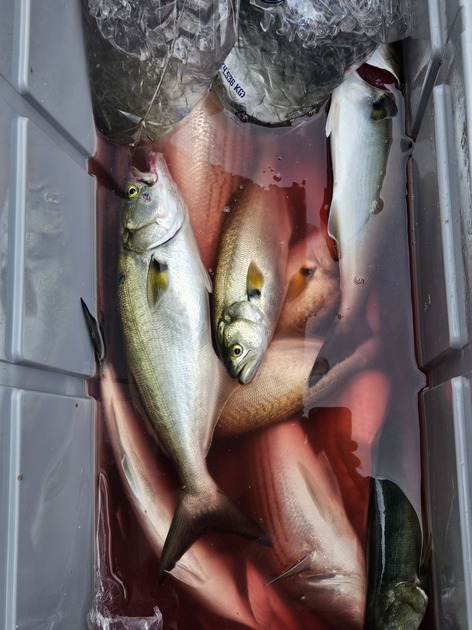
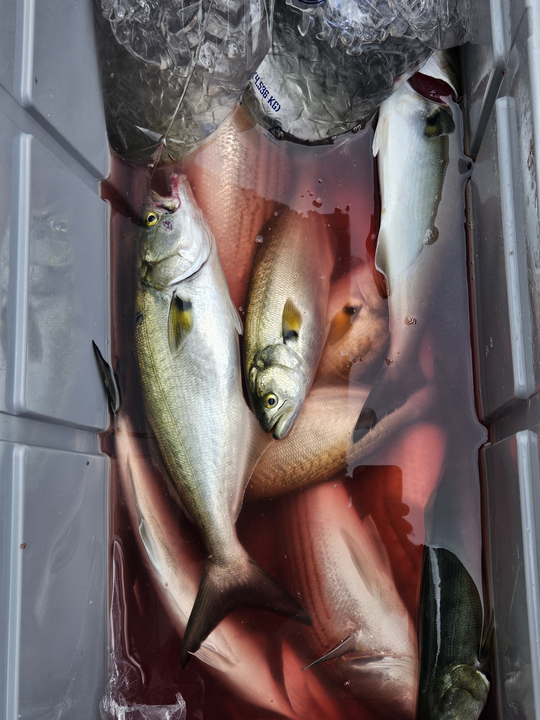
Bluefish are the ultimate opportunistic predators in the Chesapeake Bay system, and when they show up, the fishing can be absolutely electric. These fish hunt in packs, often driving baitfish to the surface where seabirds give away their location from miles away. Blues are active from late spring through fall, with some of the best action happening during the cooler months when they're feeding heavily before their southern migration. What makes bluefish so exciting is their complete lack of fear – they'll attack lures that are nearly as big as they are, and they fight with a determination that's impressive for their size. Bay blues typically range from 2 to 8 pounds, with larger fish showing up during the fall run. They're also one of the best eating fish in the Bay
 Shared Trip
 Inshore Fishing
 Choptank River, Maryland, USA

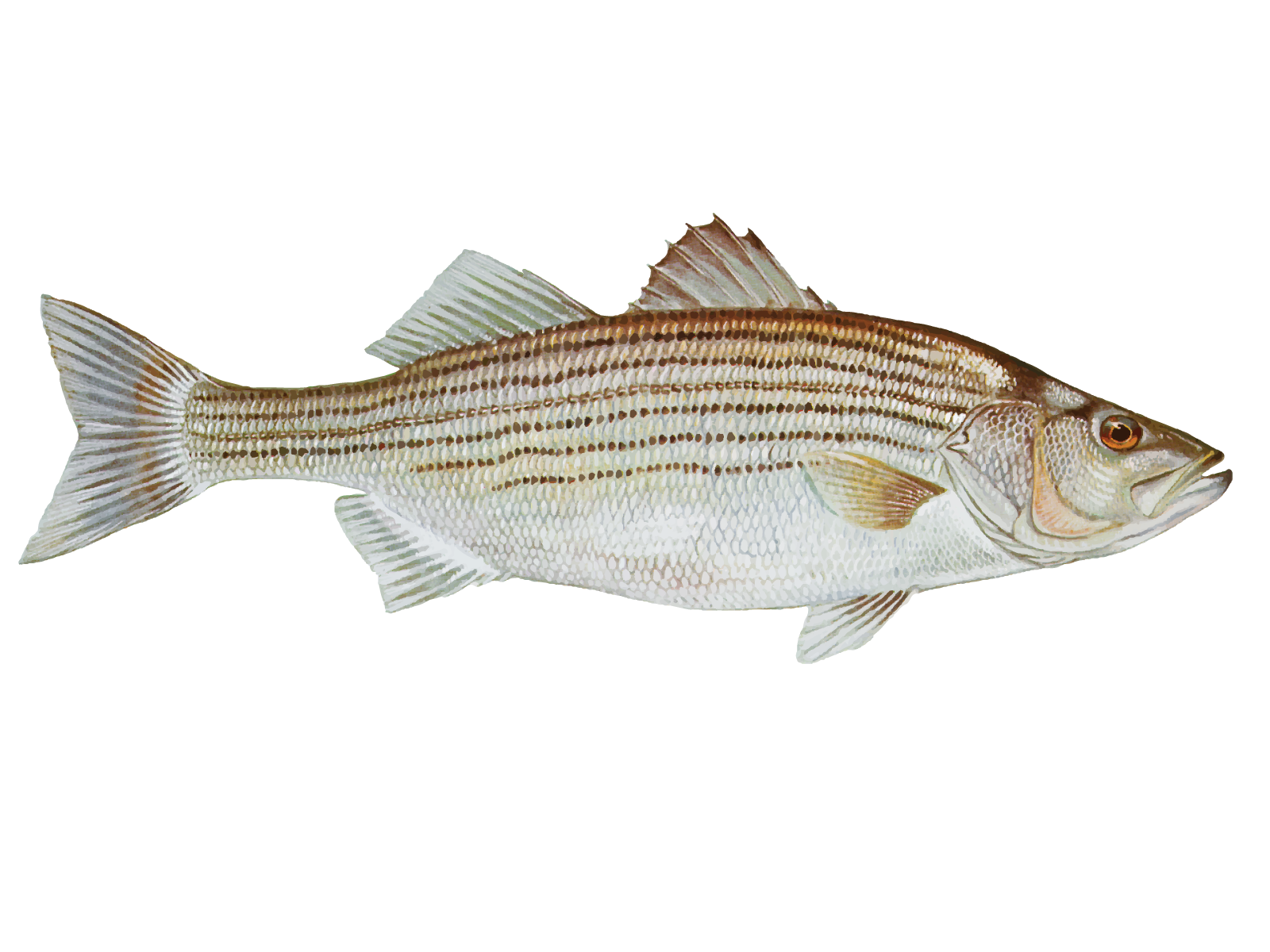
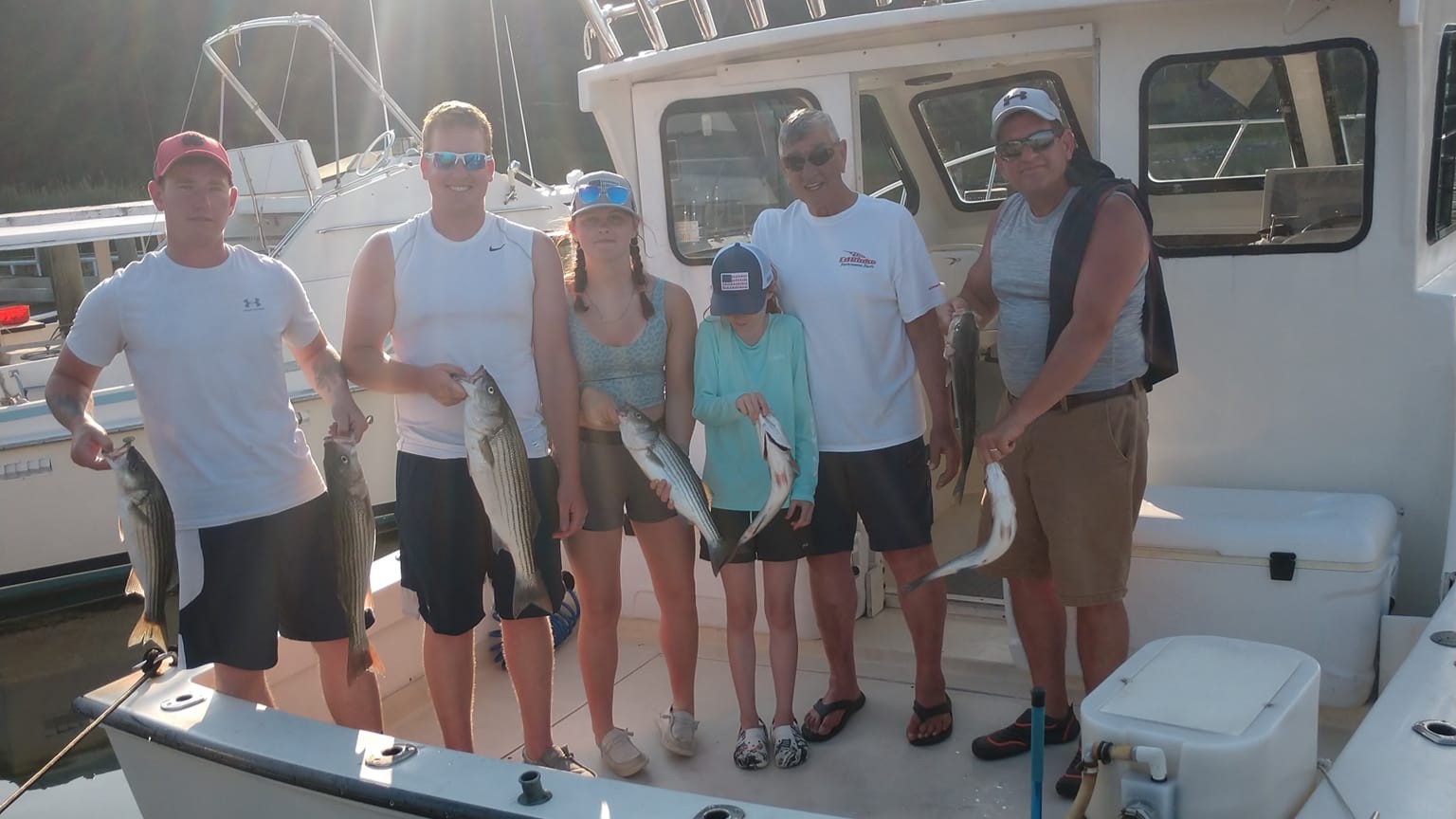
 Full-day shared weekend trips targeting Striped Bass on Chesapeake Bay