How to Catch Catfish in Rivers: Reading Current Seams, Outside Bends, and Deep Holes
Find the best river fishing spots for catfish, from current seams and deep holes to outside bends. Learn which baits and rigs work best in moving water.
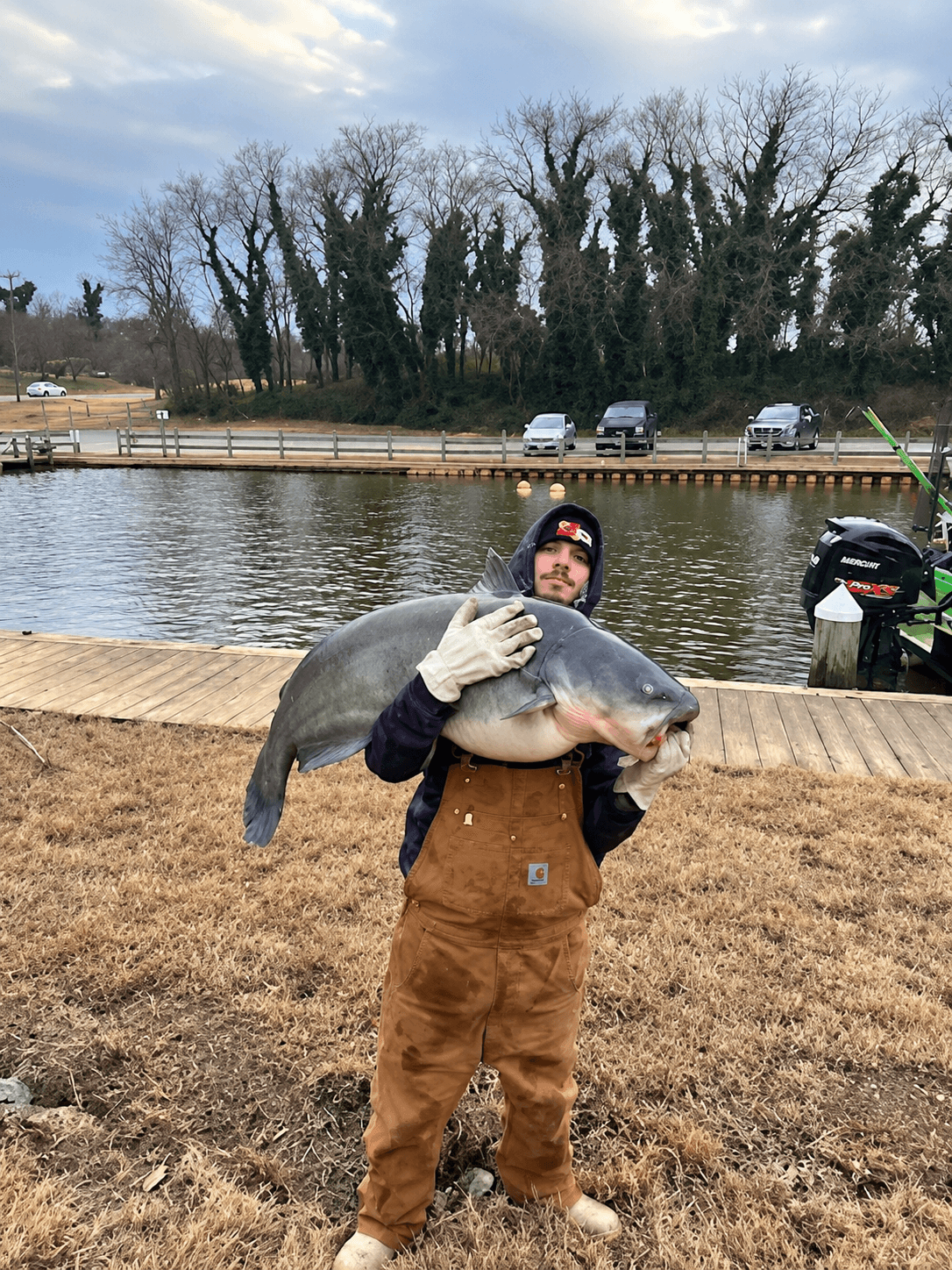


Catching catfish in a river requires more than choosing the right bait and waiting for a bite. It also requires understanding how the current moves, where the riverbed changes depth, and which areas offer fish a combination of food and shelter. Once you recognize these features, you can narrow down productive locations instead of casting randomly along the bank.
Whether you're targeting channel catfish in a slow-moving river or looking for larger fish in a deep channel, three features deserve your attention: current seams, outside bends, and deep holes. These locations help explain where catfish hold, how they find food, and why they may move between deeper water and shallower feeding areas.
This guide covers catfish river fishing, including how to spot current seams, outside bends, and deep holes, how they work together, and how to position your bait and adjust when conditions change.
1. Understand Where Catfish Hold in a River
Before choosing your bait or rig, it helps to understand how catfish use a river's natural features. Flowing water carries insects, small fish, crustaceans, and other food downstream, creating feeding opportunities along the way. Catfish behavior varies by species, but many use the riverbed, underwater cover, and changes in depth to find food and shelter.
Three factors help explain where catfish hold:
Current: Where fast and slow water meet, drifting food passes within easy reach of fish resting in calmer water.
Depth: Deeper channels, drop-offs, and holes give catfish shelter close to feeding areas.
Cover: Submerged timber, rocks, and undercut banks provide places to rest or ambush prey.
These patterns can help you narrow down where to look, but they don’t guarantee a catch. Water temperature, current speed, and food availability can all influence where catfish hold. Learning to recognize each one, and where they overlap, is what turns a long stretch of river into a short list of spots worth fishing.
2. Find Current Seams Where Catfish Can Feed
When a river's current changes speed, it creates boundaries where fast-moving water meets slower flow. These boundaries, known as current seams, can be productive spots for catfish because they bring drifting food within reach of fish holding in less turbulent water. Instead of fighting the strongest current, catfish can stay near the slower flow and feed on what passes by.
How to Identify a Productive Current Seam
Look at how water moves around obstacles and along the riverbank. A line of foam, bubbles, or floating leaves moving between fast and slow water can reveal a current seam. You may find one where the current flows around a submerged log or rock, or where the main channel meets slower water near the bank.
Once you've spotted a seam, consider what's nearby. A boundary running alongside a deeper channel or submerged cover is worth investigating because catfish may use these features as holding areas while feeding along the current's edge. Seams often form along the edge of a deeper channel, such as the one an outside bend carves, so a seam near either is a good sign. A seam in shallow, featureless water may be less productive.
Where to Place Your Bait
Once you've identified a seam, start by presenting your bait along the slower edge, where catfish can access food carried by the current. Avoid casting automatically into the fastest water, as your rig may be swept away before it settles.
Your rig needs enough weight to reach the bottom and stay near your target. If the current keeps pulling it downstream, increase the sinker weight or cast slightly upstream, so the bait has time to settle into position.
Give each area a chance before moving your cast. If the slower edge doesn't produce a bite, work along the seam and then try its downstream end, where the current may carry food past waiting fish.
3. Fish Outside Bends Where the River Runs Deeper
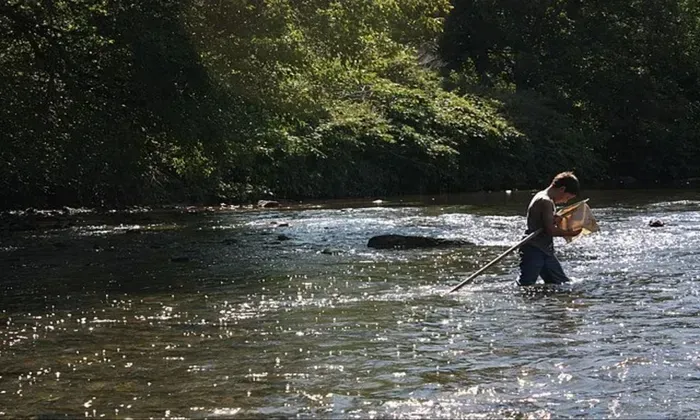
As a river curves, its current tends to move faster along the outside bank, gradually eroding the riverbed and giving way to deeper water. These outside bends can be productive fishing spots because they often connect deep holding areas with shallower sections where catfish feed. The deeper channel they create is a feature in its own right, and a current seam often forms along its edge.
How to Identify a Productive Outside River Bend
Look for a sharp curve with an eroded bank, exposed roots, or overhanging trees. These features can indicate that the current has cut into the bank, although you'll need to assess the actual depth rather than assume every bend has a deep channel.
Pay attention to changes in water movement, too. The deeper channel may run close to the outside bank, creating a drop-off that catfish can use to move between deeper water and nearby feeding areas. Look for the seam where faster water along the outside bank meets slower flow toward the inside of the bend.
Where to Place Your Catfish Bait
Start by casting near the drop-off, where shallow water meets the deeper channel. This lets you target the transition without needing to reach the deepest part of the bend. If you don't get a bite, move your bait along the curve to see whether catfish are holding farther upstream or downstream.
Your casting distance will depend on how close the channel runs to the bank. In some locations, a short cast is enough to reach deeper water. Use a sinker that keeps your bait near the bottom without allowing the current to drag it too far from your target.
4. How Current Seams, Outside Bends, and Deep Holes Work Together
Current seams, outside bends, and deep holes are useful places to investigate on their own, but they can be even more promising when they occur together. A bend may create a deeper channel along the outside bank, while the change in water speed along its edge forms a current seam. If submerged timber or other cover is nearby, the area offers several features worth checking for catfish.
It is best to start by identifying the deeper channel and locating where faster water meets slower flow. Rather than casting straight into the deepest water, try placing your bait along the seam or near the drop-off where the channel begins to deepen. These transitions can put your bait near fish holding in deeper water or feeding along the edge.
How to Choose Between Promising Spots
When you find two or three promising spots on the same stretch of river, ask three questions about each one:
Current: Is there a visible seam where fast and slow water meet?
Depth: Is there a drop-off, channel edge, or hole nearby?
Cover: Is there submerged timber, rock, or an undercut bank within reach?
The spot that answers yes to the most questions is usually the strongest place to start. If the area does not produce a bite, test another part of the same structure before leaving. Move along the seam, try the upstream or downstream edge of the hole, or adjust your position relative to submerged cover. This should help you identify where depth, current, and available cover intersect under the river’s current conditions.
5. Locate Deep Holes and Their Drop-Offs
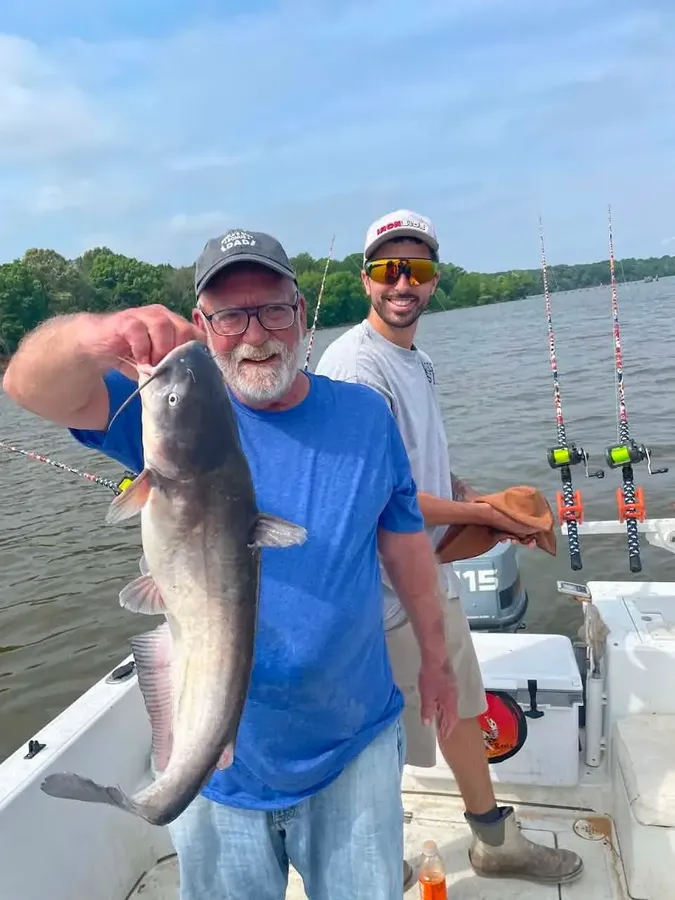
Deep holes are sections of the riverbed that sit lower than the surrounding bottom.
They often form near outside bends, below rapids, or around large obstructions where flowing water erodes sediment.
Catfish may use these areas for shelter while staying close to nearby feeding grounds.
The trick is to look beyond the deepest point. The edges of a deep hole can be just as productive as its center, especially where the current carries food past the drop-off.
Where to Find Deep Holes in Rivers
Look for these features when searching for deeper water:
Below rapids: Flowing water can scour out deeper pools downstream.
Along outside bends: Faster current can erode the riverbed and create deeper channels.
Near submerged structures: Large rocks and fallen timber can alter the current and shape the bottom.
A fish finder can help confirm depth changes from a boat. You can also use visible current patterns and surrounding river features as clues when fishing from the bank.
Many holes sit where these features overlap: an outside bend that cuts a deeper channel, with a current break or seam along its edge. Finding one feature often points you toward the others.
How to Fish a Deep Hole
Start at the upstream edge, where the riverbed begins to deepen. If you don't get a bite, try moving toward the center and then the downstream edge. During strong flows, it can be beneficial to try the calmer margins rather than focusing only on the deepest water.
If you're particularly looking for larger catfish, pay attention to deep holes near submerged timber or channel edges. This is where deeper water and cover occur together, giving more space for larger fish to hide.
6. Position Your Bait to Match the River Structure
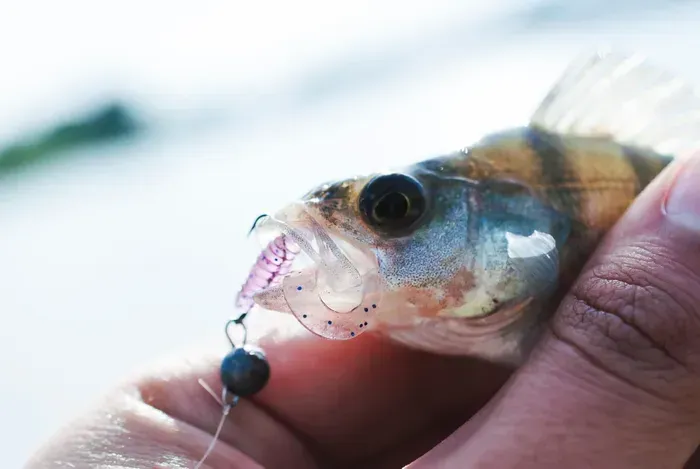 Choosing the right catfish bait involves more than picking something with a strong scent. River current, water depth, and nearby cover all contribute to where your bait should sit and how fish encounter it.
A bait that works well in slower water may need a heavier sinker or a different position in stronger current to stay near the riverbed.
Match the bait to the species you’re targeting and the structure you’re fishing, then position it where catfish are most likely to find it.
Which Bait Works Best for Different Catfish Species?
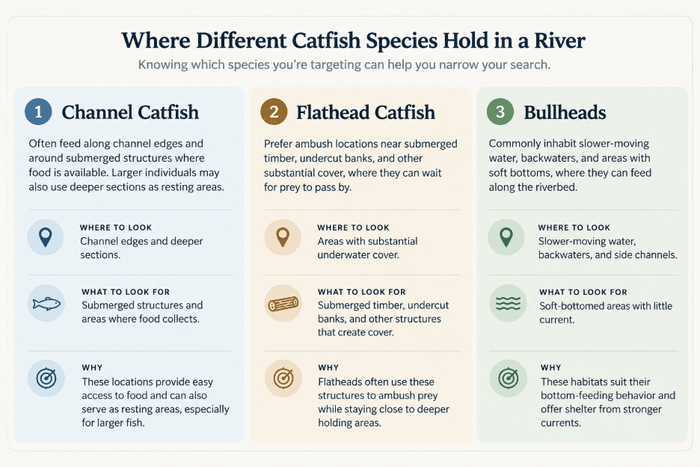
Channel catfish: Cut bait, worms, and prepared baits
Cut bait made from shad or other legally obtained baitfish, nightcrawlers, and prepared stinkbaits or dough baits all work. Cut bait suits current seams, channel edges, and deep holes, while worms are a good choice in slower runs.
Flathead Catfish: Live or fresh fish bait
Live baitfish, where legal, or freshly cut fish work best near the submerged timber and undercut banks where flatheads ambush prey.
Bullheads: Worms and other natural baits
Nightcrawlers and other natural baits, kept close to the bottom in slower water and backwaters work well for Bullheads.
Can You Use Carp as Catfish Bait?
Yes, carp can be used as catfish bait in some states, usually in the form of cut bait. Pieces of common carp can release scent into the water and attract catfish searching for food along the riverbed. However, whether carp is legal to use depends on the state and the species involved. For instance, Texas permits common carp as bait, while Missouri allows certain carp species, including silver and bighead carp, as dead or cut bait but prohibits their use as live bait.
To use carp as cut bait, slice it into manageable chunks and secure a piece firmly to your hook, preferably through a tougher section of skin, so it stays attached in moving water. Present it near the bottom along current seams, channel edges, or deep holes where catfish may be feeding.
Where to Position Your Bait at Each Structure
Current seam: Present the bait along the slower edge of the seam, where food drifts past, rather than in the fastest water.
Outside bend: Place it near the drop-off where shallow water meets the deeper channel.
Deep hole: Start at the head, where the bottom begins to deepen, then work toward the center and tail.
How River Current Changes Your Bait Presentation
Current affects not just where your bait lands, but how its scent travels. In faster flows, scents can disperse quickly downstream, which may help catfish find bait along seams and channel edges. In slower water, the scent stays concentrated around your presentation for longer. With cut bait or prepared stinkbait, target areas where the current can carry scent past likely holding spots. Near submerged timber, keep your bait close enough to attract fish from cover without placing it where snags are likely.
Choosing a Catfish Rig That Holds Bottom
When fishing for catfish in a river, your rig needs to keep the bait near the bottom without getting swept too far by the current. A simple sliding-sinker rig is a practical starting point: the sinker rests on the riverbed while the line can move through it, allowing a catfish to take the bait with less resistance.
A few quick adjustments can make your setup more effective:
Use a suitable hook: Match its size to your bait and target species.
Keep the bait near the strike zone: Position it along a current seam, deep-hole edge, or channel drop-off rather than casting blindly into the strongest current.
Reduce snags: Near timber or rocks, adjust your casting angle and placement to keep the rig close to cover without settling directly into it.
The best catfish rig for current is one that holds its position while keeping your bait in a natural feeding area. You don't necessarily need a complicated setup; simply focus on controlling where the bait sits.
7. Adjust Your Strategy to Seasonal Changes
Changing water temperature and flow shift how catfish use the same three structures throughout the year. Rather than overhauling your approach each season, adjust which part of the structure you fish.
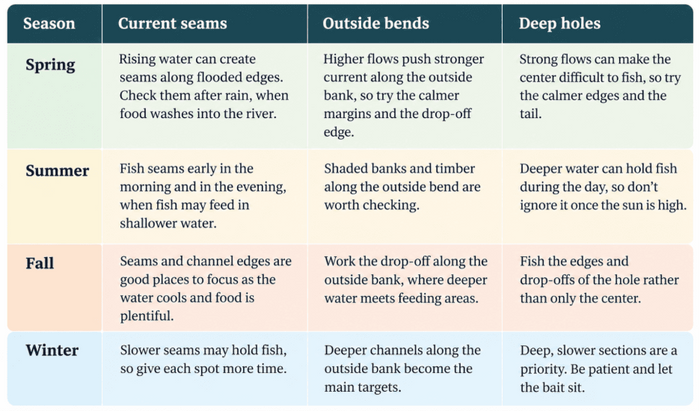
River levels, current speed, and local temperatures can shift fish activity at any time of year. If a spot isn't producing, try a nearby current seam, check the edges of a deep hole, or adjust your bait presentation before moving on. Pay attention to what the river is doing rather than relying on the calendar alone.
8. How to Adjust When a River Catfish Spot Isn’t Producing
Finding a promising spot is only part of the process. How you respond when the bites don’t come matters just as much. Try these adjustments, one at a time:
Reposition your bait before changing it: Before switching catfish bait, try moving it closer to cover, along a current seam, or toward a deep-hole edge.
Test another part of the same structure: Move along the seam, shift from the head of a hole to its center and tail, or work farther along the outside bend.
Adjust your sinker weight: If your bait keeps rolling downstream, increase the weight. If it gets snagged frequently, adjust your placement or try a different setup.
Don’t fish only the strongest current or the deepest water: Catfish often hold along seams or in calmer water near the main flow, and drop-offs and channel edges can also hold feeding fish.
Reassess when conditions change: Rain, rising water, and shifts in current can change where catfish hold. Reassess the river rather than repeatedly fishing an unproductive spot.
Move to another feature: If the spot still isn’t producing, move to the next-best location, using the same current, depth, and cover questions to choose it.
The best approach is to make one adjustment at a time. Change your location or bait presentation, observe the results, and use what you learn to decide your next move.
9. Turning River Conditions into Fishing Opportunities
Successful river catfishing starts with reading the water. Look for current seams where fast and slow water meet, outside bends that carve deeper channels, and deep holes with nearby cover, and pay closest attention where they overlap. Then position your bait to match the structure and adjust one thing at a time when the river changes. Water temperature, flow, and food availability shift throughout the year, so let the river guide your next cast.
Most importantly, stay flexible. Water temperature, river flow, and food availability can change fish behavior throughout the year. If one spot isn't producing, test a nearby depth change or a different current edge before abandoning the area. Over time, these observations will help you recognize productive locations and make more informed decisions on your next river fishing trip.
Find Your Next River Catfishing Adventure
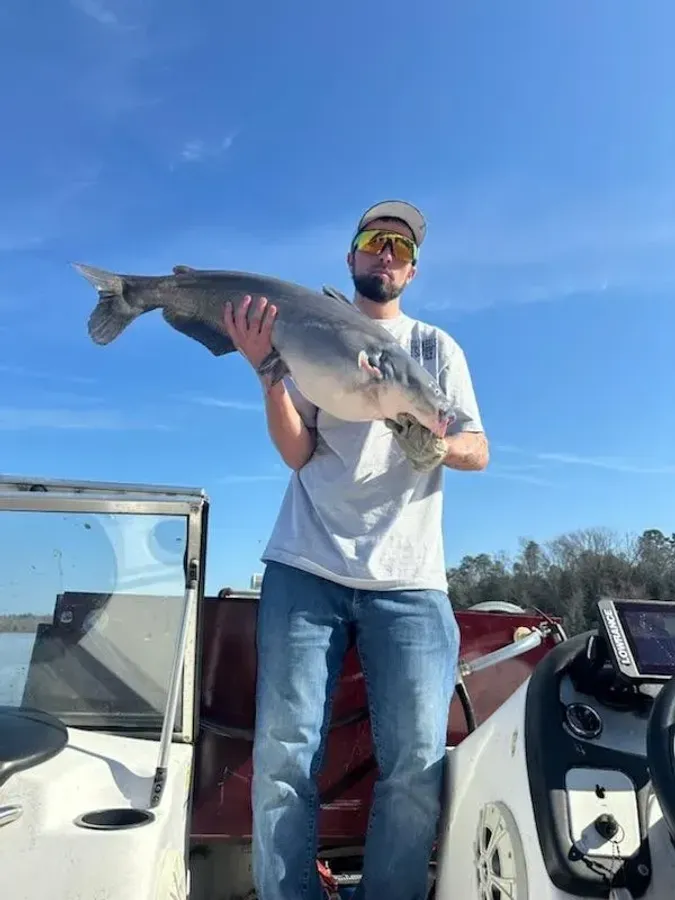
River catfishing gets easier when you stop treating the river as one big stretch of water and start reading it as a series of opportunities.
A seam where food drifts past, a bend carved deeper by current, or a quiet pocket beside submerged timber can tell you more than casting farther ever will.
Put those clues together, adjust your bait to the conditions, and give promising spots time to produce.
Want to put that knowledge to work on the water? Explore catfish fishing trips on Guidesly and connect with experienced local guides who know their rivers, understand seasonal patterns, and can help you make your next fishing trip count.