Redfish vs. Red Snapper: What’s the Difference?
Redfish vs. Red Snapper: learn how to tell them apart, where they live, what they eat, and the best baits and techniques to catch each.
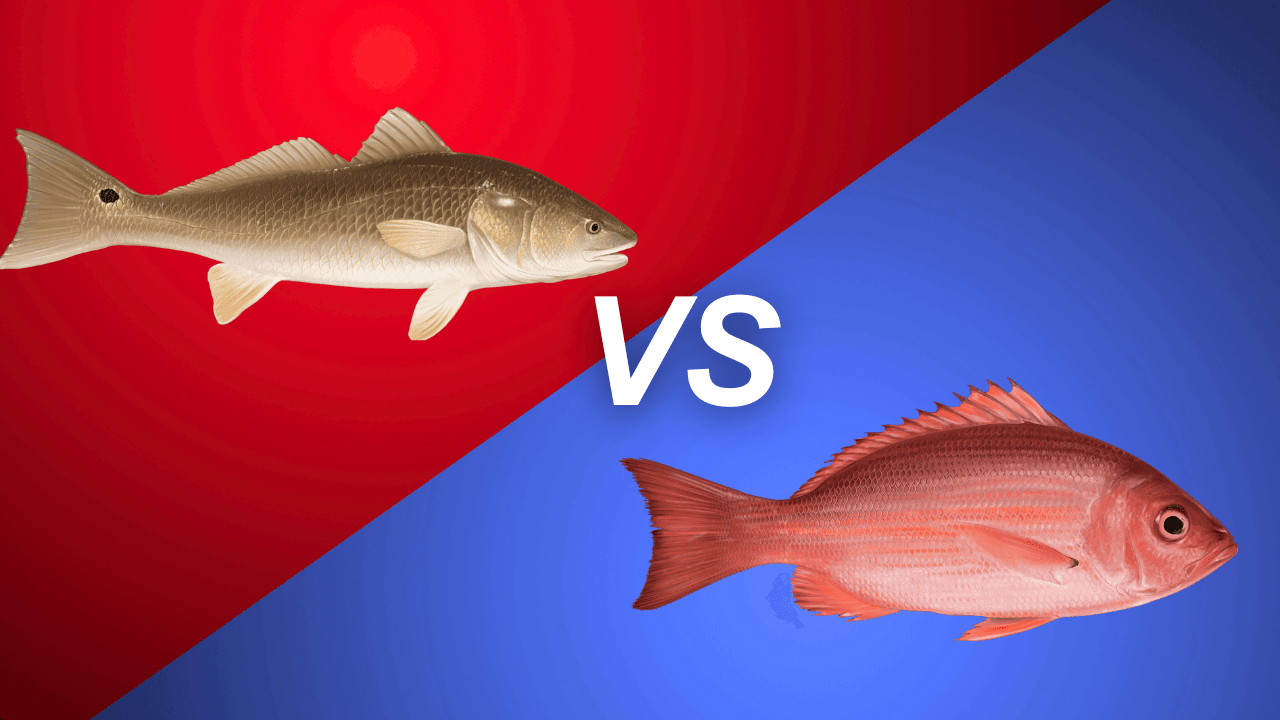


If you like fishing, chances are you’ve heard someone mention they “caught a red.” But that could either mean a Redfish or a Red Snapper. So how do you tell them apart? They’re both reddish, popular with anglers, and are regularly talked about around the Gulf and Atlantic coasts. But they’re still very different fish.
While Redfish spend plenty of time in shallow coastal water, moving through estuaries, tidal creeks, marshes, bays, and flats, Adult Red Snapper are more likely to turn up offshore, usually around reefs, wrecks, ledges, and other structure. That difference in habitat affects pretty much everything else. What do they eat. Where do you look for them. What goes on the hook. Even the way you fish for them. So, if you've ever wondered about Redfish vs. Red Snapper, here's what you need to know.
Quick Summary
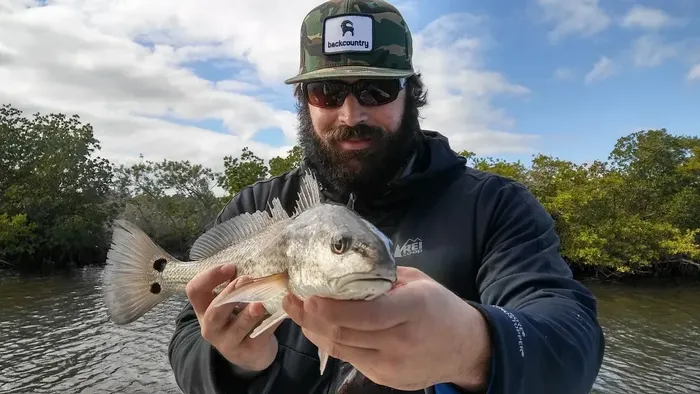
Redfish and Red Snapper aren't two names for variations of the same fish. Redfish, also known as Red Drum, are comfortable across a broad mix of coastal and estuarine habitats. They can live in brackish water, tidal creeks, bays, marshes, flats, rivers, and nearshore areas. On the other hand, adult Red Snapper have a much stronger connection to deeper offshore habitat. Reefs, rocks, ledges, wrecks, rigs, and artificial reefs are all places worth paying attention to. There are also some obvious physical differences between Redfish and Red Snapper. Redfish generally have a more streamlined body and a dark eyespot, or sometimes several spots, near the tail.
Red Snapper have a heavier body, a sloping head, and enlarged canine teeth. Their color is usually a more noticeable rosy red. The fishing is different, too. Redfish can be caught with live shrimp, baitfish, soft plastics, spoons, popping corks, and topwater plugs. Red Snapper fishing is usually built around finding offshore structures and getting a bait down to the fish.
What is Redfish?
Redfish usually means Red Drum, scientifically known as Sciaenops ocellatus. It’s part of the Sciaenidae family, the same family that includes drums and croakers. The species name ocellatus means “eye-like,” which points to one of the fish's most recognizable features: the dark spot near the tail. Redfish are euryhaline fish, meaning they can tolerate a fairly wide range of salinity. That explains why an angler might find one in a tidal creek one day and another farther out along the coast. Estuaries, marshes, bays, rivers, flats, and nearshore areas can all hold them. There isn’t one perfect type of habitat to look for. Food matters, tidal movement matters, and water conditions all matter. The fish can shift around as those things change.
What is Red Snapper?
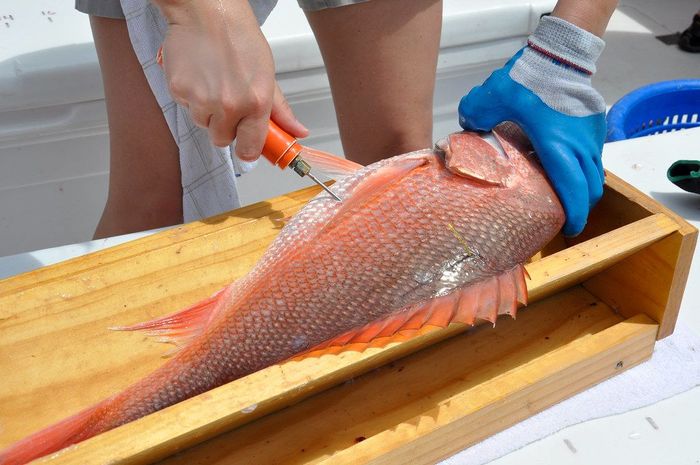
Most anglers referring to Red Snapper mean Lutjanus campechanus, a member of the Lutjanidae family, or Snapper family. The scientific name isn't actually describing the fish’s red color. Lutjanus comes from a Malay name for a fish, while campechanus refers to Campeche, Mexico. Another interesting fact about them is that Red Snapper don’t start life in the same deep-water environment where adult fish are often caught. Juveniles can live in shallower water over sandy or muddy bottoms. As they grow, they move toward deeper areas and become increasingly associated with reefs, rocks, ledges, artificial reefs, and other offshore structures along the continental shelf.
That’s an important distinction for anglers. A deep offshore spot with structure is telling you considerably more than the fact that the water is simply deep.
How to Identify Redfish vs. Red Snapper
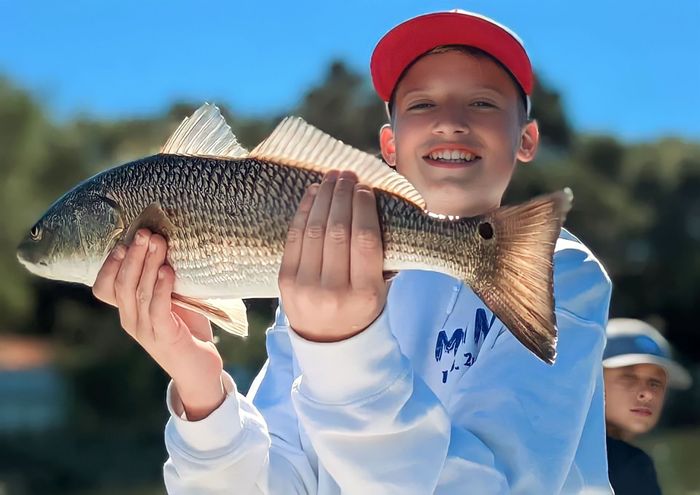
Color alone isn't going to settle whether the red fish you caught is a Red Drum or a Red Snapper. So, it is best to start with the body shape and head, then look toward the tail.
Redfish usually have a relatively streamlined body and one or more dark spots close to the tail. Their coloring can vary quite a bit, from silvery gray and copper to reddish-bronze. Red Snapper have a heavier-looking body and a sloping head.
Their enlarged canine teeth are another giveaway. They’re generally a stronger rosy red, although fish caught from different depths won't always look the exact same. The surroundings can help you identify further. A fish caught along a marsh edge, tidal creek, flat, bay, or estuary points toward Redfish. A fish coming from deeper offshore water around a reef or wreck points much more toward Red Snapper.
Although habitat isn't a substitute for proper identification, it can certainly narrow things down. Let's take a look at the different places Redfish and Red Snapper can be caught.
Where to Catch Redfish vs. Red Snapper
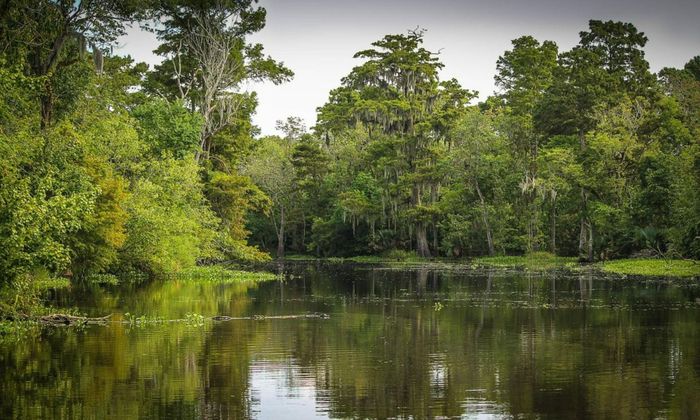
This is where the two species really start to go in different directions. For Redfish, it usually makes more sense to look for productive habitat than to obsess over a specific depth. Marsh edges are worth checking. So are tidal creeks, grass flats, oyster reefs, shallow channels, points, and places where two kinds of habitat come together. But if you’re wondering why these locations in particular, it’s because of the bait. Tidal movement can push shrimp and small baitfish into creek mouths, drains, shallow edges, and other areas where current concentrates food. Redfish know this, too, and they'll use those spots as feeding areas. They can also shift between shallow and deeper parts of an estuary or coastal system.
Adult Red Snapper are generally a different story. To catch a Red Snapper, it is best to head offshore and start paying much closer attention to the bottom. Reefs, rocks, ledges, wrecks, rigs, artificial reefs, and similar hard structures are important habitat. Soft-bottom areas can still come into play, but structure is a major part of the Red Snapper equation.
NOAA lists adult Red Snapper at roughly 30 to 620 feet in the Gulf and along the eastern coasts of North and Central America. This is one situation where a fish finder can save a lot of searching. Instead of looking along a shoreline for visible signs of fish, the focus shifts to changes in depth, structure, bait, and fish holding around the bottom.
The Differences in What Redfish and Red Snapper Eat
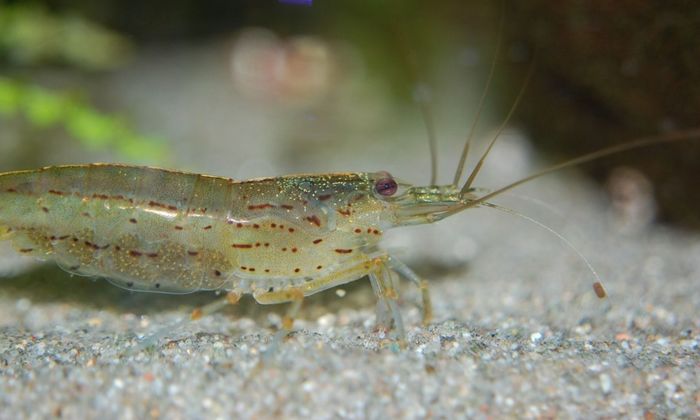
Both species are opportunistic predators, which basically means they’ll eat what is available rather than sticking to one very specific food source.
There’s some overlap between the two diets. Shrimp, crabs, and small fish can show up for both. However, larger difference is where they're finding those meals, and that is what created the differences in their diet.
What Do Redfish Eat?
Redfish have a fairly broad diet including the following:
Shrimp: A major food source, particularly in shallow bays, estuaries, and marshes.
Crabs: Common around oyster reefs, muddy bottoms, and other areas where small crabs are present.
Small fish: Bigger Redfish can rely more heavily on fish as they grow.
Worms: They’ll pick up worms and other small bottom-dwelling prey while feeding.
Other small crustaceans: Whatever else is available can become part of the meal.
A lot of this feeding happens close to the bottom. On shallow flats, Redfish can push their heads into mud or sand while searching for prey. Sometimes the only part visible above the surface is the tail. That’s the classic “tailing” behavior. For an angler, it’s more than something interesting to watch. It can also tell you what the fish are doing.
What Do Red Snapper Eat?
Red Snapper are opportunistic feeders, too, but their offshore lifestyle gives them a somewhat different menu. Their food can include:
Small fish: Particularly around reefs and other structure where baitfish gather.
Shrimp: Another food source when they're available around the bottom.
Crabs: Common prey around reef and hard-bottom habitat.
Squid and other cephalopods: These can be important prey and help explain why squid is such a common Red Snapper bait.
Worms and other invertebrates: Various bottom-dwelling organisms can also be taken.
Plankton: Younger Red Snapper can depend more heavily on plankton and other small organisms before moving toward larger prey.
Adult Red Snapper are often found around reefs, wrecks, rigs, ledges, and other offshore structure. Those spots aren't just shelter. They tend to attract baitfish, crustaceans, and other marine life. Put all of that together and you have a pretty convenient feeding area for a predator. So when Red Snapper fishing revolves around a structure, there’s a reason for it.
Best Baits for Redfish vs. Red Snapper
There isn't a single bait that automatically wins whenever either species is around. Live bait, cut bait, and artificial lures all have their place. The choice depends on what the fish are eating, where they're holding, and how the bait needs to get to them.
Best Baits for Redfish
Redfish aren't especially difficult to feed once you've found actively feeding fish. Natural baits are a reliable option, while artificial lures let you cover more ground and imitate the prey already available in the area.
Some common choices of bait for Redfish are:
Live baitfish: Useful when larger Redfish are feeding on small fish.
Cut bait: A practical choice when you want scent to spread through the water, particularly around deeper edges and channels.
Crabs: A natural presentation around oyster reefs and other areas where Redfish encounter crustaceans.
Soft plastic shrimp: Useful for matching one of the Redfish’s most common prey items.
Soft plastic jerkbaits: Good for working shallow water around grass, shorelines, and other cover.
Paddle-tail swimbaits: Useful for covering flats, channels, and shorelines while imitating small baitfish.
Spoons: Helpful when casting distance matters or when you want to search a larger area.
Topwater plugs: A popular option when Redfish are feeding near the surface.
That variety is part of what makes Redfish fun to target. There may be days when live shrimp under a popping cork gets it done. On another trip, covering water with a paddle-tail or spoon may make more sense. When fish are up feeding, a topwater plug can completely change the game.
Best Baits for Red Snapper
Red Snapper generally require a different kind of presentation. Adult fish are commonly found in deeper water around reefs, wrecks, ledges, rigs, and other structure. So the bait needs to reach that depth and stay in the strike zone. Natural baits are popular for exactly that reason.
Common bait choices for Red Snapper include:
Squid: A classic bottom-fishing bait that holds well on the hook and can be presented around structures.
Cut bait: Adds a scent to the water and imitates pieces of fish that Red Snapper already feed on.
Small baitfish: A useful way to match the forage fish already found offshore.
Live baitfish: Pinfish and pigfish are commonly used when targeting larger Red Snapper.
Shrimp: Another natural option when presented close to the bottom.
But remember, even a perfectly good piece of squid doesn't do much if it's drifting several feet above the fish or getting carried away from the structure before a Red Snapper can find it.
Best Fishing Techniques for Redfish vs. Red Snapper
There’s no single technique that defines either fishery. Still, there’s a noticeable difference in the way anglers typically approach the two. Redfish give you a lot of options because they're comfortable using so many kinds of shallow coastal habitat. Red Snapper fishing tends to revolve around finding the fish first, usually around offshore structure, and then getting a presentation down to the right depth.
The infographic below gives a quick side-by-side look at the main techniques used for each species.
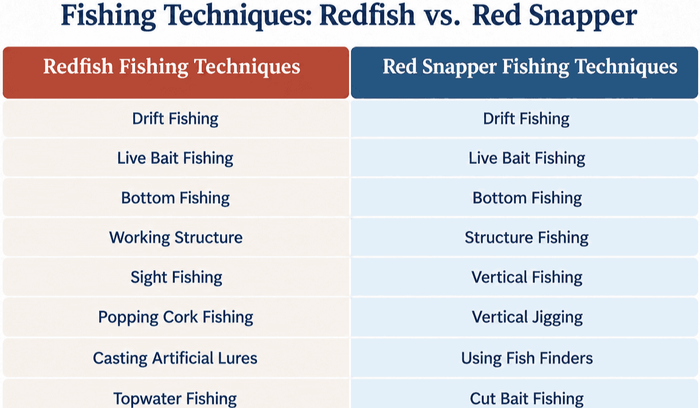
Redfish Fishing Techniques
Redfish fishing can be targeted using several fishing techniques:
Sight Fishing: Find cruising or tailing Redfish and place a lure or bait in front of them.
Popping Cork Fishing: Suspend live shrimp or another bait beneath a popping cork and work it across shallow water.
Drift Fishing: Let the boat move with the current while covering flats, bays, and channel edges.
Casting Artificial Lures: Soft plastics, jerkbaits, paddle-tail swimbaits, and spoons can all be used to search for feeding fish.
Topwater Fishing: Work topwater plugs across shallow areas when Redfish are feeding close to the surface.
Live Bait Fishing: Present shrimp or baitfish naturally around active feeding areas.
Bottom Fishing: Keep natural bait near the bottom when fish are feeding along flats, channels, or deeper edges.
Red Snapper Fishing Techniques
Red Snapper fishing is more structured, quite literally. Once a reef, wreck, ledge, rig, or artificial reef is holding fish, the goal is usually to get the bait or lure into that zone and keep it there.
Common fishing techniques for Red Snapper include:
Drift Fishing: Drift over productive areas while keeping bait at the depth where fish are holding.
Live Bait Fishing: Present live baitfish around structure where Red Snapper are feeding.
Bottom Fishing: Keep squid, cut bait, or another natural bait close to the bottom.
Vertical Fishing: Drop bait straight below the boat and work it through the depth where fish are holding.
Vertical Jigging: Drop a heavy jig to target active fish.
Structure Fishing: Work reefs, wrecks, ledges, and artificial reefs where adult Red Snapper commonly gather.
Using Fish Finders: Use electronics to find structure, locate fish, and determine the depth where the bait should be presented.
Before heading out to target either species, make sure to the current fishing regulations for the area. Or take some of the guesswork out of it and book a trip with a local guide who knows the water and the fishery.
Do Redfish and Red Snapper Have Different Fishing Regulations?
When we talk about fishing rules and regulations, it is important to keep in mind that fishing rules change. Seasons open and close. Size limits and bag limits can vary between states, regions, and fisheries. With that in mind, let’s check out how Redfish and Red Snapper have different fishing regulations.
Redfish regulations can vary considerably by state and region. Gulf states, for example, have their own size and bag limits for Red Drum, and additional rules can apply to larger fish. Historical NOAA management information shows how different those regulations can be from one state to another. There isn't one Redfish size limit that applies everywhere. The regulations need to be checked for the state and the water where the fishing is taking place.
Red Snapper regulations can be a little more complicated because federal and state management measures can both come into play. The rules can change based on region, season, and fishing sector. In the South Atlantic, for example, NOAA announced a 2026 federal recreational season running from October 9 through October 12. The federal rules for that season included a one-fish-per-person-per-day bag limit and no minimum size limit. Separate state regulations can apply in certain circumstances. The Gulf follows its own management system and recreational seasons.
Before keeping either species, check the current NOAA Fisheries regulations and the applicable state fish-and-wildlife rules. That's the safest way to know which season, size limit, and bag limit actually apply to the trip.
You Might Also Like: When Do You Need a Fishing License?
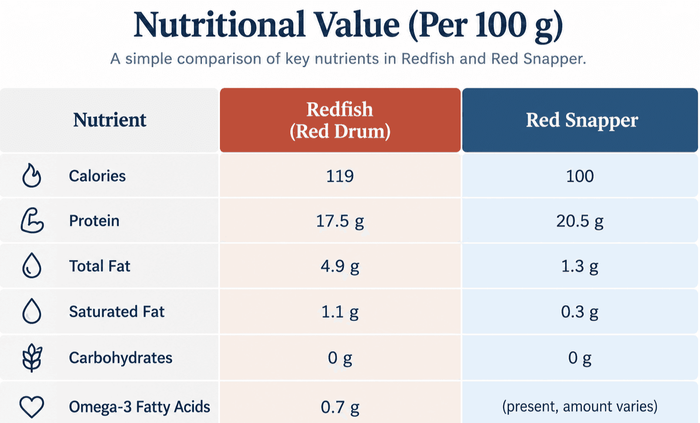
Nutritional Value of Redfish vs. Red Snapper
Both fish are good sources of protein and aren't especially high in fat. They also provide nutrients commonly associated with seafood, including omega-3 fatty acids, vitamin B12, and selenium. The nutritional profiles aren't quite the same, though. Red Snapper is particularly lean, and Redfish contains a little more fat in the flesh. That's a difference, not a reason to put one above the other. It simply means they have slightly different nutritional characteristics.
Nutritional Value of Redfish
Redfish, or Red Drum, has firm, mild-flavored meat and is naturally rich in protein. It also contains omega-3 polyunsaturated fats, including EPA and DHA. Research examining Red Drum fillets has found meaningful levels of these fatty acids in the flesh. Redfish provides phosphorus, B vitamins, and other nutrients naturally found in fish. The meat is fairly firm and mild, too, which makes it suitable for a range of preparations. It can easily work as the main protein in a meal without needing a particularly heavy coating or sauce.
Red Snapper Nutritional Value
Red Snapper is particularly lean. NOAA describes Red Snapper meat as lean, moist, and semi-firm and identifies it as a very good source of protein that is low in saturated fat and sodium. It also provides selenium, a mineral involved in several processes in the body, including antioxidant defense and thyroid function. Vitamin B12 and omega-3 fatty acids are present as well, along with other nutrients naturally found in seafood. Because the fish is so lean, lighter cooking methods such as grilling, baking, or broiling are commonly used.
Looking Out for Mercury in Redfish and Red Snapper
Mercury is another thing to keep in mind when eating fish, particularly recreationally caught fish. The FDA classifies Red Snapper as a “Good Choice.” Mercury levels in Redfish can vary, and larger, older fish tend to have higher mercury levels. Pregnant people, breastfeeding mothers, and young children should follow FDA guidance and check local consumption advisories, especially when eating larger recreationally caught Redfish.
Redfish vs. Red Snapper: It Comes Down to More Than Color
Redfish and Red Snapper might look like they belong in the same category until the details start adding up. Redfish are coastal fish. They use marshes, estuaries, tidal creeks, flats, bays, oyster reefs, and nearshore areas, often moving around as tides and feeding conditions change. Adult Red Snapper are much more connected to offshore fishing and structure. Reefs, wrecks, ledges, rigs, and artificial reefs all become important pieces of the puzzle. And that difference carries over into fishing. A Redfish trip might involve watching a shallow flat for a tail, drifting a shoreline, throwing a spoon, or working a topwater plug across moving water. A Red Snapper trip is much more likely to involve offshore structure, electronics, deeper water, and a bait that needs to reach the bottom.
Once the habitat is understood, the rest of the comparison gets a lot easier. The next step is finding the right water and knowing how to fish it. Browse fishing trips on Guidesly to find a local captain to help you catch the species of your choice.