Flamingo Flats: Your Gateway to Everglades Action
Picture this: you're standing on the bow at first light, watching the sun paint the Everglades backcountry in gold while keeping your eyes peeled for that telltale wake cutting through gin-clear water. This 6-hour inshore adventure out of Flamingo isn't your typical charter—it's a hands-on masterclass in sight fishing the legendary Florida Bay flats and mangrove shorelines. With just you and maybe one other angler, we're talking about the kind of personalized fishing that turns weekend warriors into true saltwater addicts. The Everglades backcountry holds some of Florida's most prized gamefish, and when conditions align, you'll understand why anglers travel from around the world to wet a line in these waters.
What to Expect on the Water
This top-rated charter runs six solid hours, giving us time to adapt to whatever Mother Nature serves up. We'll launch from Flamingo and head out based on tide, season, and what's been biting lately. Some days that means poling the crystal-clear flats where you can spot a snook's shadow from fifty yards out. Other trips have us threading through narrow mangrove creeks where tarpon roll like silver submarines in the deeper pockets. The beauty of this setup is flexibility—with just two anglers max, we can chase the action instead of being locked into one spot all day. Light tackle is the name of the game here, and trust me, when a bull redfish takes off on 15-pound test in shallow water, you'll appreciate why we keep things sporting. All your bait and tackle comes with the trip, but feel free to bring your own setup if you've got favorites.
Sight Fishing & Light Tackle
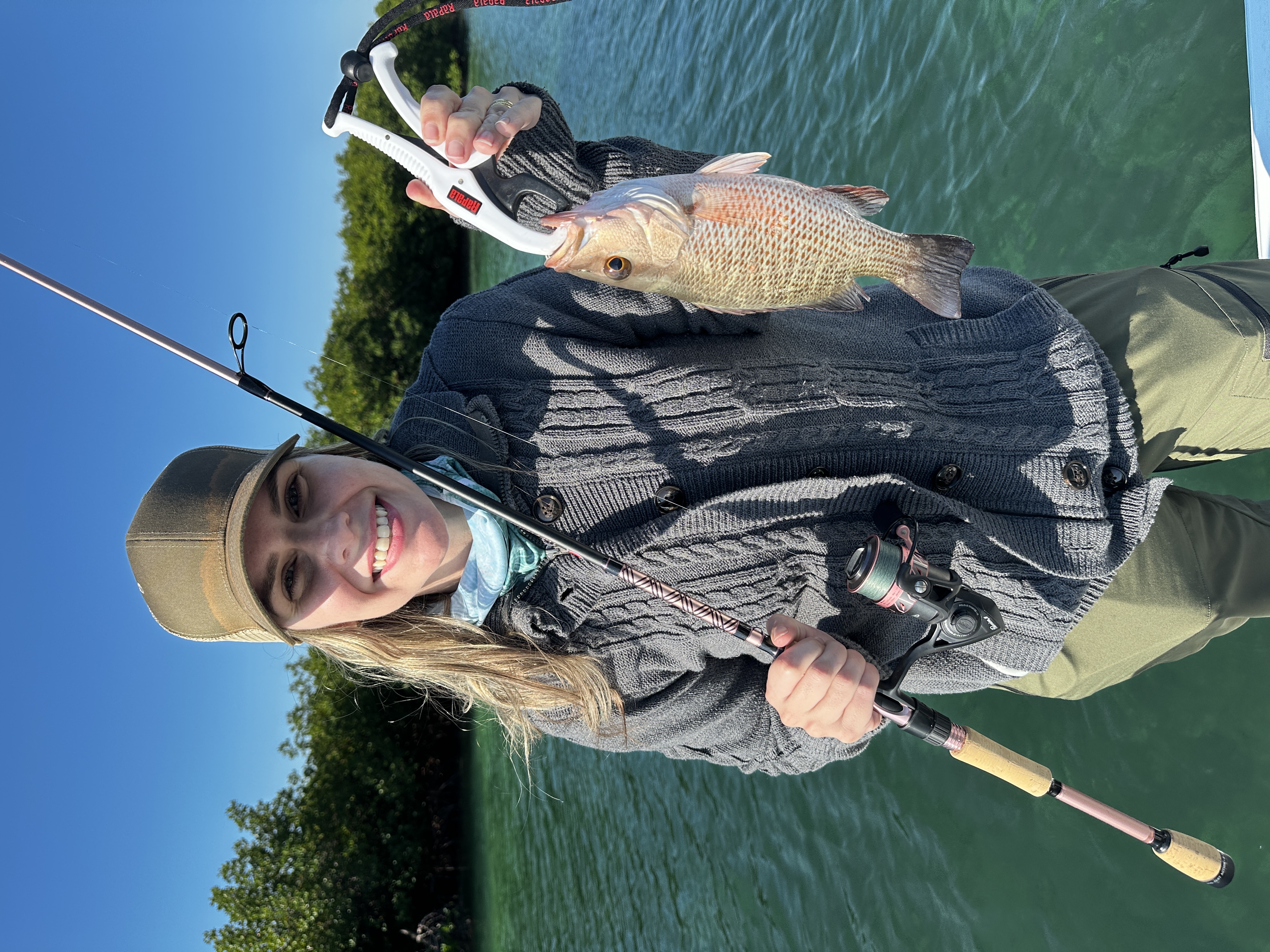
We're talking about some of the most visual fishing you'll find anywhere in the country. The Everglades backcountry is built for sight casting—shallow water so clear you can count a redfish's spots from the poling platform. Most of our action happens in two to four feet of water, sometimes less, using live shrimp, pinfish, or artificials depending on what the fish are telling us. I'll have you rigged with spinning tackle in the 3000-4000 size range, typically spooled with 15-20 pound braid and a fluorocarbon leader. The mangrove shorelines require pinpoint casting—you'll be dropping baits right into the shadows where snook lurk, sometimes with just inches of clearance. When we hit the flats, it's all about reading the water, watching for nervous baitfish, subtle wakes, or that bronze flash that screams redfish. The learning curve is part of the fun, and by the end of six hours, most anglers are picking up on the subtle signs that separate good days from great ones.
Species You'll Want to Hook
Snook are the bread and butter of Everglades fishing, and for good reason. These ambush predators love structure—downed trees, mangrove overhangs, and creek mouths where they can pin baitfish against the current. They're most active during the warmer months, roughly April through October, though we catch them year-round. What makes snook special is their attitude—they hit hard, jump when hooked, and have this stubborn streak that keeps you honest. A slot-sized snook in shallow water will test every knot and your drag system too.
Tarpon season typically runs late spring through early fall, and juvenile tarpon in the 20-80 pound range are what we're usually targeting in the backcountry. These silver kings are pure adrenaline on light tackle. They'll take live bait or artificials, but once hooked, all bets are off. Expect multiple jumps, long runs, and that heart-pounding moment when 60 pounds of tarpon goes airborne ten feet from the boat. Even smaller tarpon pack serious power, and in shallow water, they use every inch to their advantage.
Redfish are the perfect sight fishing target—they're big enough to spot from distance, aggressive enough to eat properly presented baits, and tough enough to make you work for every fish. Florida Bay reds typically run 18-30 inches, with some true bulls pushing 35+ inches and 15-20 pounds. They cruise the flats in singles, small groups, or massive schools that'll make your knees shake. Spring and fall are prime time when they're feeding heavy before spawning season. What guests love about reds is their predictability—find the right flat at the right tide, and you can usually count on action.
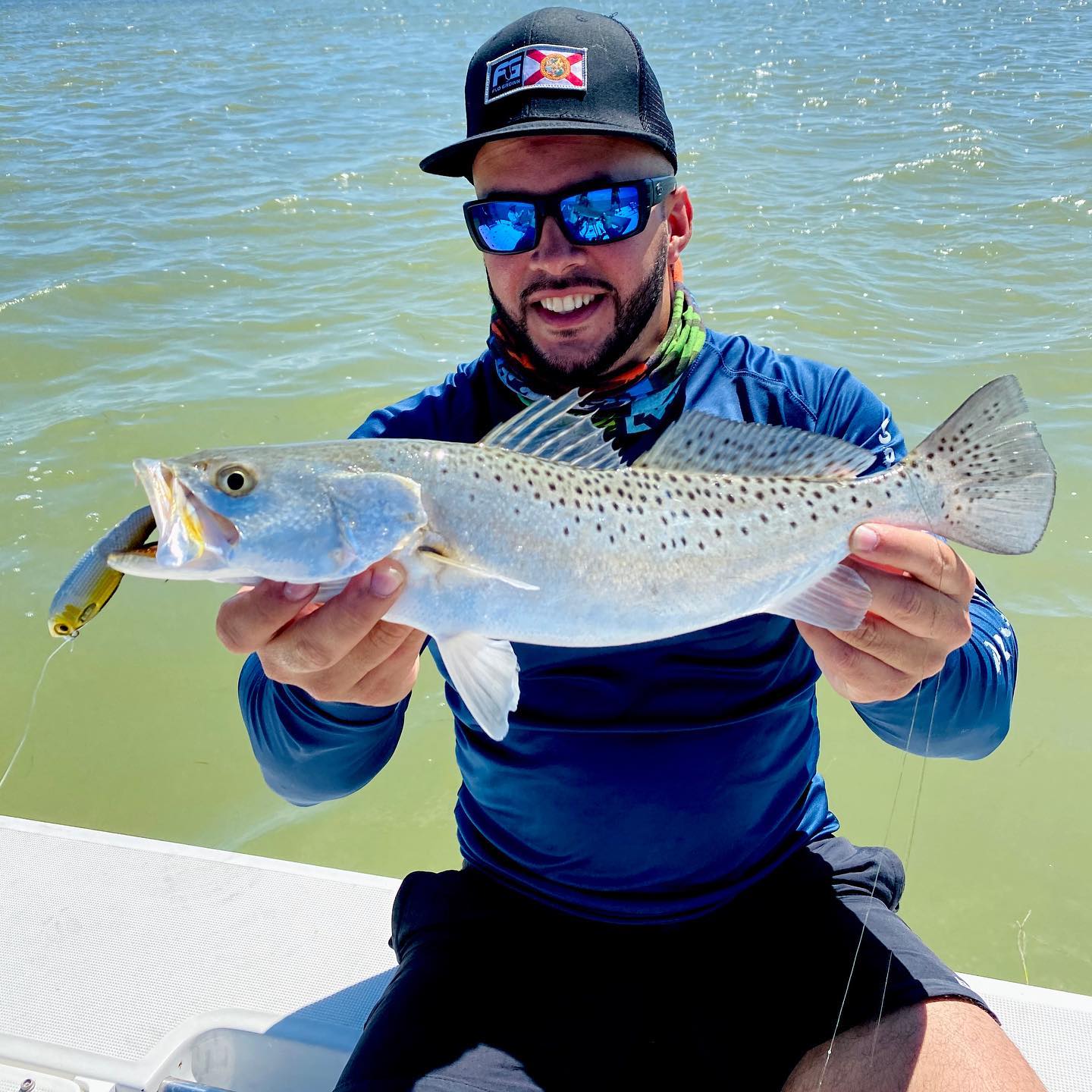
Spotted seatrout are the opportunists of the flats, and they're abundant throughout Florida Bay. These fish love grass flats, potholes, and drop-offs where they can corral schools of glass minnows or shrimp. They're excellent table fare and aggressive biters, making them perfect for anglers still learning to read the water. Trout season really heats up in fall and winter when they school up in deeper pockets, but we catch them consistently throughout the year.
Juvenile goliath grouper are the wild cards of this fishery. These protected giants, typically in the 30-100 pound range in our area, hang around structure in slightly deeper water. When one decides to eat your bait, hold on tight—they'll head straight for the nearest cave, ledge, or mangrove root system. Since they're protected, it's all catch-and-release, but getting a photo with a 75-pound goliath grouper is a memory that'll last forever. They're most active during summer months when water temperatures peak.
Time to Book Your Spot
Six hours in the Everglades backcountry with a maximum of two anglers means you're getting the kind of personalized attention that turns good trips into legendary ones. Whether you're a seasoned angler looking to master sight fishing or someone
 Private Trip
 Inshore Fishing
 Miami, FL


 Six-hour inshore fishing targeting snook, tarpon, and redfish