How to Fish a Texas-Rigged Worm: Weight Selection, Hook Setup, and When to Go Weightless
Learn how to fish a Texas-rigged worm with the right weight, hook setup, and retrieve. Find out when to use a weightless presentation.
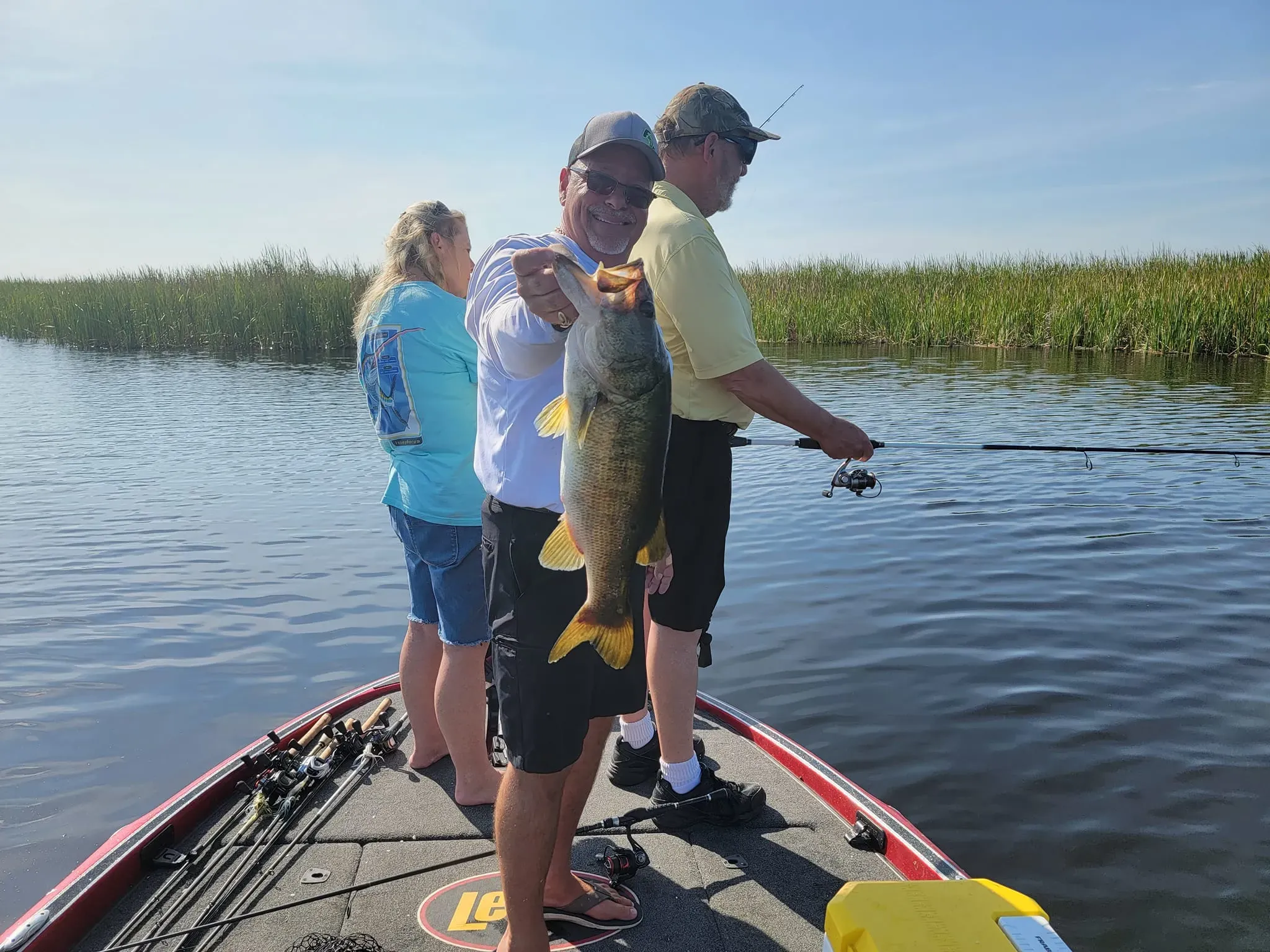


A Texas-rigged worm can do considerably more than crawl along the bottom. You can drag it across shell beds, work it through submerged timber, pitch it into grass pockets, or let it fall slowly beside a dock. The difference often comes down to three decisions: whether the presentation needs a sinker at all, how much weight to use if it does, and which hook you pair with your worm.
Getting these details right matters because the Texas rig is not just about keeping your soft plastic weedless. Your setup determines how quickly the worm reaches the strike zone, how naturally it moves through the water, and how effectively you can pull a fish out of cover.
A 1/8-ounce bullet weight and a 1/2-ounce weight might put the same worm in the same general area, but they create very different presentations. Likewise, a bulky extra-wide-gap (EWG) hook might be ideal for a thick worm but unnecessarily large for a slender finesse profile.
Here's how to make those adjustments based on the water, cover, and behavior you're targeting. But first, let's cover the basics.
What Is a Texas-Rigged Worm?
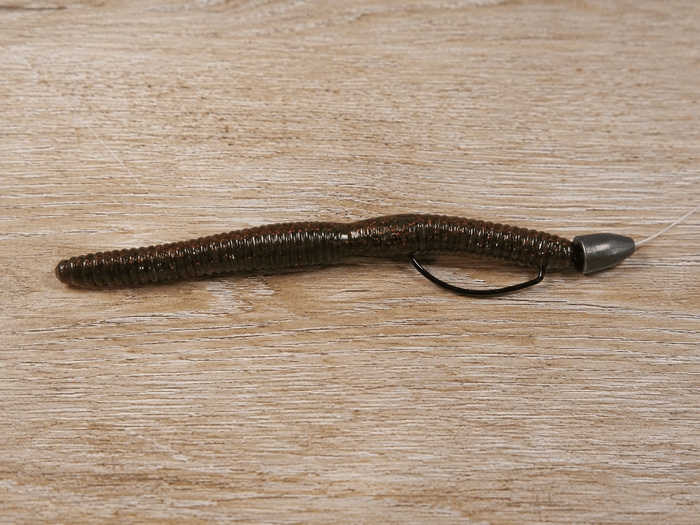
A Texas-rigged worm is a soft plastic worm threaded onto an offset, extra-wide-gap, or straight-shank hook, with the hook point either tucked into or positioned just beneath the plastic.
A bullet-shaped sinker is commonly added above the hook, creating a compact setup that can move through vegetation, brush, and submerged structure with minimal snagging. What makes the Texas rig particularly versatile is its adjustable configuration. You can peg the bullet weight against the hook to keep the entire setup together, leave it free-sliding to give the worm more independent movement, or remove the weight altogether for a weightless presentation.
Each variation changes the bait's fall rate, movement, and ability to reach fish holding in different parts of the water column. The rig is commonly used for largemouth bass, but it can also be effective for smallmouth and spotted bass, particularly when they're holding around cover or near bottom structure. Its versatility comes from how easily you can adjust the weight, hook, and worm profile without changing the fundamental setup.
How Weight Selection Changes Your Texas-Rigged Worm Presentation
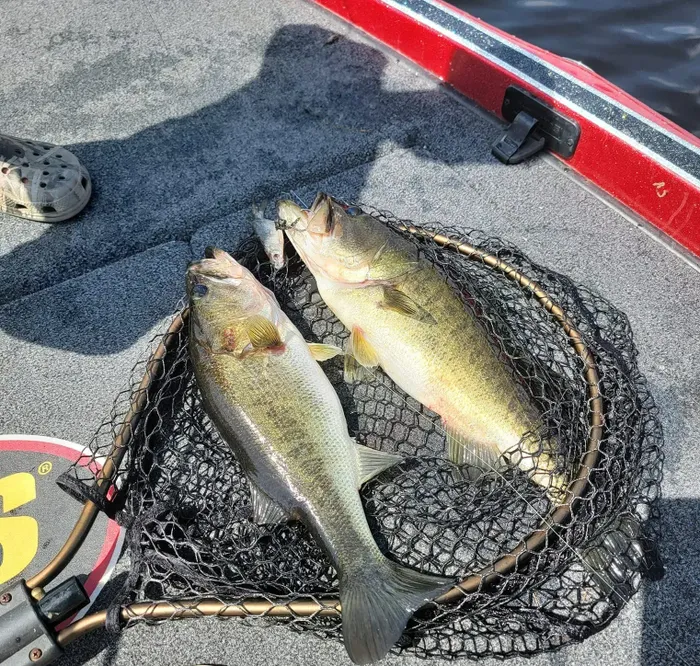
Choosing the right weight on your Texas rig does more than getting your worm to the bottom. It influences the rate of fall, bottom contact, casting control, and how the bait moves when a bass picks it up.
A heavier bullet weight helps you maintain contact with deeper structure and penetrate thick vegetation. On the other hand, a lighter one gives the worm more time to fall and can preserve the slower, more natural movement that triggers bites in shallow water.
The important distinction is that depth and cover set your starting weight, but how you want the worm to behave decides the final choice.
Texas Rig Weight Chart: Which Size Should You Use?
There are four major considerations when selecting a Texas rig weight: fall rate, water depth, cover density, and wind. The following chart brings those factors together into practical starting points.
Fishing conditions | Suggested weight | Why it works |
Shallow water (5 feet or less) | 1/8 oz | Slows the fall while keeping the worm manageable |
Shallow, sparse cover or finesse presentation | 1/32–1/8 oz | Allows a more controlled, natural descent |
Around 20 feet of water | 1/4–3/8 oz | Helps maintain contact with deeper structure |
Deeper than 20 feet of water | ½ oz | Gets the worm down and maintains bottom contact |
Larger worms dragged along the bottom | 3/8–1/2 oz | Keeps the bait connected to the bottom during retrieves |
Stroking worms over deep hard bottoms | 1/2–3/4 oz | Creates a faster lift-and-fall presentation |
Sparse pads, reeds, and shallow bushes | 1/4–1/2 oz | Helps move the rig through moderate cover without digging in |
Thick grass mats and dense vegetation | 1-2 oz | Provides the weight needed to penetrate the canopy |
Weightless fishing | No sinker | Lets the worm fall slowly or remain suspended near the surface |
However, there are a few things to keep in mind when considering the right weight for a Texas rig worm. For instance, a 1/4-ounce weight might be sufficient in relatively calm conditions, but wind pushing against your line can make it difficult to maintain contact. Similarly, a worm with considerable bulk or a slower-sinking plastic composition may behave differently from a slender straight-tail worm paired with the same weight. They can also overlap, and wind, bait size, and fish mood can all shift the right weight up or down.
You Might Also Like: Bass Fishing: Top Tips All Anglers Should Know
Matching Texas-Rigged Worm Weight to Your Desired Fall Rate
The fall is often where a Texas-rigged worm gets its bites. When you use too much weight, the bait can drop almost vertically, giving fish less time to react. A lighter weight allows the worm to descend more slowly, which can help when fish are suspended near shallow cover.
Depending on how you want the worm to behave, adjust the weight to achieve the following presentations:
For a slower fall: Start with 1/32- to 1/8-ounce weights when fishing stick-style worms or other plastics that benefit from a gliding descent.
For a faster fall: Move toward 3/8- or 1/2-ounce weights when bass are holding close to the bottom, or when you need to reach deeper structures.
For a reaction bite: Try a 1/2- to 3/4-ounce weight when stroking a worm off deep shell beds or other hard-bottom areas.
For consistent bottom contact: Increase the weight when your worm keeps drifting above the structure you're trying to work.
Expert tip: Don't assume a slower fall will always produce more bites. Some days bass respond to a worm that spends more time descending, while on others, a faster drop generates a stronger reaction.
Lead vs. Tungsten: Which Bullet Weight to Choose for Texas-Rigged Worm?
The material of your bullet weight also influences your setup. Lead and tungsten are two common choices, and both have their uses.
Lead weights are generally more affordable and work well for everyday Texas-rig fishing. They're a sensible option when you're fishing areas where you might lose several weights to rocks, wood, or other obstructions.
Tungsten weights are denser than lead, allowing you to use a smaller sinker for the same weight. Their compact profile also helps the rig slip through cover. Many anglers also report better feedback when a tungsten sinker contacts hard structure, though others feel the sensitivity gain is small and see the smaller size as the real advantage.
Consider tungsten when you're:
Dragging a worm across rocky bottoms and shell beds.
Fishing deeper structure where feeling bottom contact matters.
Working around isolated cover where subtle changes in resistance can indicate a bite.
Trying to keep your rig compact while maintaining the required weight.
While lead remains a practical choice for general-purpose fishing, tungsten is particularly useful when you need a compact profile and better sensitivity.
Should You Peg Your Texas Rig Weight or Leave It Free-Sliding?
Once you've selected the bullet weight, you need to decide whether it should stay pegged against the worm or slide freely along the line.
This small adjustment changes how the two components behave during the fall and retrieve.
A pegged weight keeps the worm and sinker together, making the rig more compact. An unpegged weight can slide away from the worm, allowing the plastic to move more independently.
The choice often depends on the type of cover you're fishing. Pegging helps the weight pull the worm through grass, brush, and other tight cover, while leaving it free-sliding can give the worm a more natural movement when fishing open bottoms.
When to Peg the Bullet Weight
Pegging is especially helpful when you're fishing dense cover and need the entire setup to move through the same opening.
Without a bobber stop, the sinker can slide up the line while the worm catches on vegetation or branches. Keeping the two components together helps you maintain a compact presentation.
Consider pegging your weight when you're:
Punching through matted grass and thick vegetation.
Flipping into bushes and submerged timber.
Fishing tight openings or dense cover where the worm needs to follow the sinker.
Working around dense cover where the weight and worm could otherwise separate.
Using heavier weights to penetrate vegetation and reach bass underneath.
Using a bobber stop is a simple way to secure the bullet weight without damaging your fishing line.
When to Leave the Weight Unpegged
In open water and around sparse cover, leaving the weight free-sliding can give the worm more independent movement.
As the rig descends, the sinker can fall faster and separate from the worm, which then follows more naturally. This is useful when you want the plastic to glide or settle without being pulled immediately behind the weight.
An unpegged setup is worth trying when you're:
Dragging a worm across rocky bottoms or shell beds.
Fishing the edges of grass rather than punching through dense mats.
Working isolated pieces of cover in open water.
Targeting bass that respond to a slower, less restricted descent.
Using stick worms or other plastics that produce movement during the fall.
You can experiment with the same worm and weight in both configurations. Pay attention to how the worm settles and moves when the sinker reaches the bottom. That difference can help you decide which setup suits the conditions.
How to Choose the Right Hook for a Texas-Rigged Worm
Your hook should accommodate the worm's thickness and profile without leaving too much plastic between the point and the fish. A slender straight-tail worm doesn't need the same hook as a bulky worm, and choosing a hook with insufficient gap can make penetration more difficult.
Three hook styles are particularly useful for Texas-rigged worms:
Hook type | Most useful for | What to consider |
Offset round-bend | Slimmer straight-tail and ribbon-tail worms | Works well with traditional worm profiles |
Extra wide gap (EWG) | Thick-bodied and bulky worms | Provides additional room for the plastic to compress |
Straight shank | Flipping and punching in heavy cover | Pairs well with heavier tackle and heavy-wire setups |
If you're using slimmer worms, a 2/0 or 3/0 hook can be a useful starting point, while thicker and bulkier plastics may require a 4/0 or 5/0 hook, depending on the bait profile. Focus on getting enough clearance for the plastic to compress without choosing a large hook that's not necessarily required.
How to Texas-Rig a Worm Without Compromising Its Action
Now comes the actual rigging. Gather your bullet weight, hook, worm, and line, then work through the steps below. The goal is to keep the plastic straight and properly aligned so it moves naturally through the water without twisting during the retrieve.
Follow these steps to keep your worm properly aligned:
Thread the bullet weight onto your line: Slide it on with the narrow, pointed end facing your rod and the wider, flat end facing the hook. To peg the weight, thread a bobber stop onto the line before adding the sinker.
Attach your hook: Tie your worm hook to the end of the line using a knot you trust, such as the Palomar knot.
Pierce the worm's nose: Push the hook point through the center of the nose and bring it out through the side about 1/4 inch from the tip of the nose.
Slide the worm up the hook: Slide the plastic along the hook shank, past the offset, until the hook eye sits just inside the nose. Rotate the hook 180 degrees, so the worm hangs alongside the shank.
Find the hook's entry point: Hold the hook against the worm to see where the point naturally lines up with its body. This helps you position the hook without stretching or bending the plastic.
Push the hook through the body: Insert the point at the spot you found in step 5 and press it in only until the tip sits just beneath the surface to keep the rig weedless while allowing the hook to emerge when a fish takes the bait.
Before casting, check that the worm runs straight along the hook shank. The hook eye should sit just inside the nose so the knot is covered, and the body shouldn't be twisted or bunched up.
When Should You Fish a Texas-Rigged Worm Weightless?

There are situations when adding a bullet weight can work against the presentation you're trying to create.
When bass are holding in shallow water or responding to subtle movement near the surface, a weightless Texas rig gives you more control over how slowly the worm moves through the strike zone. Without a sinker, the worm's own weight, buoyancy, and shape determine how it moves through the water.
This makes the setup useful when you want to keep the bait around shallow cover without pulling it straight toward the bottom.
Look for Shallow Cover Where a Slower Presentation Makes Sense
A weightless worm works well when bass are holding in shallow areas, and you don't need additional weight to reach them. It also gives you more room to work around individual pieces of cover without constantly pulling the bait into the bottom or surrounding vegetation.
Consider removing the sinker in these situations:
Shallow grass pockets: Work the worm through open spaces between vegetation, allowing it to descend naturally instead of pulling it quickly toward the bottom.
Dock edges and shallow shade: Let the worm settle beside dock posts or beneath shaded sections where bass may be holding.
Clear-water flats: A slower descent gives bass more time to follow and inspect the worm before committing to it.
Isolated cover: When fishing around individual stumps, laydowns, or vegetation patches, a weightless presentation can help you work the bait without an unnecessarily fast drop.
Pressured fish: When bass are hesitant to approach heavier or faster-moving presentations, removing the sinker gives you a quieter way to work in the same area.
Choose a Worm That Can Hold Its Own Without a Weight
Not every soft plastic will perform the same way once you remove the bullet weight. Its body shape, salt content, and overall buoyancy influence how quickly it sinks and how much movement it produces during the descent.
For example, stick worms are popular for weightless presentations because their shape and material allow them to produce a natural, often side-to-side fall. Trick worms and slimmer finesse profiles offer different options depending on whether you want the bait to stay closer to the surface or move just below it.
Here are a few worm profiles worth considering:
Worm profile | How it performs weightless |
Straight-tail worm | Produces subtle movement with small rod twitches |
Trick worm | Can be worked near or just below the surface |
Stick worm | Offers a natural descent with a subtle side-to-side movement |
Slim finesse worm | Provides a restrained presentation around shallow cover |
Expert tip: Pay attention to how the plastic behaves before settling on a particular worm. A salt-loaded stick worm will sink differently from a floating trick worm, so the choice should depend on how you want the bait to move through the water.
Adjust Your Retrieve to Give the Worm Time to Work
Once you've selected the right worm, resist the urge to work it too quickly. A weightless presentation often benefits from pauses that let the plastic settle naturally, especially when you're fishing around shallow cover.
You can experiment with a few different retrieves:
Twitch and pause: Give the worm one or two short twitches, then let it settle before moving it again. This works well when bass are following the bait but aren't committing immediately.
Slow swimming: Keep the worm just beneath the surface with gentle rod movements. This is useful when bass are actively feeding in shallow water.
Dead-stick presentation: Let the worm remain still beside a piece of cover for a few seconds before introducing movement. Sometimes leaving the bait alone is enough to get a hesitant fish to pick it up.
Keep an eye on your line throughout the presentation. A bass may pick up the worm while it's descending, before you feel anything through the rod. Unexpected slack or sideways line movement can be your first indication of a bite.
Know When It's Time to Add the Weight Back
A weightless Texas-rigged worm setup won't work equally well in every situation. Strong wind can make the bait difficult to cast and track, while deeper water and heavier vegetation may require additional weight to get the worm where the bass are holding.
Switch back to a weighted Texas rig when you find yourself struggling to maintain control of the bait, reach the bottom, or work through cover. You don't necessarily need a heavy sinker either. A 1/16- or 1/8-ounce bullet weight can provide enough additional control while keeping the presentation relatively slow.
Take Your Bass Fishing Experience Further With Local Fishing Guides
Weights and hooks only get you so far. On a lake you don't know, the harder part is finding the bass: which grass edge or laydown is holding fish this month, and at what depth. A local guide fishes that water regularly, and a day on the boat is a fast way to see how they'd set up a Texas-rigged worm for it.
Browse local fishing charters on Guidesly to compare trips, then ask your guide what weight and hook they'd pick for the day.