Weekly Fishing Report: November 6–12, 2026
Catch up on this week's fishing action across the US and British Columbia, with highlights on trout, redfish, mahi, striped bass, Chinook, and upcoming weather.


This week's fishing reports bring a mix of freshwater and saltwater action from across the US, with notable catches coming from Missouri, Oklahoma, Florida, Maryland, and North Carolina. Rainbow trout kept anglers busy at Lake Taneycomo, Oklahoma guides found catfish and paddlefish at Fort Gibson Lake, and Florida's fall fishing continued to deliver redfish, mahi, and other inshore and offshore species.
Further north, Chesapeake Bay anglers found plenty of striped bass action, while an impressive winter Chinook outing in British Columbia added an international highlight to the week's reports.
Here's a closer look at what guides caught and where the action happened.
Fishing Highlights: November 6–12
Missouri: Lake Taneycomo produced 25 rainbow trout and two brown trout, including a 20-inch rainbow released during the outing.
Oklahoma: A father-and-son trip to Fort Gibson Lake brought in two paddlefish, along with catfish.
Florida's Gulf Coast: Anglers reached their redfish limit in Crystal River, while Homosassa guides reported active feeding in the backcountry.
Palm Beach: Offshore anglers landed a gaffer mahi and several reef fish, including yellowtail snapper, grunts, and sand tiles.
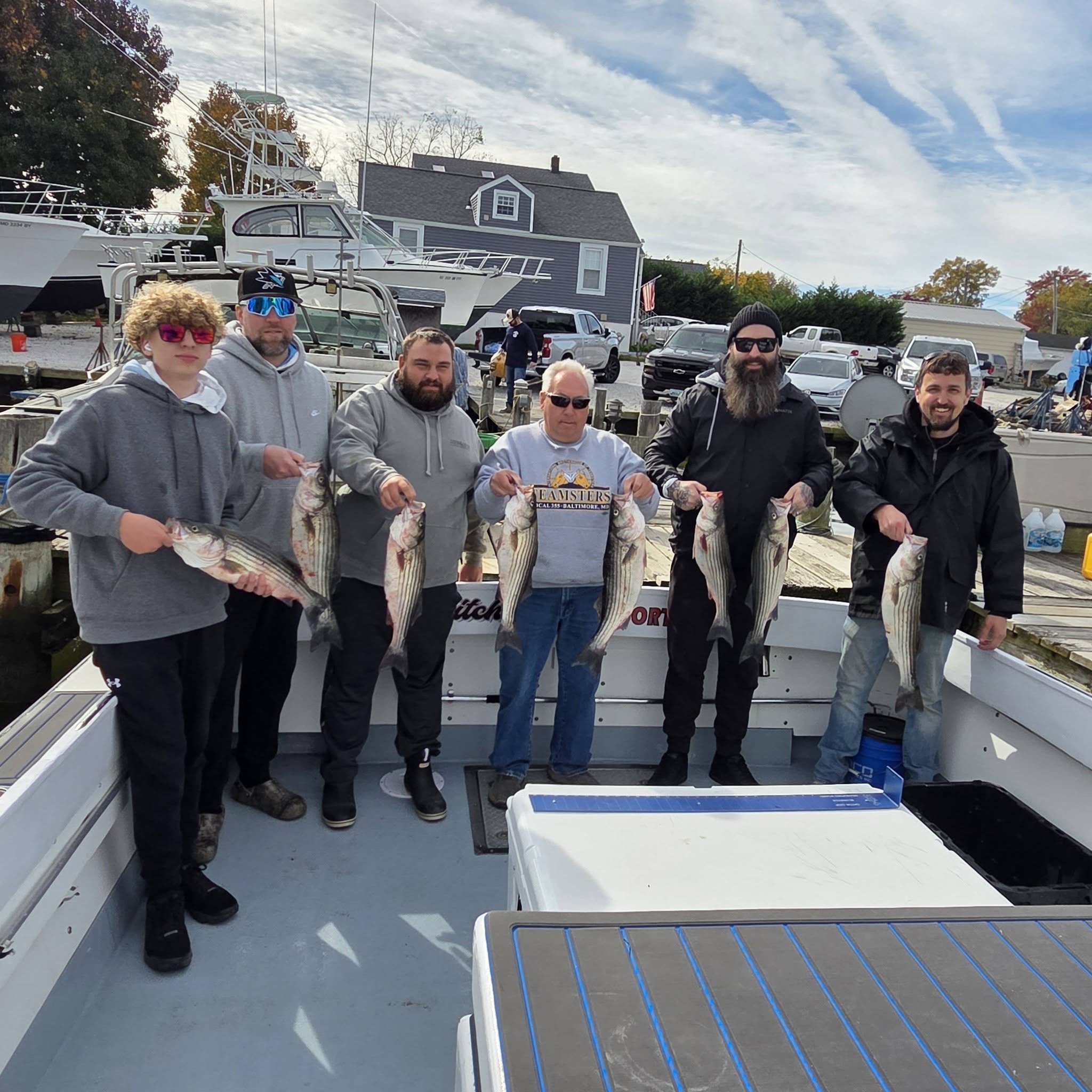
Maryland: Striped bass kept a Chesapeake Bay group busy, with several oversized fish caught before the anglers reached their limit.
British Columbia: A winter Chinook trip near the Hump produced 15 fish, with three retained and 12 released. The largest weighed 16 pounds.
This Week's Fishing Reports
Missouri: Rainbow Trout Keep Lake Taneycomo Busy
Lake Taneycomo delivered a rewarding week of trout fishing. Ronnie Lawson of Fish On Guide Service brought in 27 fish during an early morning outing on November 7. Rainbow trout dominated the catch with 25 fish, while two brown trout added to the mix. The standout was a 20-inch rainbow that earned a Trophy award from Scotty’s Trout Dock before being released back into the lake.
Fishing pressure stayed light, and water clarity ranged from 2 to 6 feet. The group drifted the lake using soft plastics, a 7-foot TFO rod, a Bass Pro Micro Lite reel, and 2-pound line. This light setup produced a varied catch of rainbow and brown trout.
With clear water and relatively light pressure, the lake continues to offer plenty of opportunities for trout anglers this late fall.
Oklahoma: Paddlefish Add to the Action at Fort Gibson Lake
A little rain doesn't keep the fish away at Fort Gibson Lake in Oklahoma, where a father-and-son fishing trip with Bob Scoggins of B&C Fishing Adventures turned into a rewarding mixed-species outing.
The pair started the day targeting catfish, which provided enough action to keep the rods busy, before switching gears to chase spoonbill (paddlefish). The change paid off, with two paddlefish making it into the final catch.
Florida: Redfish, Mahi, and Reef Fish Keep the Action Going
Florida delivered a mix of inshore and offshore action this week, with redfish keeping anglers busy around Crystal River and Homosassa, while Palm Beach produced a varied offshore catch. From backcountry waters to deeper fishing grounds, anglers found plenty of opportunities along both the Gulf and Atlantic coasts.
Crystal River: Redfish are biting well around Crystal River, where Misty Kelly of Windy Day II Fishing Charters took her group out for a productive day on the water. The anglers reached their redfish limit and caught additional fish along the way. Favorable weather also made for a pleasant outing along Florida's Gulf Coast.
Homosassa: The changing fall weather brought a shift in fishing activity around Homosassa. Vic Crosby of Snook Sniper Backwater Adventures noted that cooler temperatures were pushing fish toward the backcountry, where feeding activity had picked up. This seasonal movement made the area's shallow backwaters worth watching as temperatures continued to drop.
Palm Beach: Off Palm Beach, Rich Adler of Tuna Wahoo Charters found favorable conditions, with flat seas and a light breeze setting up a productive day offshore. The group released a large blue runner caught while trolling before landing a gaffer mahi. They also added yellowtail snapper, grunts, and sand tiles to the catch.
Maryland: Striped Bass Kept Chesapeake Bay Anglers Busy
Chesapeake Bay saw plenty of striped bass action this week, with Gus Clifton Jr. of Ditch Hag Sportfishing Charters taking anglers out near Somerset, Maryland. The group encountered several oversized striped bass during the trip before landing enough keepers to reach its daily bag limit.
The multiple oversized catches made for an active day on the bay, with the group having to work through several fish before filling its limit.
North Carolina: False Albacore Put Anglers to the Test Near Cape Lookout
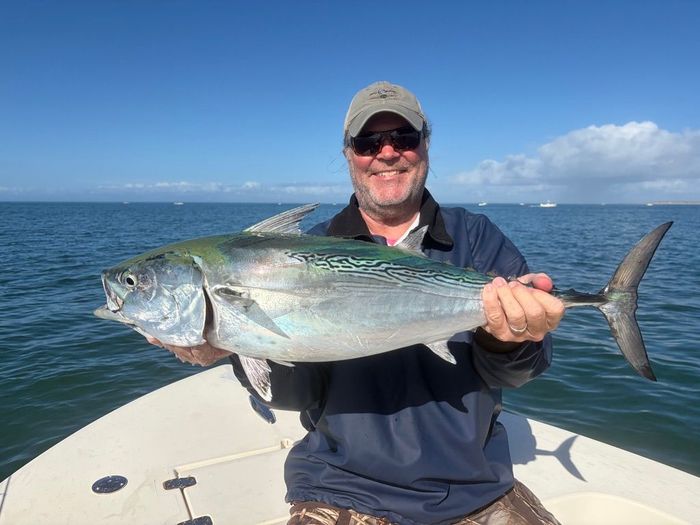
False albacore (also called albies) delivered spectacular action around Cape Lookout this week. Captain Andrew Campbell of Flying Fish Charters found fish in the 20-pound class, and early-week north winds brought particularly strong action, with one outing producing nothing under 18 pounds.
The powerful fish made their presence felt, and a couple of rods even broke as the albies made sudden runs underneath the boat and around the motor. Bluefish joined the action as well. Most of the false albacore activity took place close to the rock jetty and near the inlet, with scattered catches along the western beaches of Atlantic Beach and around Beaufort Inlet. Anglers also found bluefish weighing around 10 pounds on the eastern side of Cape Lookout Shoals.
For tackle, larger 3–4 inch Big Neck jigs in Electric Chicken and pink-over-white patterns produced results. Fly anglers also had success with smaller Surf Candy and dubbing flies that imitated anchovies.
North America: Winter Chinook Deliver a Strong Bite in British Columbia
Winter Chinook fishing produced an impressive outing near the Hump in British Columbia, where Captain Jason Storie of Fishing Storie Charters took his group out on November 8. The anglers retained three Chinook salmon and released another 12, with catches weighing between 12 and 16 pounds.
The group fished during a favorable tide window, trolling hoochies behind flashers at approximately 220 feet with downriggers. A Tiger Prawn color pattern proved particularly effective. Water temperatures measured 10.3°C, while seas remained at one meter or less.
USA Weather Outlook: November 13–20, 2026
The US is expected to see an active weather pattern over the coming week, with several systems bringing rain, thunderstorms, mountain snow, and changing temperatures across different regions. Conditions will vary considerably, from unsettled weather in the West to rainfall across parts of the Southwest and South.
Western US and Pacific Northwest: Rain and embedded thunderstorms are expected along the West Coast from November 13, spreading inland toward the Great Basin and Northern Intermountain Region. The Pacific Northwest could see additional rainfall and mountain snow early next week.
Sierra Nevada and Intermountain West: Moderate to heavy snow is possible across the Sierra Nevada through Saturday. Colder air could also bring mixed rain and snow to parts of the Intermountain West and Four Corners region, with further mountain precipitation expected early next week.
Southwest and Southern Plains: Showers and thunderstorms are expected to move from the Southwest toward western Texas. Rainfall could increase across the southern High Plains and Texas on Saturday, with additional moderate to locally heavy rain possible in eastern Texas and Louisiana on Sunday.
Great Lakes, Northeast, and Mid-Atlantic: Lake-effect snow and rain are expected across parts of the Great Lakes, with snowfall potentially extending into the Northeast and Appalachians through Saturday. Chilly conditions are likely to continue across parts of the East early next week.
Gulf Coast: A low-pressure system moving across the southern US could bring moderate to locally heavy rainfall to eastern Texas and Louisiana on Sunday. The heaviest precipitation associated with the broader Gulf system is expected to remain mostly offshore.
South and East: High pressure near the Ohio Valley is expected to bring chilly conditions early next week. Parts of Texas could see highs in the 50s, while frost or freeze concerns are possible across portions of the Southeast and Mid-Atlantic. Temperatures should gradually moderate later in the week.
North-Central US: An upper-level ridge is expected to bring warmer-than-average temperatures across the north-central states, with daytime highs in the 50s. Warmer conditions may gradually spread east and south later in the week.
Hawaii: Trade winds are expected to ease initially before strengthening again over the weekend. Moderate to heavy showers are possible across windward and mountainous areas by the middle of next week, particularly on the Big Island.
Planning a Fishing Trip When the Weather Is Uncertain
Unpredictable weather doesn't necessarily mean canceling your fishing plans, but it does mean staying flexible. Before heading out, check the latest local forecast, wind speed, wave conditions, and marine advisories rather than relying solely on the weekly outlook. A change in wind direction or an approaching storm can quickly affect where and when you can fish.
If conditions look uncertain, speak with a fishing guide before finalizing the trip. Local guides understand how changing weather affects nearby fishing grounds and can suggest alternative locations, adjust departure times, or recommend rescheduling when conditions aren't safe.
You can also explore fishing guides on Guidesly to find experienced local captains, compare available trips, and connect with guides who are familiar with the waters you're planning to fish.