Cape May's Premier 16-Hour Deep Sea Charter
When serious anglers talk about world-class offshore fishing on the East Coast, Cape May consistently tops the list. This 16-hour deep sea charter with Gone Fishin' Sport Fishing Charters takes you 60-70 miles offshore to the continental shelf edge, where trophy pelagics roam in open blue water. You'll be fishing some of the most productive waters in the Atlantic, targeting bluefin and yellowfin tuna, white marlin, mahi mahi, and wahoo. The trip runs between 12-16 hours depending on conditions and bite, giving you maximum time in the zone where the big fish live. With space for up to six anglers aboard a well-equipped 44-foot Henriques, this is the kind of charter that creates fishing stories you'll tell for years.
What to Expect on the Water
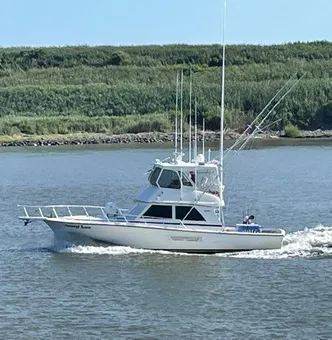
Your day starts early – we're talking pre-dawn departure to maximize fishing time in the blue water. The 44-foot Henriques is powered by twin 700 HP Mercury engines, meaning you'll cover those 60-70 miles to the fishing grounds efficiently while staying comfortable. The continental shelf drop-off is where the magic happens – it's where warm Gulf Stream waters mix with cooler inshore currents, creating a feeding highway for pelagic species. You'll be fishing in 200-600 feet of water, where temperature breaks and current edges hold baitfish and attract the predators we're after. The boat has plenty of deck space for six anglers to fish comfortably, with outriggers for trolling spreads and enough rod holders to keep multiple lines working. Plan to bring your own food and drinks – with a 16-hour day ahead, pack like you're feeding an army. Comfortable clothing, sun protection, and layers for changing conditions are essential since you'll be out there from dawn to dusk.
Trolling the Blue Water
This is high-speed trolling at its finest. We'll be pulling a spread of lures and baits at 8-12 knots, covering water to locate feeding fish. The setup typically includes a mix of cedar plugs, daisy chains, ballyhoo rigs, and high-speed lures on the outriggers and flat lines. When we mark fish on the sounder or spot feeding activity, we'll adjust our spread and work the area methodically. Tuna fishing often means watching for bird activity, temperature breaks, and debris lines that concentrate baitfish. For mahi and wahoo, we'll focus on floating structure, weed lines, and color changes in the water. The tackle is heavy – 50 and 80-pound class gear that can handle the drag-screaming runs these fish are famous for. When a fish hits, it's all hands on deck. The mate will clear lines while the angler fights the fish, and everyone gets involved in the action. Circle hooks and proper release techniques ensure healthy fish whether you're keeping dinner or practicing catch and release.
Top Catches This Season
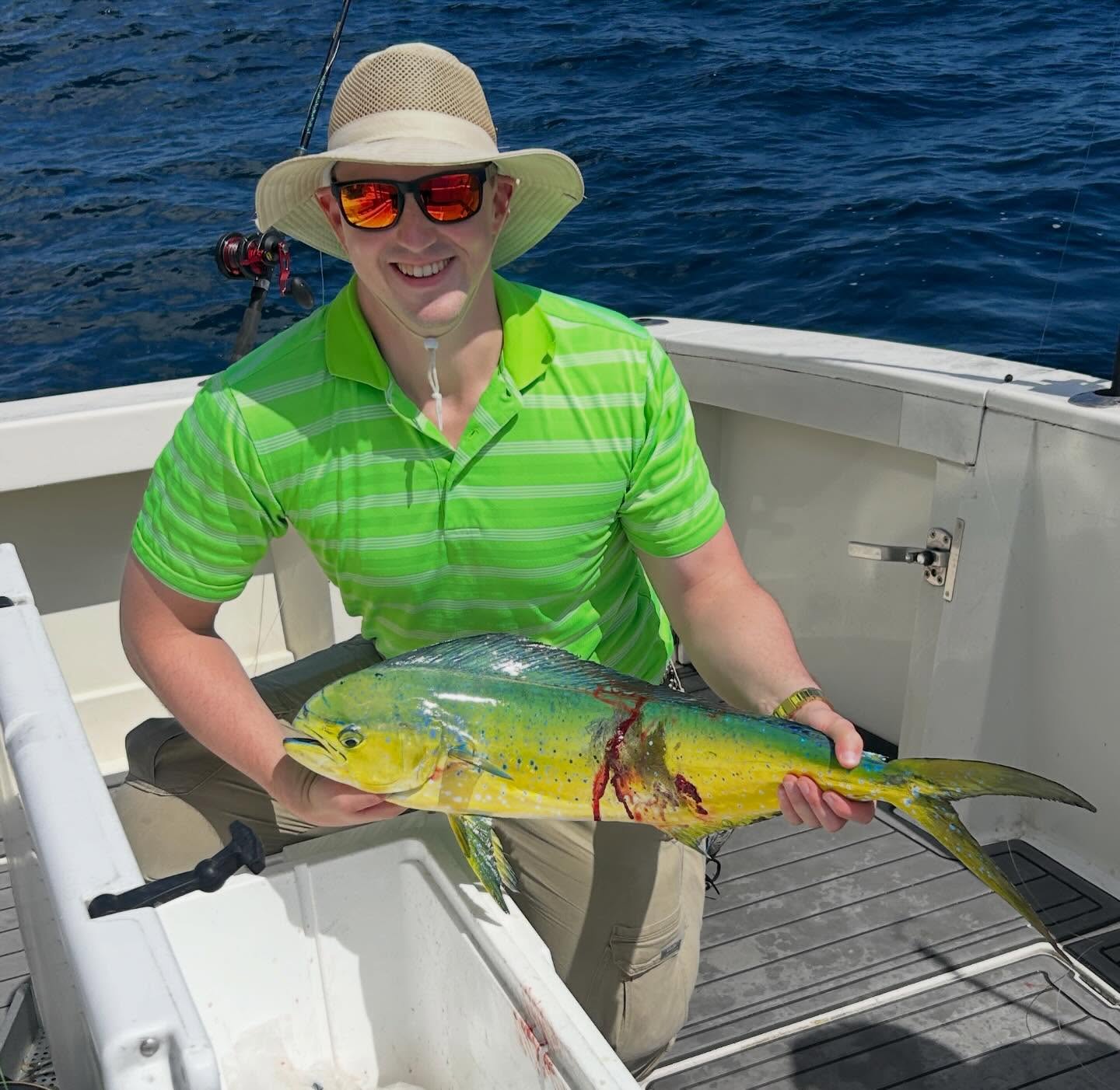
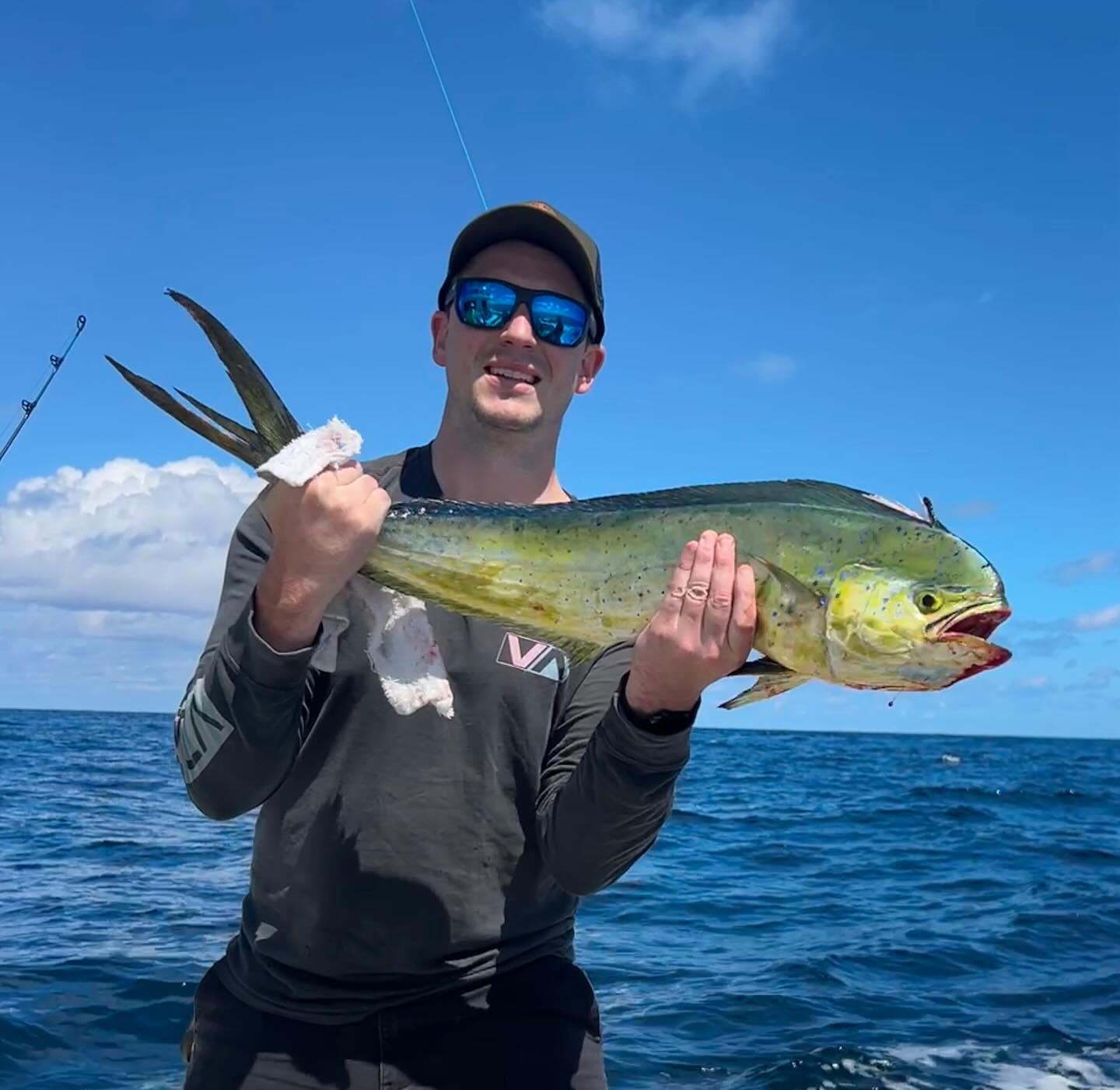
Mahi mahi are the bread and butter of summer offshore fishing here, and they're absolute dynamite on the line. These fish typically run 10-30 pounds, with bulls pushing 40-50 pounds when conditions are right. Peak season runs from June through September, when they're scattered throughout the warm water column. What makes mahi special is their willingness to eat just about any lure or bait, plus their acrobatic fight – expect multiple jumps and long runs. They're also excellent table fare, which is why they're such a customer favorite. Schools often travel together, so when you find one, there's usually more around.
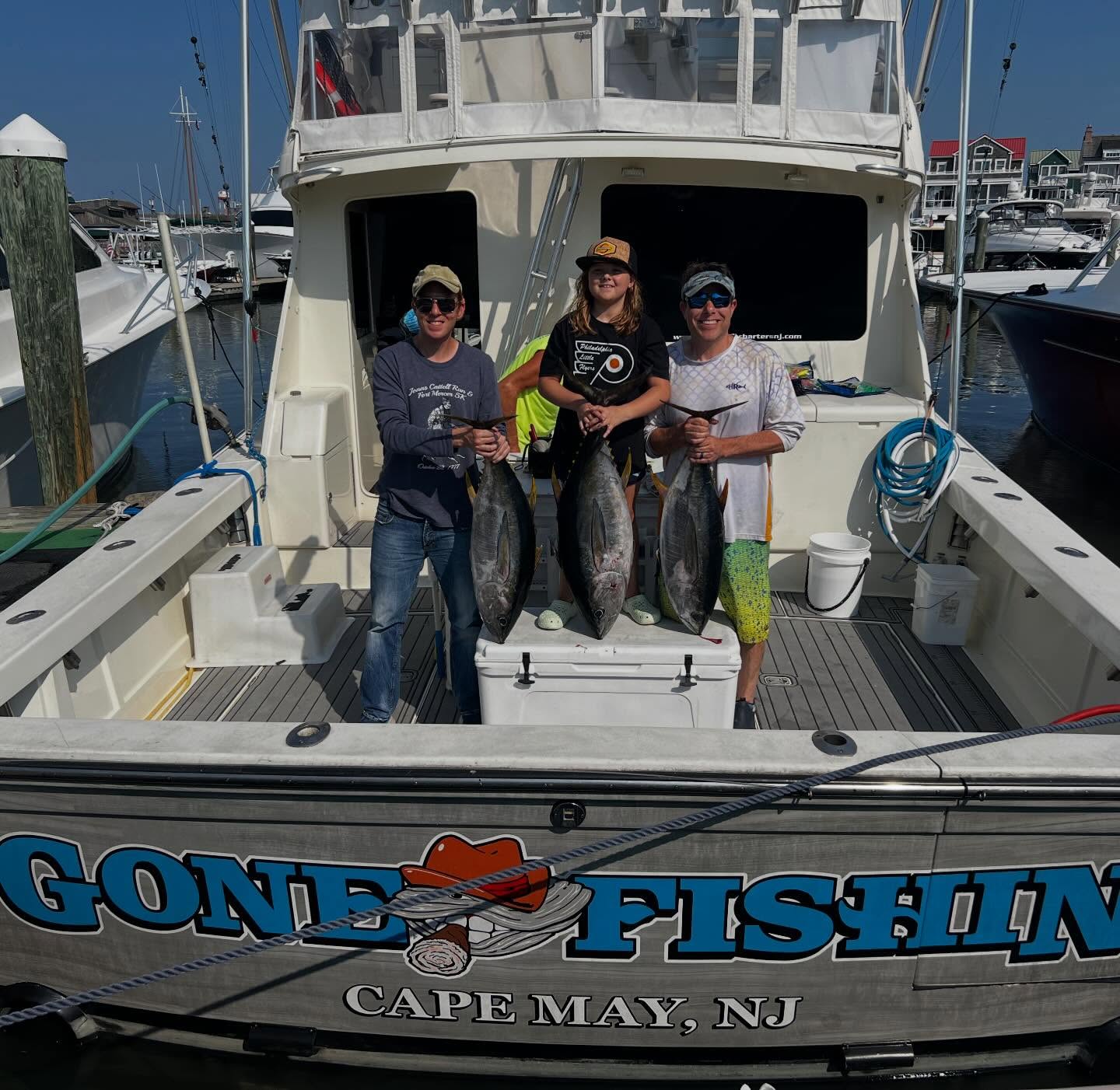
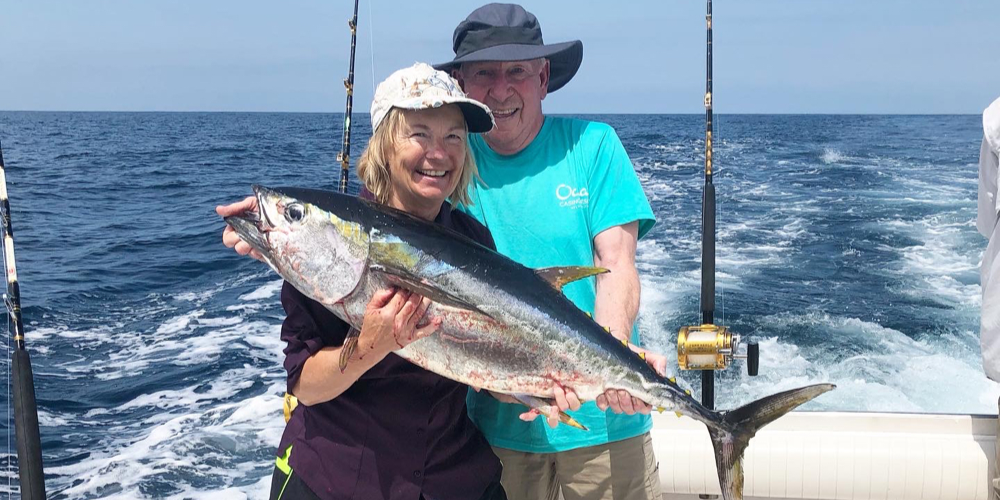
Yellowfin tuna are the power players of the offshore scene, averaging 30-80 pounds with monsters over 100 pounds always possible. These fish are available year-round but peak from August through October. Yellowfin fight with incredible stamina – they'll sound deep and make multiple runs that test your endurance and tackle. They're prized for their sashimi-quality meat and are considered one of the finest eating fish in the ocean. The key to consistent yellowfin success is finding the right water temperature and bait concentrations.
Bluefin tuna represent the ultimate offshore challenge. These are the fish that separate recreational anglers from serious big game fishermen. Cape May bluefin can range from school fish in the 40-60 pound range up to giants exceeding 200 pounds. Prime time is typically late fall through early winter, though smaller fish may show up throughout the season. Bluefin are incredibly strong and smart – they'll test every knot and every piece of tackle you have. The regulations are strict and change frequently, so catch and release is often the rule, but the experience of battling one of these fish is worth the trip alone.
Wahoo are the speed demons of the deep, capable of hitting lures at 50+ mph and stripping line faster than almost any other fish. They typically range from 20-60 pounds in our waters, with their razor-sharp teeth and blistering runs making them a top target for experienced anglers. Wahoo are most common from late summer through fall, often caught while targeting tuna. Their white, flaky meat is outstanding on the grill, and their fierce fight makes them a favorite among charter customers looking for something different.
White marlin fishing represents the pinnacle of East Coast billfishing. These magnificent fish average 60-80 pounds and are renowned for their spectacular jumps and bulldogging fights. Peak season runs from August through September, when they follow baitfish along the continental shelf. White marlin are almost always released, making them a pure sport fish. The sight of a marlin crashing a trolled bait or teaser is something that stays with anglers forever, and Cape May's waters consistently produce some of the best white marlin action on the coast.
Time to Book Your Spot
This 16-hour offshore charter represents the best value in Cape May deep sea fishing. You're getting maximum time on
 Private Trip
 Offshore Fishing
 Cape May, NJ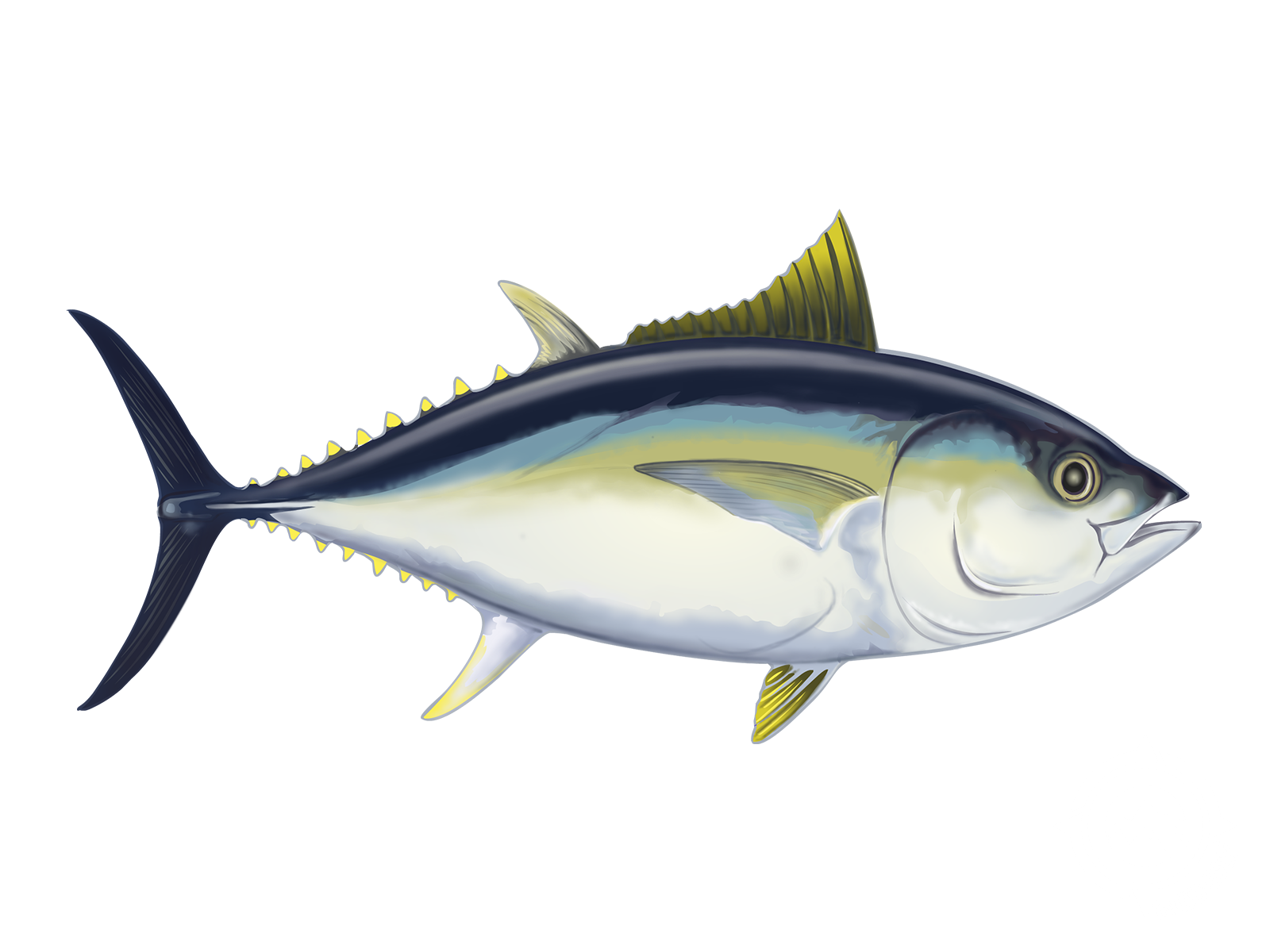


 16-hour offshore charter targets tuna, mahi, marlin, and wahoo