North Fork Shoshone River Fishing Trip
The North Fork Shoshone River is where serious Wyoming anglers go when they want to get away from the crowds and into some real fish. Just east of Yellowstone's boundary, this 50-mile stretch of prime trout water holds everything from chunky lake-run rainbows to native Yellowstone cutthroat that'll make your drag sing. We're talking about a fishery that produces consistent 10-22 inch trout, with the occasional surprise that'll have you scrambling for your net. This is intimate fishing at its finest - just you, your guide, and one other angler working some of the most productive water in the Greater Yellowstone area.
What to Expect on the Water
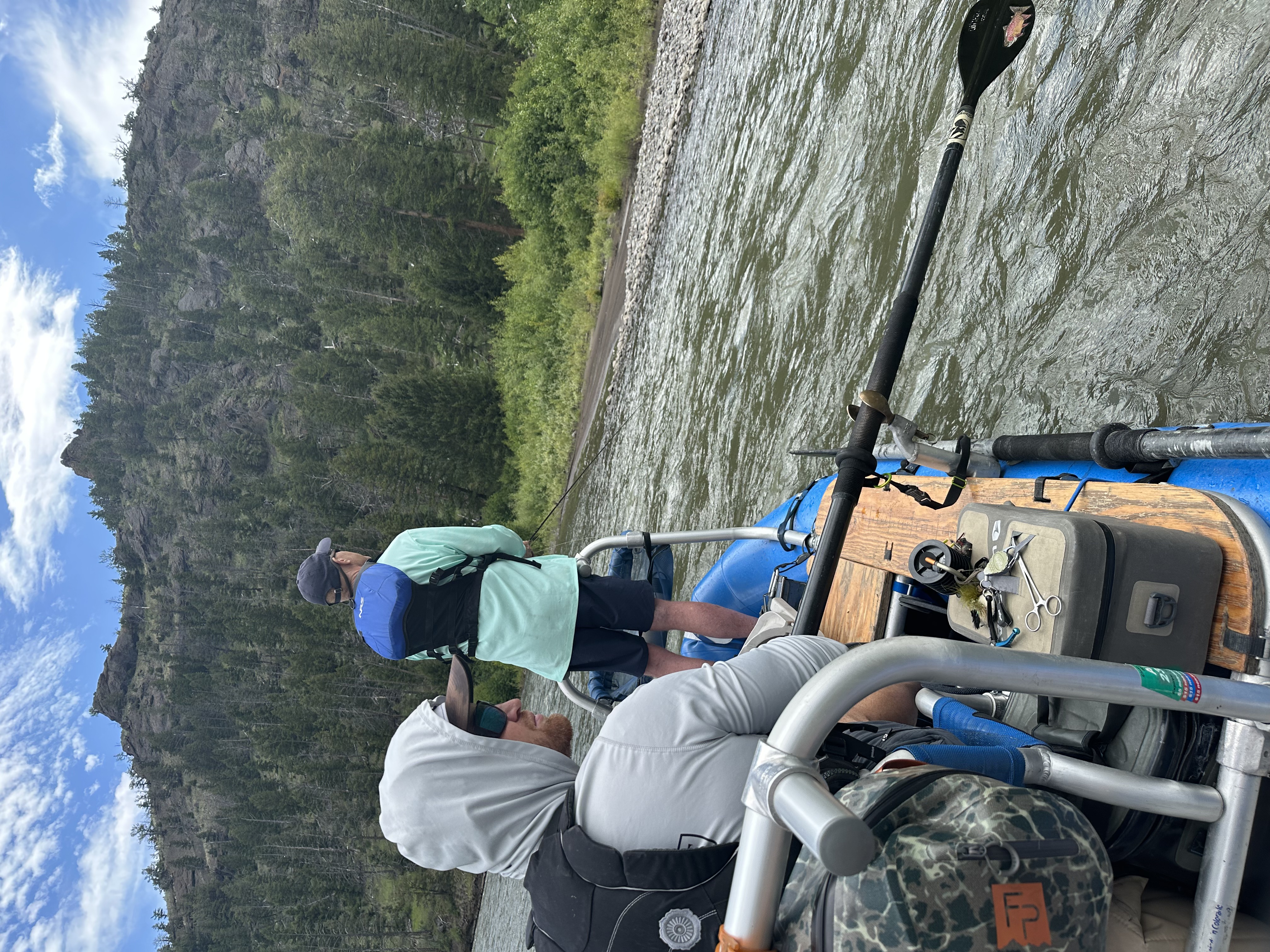
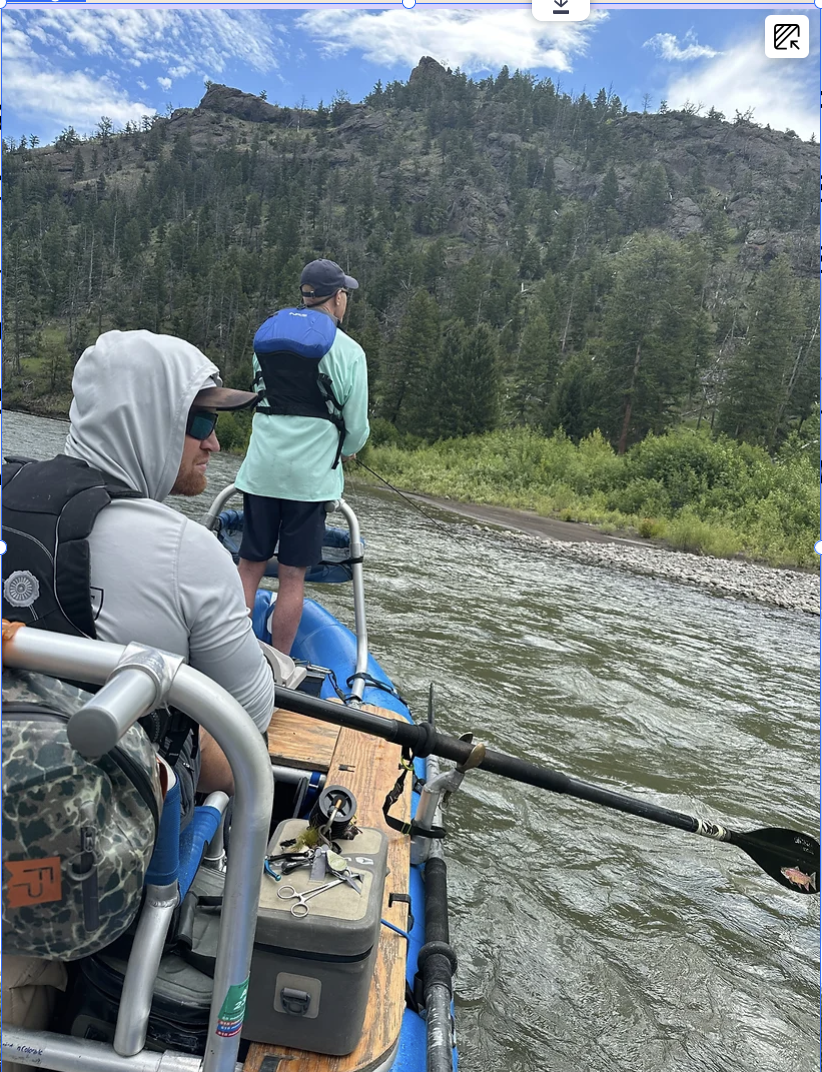
Your day starts where the North Fork flows out of Yellowstone's backcountry, carrying all that high-country coldwater magic down through some gorgeous Wyoming scenery. For the first 30 miles, we're following US 14-16-20 from Pahaska Teepee down to the National Forest boundary, which gives us access to miles of public water that most folks just drive right past. The river here runs clean and cold, with plenty of pocket water, deeper runs, and undercut banks that hold fish year-round. Once we hit that National Forest boundary, the character changes as we move into private ranch land for those final ten miles before Buffalo Bill Reservoir. The fishing pressure drops way off, and the trout have room to grow fat and lazy. We keep our groups small - just two anglers per guide - so everyone gets plenty of personal attention and room to work their water properly.
Techniques & Tackle
The North Fork is classic freestone fishing, which means we're reading water, working structure, and adapting to what the fish are telling us. Early season, we're often nymphing the deeper runs with stonefly patterns and pheasant tails, getting down where those rainbows and cutthroat are holding in the cooler water. As things warm up, the dry fly action can be outstanding - think pale morning duns, caddis, and terrestrials that bring fish up from surprising depths. The lake-run rainbows from Buffalo Bill Reservoir are built different - they're aggressive and strong, so we fish 4X to 5X tippet and aren't afraid to go heavier when the situation calls for it. Your guide will have all the gear dialed in, from 9-foot 5-weight rods that handle the Wyoming wind to a fly selection that's been tested on this exact water. We're not just throwing random patterns and hoping - every fly in the box has earned its spot by fooling North Fork trout.
Top Catches This Season
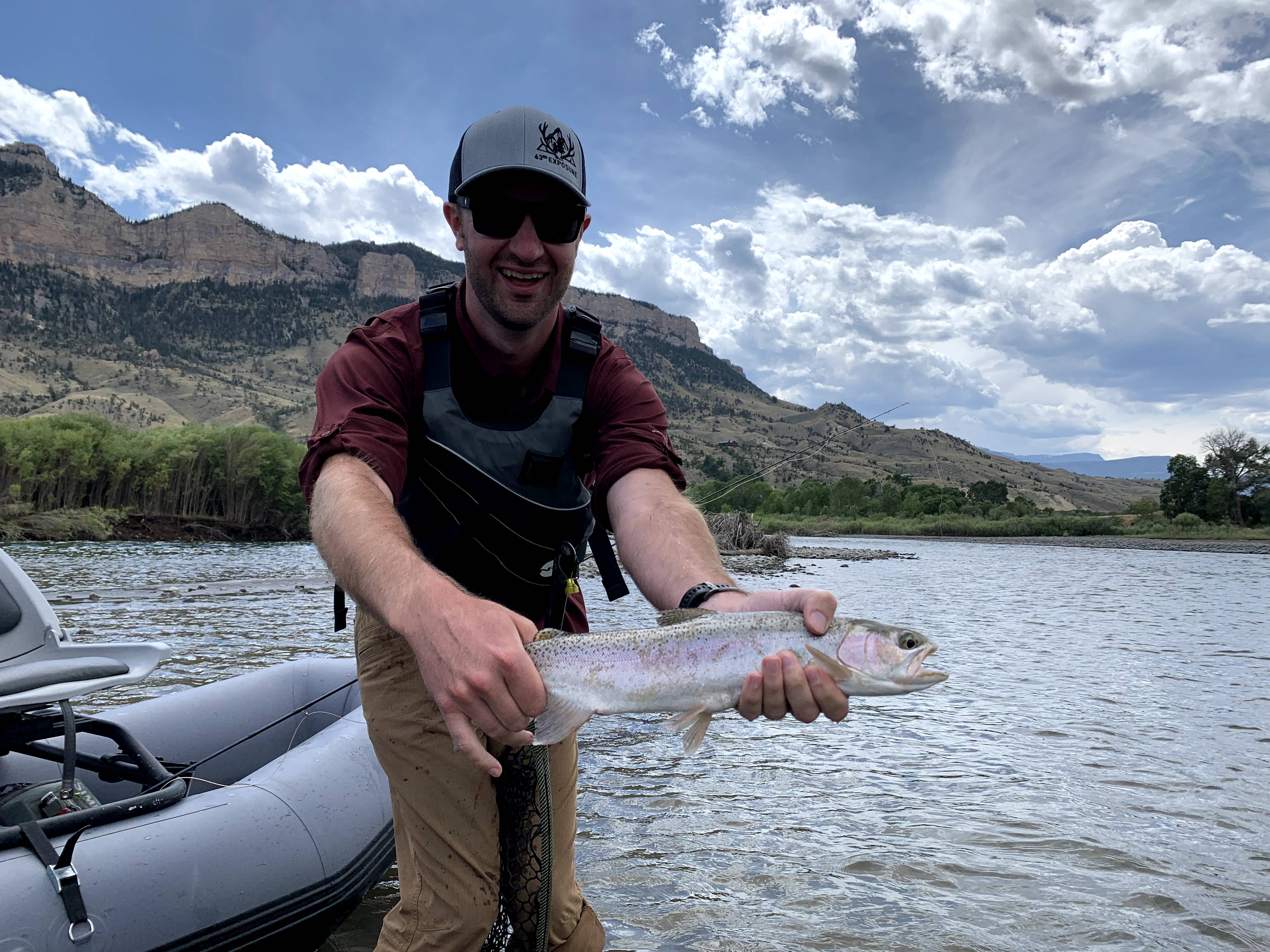
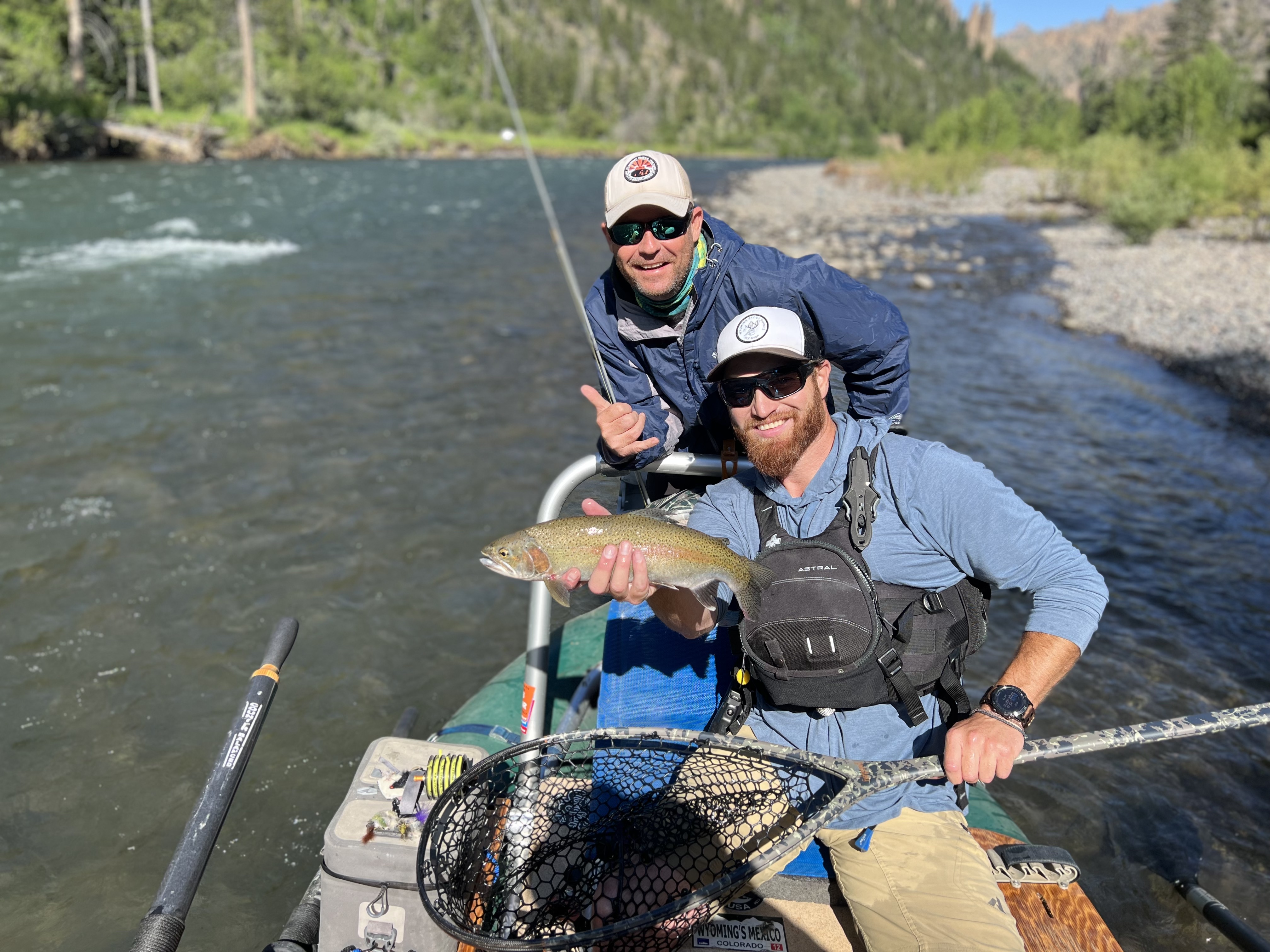
Rainbow trout are the backbone of this fishery, especially those lake-run fish that cruise up from Buffalo Bill Reservoir looking to feed. These aren't your typical stream rainbows - they're thick, chrome-bright, and fight like they mean it. Most run 12-18 inches, but don't be shocked when a 20-incher decides your streamer looks tasty. They're most active during the cooler parts of the day and love structure like undercut banks and deeper pools where they can ambush food drifting downstream.
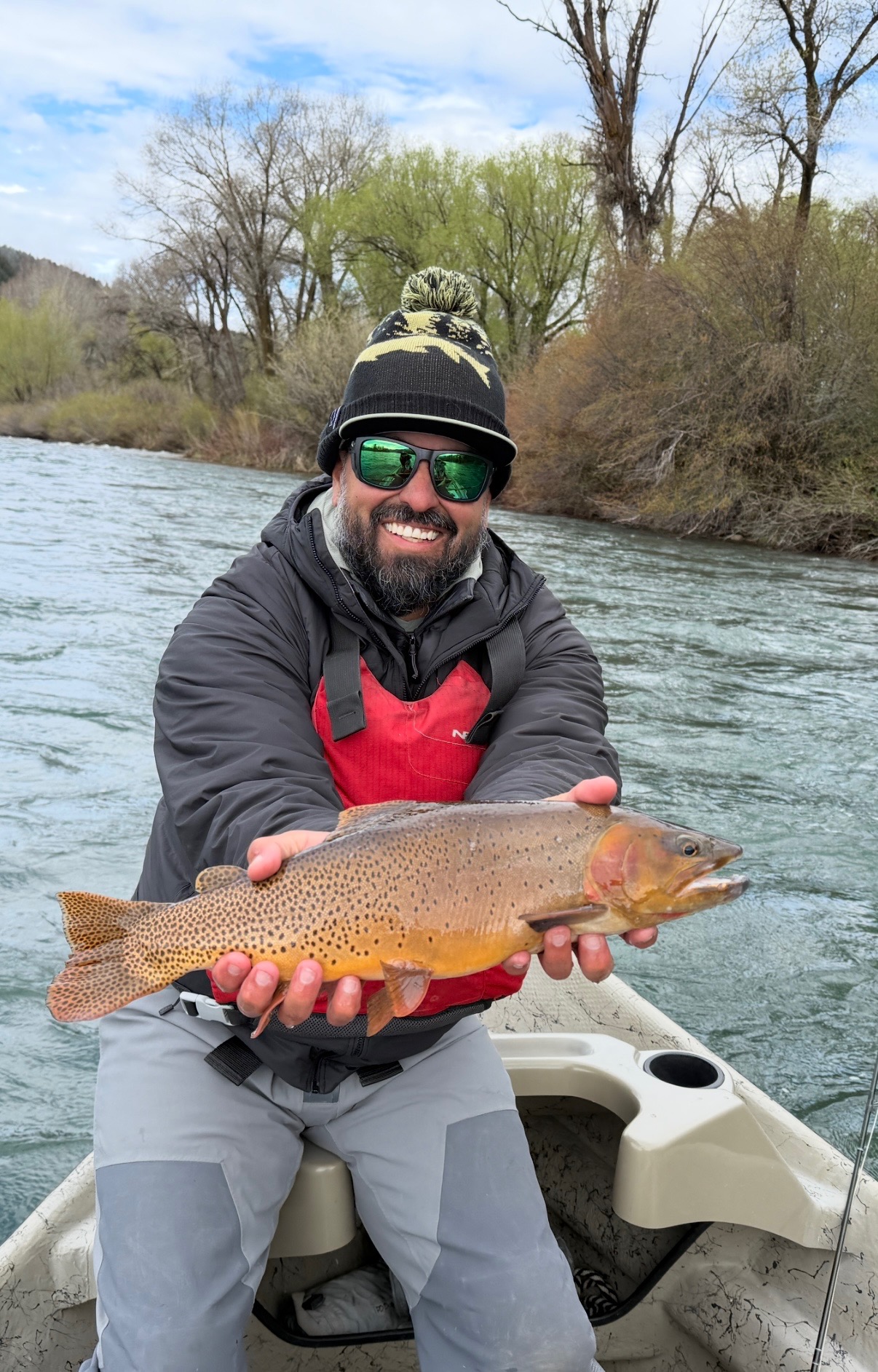
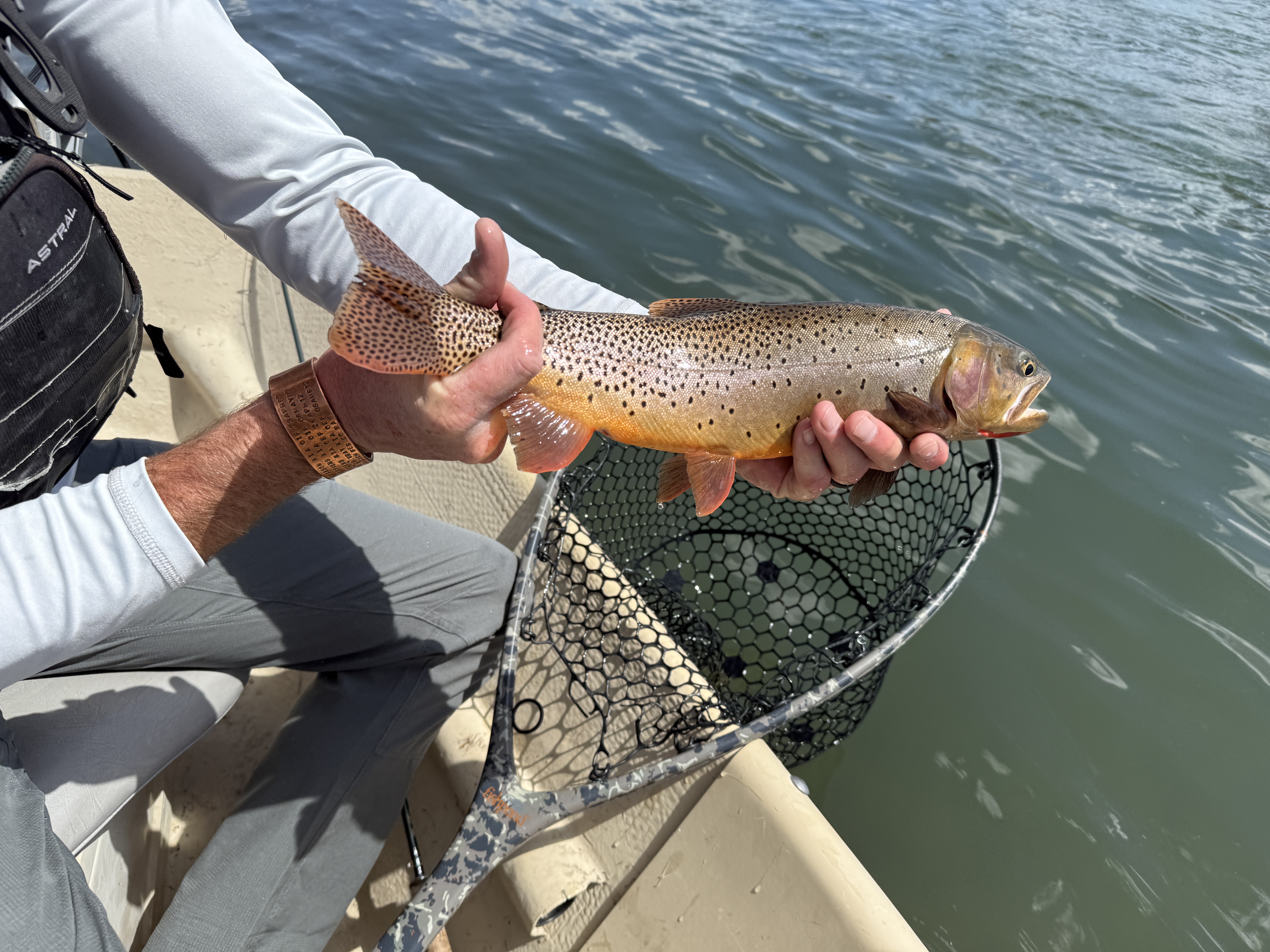
Cutthroat trout here are the real deal - native Yellowstone cutthroat that have been working this drainage for thousands of years. They know every rock, every current seam, and every hiding spot, which makes them a genuine challenge to fool consistently. These fish typically run 10-16 inches and have that classic cutthroat attitude - cautious but aggressive once they commit. Spring and early summer are prime time when they're active in the shallower water, and they absolutely crush dry flies when conditions line up right.
Brown trout are the wildcards in this system. They're not super abundant, but the ones that call the North Fork home are genuine trophy material. These fish have learned to be nocturnal and picky, holding in the deepest, most protected water during the day. When you hook into a North Fork brown, you know it immediately - they're bulldogs that use every bit of current and structure to their advantage. Fall fishing can produce some memorable brown trout encounters, especially on streamer patterns worked through the deeper runs.
Brook trout add some color and variety to the mix, particularly in the upper reaches where the water stays cold all season. They're typically smaller than the other species - 8-14 inches is the norm - but they make up for size with pure beauty and willingness to eat. These fish love pocket water and smaller presentations, and they're often the most cooperative when the other species are being finicky. Their spawning colors in fall are absolutely stunning.
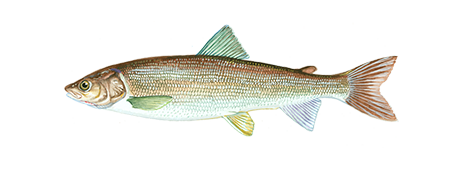
Mountain whitefish might not be the target species, but they're a sign of a healthy ecosystem and can provide steady action when the trout are being difficult. They're bottom feeders that love nymph presentations, and while they might not jump like a rainbow, they're surprisingly strong fighters that deserve respect. Plus, catching native whitefish means you're fishing clean, cold water - exactly what trout need to thrive.
Time to Book Your Spot
The North Fork Shoshone represents everything that makes Wyoming trout fishing special - wild fish, clean water, and enough elbow room to really focus on your angling. With lunch included and just two anglers per guide, you're getting a premium experience without the premium attitude. This isn't about hauling in limits or taking grip-and-grin photos for social media - it's about connecting with a genuine piece of trout country that still fishes like it did decades ago. Whether you're working dry flies over rising cutthroat or stripping streamers for aggressive lake-run rainbows, the North Fork delivers the kind of fishing that reminds you why you picked up a fly rod in the first place. Give us a call and let's get you on the water where the fishing matches the scenery.
 Shared Trip
 River Fishing
 Cody
Cody



 Target 10-22" lake run rainbows and native Yellowstone cutthroat trout