How to Find Fish Around Flooded Shoreline Cover During an Incoming Tide
Discover where fish move as the tide rises. Explore productive shoreline cover, read tidal currents, and choose lures for flooded grass flats and mangroves.
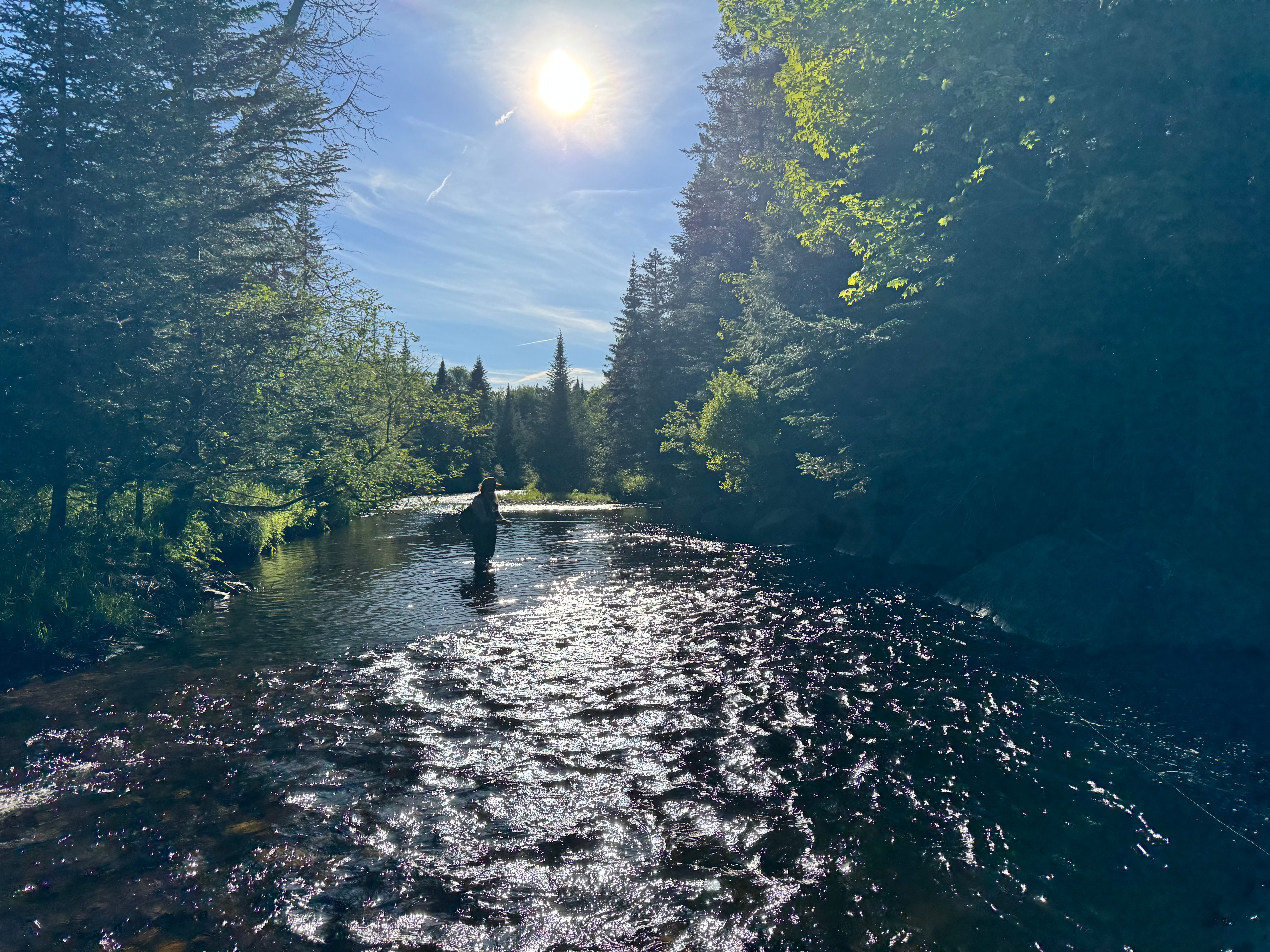


When an incoming tide pushes water over a shallow shoreline, you gain access to fishing spots that may have been dry or too shallow to hold fish just an hour earlier. Grass edges, oyster banks, mangrove roots, and small pockets along the bank gradually become accessible, creating new opportunities to catch fish feeding close to shore.
However, knowing where to find fish as the water rises can be difficult. The same stretch of shoreline won't necessarily produce throughout the entire tide. As water levels rise, fish gain access to different depths and pieces of cover, which means the spots that held them earlier may become less productive.
To make the most of these changing conditions, identify productive shoreline features before they're submerged. Focus on the first areas covered by water, then adjust your position as the tide progresses.
Understanding How Fish Move During an Incoming Tide
As the tide rises, fish gain access to feeding areas that were previously exposed or too shallow to reach. Predators like redfish, snook, and other inshore species use channels, grass openings, and deeper pockets to move between deeper water and newly flooded shoreline cover.
There are three major factors that influence where they move:
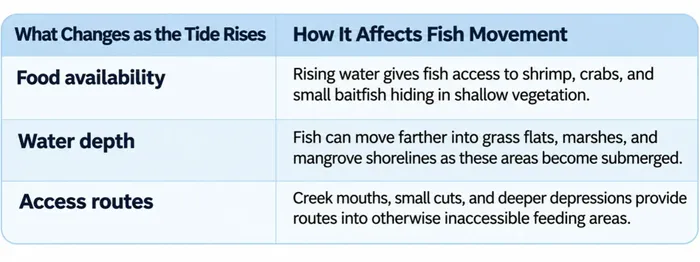
If a shoreline produces early bites and then slows, the fish have likely spread into newly flooded cover. Check the next section of vegetation, especially around small openings and shallow pockets, instead of leaving the area.
Where to Find Fish as the Water Starts Rising
The early incoming tide is a good time to investigate areas connecting deeper water with shallow shoreline cover. It is better to concentrate on places where fish can enter newly flooded feeding grounds rather than casting along an entire bank without a clear target.
Small Cuts and Creek Mouths
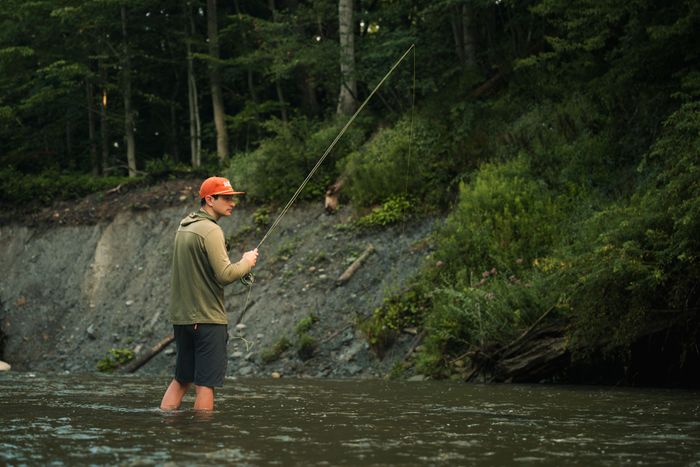
Small cuts, creek mouths, and drainage channels are among the first places worth fishing when the tide starts rising. These openings connect deeper water with shallow marshes, grass flats, and shoreline pockets.
As incoming current pushes water through them, baitfish and crustaceans ride the same routes, and predators use these openings to enter the surrounding cover. Their value becomes more apparent when the surrounding flats are still relatively shallow. A narrow cut leading into a broad grass flat or a sheltered pocket can act as a natural entrance for fish moving toward the shoreline. Rather than spreading across the entire flat immediately, fish may hold around these openings while waiting for enough water to move farther in.
This creates a useful opportunity to intercept them before they reach the shallows. Fish may hold at the edge of the current near the mouth, waiting for bait to pass through. A soft plastic shrimp or paddle-tail swimbait can work well here. Cast beyond the opening and retrieve across the channel edge, allowing the lure to move naturally with the current.
Grass Edges and Shallow Pockets
Once enough water covers the surrounding flats, fish can move beyond the creek mouths and into the vegetation itself. Grass edges become increasingly productive as incoming water covers the shallow bottom around them. These areas provide feeding opportunities for redfish, spotted seatrout, and other inshore species that hunt around submerged vegetation.
The shape of the grass line matters here. A straight, uninterrupted edge offers fewer changes in depth and cover than one broken by indentations, small openings, and isolated patches. These irregularities create pockets where fish can move off the open flat while remaining close to feeding areas.
Isolated patches of grass surrounded by sand or mud are also worth investigating. These patches create smaller feeding zones where shrimp and baitfish can gather. They can be particularly useful when fish are spread across a larger flat, as the isolated vegetation provides a more defined area to search.
When fishing in these areas, keep your casts along the outside edge of the vegetation. A lure retrieved parallel to the grass line can remain in the strike zone longer than one pulled quickly across the open flat. A lightly weighted soft plastic is a practical choice, especially where the grass is thick enough to catch exposed hooks.
Oyster Bars and Reef Edges
Unlike grass flats, oyster banks offer a harder, more irregular type of structure. Their shell formations attract small fish, crabs, and other organisms, making the surrounding water a useful feeding area for larger predators.
When fishing oyster banks during an incoming tide, pay attention to:
Shell-to-sand transitions: These boundaries give fish access to different bottom types and nearby feeding areas.
Deeper channel edges: Fish can hold in slightly deeper water before moving closer to the flooded shoreline.
Points and gaps in oyster beds: Incoming current carries forage around these openings, creating opportunities for predators to intercept it.
The rough bottom requires a little more care with your presentation. To fish these areas effectively:
Present your lure along the outside edge of the shell rather than dragging it across the roughest sections.
Use a weedless soft plastic or lightly weighted shrimp imitation to reduce snagging.
Check your leader regularly for abrasions, particularly after a hooked fish makes a run toward the structure.
Mangrove Edges and Root Systems
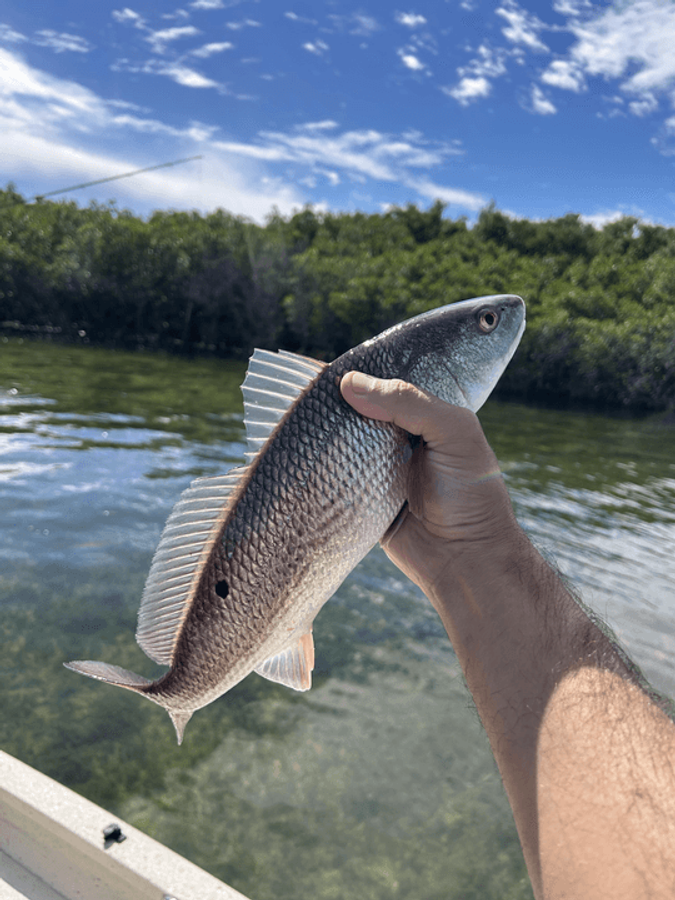
Mangrove roots provide food, shelter, and nursery habitat for several coastal fish species. Their submerged root systems attract smaller fish and crustaceans, creating feeding opportunities for predators such as snook and redfish.
As the incoming tide covers more exposed roots and shallow margins, fish gain access to additional pockets along the mangrove edges. Look for gaps between root systems, deeper pockets, and shaded sections where baitfish can gather.
These areas give predators places to shelter and ambush passing prey. A weedless paddle-tail, shrimp imitation, or compact jerkbait can help you catch more fish around submerged roots without constantly snagging your lure. For snook, you'd want to maintain enough control after a strike to turn the fish toward open water before it reaches the structure.
How to Adjust Your Fishing Position as the Tide Rises
The amount of accessible shoreline changes throughout an incoming tide. Your fishing position should change accordingly, particularly when fish begin moving beyond the original shoreline edge.
Early Incoming Tide: Focus on Shoreline Edges
Focus on the boundary between shallow cover and deeper water during the early incoming stage. Creek mouths, small cuts, oyster edges, and newly flooded grass edges act as good starting points.
Make a few casts along both sides of the creek mouth, focusing on where the deeper channel meets the shallow shoreline. If you notice baitfish activity or get bites, spend more time in that area before moving to the next opening.
If you're fishing from a boat, stay in deeper water and cast toward the shoreline. This lets you cover the shallow edges without disturbing fish moving through the area.
Mid-Incoming Tide: Follow the Flooded Cover
As water reaches more of the shoreline, the available feeding area expands. Redfish, for example, may spread across flooded grass flats in search of crabs and shrimp, while snook can move closer to submerged mangrove roots and other shoreline structures.
This stage often requires covering a wider area than the early incoming tide. The outer grass line may still hold fish, but newly flooded pockets and openings can become productive as they gain enough depth.
If you’re sight-fishing, watch for wakes, muddy patches, and unusual movement in the grass that may indicate fish feeding below the surface. These signs can help you locate fish even when their bodies are difficult to see beneath the vegetation.
Late Incoming Tide: Target Deeper Access Points
As the tide approaches its highest level, fish may move farther into flooded vegetation and shoreline cover. This can make them harder to locate because a broad flat may now contain several potential feeding zones.
Depending on the shoreline layout, fish may spread beyond the original creek mouth and move into deeper pockets or smaller channels within the flooded cover. Mangrove edges can also hold snook farther beneath overhanging branches, where submerged roots provide additional cover.
Keep track of the routes fish use to enter these areas. Those same channels and openings can become productive again when the tide starts falling.
Reading Current to Find Feeding Fish
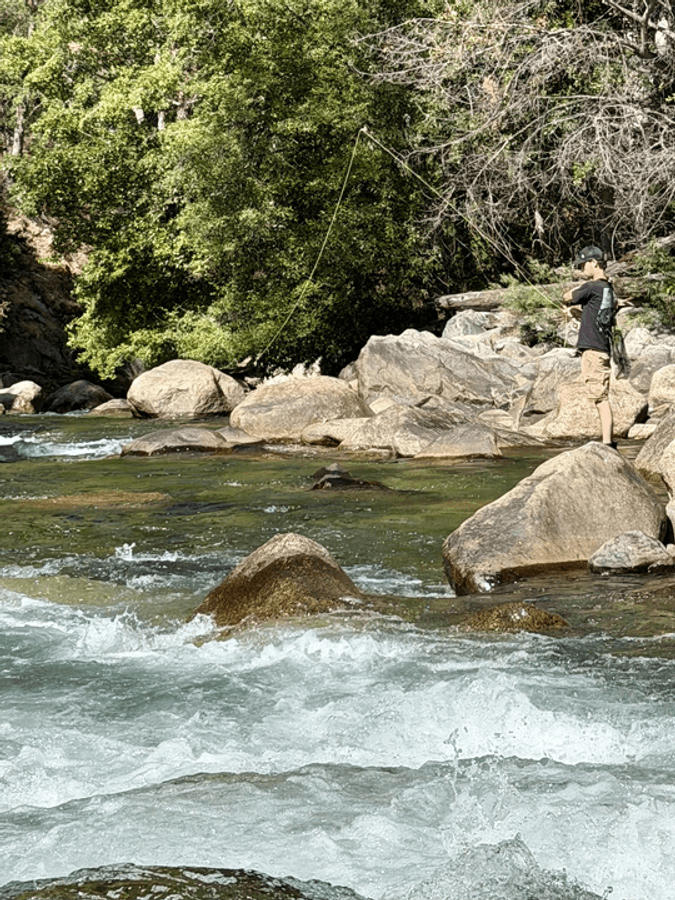
Water depth tells you which areas fish can access. Current helps you understand where they may feed.
Even along a relatively shallow shoreline, incoming water creates small current seams around points, vegetation, oyster banks, and channel openings.
These changes in water movement influence how bait travels and where predators can intercept it.
A current seam forms where water moving at different speeds or in different directions meets.
Fish may position themselves just outside the strongest flow, where they can conserve energy while remaining close to passing forage.
Look for three specific features:
Upcurrent sides of points: Water moving around a shoreline point can push baitfish and shrimp toward waiting predators. Cast beyond the point and retrieve across the flow to keep your lure in the strike zone. Predators also hold in the eddy on the downcurrent side, as the next feature describes.
Eddies behind structure: Oyster banks, mangrove points, and other obstructions can create sheltered pockets where current slows down. Fish may hold in these areas and move into faster water when prey passes.
Narrow current openings: Small channels between grass beds can concentrate moving bait. The difference in water movement along either side of an opening can create separate holding positions for predators, so both edges are worth examining.
Don't assume the strongest current will always produce the most bites. If water is moving too quickly, bait can pass through an area before fish have a chance to strike. In these conditions, the edges of the current may be more productive than its center.
Your lure should move with the water rather than appear to fight against it. Casting slightly upcurrent and allowing the presentation to travel across a current seam can help achieve this.
Choosing the Right Lure and Presentation for Flooded Cover
Fishing flooded shoreline cover requires a presentation that can reach fish without constantly catching vegetation, roots, or shells. The best choice depends on the type of cover, water depth, current, and available forage.
Weedless Soft Plastics
Weedless soft plastics are a practical choice for fishing in shallow grass and vegetation. A soft plastic shrimp, paddle-tail, or jerkbait rigged weedless can move through areas where exposed hooks would frequently catch grass.
For grass edges, use a lightly weighted presentation that keeps the lure above the vegetation. An exposed hook may work around sparse grass, but a weedless setup is more useful when fishing through thicker cover.
A paddle-tail swimbait is useful when you want to cover more water and imitate a small baitfish. A shrimp imitation gives you a slower presentation when fish are feeding around grass pockets and shoreline roots.
Pay attention to hook size and weight. An oversized hook can affect how a soft plastic swims, while excessive weight can pull the lure into vegetation before it reaches the fish.
Topwater Lures
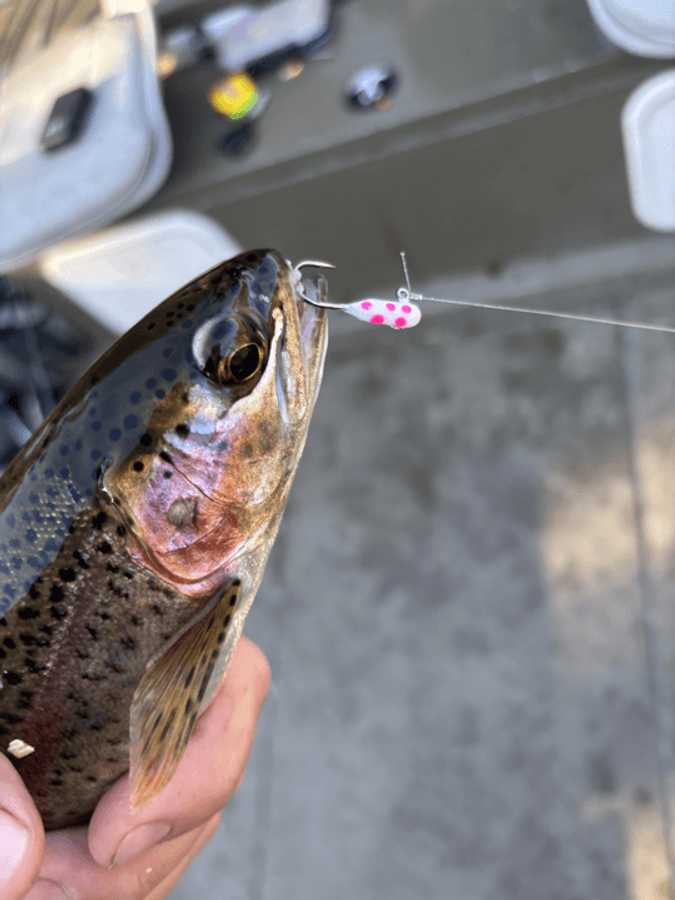
Topwater lures can be effective when fish are actively feeding in shallow water.
A walking bait or compact popping lure can help you cover open lanes, grass edges, and the outer sections of mangrove roots without dragging hooks through submerged vegetation. The two presentations offer different advantages.
A walking bait creates a side-to-side action across open water, while a popping lure produces a more concentrated surface disturbance that can attract fish holding near a small opening. If fish repeatedly follow the lure without striking, slow down or switch to a subsurface presentation. Topwater fishing is most useful when surface activity indicates that predators are actively chasing bait.
Shrimp and Crab Imitations
Shrimp and crab imitations are useful when targeting fish feeding around flooded marshes and grass flats. As the tide covers previously exposed marsh areas, crustaceans such as shrimp and fiddler crabs become accessible to feeding fish. Soft plastic shrimp and crab-pattern flies can imitate this forage.
A lightly weighted shrimp imitation can move along the bottom without digging too deeply into the mud or vegetation. When targeting visible fish, placing the lure ahead of their path gives them an opportunity to intercept it naturally.
For fly anglers, crab and shrimp patterns are useful options when targeting tailing redfish on flooded flats. Choose the pattern and weight according to the available forage, depth, and current.
Adjusting Weight and Retrieve Speed
The amount of weight you use should match the depth and current.
A heavily weighted lure can dig into shallow grass, collect vegetation, and move unnaturally through the strike zone. An unweighted presentation, on the other hand, may be difficult to control when incoming current becomes stronger.
A useful starting point is the lightest weight that still allows you to maintain control of the lure.
Retrieve speed should also reflect the water movement. In slower water, a steady retrieve with occasional pauses can keep the lure near feeding fish. Stronger current may call for a more natural drift, with short rod movements added to maintain the desired presentation.
If the lure repeatedly passes above the fish or moves too quickly through the strike zone, its weight and presentation angle may need adjusting.
How to Approach Flooded Shorelines Without Startling Fish
Fish feeding in shallow water can be particularly sensitive to disturbances. In clear conditions, they may detect movement above the water or react to pressure waves created by an approaching boat.
Your position relative to the shoreline can determine whether fish notice you before they see your lure. From the bank, standing too close to the water can create a visible silhouette. From a boat, approaching shallow cover too quickly can push fish away from their feeding areas.
A few adjustments can make a difference:
Cast before moving closer: Make your first few casts from a distance rather than approaching the bank immediately.
Avoid unnecessary splashing: Sudden movements and loud disturbances can send fish away from shallow pockets.
Use longer casts: Cover the shoreline without positioning yourself directly over the fish.
Approach feeding fish from an angle: A diagonal cast lets you place the lure ahead of a moving fish without casting directly over it.
Watch the wind: Plan your approach so it doesn't push your boat directly into the shoreline.
When sight-fishing, look for fish movement and signs of feeding before making a cast. Fish feeding with their heads down in grass or mud may be difficult to spot, and sudden movement or a poorly placed cast can send them away before you get a chance to present your lure.
Planning Your Next Incoming-Tide Fishing Trip
Before you head out to your next fishing adventure, make sure to check a local tide chart to understand the tidal range, and when shallow shoreline cover will become accessible. If possible, scout the area during low tide to identify creek mouths, grass edges, oyster bars, and deeper channels.
Keep an eye on wind conditions, as they can affect actual water levels. Also, note where you catch fish and at what stage of the tide so you can identify productive patterns on future trips.
You can also book a local fishing guide on Guidesly for insider tips and expert knowledge on how the tide moves through your local waters.