Halloween's Biggest Frights for Anglers: 5 Monster Fish and How to Catch Them
Meet five formidable fish this Halloween, from prehistoric alligator gar to fast-moving barracuda, learn regulations, where to find and how to catch them.
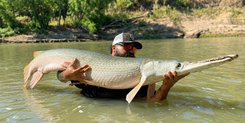


Some fish test an angler's ability to read water, select the right presentation, and stay in control when a hooked fish makes a powerful run. Others demand specialized tackle, precise boat positioning, and a plan for landing and releasing a fish that can weigh several hundred pounds.
This Halloween season, we're looking at five species that earn their monster reputation through size, strength, and challenging fishing conditions: alligator gar, muskellunge, goliath grouper, blue catfish, and great barracuda.
Each presents a different challenge. Alligator gar fishing often involves locating fish in large river systems and choosing an effective bait presentation. Muskellunge demand persistence and careful lure selection. Goliath grouper require anglers to work around heavy structure, while blue catfish reward a good understanding of current and bottom contours. Great barracuda, meanwhile, can turn a fast-moving lure presentation into an explosive strike.
Here's where to find these fish, which techniques are worth trying, and what anglers should consider before targeting them.
1. Alligator Gar: Targeting a Prehistoric River Predator
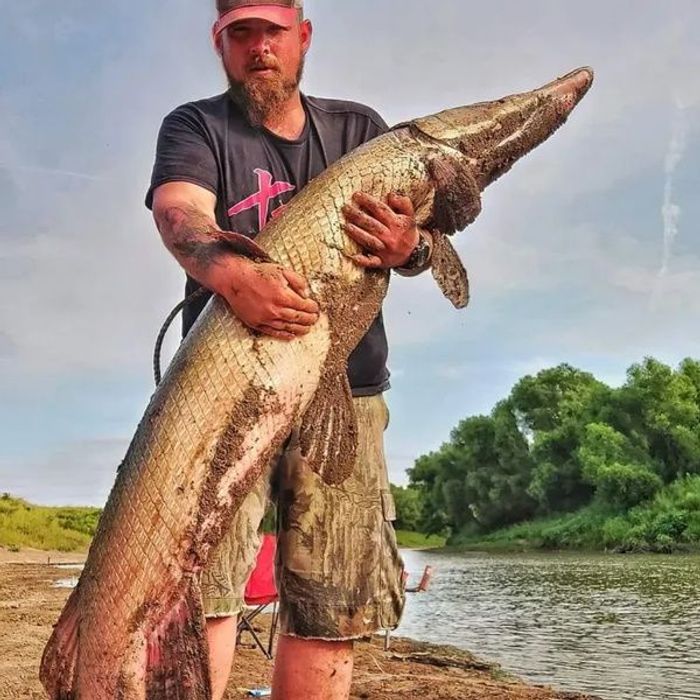
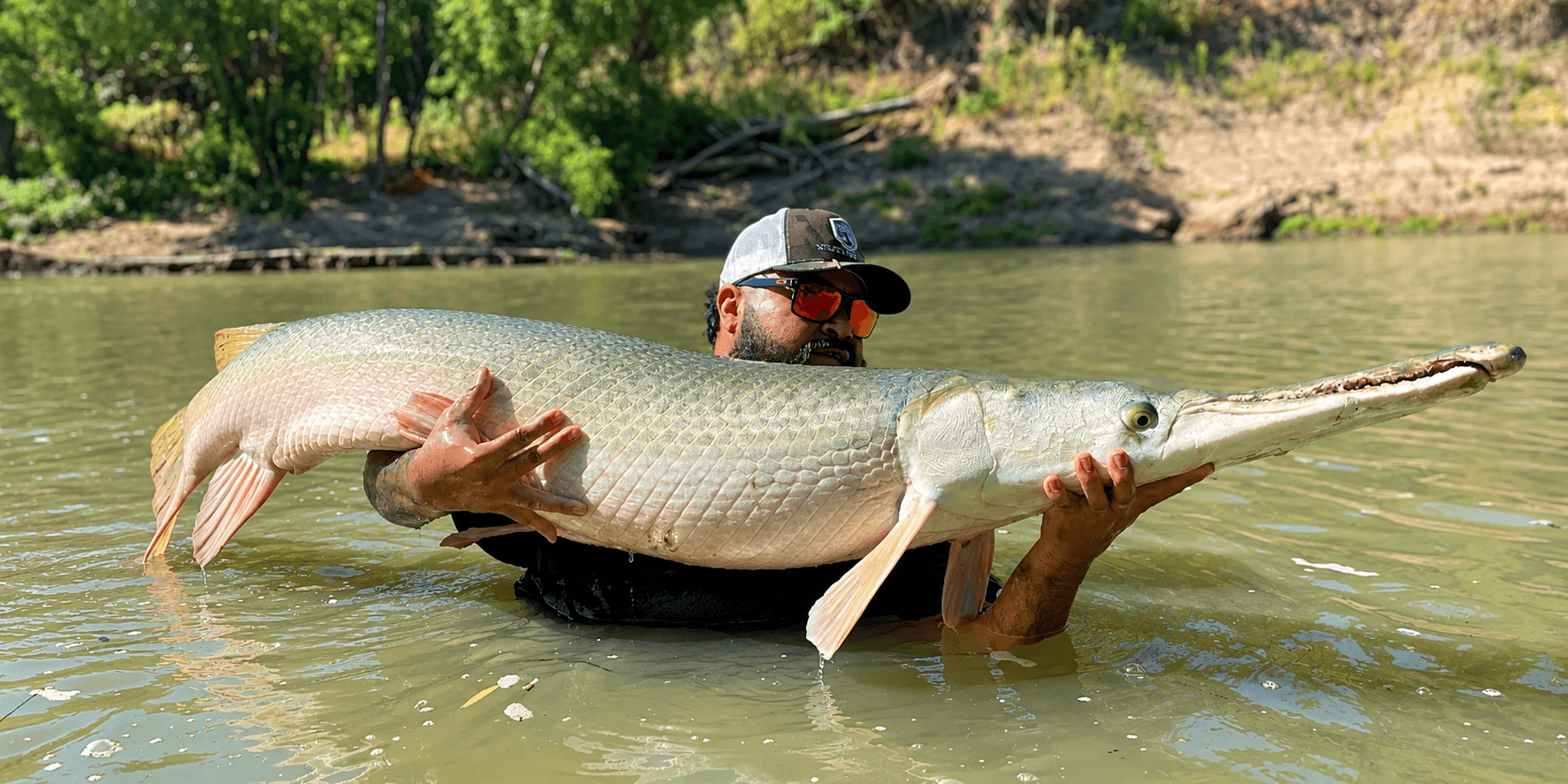
The alligator gar (Atractosteus spatula) is one of North America's largest freshwater fish, with exceptional specimens exceeding 8 feet and 300 pounds.
Its broad snout, rows of sharp teeth, and armor-like scales distinguish it from other gar species. Despite its intimidating appearance, this ambush predator is a native part of southern river ecosystems.
For anglers, the challenge lies in locating fish across expansive river systems and choosing a bait presentation and tackle capable of handling a large, powerful catch.
Where to Find Alligator Gar
Alligator gar are known to inhabit large rivers, oxbows, backwaters, reservoirs, and connected coastal waters across the southeastern United States, particularly Texas, Florida, Mississippi, and Louisiana.
You can start by looking at river bends, slower-moving pockets, and areas adjoining deeper channels. Submerged timber and other cover can also be worth checking out. Another thing to keep in mind is that alligator gar periodically surface to gulp air, which can help anglers locate them. Although a surface sighting doesn't necessarily indicate feeding activity.
How to Catch Alligator Gar
Targeting alligator gar calls for a thoughtful approach to bait selection, tackle, and handling. Their size and powerful jaws make preparation especially important, so plan your setup before casting.
Choose bait that matches local forage: Common carp and fresh gizzard shad are options for freshwater fishing, while mullet may be suitable in brackish areas. Chunks around 4 inches can be a starting point, but adjust the size to local forage and the fish you're targeting. Check your state's regulations before collecting or using baitfish.
Use tackle built for a powerful fish: A sturdy rod, reliable reel, strong line, and an appropriate leader and hook setup will help you manage a large gar. Choose your gear based on the fish you're targeting and the conditions you're fishing in, rather than relying on heavy tackle alone.
Plan the landing before the strike: Alligator gar have sharp teeth and powerful bodies, so keep appropriate landing and release tools within reach. If you're new to targeting large gar, consider fishing with an experienced guide who can help you manage the catch safely and minimize stress on the fish.
2. Muskellunge: Getting Follows to Turn Into Strikes
The muskellunge (Esox masquinongy), commonly called a muskie, is a large freshwater apex predator known for its size, sharp teeth, and habit of following lures without striking. Some exceptional muskellunge can exceed 50 inches, but getting one to commit can be just as challenging as landing it. Muskies often require anglers to experiment with lure size, retrieve speed, and presentation until they find what triggers a response. For those willing to put in the time, that final strike can make hours of casting worthwhile.
Where to Find Muskellunge
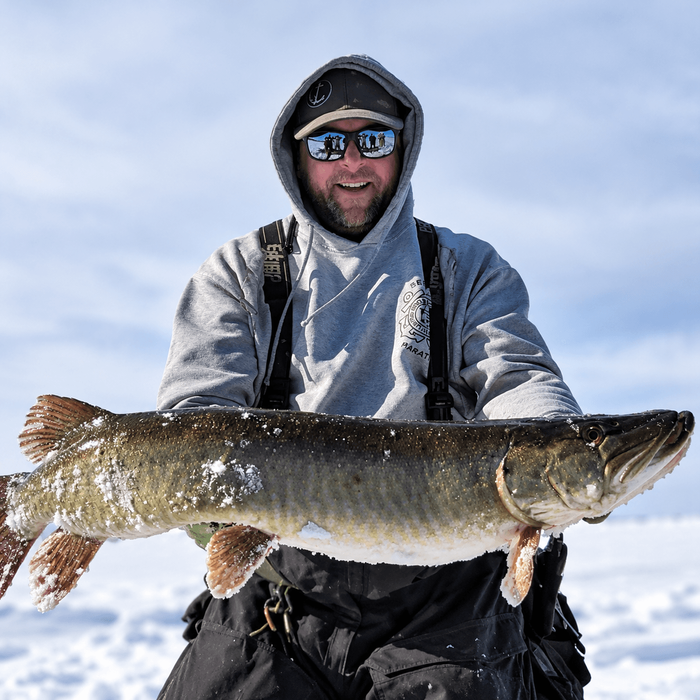
Muskellunge inhabit lakes and rivers across parts of the northern United States and Canada, particularly the Great Lakes region and other established muskie fisheries.
During fall, changing water temperatures and baitfish movements can influence where these predators feed. Weed edges, rocky points, submerged timber, and drop-offs are productive areas to investigate.
Pay particular attention to transitions between shallow feeding grounds and deeper water, where muskies can move between hunting and holding areas.
How to Catch Muskellunge
Catching a muskie often comes down to finding the right presentation and sticking with it long enough to learn how the fish respond. These predators can follow a lure without striking, so pay attention to their behavior and be ready to adjust your approach.
Match your lure to the conditions: Bucktail spinners, jerkbaits, crankbaits, and large swimbaits are all worth keeping in your tackle box. Choose based on the depth you're fishing, the available forage, and how actively the fish are feeding. If a lure isn't reaching the strike zone, changing its running depth may be more effective than switching colors or sizes.
Experiment with retrieve speed and cadence: A steady retrieve can produce strikes, but muskies sometimes respond better to pauses, speed changes, or an irregular presentation. If a fish follows without committing, vary your retrieve on the next cast and observe whether its behavior changes.
Finish each cast with a figure-eight: Don't lift your lure out of the water as soon as it reaches the boat. Instead, keep it moving in a controlled figure-eight pattern beside the boat. A muskie following closely may strike during this final movement, so stay alert until the lure is clear of the water.
Prepare for the fight before you hook up: Muskies have sharp teeth and can injure themselves during prolonged handling. Use a suitable leader, a large landing net, long-nose pliers, and appropriate release tools. Having your equipment ready makes it easier to land and release the fish promptly.
3. Goliath Grouper: Targeting an Atlantic Giant
The goliath grouper (Epinephelus itajara) is one of the largest grouper species in the Atlantic, with some fish reaching around 8 feet in length and weighing several hundred pounds. Its broad head, heavy body, and powerful jaws make it a formidable fish, particularly when it retreats toward underwater cover after being hooked. For anglers, success depends on understanding the structure these fish occupy, choosing tackle that can handle their strength, and planning the fight before making a presentation.
Where to Find Goliath Grouper
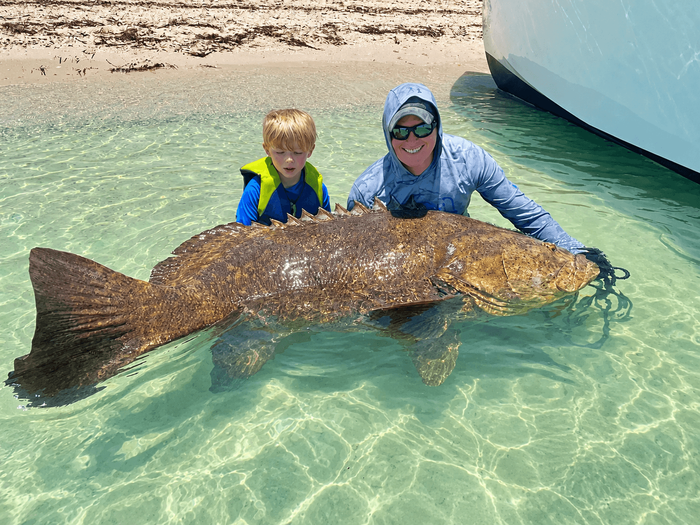
Goliath grouper inhabit tropical and subtropical western Atlantic waters, including Florida and the Caribbean. Natural reefs, artificial reefs, shipwrecks, and underwater ledges are among the main areas to investigate.
These fish often remain close to substantial cover, where they find shelter and feed on fish and crustaceans. Pay attention to depth, current, and the layout of the structure when choosing a fishing spot.
Local knowledge can also be particularly useful for identifying productive areas and positioning the boat safely.
How to Catch Goliath Grouper
Before targeting goliath grouper, check the regulations for your exact fishing location. Harvest rules differ between state and federal waters, and federal waters in the southeastern United States are closed to goliath grouper harvest. Where harvest is prohibited, anglers must release their catch. Because these fish can grow exceptionally large, knowing how to handle and release one safely is an important part of planning your trip.
Here's how to approach the setup, fight, and release.
Present bait close to the holding area: For catching goliath grouper, natural bait presented near the bottom can be effective. Fish and crustaceans form part of the grouper's diet, so choose bait that suits local conditions and permitted methods. Keep the presentation near the target zone without allowing the rig to become unnecessarily tangled in the structure.
Be ready for the initial run: A hooked goliath grouper may try to retreat into nearby cover almost immediately, making it difficult to pull the fish away from the structure. Use a heavy-duty rod, a high-capacity reel with a strong drag system, and a braided line rated for the fish's size and the conditions you're fishing in. Set the drag before casting so you can apply controlled pressure without risking a line break. Position the boat to give yourself a clear angle away from the structure and be prepared to respond as soon as the fish takes the bait. If it reaches a reef or wreck, the line can snag or abrade against the structure, making the fish much harder to control.
Plan the landing and release in advance: A fish of this size requires appropriate equipment and careful handling. Avoid attempting to manage an exceptionally large grouper without the necessary experience, and have a clear plan for releasing it safely before you start fishing.
Check the regulations before heading out: Goliath grouper are subject to strict harvest restrictions. Federal waters in the southeastern United States remain closed to harvest, while Florida has a limited, regulated state-water harvest program with specific permit and compliance requirements.
If you're targeting goliath grouper on a catch-and-release basis, keep the fish in the water during handling and release. Large individuals should not be lifted aboard because their body weight can cause serious internal injuries. Follow official handling guidance to minimize stress and release the fish promptly.
4. Blue Catfish: Reading Current and River Bottoms
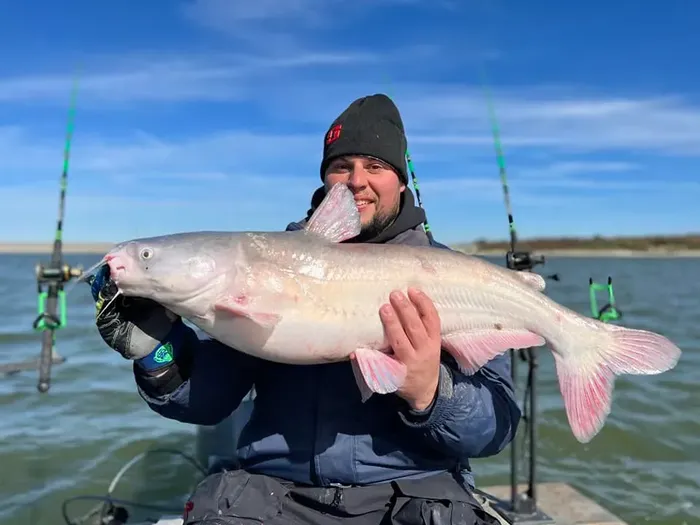
The blue catfish (Ictalurus furcatus) is one of North America's largest catfish species, with some large fish reaching more than 100 pounds in weight.
Its blue-gray coloration, deeply forked tail, and lack of the dark spots common on some other catfish help distinguish it from related species.
For anglers pursuing a heavyweight freshwater catch, the challenge is often finding where large blue catfish feed and presenting bait where they can locate it.
Where to Find Blue Catfish
Blue catfish inhabit large rivers, reservoirs, and major tributaries, including the Mississippi River system and other established fisheries.
When fishing rivers, look for deeper water around channel bends, along drop-offs, and near current breaks where blue catfish can hold out of the strongest flow while remaining close to passing food. If you're fishing in reservoirs, submerged river channels and their edges are worth exploring, especially where they meet shallower flats that attract baitfish. As water temperatures change and forage shifts, blue catfish may move between these areas, so pay attention to seasonal patterns rather than focusing on depth alone.
How to Catch Blue Catfish
Blue catfish are opportunistic feeders, but targeting larger individuals calls for more than dropping bait into deep water. Your choice of bait, rig placement, and understanding of current can make a real difference. Here's how to increase your chances of catching a blue catfish:
Start with fresh cut bait. Shad and skipjack herring are popular choices where available and legal. Other permitted baitfish can also work, depending on the local forage. Match your bait size to the fish you're targeting and check local rules before collecting or transporting baitfish.
Keep your bait in the feeding zone. A bottom rig with a suitable sinker can hold your presentation in place, especially in current. Use enough weight to keep the bait near your chosen spot without making the rig unnecessarily heavy. If the current keeps pulling your bait out of position, adjust the weight or move to a more manageable stretch of water.
Use bottom contours to narrow your search. Once you've identified a promising channel edge or current break, focus on the transition rather than repeatedly casting into the same featureless stretch. If bites are slow, try a nearby depth change or another current seam before changing every part of your setup.
Prepare your tackle for a heavy fish. A sturdy rod, a reliable reel with a properly adjusted drag, abrasion-resistant line, and strong hooks will help you manage a large catfish. Choose your setup based on the current, depth, and size of fish in the water, and make sure you can control a fish without putting excessive strain on your gear.
Don't assume you have to fish at night: Although night fishing for blue catfish is a common practice, they can feed during both daylight and darkness. Depending on the fishery and conditions, they may move onto shallower flats to feed during the day or hold along deeper edges. Pay attention to seasonal patterns and local reports instead of relying on a fixed time.
5. Great Barracuda: Targeting a Fast-Moving Predator
The great barracuda (Sphyraena barracuda) is a large marine predator recognized by its streamlined body, projecting lower jaw, and prominent teeth. Built for sudden bursts of speed, it can accelerate quickly when chasing baitfish, making it an exciting target for anglers who enjoy lure fishing.
But speed isn't the only challenge; barracuda may follow a lure without striking, and their sharp teeth can sever ordinary fishing line. Getting the presentation right and choosing a bite-resistant leader are both important when targeting these fish.
Where to Find Great Barracuda
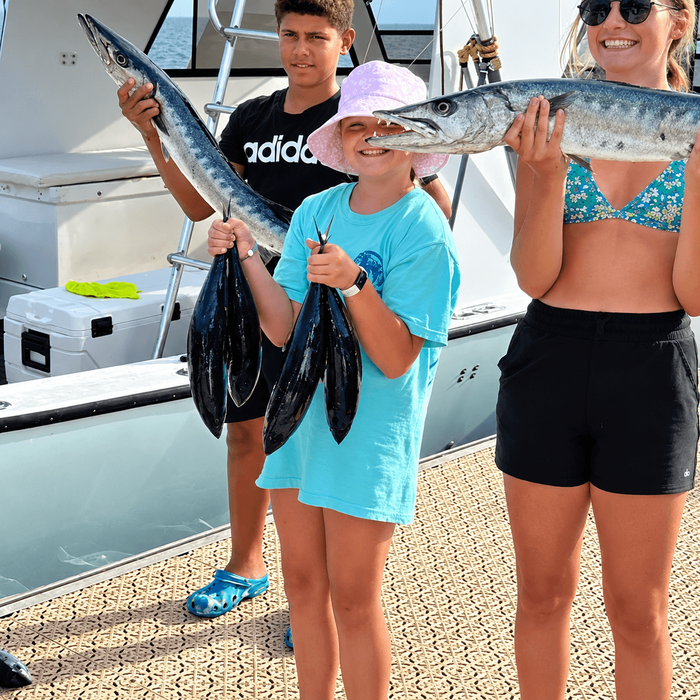
Great barracuda inhabit tropical and subtropical coastal waters, including Florida, the Florida Keys, the Caribbean, and other warm-water regions.
You can encounter them around reef edges, shipwrecks, channels, and shallow flats, although their location often depends on the availability of prey.
Look for baitfish activity and moving water, particularly where currents carry prey past reefs or other underwater structure.
Clear, shallow flats can provide opportunities for sight fishing, while deeper reef edges and wrecks offer areas where barracuda can patrol for food. If you spot one, observe its movement before casting; a fish cruising through an area isn't necessarily ready to strike.
How to Catch Great Barracuda
Great barracuda often hunt by chasing down smaller fish, so your approach should focus on imitating that movement while keeping your tackle ready for a fast strike.
Choose lures that imitate fleeing baitfish: Metal spoons, plugs, and streamlined artificial lures are common options for barracuda. Choose one that maintains its action at the speed you plan to retrieve it. Flash and movement can attract attention, but the right presentation depends on water clarity, baitfish size, and how the fish respond.
Vary your retrieve when a fish follows: A fast, steady retrieve can trigger an aggressive strike, but repeating the same movement won't always work. If a barracuda follows without committing, experiment with your retrieve speed or approach angle. When sight fishing, avoid repeatedly casting directly at a fish that has already shown little interest.
Use a bite-resistant leader: Barracuda teeth can cut ordinary fishing line, so a wire leader is a common choice. Match the leader's strength and length to the fish and lure you're targeting, and inspect it for damage after strikes or missed hookups. A compromised leader can fail when the next fish hits.
Prepare for a safe landing and release: Even a lethargic barracuda can inflict serious injuries. Keep your hands away from its mouth, use long-handled tools where appropriate, and avoid gripping the fish by its jaws. Have a plan for removing the hook or cutting the leader if removing it would cause unnecessary injury.
Important: Larger barracuda can carry ciguatera toxins in some tropical and subtropical regions. These toxins aren't destroyed by cooking, so check local consumption advisories before deciding whether to eat your catch.
Before You Go: Fishing Regulations for These Five Monster Fish
Landing a trophy fish is exciting, but knowing whether you can keep it is just as important. Regulations vary by species, state, and waterbody, so check the current rules before heading out. Pay particular attention to seasons, size and bag limits, permitted bait, and catch-and-release requirements.
Here's a quick checklist for each species and what you need to look out for:
Species | What to Check |
Alligator gar | Harvest limits, permitted methods, and bait rules |
Muskellunge | Open season, minimum size, and daily bag limit |
Goliath grouper | Harvest prohibitions, permits, and release requirements |
Blue catfish | Size/creep limits, baitfish rules, and invasive-species rules |
Great barracuda | Size and bag limits, local restrictions, and consumption advisories |
Ready to Take on Your Next Big Catch?
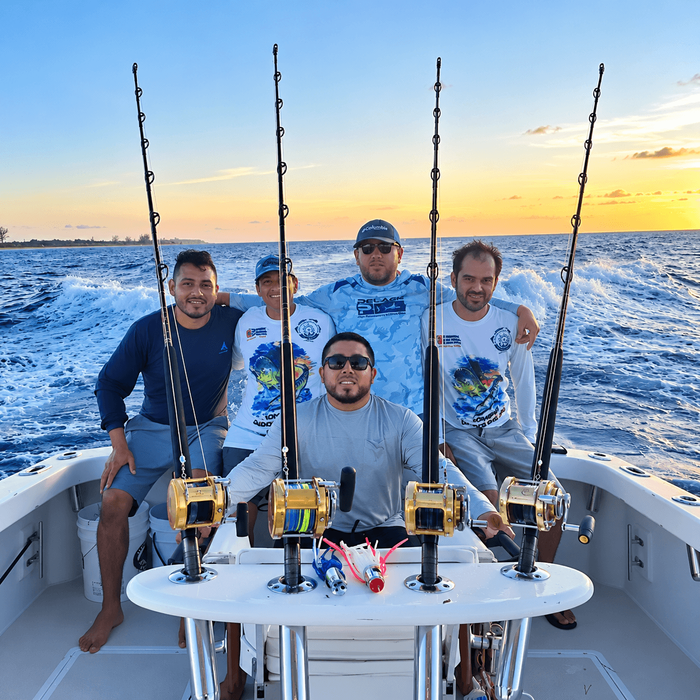
Halloween is the perfect time to take on a fishing challenge that feels a little more intimidating than usual. From the prehistoric alligator gar to the powerful goliath grouper and lightning-fast great barracuda, these five species bring plenty of thrills to any angler's bucket list.
If you're looking to make this Halloween season memorable, use these tips to plan your next fishing trip, sharpen your techniques, and see if you can land one of these impressive predators. With the right preparation and a knowledgeable local guide, your next big catch could be your best fishing story yet.
Find your next fishing story with Guidesly. Explore guided fishing trips, connect with local fishing experts, and discover waters that could put a new personal best within reach.