How to Catch Sheepshead From a Dock or a Pier
Find out where sheepshead hide around docks and piers, which baits work best, how to detect bites, and what tackle to use.
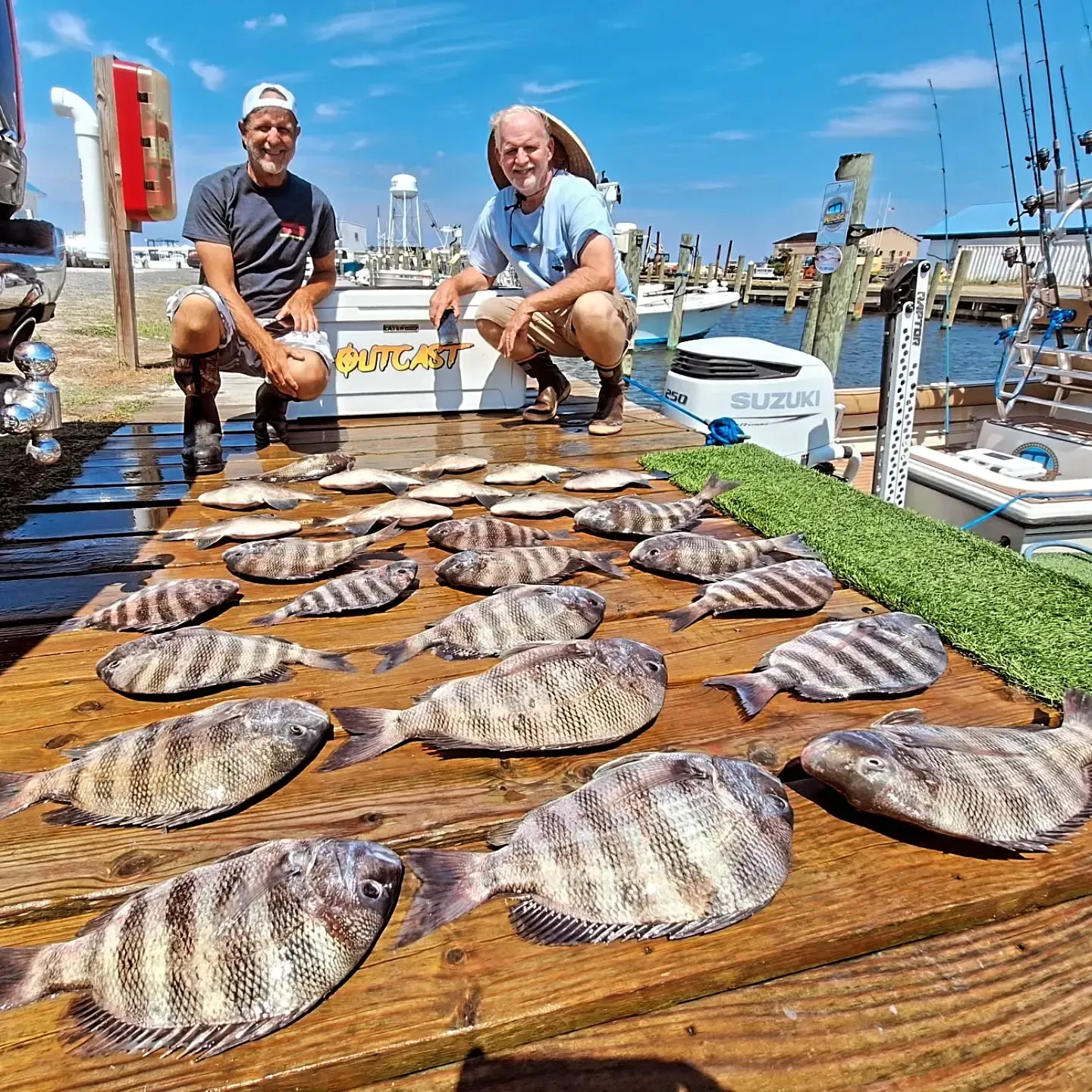


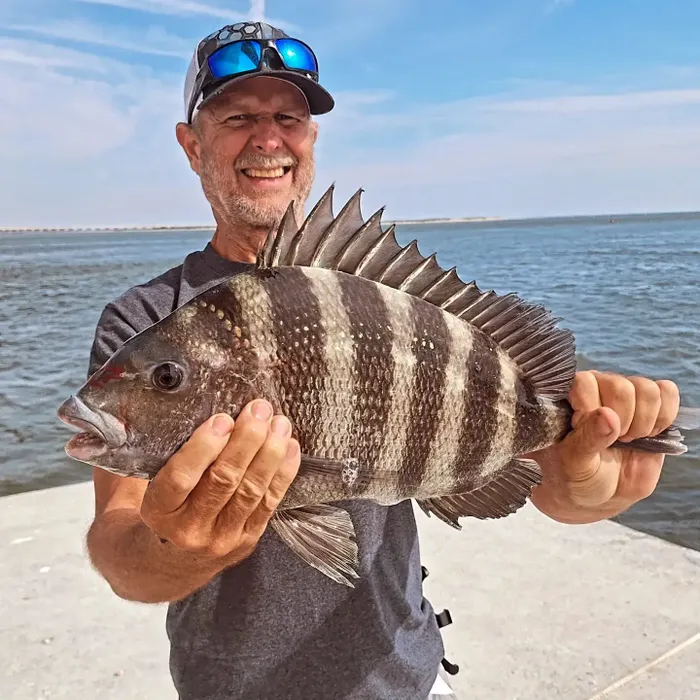
Sheepshead can be frustrating to catch, especially when you’re fishing from a dock or pier. You might see them moving around the pilings, picking at barnacles, or following your bait without actually taking the hook.
Even when one bites, it can be difficult to tell. These fish are known for stealing bait with surprisingly little movement, leaving you wondering whether you missed a bite or simply lost another piece of shrimp.
The good news is that docks and piers give you access to some of the most productive sheepshead fishing spots. Their pilings, crossbeams, and submerged structures attract barnacles, crabs, shrimp, and other small prey that sheepshead feed on.
The trick is knowing where to position yourself and how to present your bait. Here’s how to find sheepshead around docks and piers, get your bait in front of them, and bring them up without losing your tackle to the structure.
1. Look for Sheepshead Around the Right Dock and Pier Structures
You don’t need to cast far to find sheepshead from a dock or pier. In fact, some of the best spots are directly beneath your feet.
Sheepshead often feed around hard surfaces where barnacles, oysters, and other small organisms grow. Dock pilings are particularly productive because they provide a steady food supply and give fish somewhere to hold against moving water.
Pay attention to these areas:
Barnacle-covered pilings: These are worth checking first. Barnacles are a natural food source, and sheepshead regularly pick at them.
Crossbeams and submerged supports: Fish can hold around these spots, particularly when there’s enough depth and current to bring food past them.
Shaded sections: The darker areas beneath docks provide cover and can attract fish at any time of day.
Oyster-covered edges: Look for areas where dock structures meet oyster beds or other hard bottoms. These spots can hold plenty of natural prey.
Piling clusters: Where several pilings sit close together, fish may move between them while feeding.
More importantly, don’t assume every piling holds fish. Some may have little growth or sit in water that’s too shallow. Therefore, it is best to start with structures that have visible marine growth and enough depth around them.
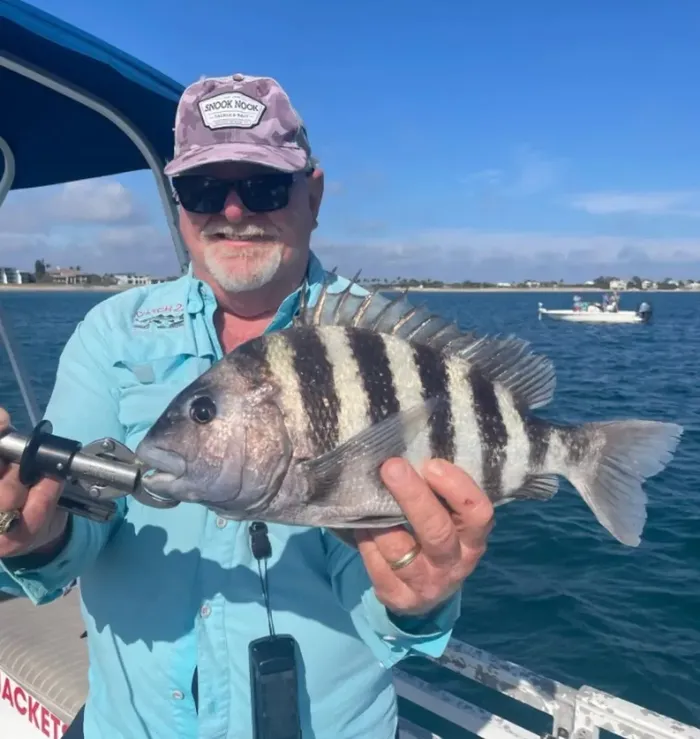
If you can safely look into the water, watch for movement around the pilings. Sheepshead can blend into their surroundings, so look for flashes of their black-and-white vertical stripes or groups of fish moving close to the structure.
2. Choose Your Position Before Dropping the Bait
Once you’ve found a promising section of dock or pier, think about where you should stand.
Your position affects how easily you can keep the bait near the structure and control a fish once it takes the hook. If you’re fishing beside a piling, try to position yourself so you can lower your bait vertically or make a short cast alongside it.
This keeps your presentation close to the structure instead of letting the current carry it away. Before settling into one spot, check the direction of the current and make sure you have enough room to move if a fish heads toward the pilings. Avoid standing directly behind other anglers or in areas where your line could cross theirs. If possible, choose a position that gives you a clear path to bring the fish up without dragging it across nearby structures.
There are a few things worth considering:
Stay close enough to control your line: A shorter distance makes it easier to keep your bait near the piling and notice small changes in tension.
Avoid casting directly into tight gaps: Your bait may reach the fish, but you could have trouble pulling it out if the line catches on a support.
Look for room to fight a fish: A productive piling isn’t much use if there’s no clear direction to move a hooked sheepshead away from it.
Pay attention to nearby anglers: If you’re on a busy pier, try finding a spot where you can fish peacefully without crossing other people’s lines.
You don’t always need to fish the piling closest to the shore or the one with the most barnacles. Try a few different structures until you find where the fish are actively feeding.
3. Fish During Productive Tidal Conditions
Tide movement can make a noticeable difference when you’re fishing for sheepshead around docks and piers. Moving water carries small food items past pilings and other structures, giving fish a reason to feed.
An incoming tide can bring cleaner, saltier water and food toward dock structures. As the water rises, sheepshead may move closer to shallow pilings and oyster-covered edges. On the other hand, a falling tide can also be productive, particularly when water moving away from the structure carries small prey with it.
Rather than relying on a fixed tide rule, pay attention to what the water is doing at your fishing spot. Here's how:
Watch the current: You want enough movement to bring food past the pilings, but not so much that your bait becomes difficult to control.
Check changing water depth: Fish may shift their position as the tide rises or falls, so a piling that was unproductive earlier may become worth checking again.
Try the edges of moving water: Areas where current slows around a piling can give sheepshead a place to feed without fighting the full flow.
Not to forget, the season matters too. For example, much of the Gulf and South Atlantic see sheepshead gathering around docks, piers, and other structures from late fall through early spring, though they can be found year-round.
You can also catch sheepshead during slower periods, but a complete lack of water movement can make feeding activity less predictable. If the bite slows down, try another section of the pier or adjust the depth of your presentation.
4. Choose Tackle That Can Handle Sheepshead Around Pilings
Sheepshead aren’t necessarily large fish, but they can put your tackle under pressure. Their strong bodies and habit of moving toward nearby structures make control important.
A medium or medium-heavy spinning setup is a practical choice for many dock and pier situations. You want enough strength to turn a hooked fish away from the pilings without making your tackle unnecessarily heavy.
Your setup should account for four things:
Rod power: A medium or medium-heavy rod gives you the backbone to manage a fish around the pilings. If you’re fishing around larger pilings or heavier current, the stronger option can be useful.
Reel: Choose a reel with a smooth drag and enough line capacity for the depth and conditions you’re fishing.
Line and leader: Braided main line offers good sensitivity, while a fluorocarbon leader provides some protection against abrasion around rough surfaces.
Hook: Sheepshead have small mouths and hard teeth, so use a small, strong, short-shank hook (commonly around size 1 to 2/0) that won’t bend or straighten under pressure.
For many situations, a 10-20 lb braid paired with a 15-25 lb fluorocarbon leader is a reasonable starting range. However, many anglers step up to a leader as heavy as 30 lb for extra abrasion resistance around especially rough pilings or heavy barnacle growth. Adjust the strength to the size of the fish, the pilings, and local conditions.
You don’t need an oversized surf setup for fishing directly beside a dock piling. A rod and reel that are well matched in size and weight will be comfortable to hold all day and make it easier to detect bites and react quickly.
5. Use Baits Sheepshead Naturally Find Around Docks
Sheepshead have a varied diet, but their feeding habits make certain baits particularly useful around docks and piers. They are known to have human-like front teeth and powerful molars that help them crush barnacles, crabs, and other hard-shelled prey.
Your bait choice should reflect what’s naturally available around the structure.
Fiddler crabs
Fiddler crabs are a popular choice for sheepshead. They naturally occur around coastal shorelines and marsh edges, making them familiar prey. Their firm bodies also stay on the hook reasonably well when presented properly.
Live shrimp
Shrimps are another reliable option. You can fish them near the bottom or alongside a piling, where sheepshead may pick them up while feeding. Keep the presentation compact, so the bait doesn’t look oversized or difficult to take. Because shrimp also attract other fish, expect more bait-stealers than you’d get with fiddler crabs.
Barnacles
Where permitted and practical, barnacles can make an effective natural bait because sheepshead regularly feed on them. Rules vary by state. Florida, for example, sets no size or bag limit on barnacles and allows up to 100 pounds per person per day with a saltwater license. Many docks are private property, so confirm you can scrape them before you do.
Other small crabs
Small crabs can also attract sheepshead, particularly around oyster beds and hard-bottom areas. Try to find a bait size that would fit easily in the fish’s small mouth.
Whichever bait you choose, keep it fresh and securely attached. Sheepshead are good at stripping bait from a hook, so check your presentation regularly rather than assuming the bait is still there.
6. Present Your Bait Close to the Pilings
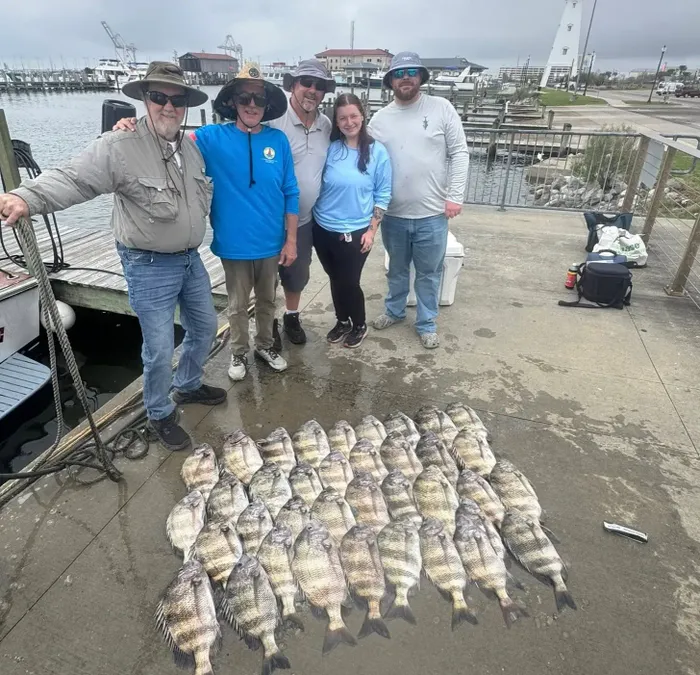
Getting the bait in front of a sheepshead is often more important than casting a long distance. These fish frequently feed close to the structure, where barnacles and other natural food sources are concentrated.
A simple bottom presentation is a good place to start. Use enough weight to take your bait down while keeping the rig manageable in the current. Lower it beside a piling and allow it to reach the depth where fish are holding. Once your bait is down, avoid constantly moving it. Small adjustments can help you find the feeding zone, but excessive movement may pull the bait away from the structure.
Try these approaches for the best results:
Start near the bottom: Sheepshead often feed close to pilings and hard bottoms, so begin by presenting your bait near the base of the structure.
Adjust the depth gradually: If you’re not getting any bites, raise the bait a little at a time. Fish may be feeding higher along the piling than expected.
Keep your line controlled: Too much slack makes it harder to notice a bite. Keep enough tension to feel what’s happening without pulling the bait away.
Avoid dragging the rig across the bottom: Your hook can catch on rocks, oyster shells, and other debris. Lift and reposition it when necessary.
If the current keeps carrying your bait away, try a slightly heavier weight. The goal is to keep the bait close to the structure without making the presentation difficult to control.
7. Look for Signs to Recognize a Sheepshead Bite
One of the biggest challenges when fishing for sheepshead is knowing when to set the hook. Their feeding behavior can make bites difficult to detect, particularly when they’re picking at bait rather than swallowing it immediately.
You might feel a few light taps, notice your line twitch, or see the rod tip move slightly. Sometimes, the only sign is a brief change in line tension. Don’t wait for a dramatic pull. By the time the rod bends heavily, the fish may already have taken the bait or moved toward the structure.
Keep an eye out for:
Small, repeated taps on the line.
A sudden change in tension.
The line moving sideways or away from the piling.
A slight bend in the rod tip that doesn’t match the current.
When you notice these signs, respond with a quick, controlled hookset. A sharp upward lift is generally more useful than a long, exaggerated swing, especially when you’re fishing close to a dock.
You may miss a few bites while getting used to their feeding behavior. If that happens, check your bait. Missing or chewed bait can tell you that fish are feeding even when you haven’t managed to hook one.
8. Bring the Fish Away From the Structure
Hooking a sheepshead is only part of the challenge. Once it realizes something is wrong, it may turn toward a piling, crossbeam, or nearby structure. If your line rubs against barnacles or rough surfaces, it can weaken or break quickly.
As soon as you hook the fish, maintain steady pressure and try to guide it into open water. Avoid giving it too much slack, particularly when fishing close to pilings.
A few habits can make landing sheepshead easier:
Keep your rod at a controlled angle: This helps you maintain pressure without putting unnecessary strain on the rod.
Move the fish away from the piling: Guide it toward open water as soon as you can, rather than letting it circle the structure.
Don’t force the fight: Excessive pressure can break your leader or pull the hook free.
Use a landing net or drop net when needed: A net is useful when fishing from a high pier or when the fish is too heavy to lift safely.
If you’re fishing from a particularly tall pier, plan how you’ll land your catch before casting. Lifting a fish directly by the line can damage your tackle and may cause the hook to come loose.
Handle sheepshead carefully once they’re on the dock. They have sharp dorsal spines and powerful teeth, so use wet hands or a towel, and use pliers or a dehooker rather than your fingers. Size and bag limits vary by state, so check the regulations below before keeping any fish.
9. Know the Sheepshead Regulations Before You Keep One
Size and bag limits vary widely by state, and several states have tightened their rules recently. North Carolina changed its sheepshead rules in March 2026 because of increased fishing pressure, particularly on juvenile fish, and Alabama cut its recreational bag limit from 10 fish to eight in 2025.
State | Minimum size | Daily bag limit |
12 inches total length | 8 per person | |
10 inches fork length | 15 per person | |
14 inches total length | 5 per person | |
14 inches total length | 10 per person, 30 per boat | |
12 inches fork length | 8 per person | |
14 inches total length | 15 per person | |
15 inches total length | 5 per person |
Don't forget to pay attention to how each state measures. Georgia and Alabama use fork length, while the others use total length, and North Carolina switched from fork to total length, measured to the end of the pinched tail. A fish that passes in one state can come up short in another.
Rules change often, so confirm the current limits with your state’s wildlife agency before you go and carry the required saltwater fishing license.
Common Mistakes to Avoid When Pier Fishing for Sheepshead
A few small adjustments can save you from losing bait, breaking line, or spending the day fishing in unproductive spot. Let's take a look at them below:
Fishing too far from the structure: Sheepshead often feed close to pilings, so start nearby instead of casting into open water without a reason.
Using too much weight: A heavy sinker can make your presentation look unnatural and increase the chance of getting snagged.
Leaving too much slack in your line: You may miss subtle bites if you can’t feel what’s happening below the surface.
Waiting too long to set the hook: Sheepshead can strip bait quickly. Pay attention to small taps and changes in tension.
Ignoring abrasion: Check your leader after fishing around barnacles, oyster shells, and rough pilings.
Staying in one spot without checking others: If fish aren’t feeding around a particular piling, move along the pier and try another section.
Final Thoughts
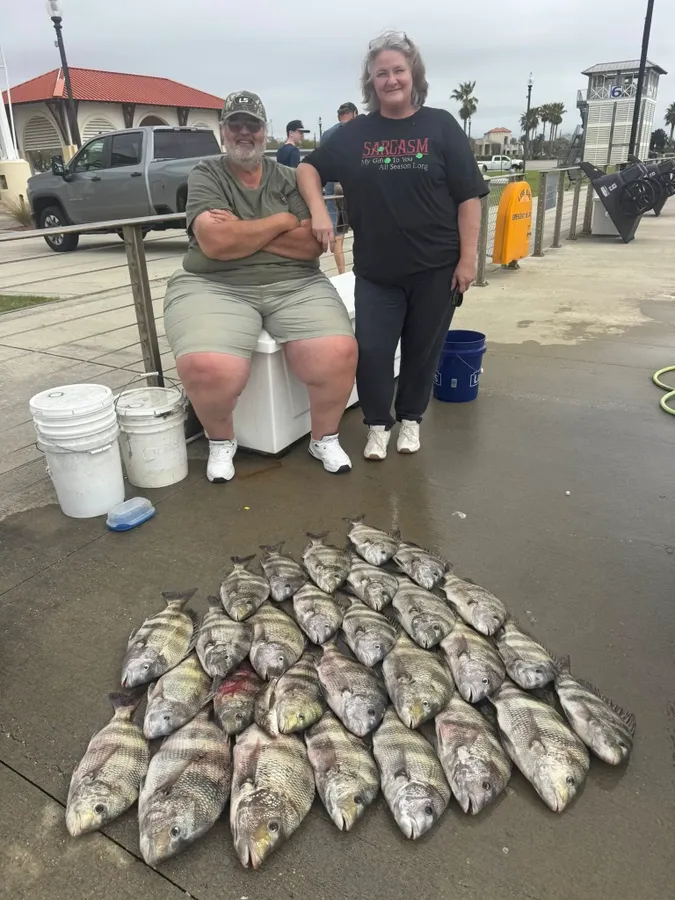
Catching sheepshead from a dock or pier is less about casting distance and more about placing your bait where the fish are feeding. Start with barnacle-covered pilings, pay attention to moving water, and work your bait close to the structure rather than leaving it in open water.
Once you find active fish, focus on keeping your line controlled and watching for subtle bites. Even a well-detected bite means little if the fish gets back into the pilings, so guiding it into open water and landing it safely matters just as much.
If you'd rather put these tips into practice with some local knowledge, explore Guidesly to find experienced fishing guides who can help you target sheepshead and make the most of your next inshore fishing trip.