What Fish Can You Catch at Crab Island, Destin? Species, Baits, and Best Conditions
Planning to fish in Crab Island, Destin? Explore 7 fish species, their favorite habitats, proven bait techniques, and the best seasons to target them.
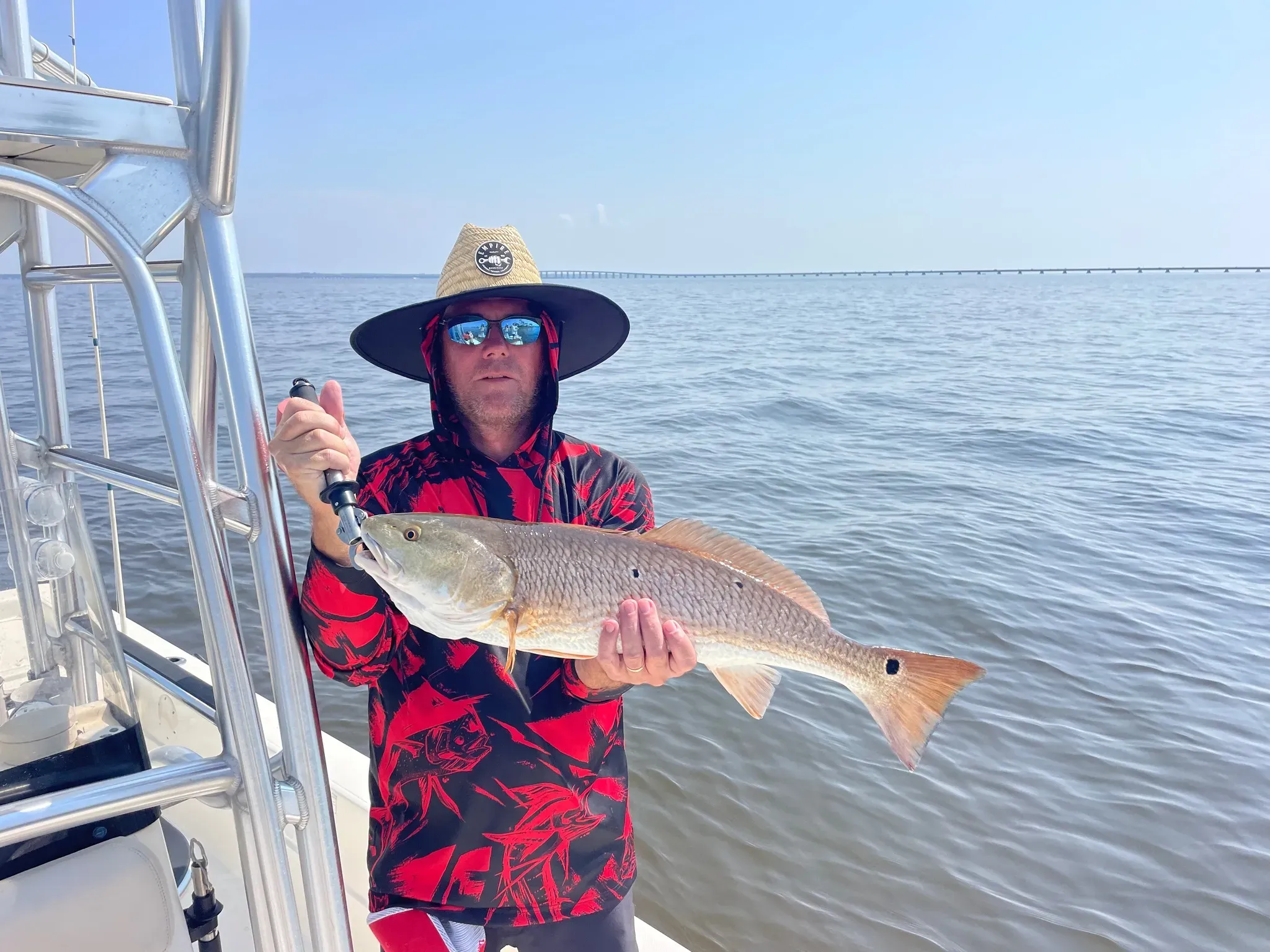


Crab Island, Destin, is known for its emerald-green waters, shallow sandbar, and boat-filled summer days. But there's more to it than swimming and relaxing on a boat. The surrounding waters offer opportunities to catch several inshore and nearshore fish species.
The trick is knowing where to go. While the busy Crab Island Florida sandbar is better suited to recreation, nearby grass flats, deeper channels, harbor edges, and East Pass can offer better fishing opportunities, depending on the season and water conditions.
Whether you're planning a dedicated fishing trip or hoping to fit in a few casts during your visit, this guide covers the fish you can catch around Crab Island Destin Florida, the baits and techniques worth trying, and how to make the most of your time on the water.
Where Can You Go Fishing in Crab Island, Destin?
Crab Island sits in Choctawhatchee Bay near Destin Pass (also known as the East Pass), where the bay connects with the Gulf of Mexico. This mix of shallow flats, sandy bottoms, deeper channels, and nearby structures creates different fishing opportunities depending on what you're hoping to catch.
However, fishing in Crab Island isn't just about casting a line at the sandbar. The central area gets busy with boats and swimmers, so exploring nearby fishing grounds can be a better option. Here are some places worth focusing your efforts:
Grass flats and sandy edges: Look for redfish and speckled trout around shallow flats, seagrass, and deeper pockets.
Destin Harbor and dock structures: Pilings and docks can attract sheepshead and mangrove snapper.
East Pass and nearby jetties: Moving water and rocky structures can provide opportunities for redfish, flounder, and other coastal species.
Deeper bay channels: These areas are worth exploring when shallow water becomes less productive or conditions change.
The best location depends on your target species, tide, and season. These fishing grounds are in the waters surrounding Crab Island, rather than necessarily within the crowded sandbar itself.
What Fish Can You Catch in Crab Island, Florida?
Fishing in Crab Island can mean targeting different species in the surrounding waters, from inshore favorites to seasonal coastal catches. Before choosing your bait or fishing spot, it helps to know which species to look for and the habitats they prefer.
1. Redfish: Look for Shallow Flats in Crab Island
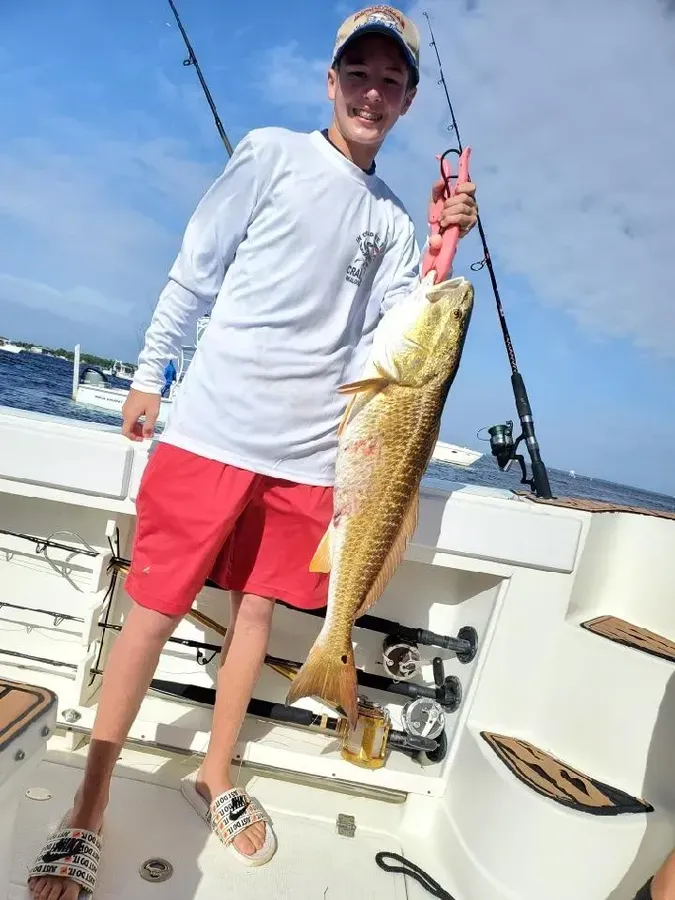
Redfish, also called red drum, are a popular inshore target along Florida's Gulf Coast. They frequent coastal bays, estuaries, and shallow flats, where they feed on shrimp, crabs, and small fish.
When fishing in Crab Island, focus on nearby grass flats, sandy edges, and shallow areas with access to deeper water.
These habitats can provide better opportunities than casting into the busy sandbar. Redfish can be caught throughout the year, although their movements and feeding activity change with the seasons and water conditions.
Best baits and techniques for redfish:
Live shrimp: Hook a lively shrimp beneath a popping cork and drift it across the edge of a grass flat, or use a light bottom rig where the water is deeper. Keep the bait moving naturally with the current and adjust the depth if you aren't getting bites.
Live or cut mullet: Use a live mullet when you want to tempt an actively hunting redfish; try a fresh cut piece when fishing a deeper edge or current break. Keep the bait near the bottom without letting it drag constantly through snags.
Soft-plastic paddletails: Cast beyond the suspected fish-holding area, then retrieve the lure steadily across the flat, so its tail vibrates. If fish follow without striking, slow the retrieve or let the lure sink a little deeper near a pothole or grass edge.
Gold spoons: Cast across open flats and retrieve at a moderate, consistent speed. The flash helps fish locate the lure, while covering water lets you search for redfish instead of repeatedly working one unproductive spot.
Expert Tip: If you're planning to fish around Crab Island, Florida, early morning and late afternoon can get you access to less crowded waters. Pay attention to the tide, too, as moving water can bring baitfish and crustaceans within reach of feeding redfish.
2. Speckled Trout: Explore Grass Flats in Crab Island
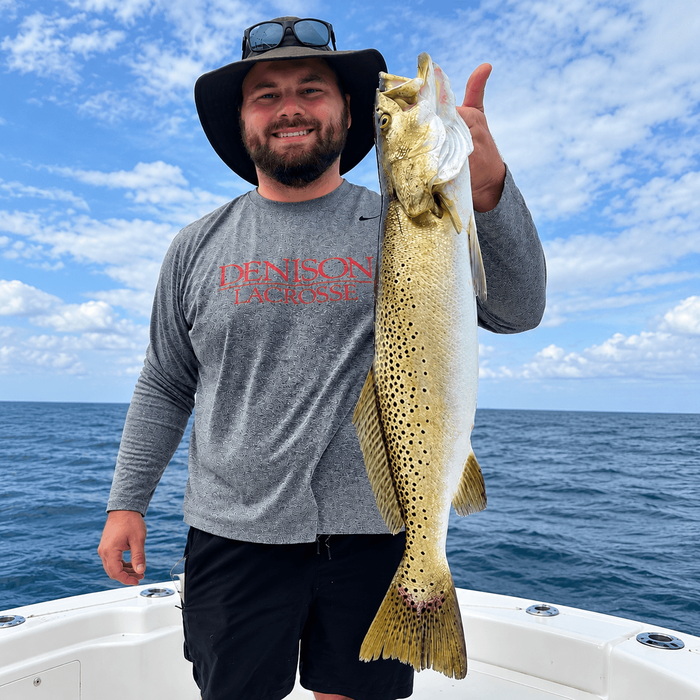
Speckled trout, also known as spotted seatrout, are another species anglers can target in the waters around Crab Island Destin.
They favor estuaries, grass flats, sandy potholes, and transitions between shallow and deeper water.
Rather than fishing randomly across open water, look for baitfish activity, changes in bottom depth, and areas where moving water passes over grass beds. These features can help you identify promising trout habitat in Choctawhatchee Bay.
Best baits and techniques for speckled trout:
Live shrimp under a popping cork: Set the shrimp just above the grass or bottom, then give the cork an occasional pop to draw attention without constantly pulling the bait away from fish. If the water is deeper, increase the leader length so the shrimp reaches the trout's feeding zone.
Soft-plastic jerkbaits: Work the lure with short twitches followed by a brief pause, imitating an injured baitfish. Cast along the edge of a grass bed or across a sandy pothole and vary the pause length until you find a rhythm that draws strikes.
Topwater plugs: Walk the lure side to side with gentle rod-tip movements and pauses. Use this approach when you see baitfish near the surface or hear surface activity; switch to a subsurface lure if trout aren't responding.
Small paddletails: Cast fan-shaped passes across a flat and retrieve steadily, changing direction to cover new water. Let the lure sink more deeply around potholes, then speed up slightly over shallow grass to avoid snagging.
3. Sheepshead: Find Structure for Fishing in Crab Island
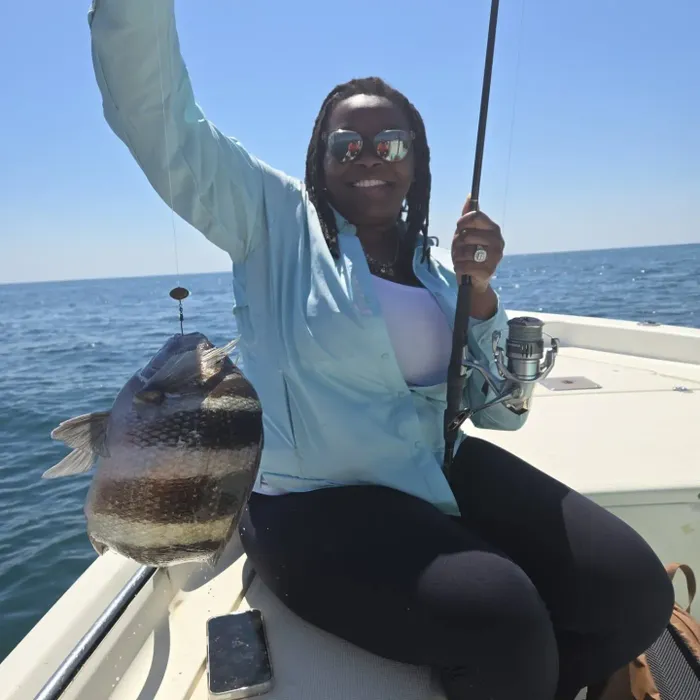
Sheepshead are easy to recognize, owing to their dark vertical stripes and prominent teeth. They feed on barnacles, crabs, shrimp, and other small organisms, making docks, pilings, rocks, and other structures promising places to look for them.
For anglers fishing in Crab Island, the more productive places to look for sheepshead are usually nearby structures, not the open sandbar. Focus on barnacle-covered dock pilings, seawalls, oyster-covered edges, and rocky structures around the harbor or accessible parts of East Pass.
Sheepshead move nearshore during late winter and early spring to spawn, but they can be caught year-round in Florida. Make sure to check local access and current conditions before choosing a spot.
Best baits and techniques for sheepshead:
Fiddler crabs: Use a small, sturdy hook and present the crab close to barnacle-covered pilings, rocks, or dock supports where sheepshead feed. Keep the bait near the structure but lift and reposition the rig if it starts catching on the bottom.
Small pieces of shrimp: Use a small, fresh piece rather than a large bait that sheepshead can pick apart. Lower it beside a piling or rocky edge and watch the line closely, since bites can feel like a slight tap or added weight.
Light bottom rigs: Choose only enough weight to keep the bait near the bottom in the current. A compact rig helps you control the presentation beside structure without letting the bait drift too far away or snag on every drop.
Sensitive rods: A responsive rod and tight line help you notice small taps and changes in weight. When you feel a bite, lift firmly rather than waiting for a dramatic pull, but avoid striking so hard that you tear the hook free.
Expert advice: Sheepshead can steal bait without producing an obvious bite, so use a small hook and pay close attention to your line. Keep your rig close to the structure without allowing it to snag repeatedly.
4. Mangrove Snapper: Target Structure in Crab Island
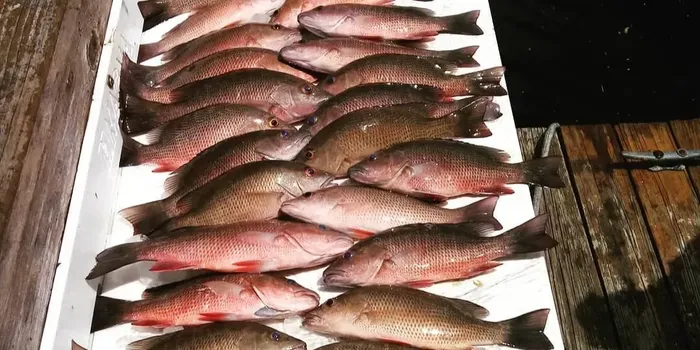
Mangrove snapper, also called gray snapper, often gather around docks, pilings, rocks, and other submerged structures where they can find smaller fish and crustaceans.
They are worth targeting in the waters around Crab Island Destin Florida when you find structure holding baitfish. Look for pilings, seawalls, oyster or rocky edges, and seagrass near deeper water; these provide cover and feeding opportunities, but the presence of structure alone does not guarantee if snapper are there. These fish can be cautious around fishing lines and unnatural presentations, particularly in clear water.
Start by lowering a small live shrimp or a small piece of fresh cut bait beside a piling, then fish at the depth where baitfish or snapper activity is visible. If you do not get bites after a few careful presentations, try slightly higher or lower in the water column or move to the next piece of structure. Use a leader strong enough to turn a fish away from pilings before it can break you off.
Best baits and techniques for mangrove snapper:
Small live shrimp: Use a small shrimp on a light hook and fish close to the pilings where snapper shelter. Let it drift naturally with the current, keeping enough contact to detect a bite without dragging the bait through the structure.
Live baitfish: When you notice snapper chasing baitfish, hook one carefully so it can swim naturally near the structure. Start at the depth where you see bait or fish activity, then adjust deeper or shallower if bites stop.
Small pieces of cut bait: Cut bait into compact pieces that fit the hook and release scent without spinning unnaturally. Present it near the bottom or beside a piling and check it regularly so you can replace bait that has been picked clean.
Light fluorocarbon leaders: In clear water, a lighter leader can make the presentation less obvious, but it still needs enough strength for the structure and fish size. If fish keep breaking off, increase leader strength rather than risking repeated losses.
Warmer months can provide opportunities to target mangrove snapper, but catches depend on local conditions. Use fresh bait, appropriately sized hooks, and tackle suited to the structure you're fishing.
5. Flounder: Fish Sandy Bottoms in Crab Island
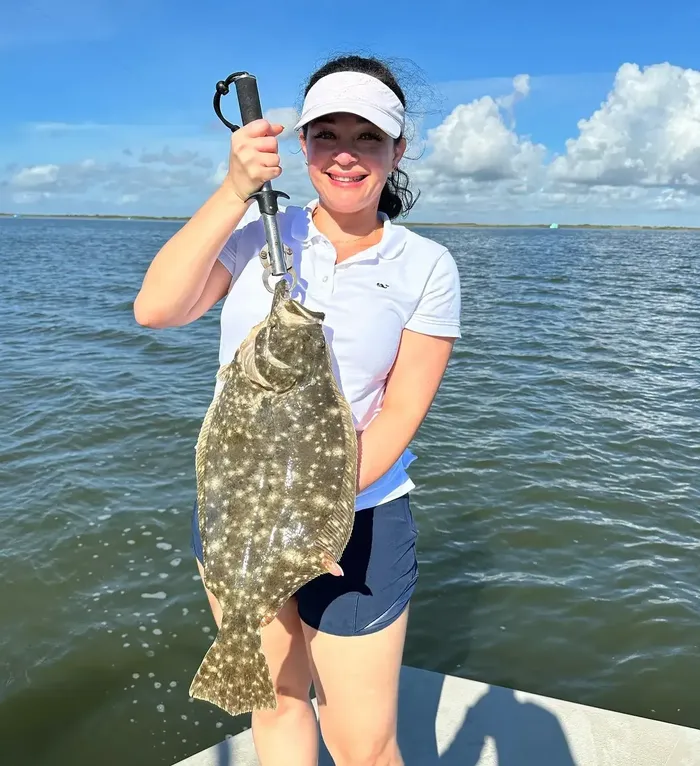
Flounder are bottom-dwelling fish that blend into sandy or muddy surroundings while waiting to ambush prey. They can be found near channels, pass edges, and other areas where changes in bottom depth create feeding opportunities.
If you're fishing in Crab Island and want to target flounder, look for sandy or muddy bottom along the edges of channels, tidal creeks, and pass margins, especially where a shallow flat drops into deeper water or current carries small baitfish past the bottom.
Gulf flounder are found inshore on sandy or muddy bottoms and may also occur near rocky nearshore reefs.
Best baits and techniques for flounder:
Live minnows: Rig a lively minnow so it can move naturally, then work it slowly along a sandy drop-off or channel edge. Keep it close to the bottom, where flounder wait to ambush prey, and retrieve in short movements rather than pulling it continuously.
Small finger mullet: Use a small finger mullet around a pass edge or deeper sandy transition. Let the bait move with the current while keeping contact with the rig, and reposition if the bait is swept away from the bottom structure you're targeting.
Soft plastics on jigheads: Choose a jighead heavy enough to reach the bottom without plowing into it. Cast across the drop-off, let the lure sink, then lift it a few inches and allow it to settle again to imitate prey moving along the bottom.
Slow retrieves: Pause after each short lift or turn of the handle so the lure stays near the bottom. If you feel a bump, maintain contact and allow a moment for the fish to take the bait before setting the hook.
Florida closes flounder harvest from October 15 through November 30 each year, so fall anglers can catch and release but not keep fish during that stretch. Outside the closure, the minimum size is 14 inches, and the daily limit is five per person.
6. Pompano: A Seasonal Catch Near Crab Island
Pompano are popular among coastal anglers for their fighting ability and reputation as a table fish. However, they're more closely associated with sandy beaches and coastal surf than with the central Crab Island sandbar.
If your visit to Crab Island Florida includes time along the nearby Gulf beaches, you can target pompano in the surf and inshore waters over sandy bottoms and seagrass beds. Pompano feed heavily on small crustaceans, especially sand fleas, and their movements are influenced by tides and water temperature.
Best baits and techniques for pompano:
Sand fleas: Look for sand fleas in the wash along beaches and present them on a small hook with a pompano rig. Cast beyond the nearest breaking wave when conditions allow, then keep the bait in the sandy troughs where pompano forage.
Fresh shrimp: Use small, fresh pieces secured firmly to the hook so they stay on during the cast. Fish them close to the sandy bottom and check the bait regularly, especially when small fish or crabs are active.
Pompano jigs: Cast into troughs and retrieve with short hops along the bottom rather than a fast, continuous retrieve. Change jig weight to match surf and current, and cover several sections of beach to find where fish are feeding.
Light bottom rigs: Use a rig that keeps bait near the bottom while allowing it to move naturally in the surf. If waves or current keep rolling the rig out of position, use enough weight to hold the target area without making the setup unnecessarily heavy.
If you're visiting Crab Island, Florida, you can head to nearby Gulf beaches for pompano surf fishing. Henderson Beach State Park in Destin is one option, with surf fishing along its sandy shoreline.
7. Spanish Mackerel: Look for Baitfish Near Crab Island
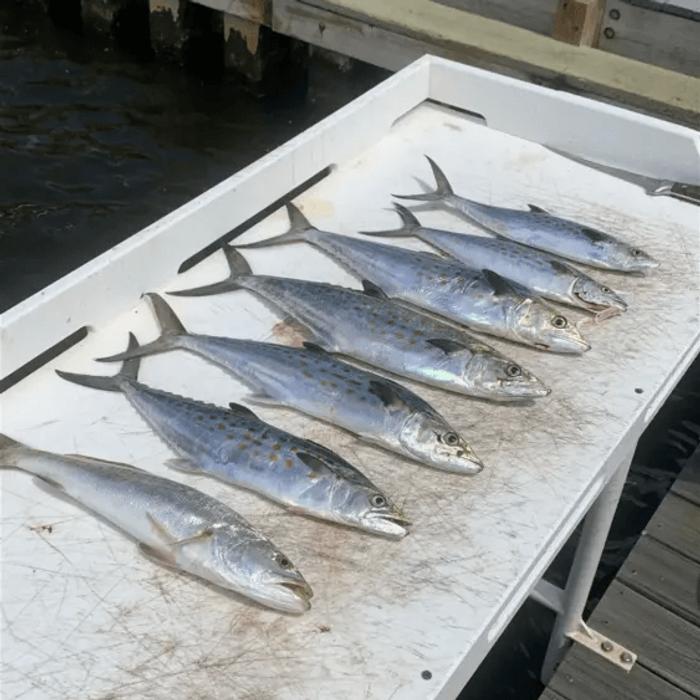
Spanish mackerel are fast-moving predators that chase schools of small baitfish.
They're a possible target in the broader Destin coastal area, particularly when baitfish are abundant and feeding fish move within reach of anglers.
For those fishing in Crab Island, the nearby coastal waters are a more suitable focus than the crowded sandbar itself. Late spring and early fall can provide useful seasonal windows, depending on local conditions.
Best baits and techniques for Spanish mackerel:
Silver spoons: Cast toward visible baitfish or surface activity and retrieve briskly enough to make the spoon flash like a fleeing baitfish. If mackerel are following but not striking, vary the speed or try a slightly smaller spoon.
Small casting plugs: Choose a compact plug that resembles the baitfish in the area, cast beyond the feeding fish, and retrieve through the activity rather than landing directly on top of it. This can reduce the chance of spooking fish that are feeding at the surface.
Live baitfish: Use a lively baitfish on tackle suited to the fish and current, presenting it near the depth where mackerel are feeding. Keep the bait away from propellers and crowded boat traffic, and follow local rules for bait collection and use.
Abrasion-resistant leaders: Spanish mackerel have sharp teeth, so inspect the leader after each fish and replace it if nicked or frayed. A heavier or wire leader can reduce bite-offs, though very visible leaders may affect strikes in clear water; balance bite protection with the conditions.
Watch for diving birds, scattering baitfish, and surface strikes to locate feeding activity. These signs can help you find productive water instead of repeatedly casting into empty areas.
Fish You Can Catch in Crab Island, Destin: A Quick Comparison
The fish you can catch around Crab Island depends on the habitat, bait, and season. Use this table to compare where to find each species, what to fish with, and when to target it.
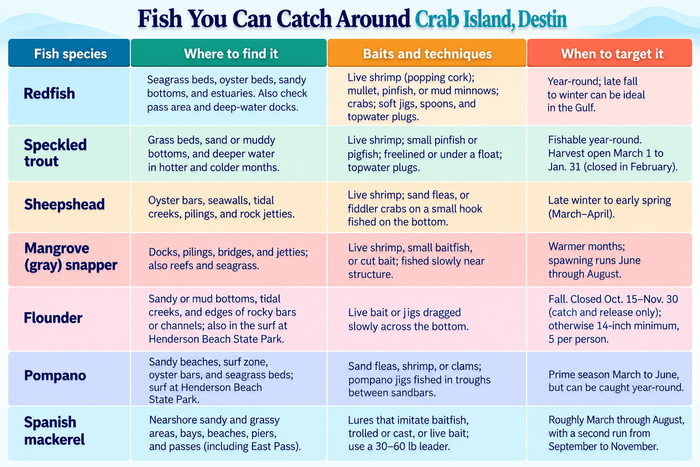
Before you go: Check recent Destin fishing reports, tides, and current Florida fishing regulations.
Plan Your Crab Island Fishing Trip with Ease
Fishing around Crab Island is all about knowing where to look, what bait to use, and when to make your move. Whether you're hoping to catch redfish around shallow flats or target the gray snapper, the right local knowledge can help you make the most of your time on the water.
Ready to plan your next fishing trip? Explore Guidesly's fishing trips to discover guided experiences, connect with local captains, and find your next fishing adventure in Destin, Florida.